
How BIBPU Keeps Humid Salt Moving Cleanly to Sewing
BIBPU keeps the salt line stable at the point where problems usually start: after filling, before sewing, and during the short transfer between modules. For humid salt, that matters more than the fill itself, because the bag loses shape faster, sticks more easily, and holds too much air if the line is not controlled well.
Where the delay usually starts on a salt line
On a real production floor, the issue rarely appears as a single breakdown. It usually begins with a slight bag offset, then a soft and swollen top seam area, then manual correction by the operator, and finally a slower transfer to sewing. For dry materials, that workflow may still be tolerated. For humid salt, it quickly becomes a throughput problem.
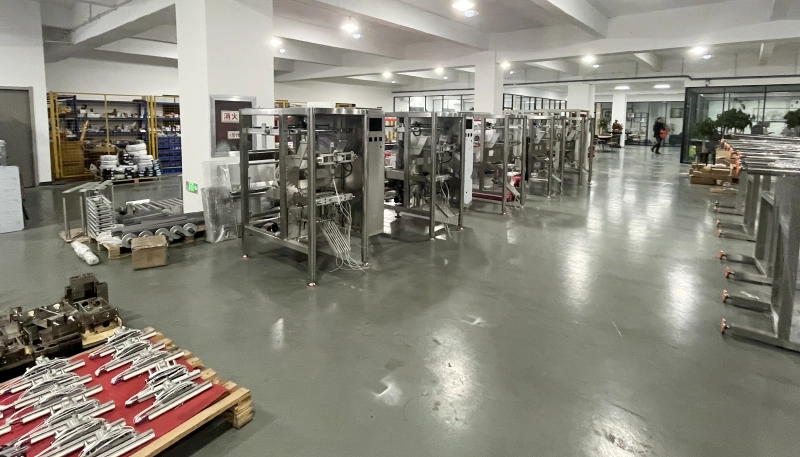
BIBPU is useful because it does not only fill the product. It also keeps the bag stable until the next operation. That means the line can move from dosing to shaping and then to sewing without a manual rescue step in between.
Why the old manual tail slows the output
When the bag has to be corrected by hand after filling, the operator stops being a line controller and becomes a defect fixer. Time is spent on holding the top edge, removing extra volume, and centering the bag for sewing. On a small batch that may look acceptable, but on a continuous line it eats capacity and creates quality variation.

Humid salt makes this worse. The product can cling to surfaces, the top of the bag deforms more easily, and the transfer into sewing becomes unstable. Once that happens, line speed is no longer determined by the machine settings but by how fast a person can straighten each bag.
Why BIBPU fits salt packaging
BIBPU is built as a continuous line for bulk granular material. It uses VFFS machines with top dosing hoppers and auger systems, while the product-contact parts are made from corrosion-resistant 316L stainless steel. For salt, that is not a minor detail. In a corrosive and humid environment, the contact material directly affects service life and consistency.
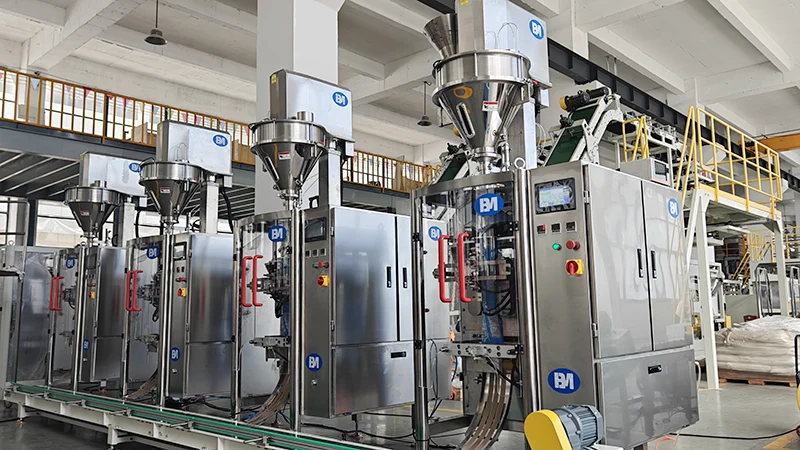
When several machines share one line logic, it becomes easier to hold the same bag geometry, the same speed, and the same transfer behavior. That is especially valuable when salt batches change in moisture content, because the line does not need to be re-tuned every time the product behavior shifts.
Which modules keep the flow stable
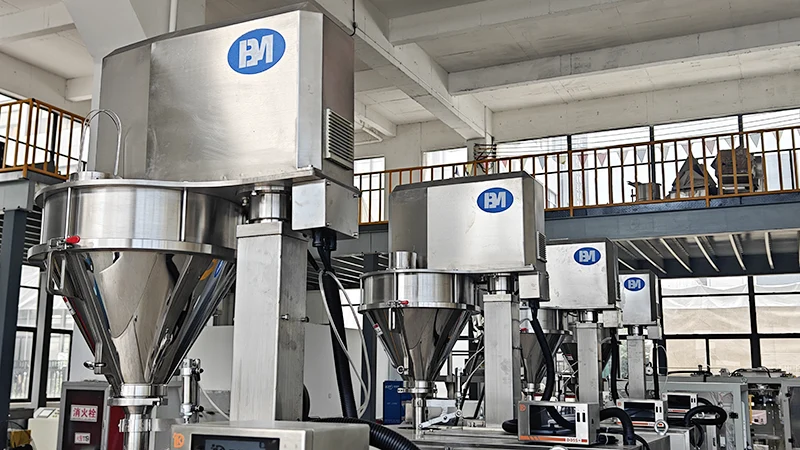
The first support module is the auger feeding system. The image shows the upper dosing units and structural columns. This layout helps keep the product feed even and prevents dead spots in the dosing zone. For humid salt, that matters because the material can clump and move less freely through the channel.
The next module is the forming shoulder. Its dimple-processed surface reduces film sticking and helps the tube move more smoothly even under heavier operating conditions. If the film does not drag or jump, the bag forms cleaner, and the next transfer to sewing becomes much easier.
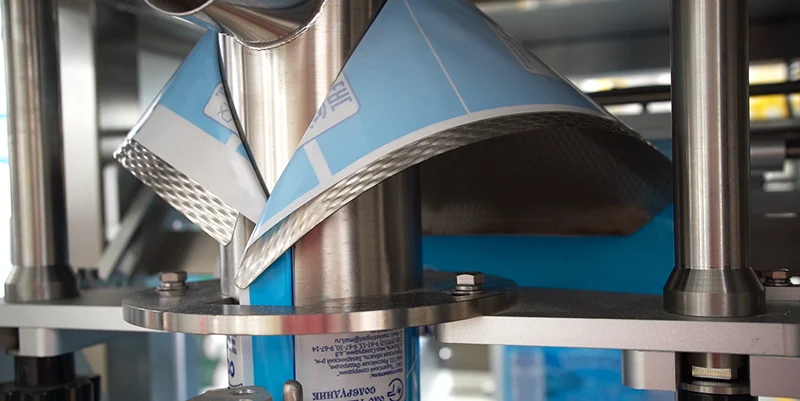
A third key point is film guidance and alignment. When the film runs straight, the machine spends less effort correcting the edge, and the bag keeps a better shape. On a salt line, that directly improves the quality of the transfer to the next step.
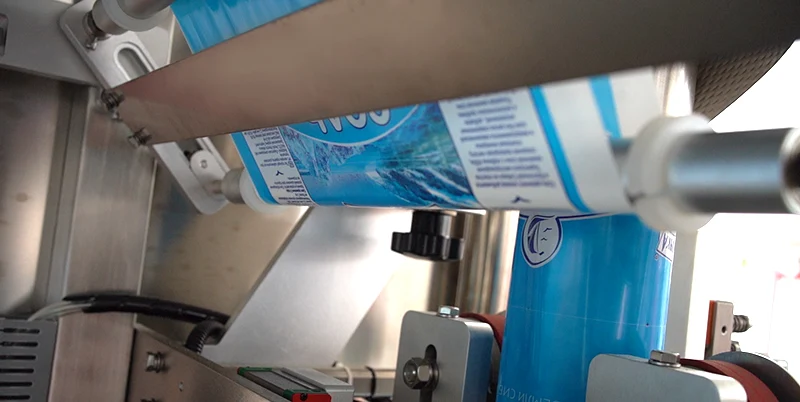
How the bag reaches sewing without extra air
Before sewing, the bag is not just transferred. It is prepared. A soft flattening module compresses the package, removes extra volume, and reduces the swollen-top effect. Because of that, the bag keeps its shape better and does not need manual correction at the next stage.
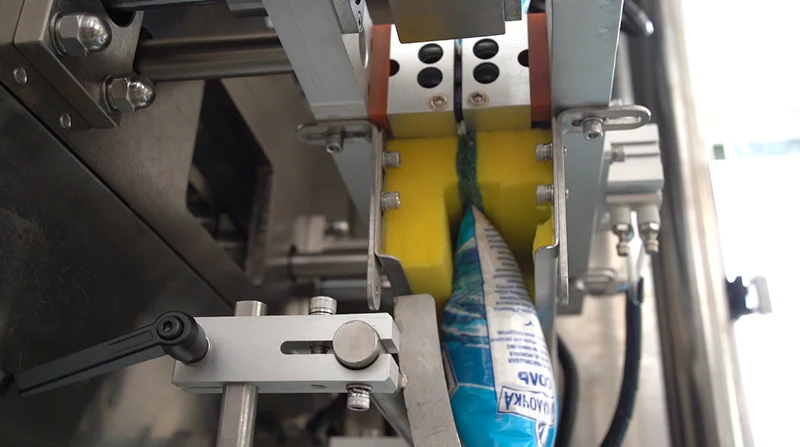
After that, the bag enters the industrial sewing head. At this point there should be no offset and no soft tail that an operator has to hold by hand. When the upstream modules work correctly, the seam becomes cleaner and the line runs more calmly and faster.
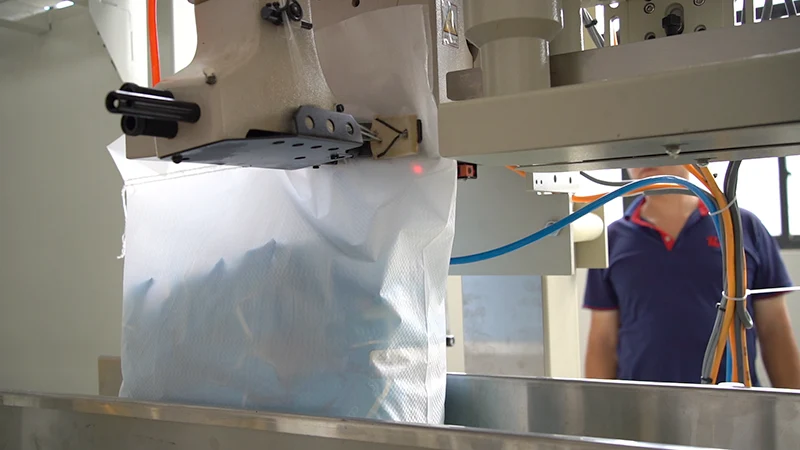
The result for the customer is simple: less manual intervention, fewer offsets, fewer failures at the transition between filling and sewing. For humid salt, that means a more even secondary package, a steadier output, and a predictable result on every shift.
Need a consultation on packaging equipment?
CONTACT US → English
 Русский