
Bulk Bagging Line That Kept Woven-Sack Handoffs Steady Before Sewing
A grain warehouse needed a cleaner way to move filled woven sacks from dosing to sewing and palletizing. The ppline solution focused on stable gravity dosing, a guided bag path, and a discharge conveyor that reduced last-meter bag drift.
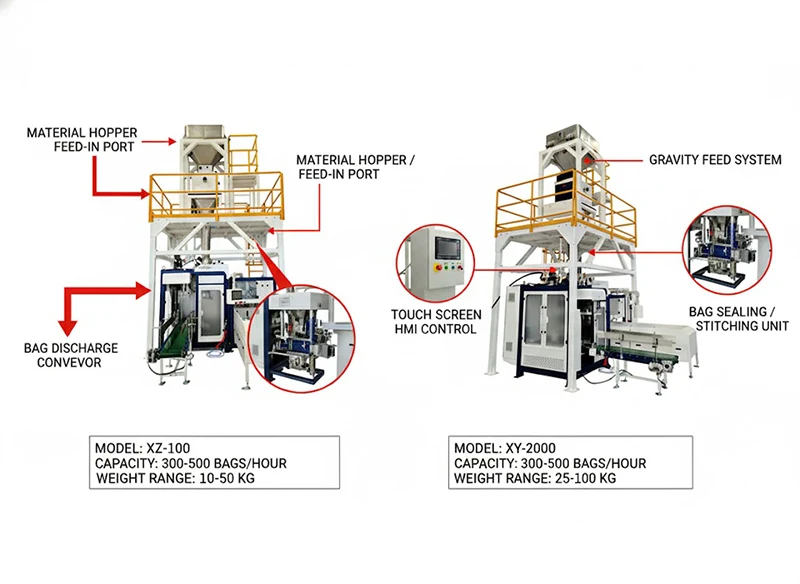
1) The customer problem: bulk sacks were arriving too loose for the sewing station
The site was handling dry bulk products in woven sacks, and the bottleneck was not filling alone. The trouble started after discharge. Bags were leaving the filling point with slight mouth distortion, uneven top shape, and too much operator correction before sewing. Every correction added time, dust exposure, and avoidable handling.
That is exactly where a packaging line has to do more than weigh product. It has to keep the sack path predictable from hopper feed to final handoff. For a warehouse working under daily loading pressure, a stable transfer matters as much as the fill itself.
Manual bag straightening and an unstable transfer path were slowing down the sewing point, creating rework, and making every shift more dependent on operator skill than on machine repeatability.
2) Why this ppline fit the job
The selected machine concept matched the customer’s workflow because it combines hopper feed, gravity dosing, HMI control, and a controlled bag discharge path in one line. The machine family shown in the product images supports 300-500 bags per hour and covers both 10-50 kg and 25-100 kg bag ranges, which makes it practical for different bulk-product SKUs without rebuilding the whole line.
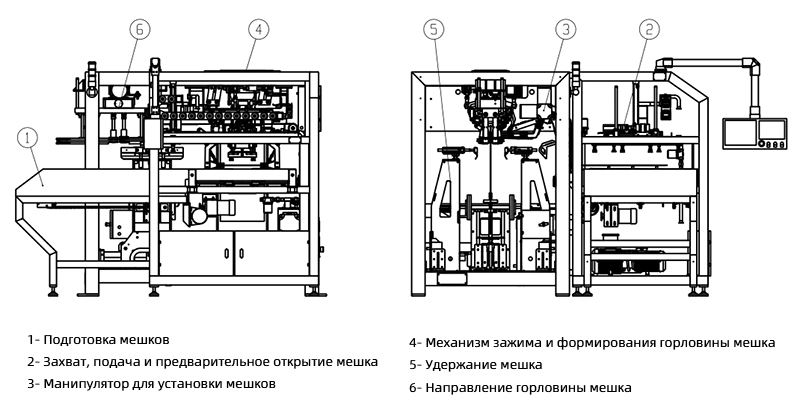
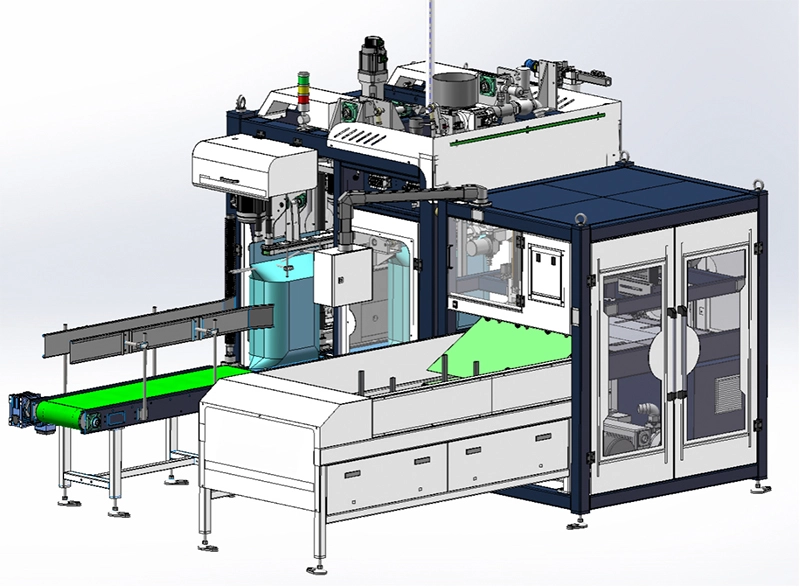
Just as important, the structure is built for alignment. The bag magazine, bag guide, and gripper area keep the woven sack in a fixed path instead of letting it swing or twist before the next station. That is what makes the line useful for dry bulk packaging jobs where the top seam has to be clean and repeatable.
What the structure solves: guided bag presentation, steadier top-mouth shape, and less handling between dosing and sewing. In practice, that means the operator spends less time correcting each sack and more time keeping the line moving.
3) Structure, parameters, and image evidence that support the result
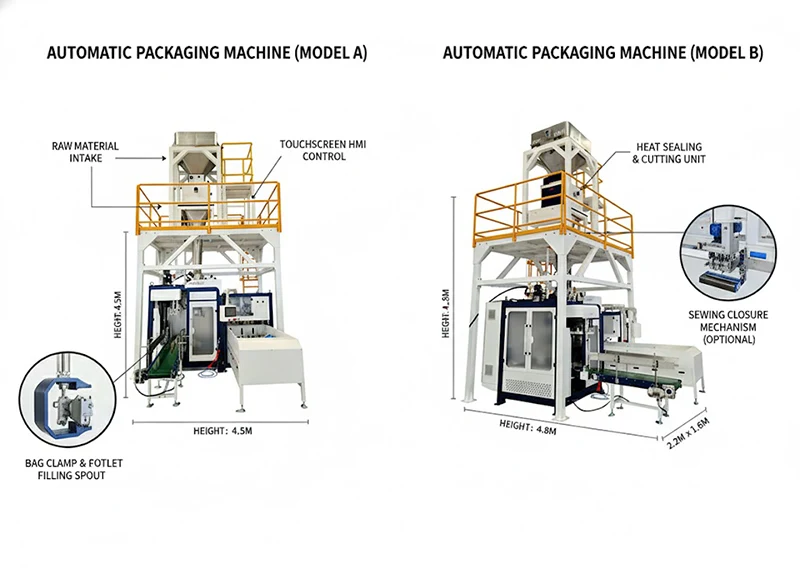
The line architecture is not decorative. The elevated steel frame creates room for the weighing and filling section, while the side conveyor and discharge section keep the filled bags moving in one direction. The CAD view confirms the modular layout: bag magazine, robotic placing arm, and bag guide are arranged to protect the mouth of the sack during transfer.
The 3D machine view adds the main industrial details the customer cared about: HMI touchscreen operation, optional sewing closure, and a rigid frame that is easier to integrate into a plant layout. For bulk products, that matters because the packaging machine is not only a filler; it becomes part of the handling system that protects the final package before shipment.
| Customer issue | Line response |
|---|---|
| Bag mouth drift before sewing | Bag guide, gripper area, and controlled discharge path keep the sack aligned. |
| Manual straightening slows the shift | Stable transfer reduces corrective handling and frees the sewing station. |
| Different SKUs need flexible output | 300-500 bags per hour and 10-50 kg / 25-100 kg coverage support multiple bulk-product jobs. |
| Plant integration must stay clean and modular | Elevated frame, conveyor discharge, and modular bagging layout simplify installation. |
Final result: a cleaner handoff and a more predictable packing floor
For this grain operation, the value was simple: less bag rework, steadier sewing preparation, and a packaging line that could keep up without depending on constant manual correction. That is the practical difference between a basic filler and a true packaging line for dry bulk materials.
Request a bulk-products packing proposal English
 Русский