Automatic Bagging Machine & Palletizing Systems Manufacturer

Category: Статьи

  • Как сибирский солерудник убирает перекос и раздувание мешков перед отгрузкой

    Как сибирский солерудник убирает перекос и раздувание мешков перед отгрузкой

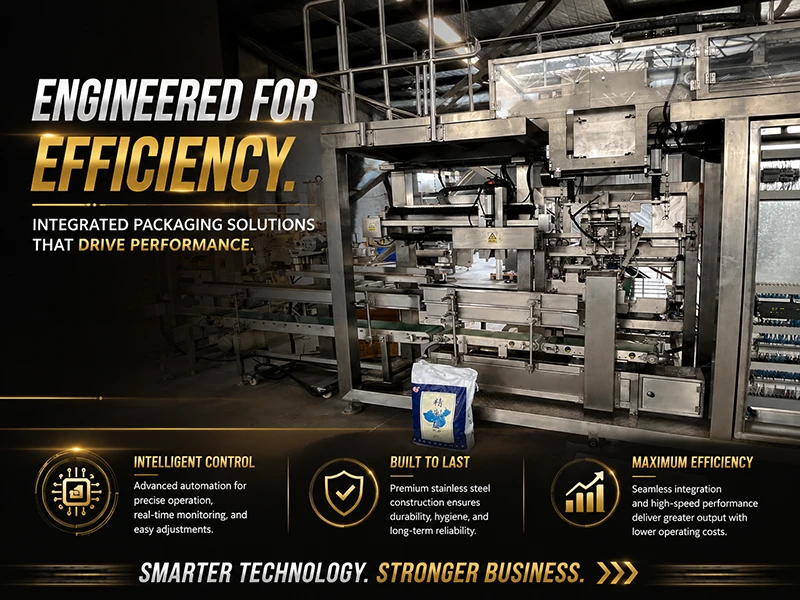
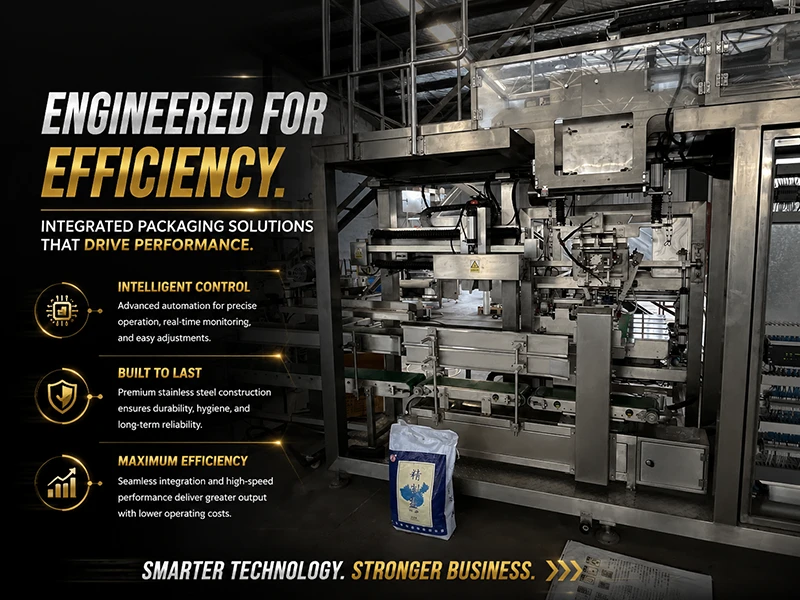
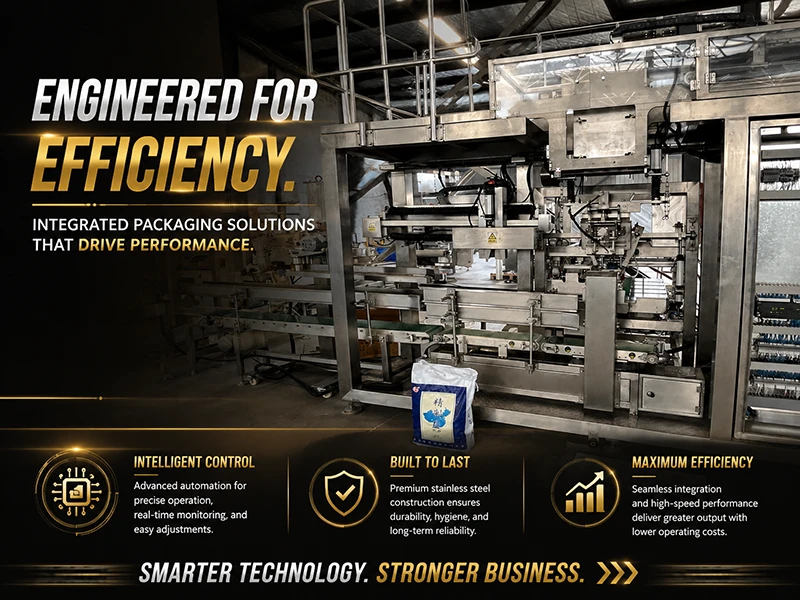
    Real industrial photo of a stainless steel BIBPU secondary packaging line with conveyors and buffering bin

    Поток, который не рвется на отгрузке

    Линия вторичной упаковки собирает мешки в устойчивую подачу, чтобы партия шла на склад без лишних остановок, ручных перебросов и перекоса пачек.

    Когда проблема не в фасовке, а в переходе к отгрузке

    На соляных предприятиях чаще всего спорят о дозировании, запайке и точности фасовки. Но деньги часто теряются позже, когда готовые мешки уже вышли из основного упаковочного узла и еще не стали удобной транспортной единицей. Именно на этом участке возникают перекосы, раздувание, смятие кромок и лишние прикосновения руками. Для сибирского солерудника это особенно заметно в пиковые дни, когда важна не только производительность, но и стабильная геометрия мешка перед дальнейшей подачей.

    BPM bibpu закрывает именно этот промежуток. Система не пытается заменить фасовку, она берет готовый мешок и доводит его до состояния, в котором его можно уверенно передавать дальше по линии. За счет закрытой механики, жесткой рамы и последовательной передачи между узлами предприятие получает более ровный поток и меньше потерь на ручную правку.
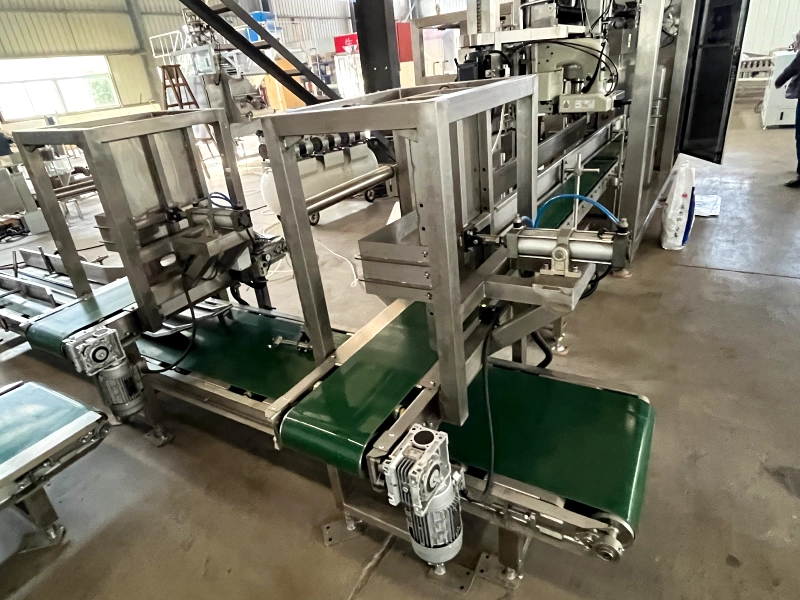
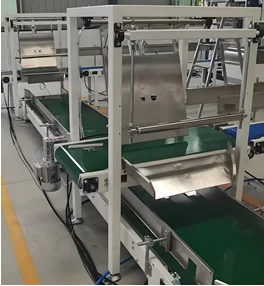
    Stainless steel conveyor transfer unit with pneumatic pusher and dual green belt sections

    Передача без рывка

    Пневматический толкатель и две транспортные секции помогают выровнять мешок перед следующим шагом, не ломая темп линии.

    Плавный перенос между узлами дает больше, чем просто порядок

    Узкий участок между транспортерами обычно выглядит второстепенным, но на практике именно там накапливаются сбои. Если мешок подан косо, если он еще не расправился после выхода из предыдущего узла или если расстояние между пакетами гуляет, дальше начинается цепочка мелких проблем: застревание, наклон, неравномерная укладка в внешний мешок или лишняя нагрузка на операторов. В производстве соли такие мелочи быстро превращаются в брак по внешнему виду и дополнительную работу на складе.

    В bibpu этот переход собран на жесткой раме и с пневматическим подхватом. Задача узла не в том, чтобы просто протолкнуть мешок вперед, а в том, чтобы сохранить ритм и геометрию. Это особенно полезно, когда упаковка идет сериями и каждая единица должна сохранять одинаковую ориентацию. Чем ровнее передача, тем меньше ручных поправок и тем предсказуемее вся отгрузка.
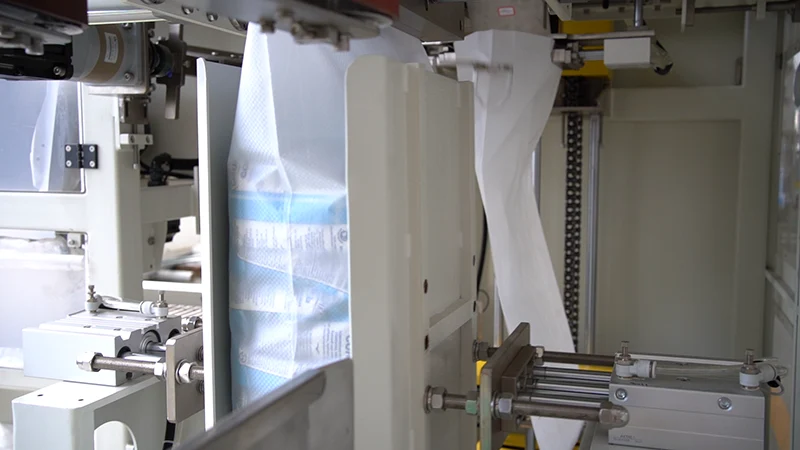
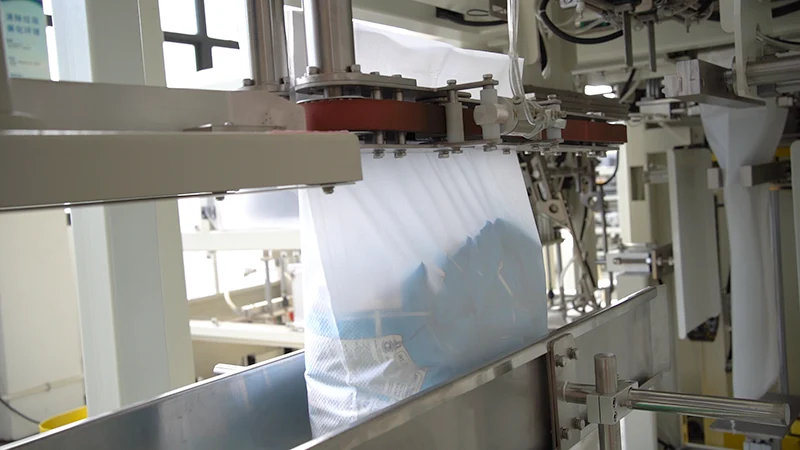
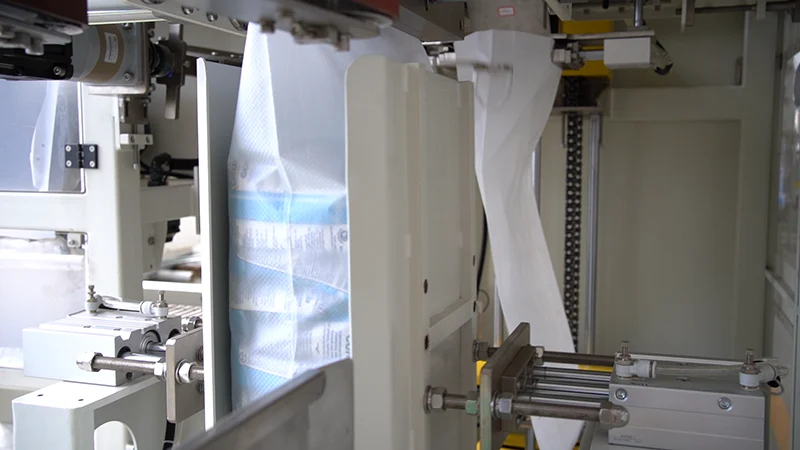
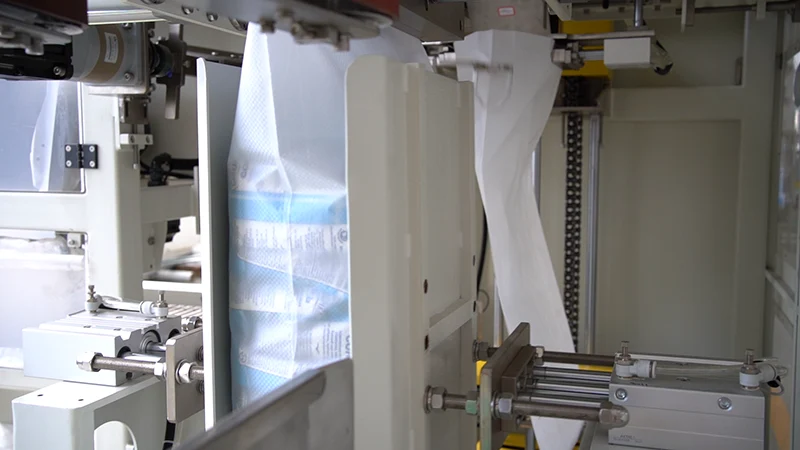
    Loaded secondary woven PP sack compressed by pneumatic side clamping plates

    Сжатие перед фиксацией

    Боковые прижимы выравнивают загруженный мешок и убирают лишний объем перед дальнейшей фиксацией.

    Почему компрессия мешка важнее, чем кажется

    Когда внешний мешок уже заполнен, его нужно не просто закрыть, а привести к форме, которая хорошо переносит штабелирование и транспортировку. Если внутри остается лишний воздух, мешок становится мягким, нестабильным и хуже держит ряд в пачке. Если форма нарушена, страдает вся партия: она занимает больше места, легче цепляется за соседний пакет и хуже идет на паллету. Поэтому компрессия и направленная стабилизация играют здесь такую же роль, как точность дозирования на первой стадии.

    На изображении видно, что боковые пневматические прижимы работают не грубо, а контролируемо. Для соляного предприятия это означает, что мешок не расплющивается случайно, а получает одинаковую степень уплотнения. Такой подход помогает сохранить товарный вид и упрощает дальнейшее перемещение в зоне склада. Когда мешок стабилен по форме, его проще укладывать, проще считать и проще отправлять без повторной ручной корректировки.
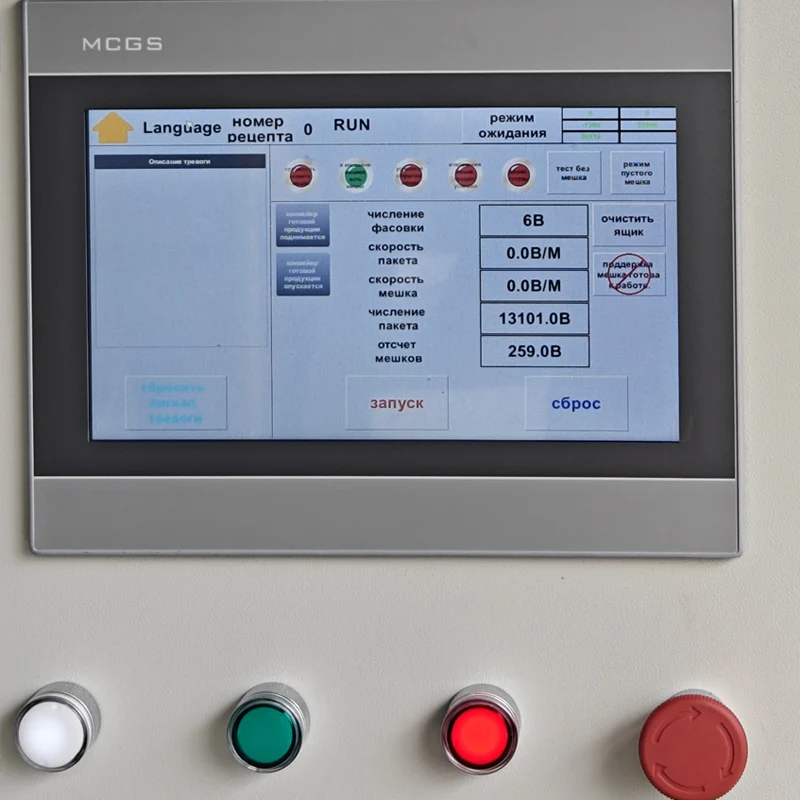
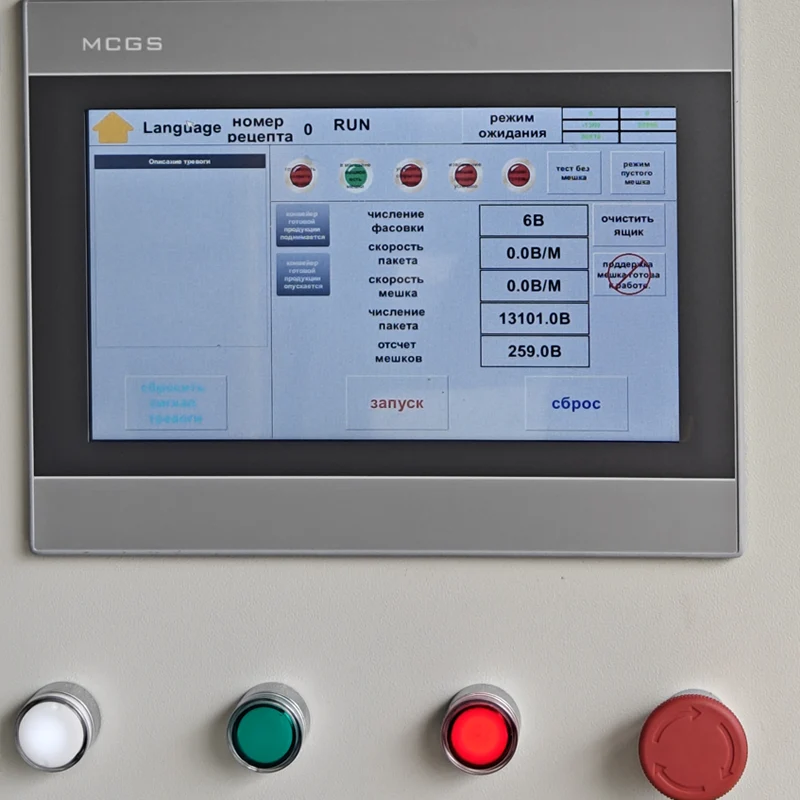
    MCGS industrial touch screen interface displaying Russian language packaging control parameters

    Управление на русском интерфейсе

    Оператор видит режимы, параметры и запуск на понятном экране, а не ищет нужную кнопку в догадках.

    Когда управление понятно, линия работает ровнее

    Для производственной смены важен не только железный узел, но и то, насколько быстро его можно запустить, остановить и перенастроить. Если интерфейс запутан, каждый переход между режимами увеличивает риск ошибки. Если экран и подписи понятны оператору, линия меньше зависит от случайных действий и быстрее входит в рабочий ритм после пауз. Это особенно важно на предприятиях, где смены разные, а персонал меняется.

    Русскоязычный MCGS-интерфейс в bibpu делает работу более прямой. Оператору не нужно догадываться, что означает тот или иной параметр: он видит состояние линии, режим запуска и основные настройки в одном месте. В результате настройки становятся повторяемыми, а выпуск меньше зависит от конкретного человека на смене. Для солерудника это означает не красивую панель, а более устойчивую работу всей цепочки от мешка до отправки.
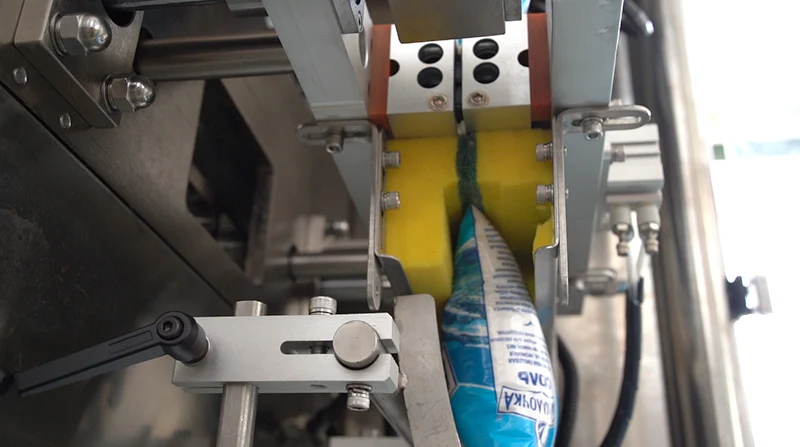
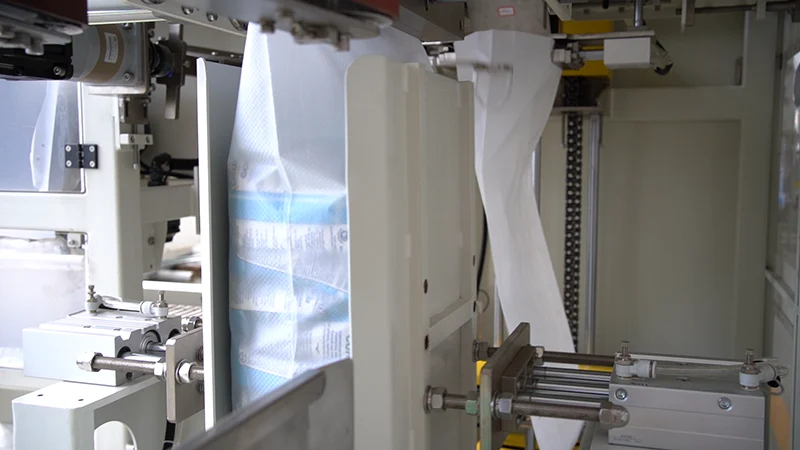
    Soft polyurethane foam guide mechanism on VFFS machine to flatten salt bags

    Финишная правка геометрии

    Полиуретановый узел мягко расправляет мешок, чтобы партия выглядела одинаково и шла без лишней деформации.

    Финишная правка мешка решает больше складских проблем, чем кажется

    Последний шаг перед отправкой обычно недооценивают. Именно здесь мешок либо получает ровный внешний вид и понятную форму, либо продолжает жить с внутренним воздухом, выпирающими гранями и нестабильной посадкой. Мягкий направляющий элемент помогает убрать излишний объем без повреждения тары. Для соли это важно потому, что мешок должен не только содержать продукт, но и пережить перенос, укладку, возможную перегрузку и обратное движение по складу.

    Когда предприятие получает стабильную вторичную упаковку, оно выигрывает сразу в нескольких местах: меньше ручной правки, меньше брака по внешнему виду, меньше потерь времени на перегрузке и более ровная паллетизация. Именно поэтому bibpu стоит смотреть не как на отдельную машину, а как на узел, который закрывает слабое место между фасовкой и отгрузкой. Для сибирского солерудника это обычно и есть тот шаг, который превращает набор отдельных мешков в нормальный товарный поток.
  • Трещины, пыль и смятые мешки: где соль теряет деньги на пути к складу

    Трещины, пыль и смятые мешки: где соль теряет деньги на пути к складу

    Трещины, пыль и смятые мешки: где соль теряет деньги на пути к складу

    Для соляного предприятия упаковка редко бывает «просто упаковкой». Соль тяжёлая, сыпучая, чувствительная к влаге и плохо прощает лишние ручные касания. Как только мешок выходит из фасовки, у линии появляется новая задача: не потерять форму пакета, не повредить шов, не запустить пыль в складской поток и не растянуть отгрузку из-за лишних перекладок. Именно на этом участке многие производства теряют больше, чем на самой дозировке.

    Если смотреть на участок глазами склада, то важен уже не отдельный мешок, а готовая транспортная единица. Когда пучок пакетов собирается в стабильный блок, его проще перенести, быстрее принять, аккуратнее уложить и надёжнее отправить в паллетирование. Поэтому для солерудника вторичная упаковка — это не «дополнительная опция», а способ убрать хаос между фасовкой и отгрузкой.

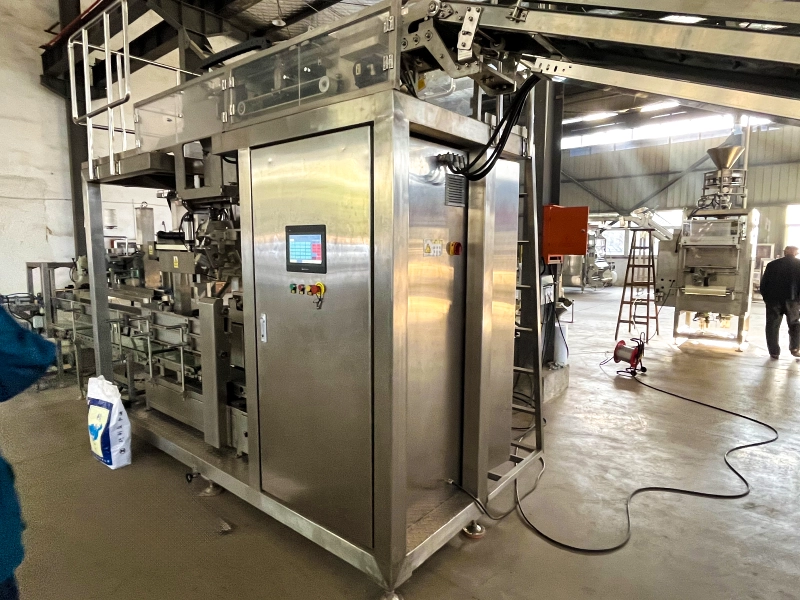
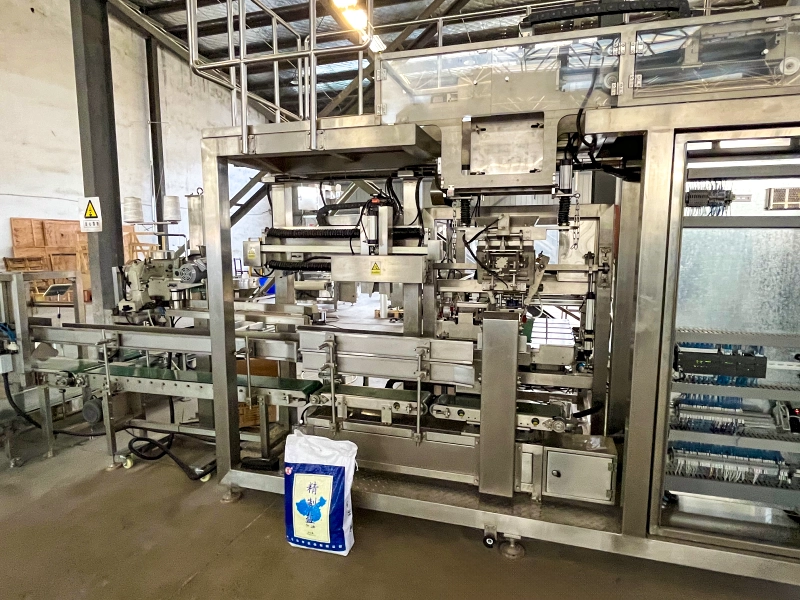
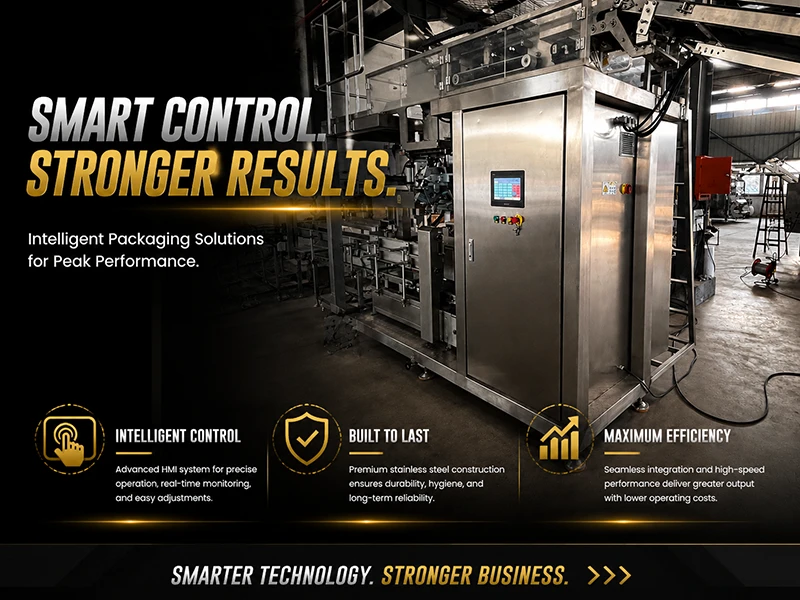
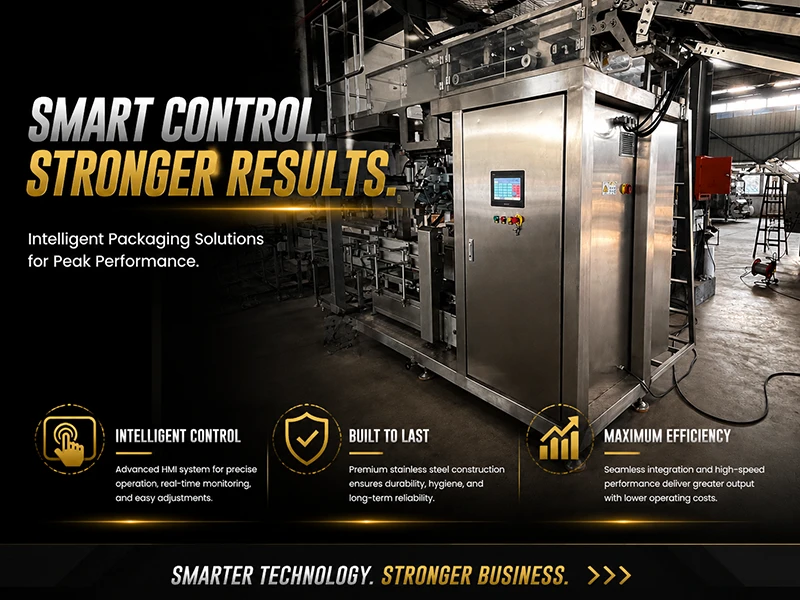
    Stainless steel secondary packaging machine with HMI control panel in an industrial factory

    На фото видно, как промышленная линия уже работает в логике производства, а не отдельного станка. Машина стоит в реальном цехе, с нормальным сервисным доступом, с понятной компоновкой и с управлением через HMI. Для соляного производства это принципиально: линия должна быть обслуживаемой, а не героической. Чем меньше ручных вмешательств в ежедневном цикле, тем стабильнее выход на отгрузку и тем меньше риск, что смена уйдёт в мелкий ремонт вместо работы.

    Почему формующая часть и подача плёнки решают больше, чем кажется

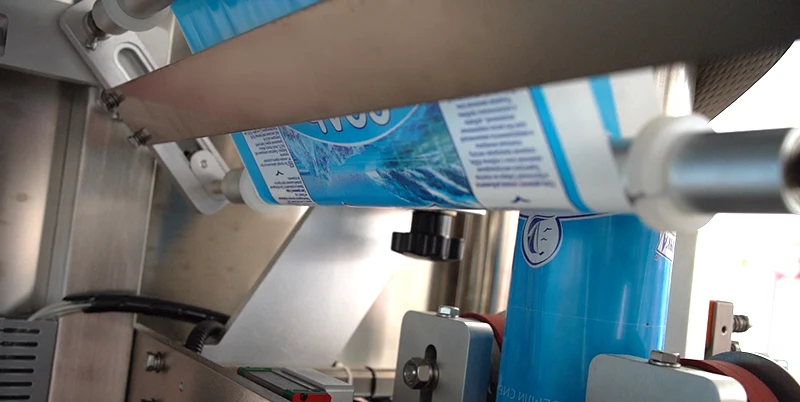
    Соль часто идёт в условиях повышенной влажности, а это сразу бьёт по качеству формирования пакета. Если плёнка цепляется за формующее плечо, меняется натяжение и начинаются перекосы. Если траектория плёнки не держится точно, то шов становится неравномерным, а упаковка теряет аккуратную геометрию. На длинной смене именно такие мелочи превращаются в повторяющиеся простои и лишний брак.

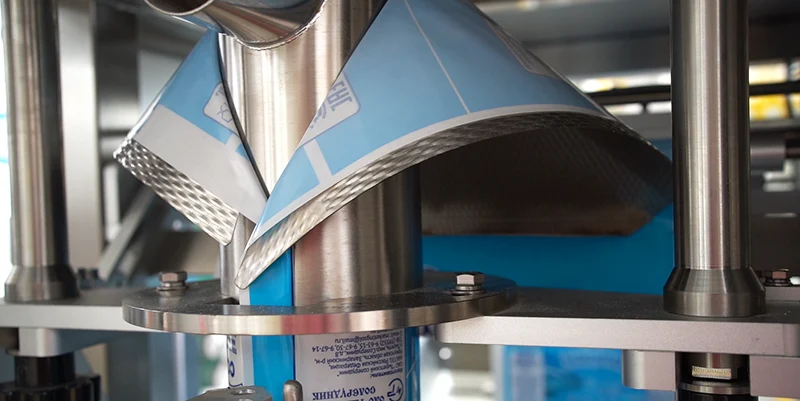
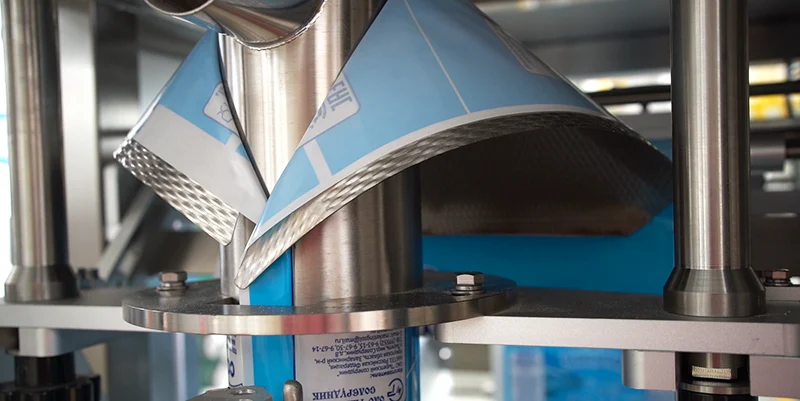
    Dimpled stainless steel forming shoulder of VFFS machine to reduce film sticking

    Формующее плечо с рифлёной антизалипающей поверхностью — это не декоративная деталь, а рабочий ответ на влажную и липкую плёнку. Оно помогает сохранить стабильный ход материала и уменьшить сопротивление на участке формирования рукава. Для соляной продукции это особенно полезно, потому что линия должна сохранять повторяемость формы даже тогда, когда в цехе меняется температура или влажность.

    Aluminum film guide rollers and manual alignment collar on VFFS machine

    Направляющие ролики и узел ручной центровки решают ещё один практический вопрос — удерживают плёнку по оси без постоянной ручной корректировки. В реальном производстве это означает меньше остановок на подстройку, меньше риска смещения рисунка и более ровную подачу материала на следующую операцию. Для соляной линии, где каждая смена должна выдать прогнозируемый объём, такие механические мелочи дают очень заметный эффект.

    Как выглядит нормальный шов и почему это важно для соли

    На выходе упаковочной головы важен не только внешний вид мешка, но и то, как он переживёт складскую жизнь. Соль не любит слабый шов: при транспортировке пакет должен выдерживать давление соседних мешков, вибрацию, перестановки и повторные касания. Если горячий шов нестабилен, упаковка начинает терять форму уже на уровне внутренней логистики.

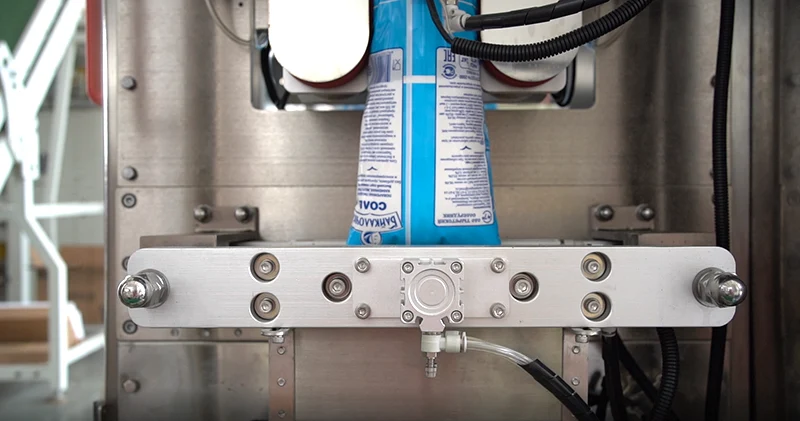
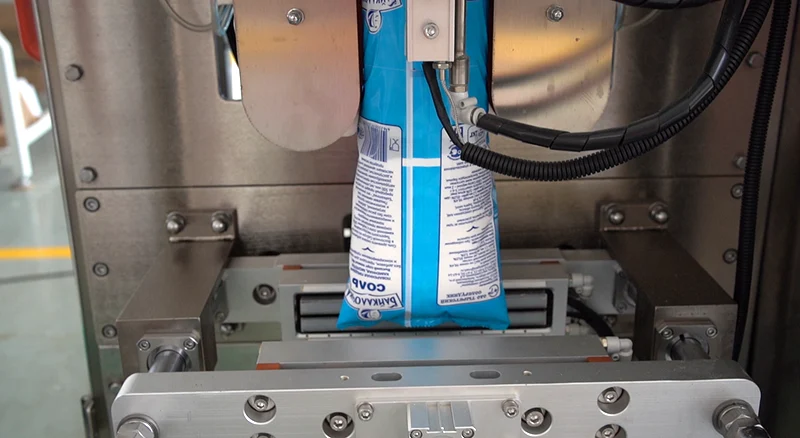
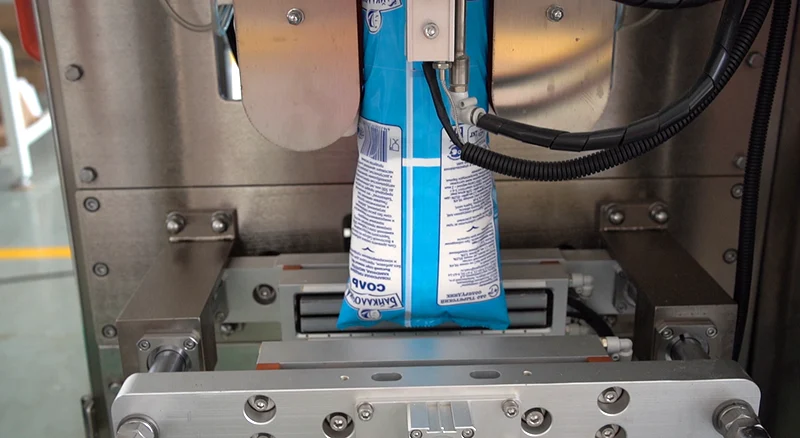
    Horizontal sealing jaw of VFFS machine sealing blue printed salt pillow pouch

    Горизонтальный запаивающий узел здесь работает как последний контроль качества. Он должен давать ровный, чистый и повторяемый шов, чтобы пакет не раскрывался на пересыпке и не «расползался» под давлением в таре. Для солерудника это особенно важно, потому что даже небольшой дефект на массовом продукте быстро превращается в общий перерасход времени и материалов.

    Когда на линии появляется повторяемый шов, склад начинает работать проще: мешки ровнее складываются, их легче считать, а транспортный поток становится предсказуемее. В результате предприятие получает не просто более красивую упаковку, а более управляемую отгрузку.

    Что меняется, когда первичная пачка превращается в готовую отгрузочную единицу

    Для соляного предприятия самый заметный эффект даёт не одна отдельная операция, а связка операций. Сначала мешок должен выйти из фасовки без перекоса. Затем он должен сохранить форму. После этого его нужно собрать в более крупную и удобную для склада единицу. Именно на этом участке secondary packaging убирает хаотичные ручные действия и делает поток стабильным.

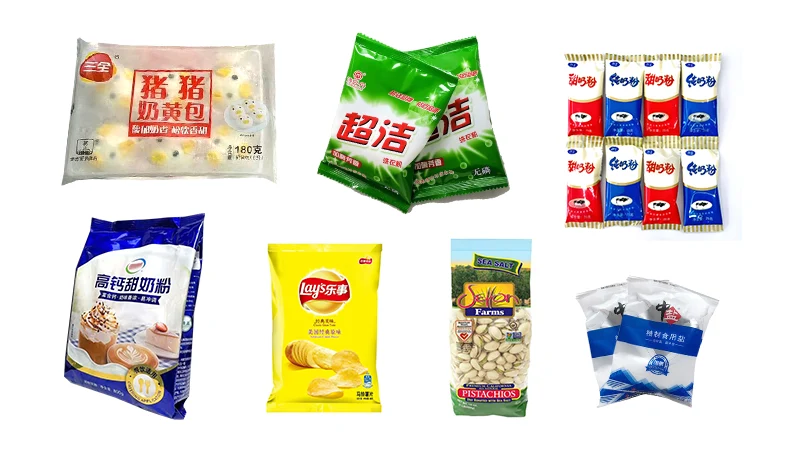
    Compilation of various primary flexible packaging formats including pillow pouch and stand-up pouch

    Набор форматов наглядно показывает, что одна и та же упаковочная логика может работать в разных сценариях. Для соли это означает гибкость по типу мешка и удобство для дальнейшей логистики. Когда предприятие может уверенно выпускать устойчивую упаковочную форму и дальше собирать её в пакетированные единицы, оно меньше зависит от ручного труда и лучше держит ритм отгрузки.

    Если коротко, то для солерудника важны три вещи: стабильный шов, ровная подача материала и предсказуемый выход на склад. Именно эти три пункта в итоге сокращают потери, уменьшают повреждения и делают смену спокойнее. А спокойная смена на промышленной линии почти всегда означает и более дешёвую отгрузку.

    Stainless steel secondary packaging machine with HMI control panel in an industrial factory

    Для соляных линий, которым нужен ровный поток
    Если фасовка уже стабильна, следующий шаг — убрать ручные перехваты между мешком, складом и паллетой. Secondary packaging помогает собрать соль в аккуратную отгрузочную единицу и держать ритм без лишней суеты.

  • Как один сибирский солерудник собрал отгрузку в ровный поток

    When fasovka of salt is already stable, the weak point often appears not in the doser and not on the seam, but at the handoff to dispatch. Bags need to be gathered, held, aligned, and moved to storage or transport packaging so they do not spread, leak dust, or tear during manual transfer. At one Siberian salt enterprise, this exact section had become the point of loss.

    One control loop keeps the line in one mode

    Stainless steel electrical control cabinet with Siemens touch HMI and tower light

    Unified control
    The Siemens HMI cabinet and signal tower let the operator see the line status in one place.

    For a salt plant, this is not a decorative detail. When start, reset, and speed are gathered into one interface, the line stops behaving like a collection of separate machines. The operator no longer runs between different control points and gets a clear view of the whole path. On this kind of section, it is especially important to see a stop, a warning, or a manual-mode change quickly, because salt does not forgive long pauses: dust, humidity, and a continuous bag flow can turn disorder into the norm if control is fragmented.

    What happens inside the machine once the bag enters the tract

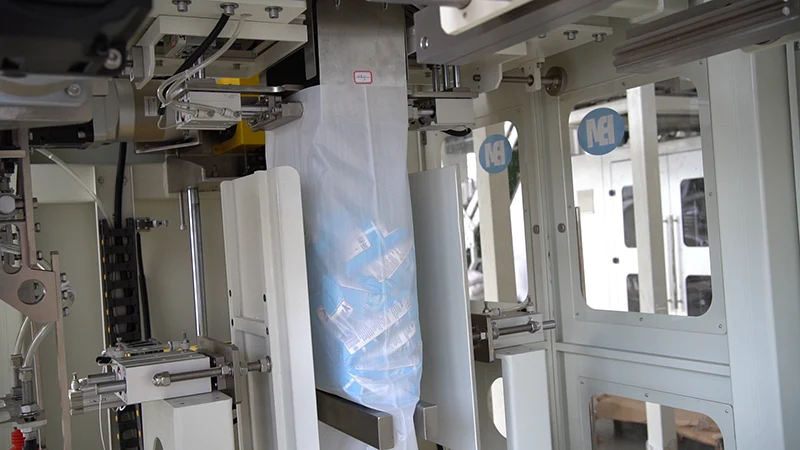
    Internal mechanisms of bag-in-bag machine with pneumatic cylinder guides and guard doors

    A stable internal path
    Pneumatic guides and safety doors keep the bag on a stable trajectory.

    From the outside, secondary packaging looks like a simple sequence: feed, position, load, close. But inside, the result is decided by guides, cylinders, and motion geometry. That is where the bag must move without a jerk, without skew, and without unnecessary manual contact. The enclosed body and service doors matter not only for safety. They keep the process repeatable, and repeatability in salt production means fewer jams, less spillage, and fewer unplanned stops.

    How loose packets become one transport unit

    Refined salt packets falling into secondary woven PP bag held by pneumatic clamps

    From scattered packs to dispatch unit
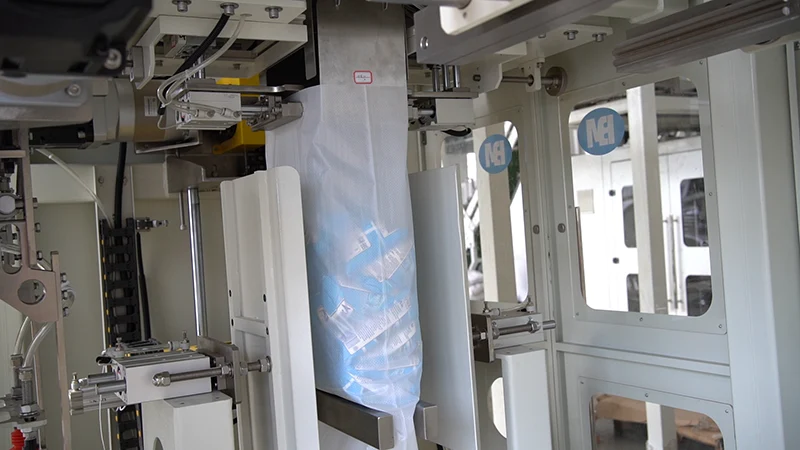
    Pneumatic clamps hold the outer bag while finished packets are loaded into it.

    This is where secondary packaging delivers its main value. Finished packs should not travel to the warehouse one by one. They are gathered into one outer package that is easy to move, stack, and palletize. For the plant, that means dispatch becomes manageable: instead of many individual units, there is one transport form that is easier for the forklift driver, the warehouse zone, and logistics to handle. The smoother this transfer, the lower the risk of damaging the packaging and the more stable the whole lot looks.

    Why the bag closure should never be left to manual routine

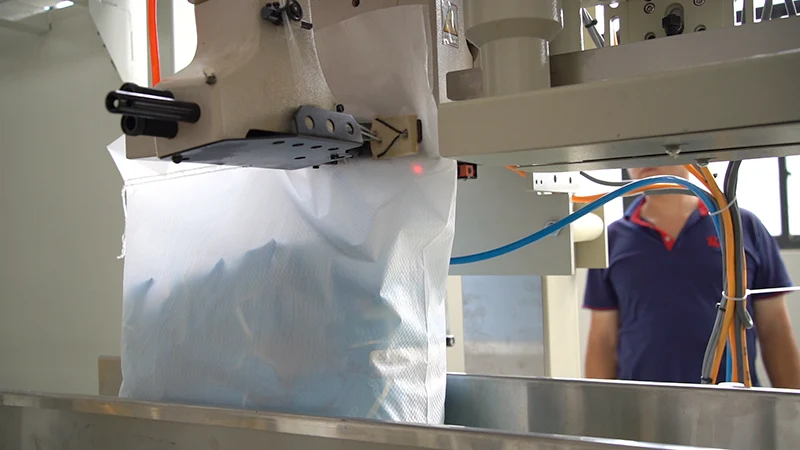
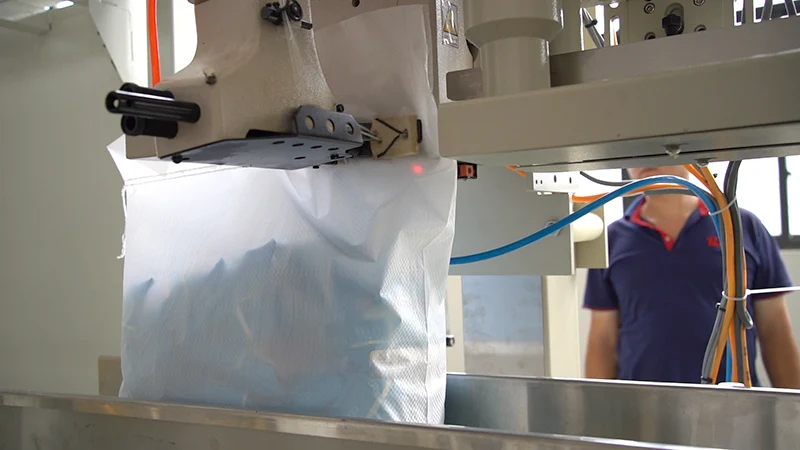
    Industrial Newlong sewing machine head stitching the opening of filled woven sack

    Consistent sack closure
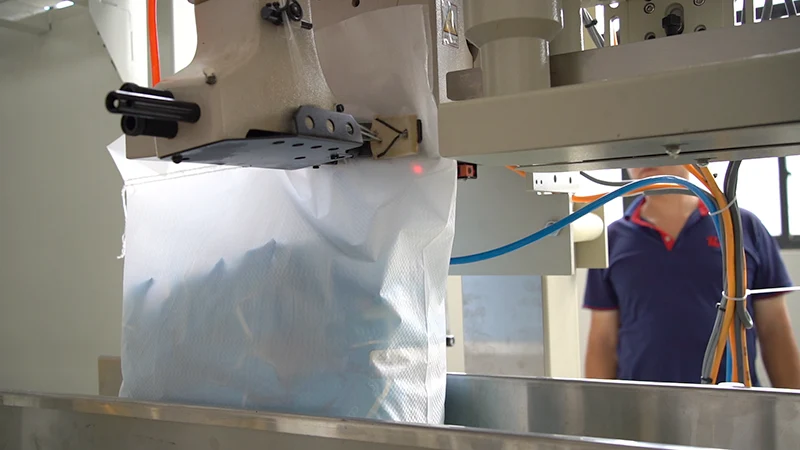
    The industrial sewing head keeps the mouth of the sack in a rigid, repeatable seam.

    Salt is not a “light” product just because it is familiar and free-flowing. In real dispatch, it quickly shows every weak point: if the seam is unstable, the sack opens on a turn, on impact with the truck side, or while it is stacked. That is why the sewing head in the line is not an accessory, but part of process discipline. A machine seam gives a consistent result that does not depend on operator fatigue, line tempo, or a habit of tightening the bag “however it works.”

    What changes for the salt plant in the end

    When the whole chain is assembled properly, secondary packaging stops being a separate “last operation” and becomes a continuation of production. Fewer manual touches, less spillage, less damage to the outer package, a cleaner stack, a calmer warehouse, and faster dispatch. For a Siberian salt enterprise, this matters even more: climate, dust, and long logistics always test the package before sales even close the paperwork.

    If the task is not just to pack salt but to build a stable transport unit from finished packs, BPM configures the secondary packaging route around the actual bag format, line speed, and warehouse flow. In such a setup, the winner is not one machine but the whole chain: control, internal mechanics, loading, and reliable bag closure.

  • Как соляной завод убирает узкое место между фасовкой и отгрузкой

    Как соляной завод убирает узкое место между фасовкой и отгрузкой

    На соляном предприятии узкое место часто прячется не в самой фасовке, а в том, что происходит сразу после нее. Мешок уже наполнен, но партия еще не стала ровной, устойчивой и удобной для склада. Пока этот переход не отработан, завод теряет минуты на ручную подправку, получает лишнюю пыль и рискует повредить упаковку при переносе.

    Real industrial photo of a stainless steel BIBPU secondary packaging line with conveyors and buffering bin

    Поэтому для соли важна не только точность дозирования и герметичный шов. Важно, чтобы вся линия работала как один контур: от стабильной подачи пленки и понятного управления до аккуратной группировки готовых мешков в транспортную единицу. Именно на этом стыке завод либо выигрывает смену, либо начинает догонять план вручную.

    Стабильная подача пленки решает больше, чем кажется

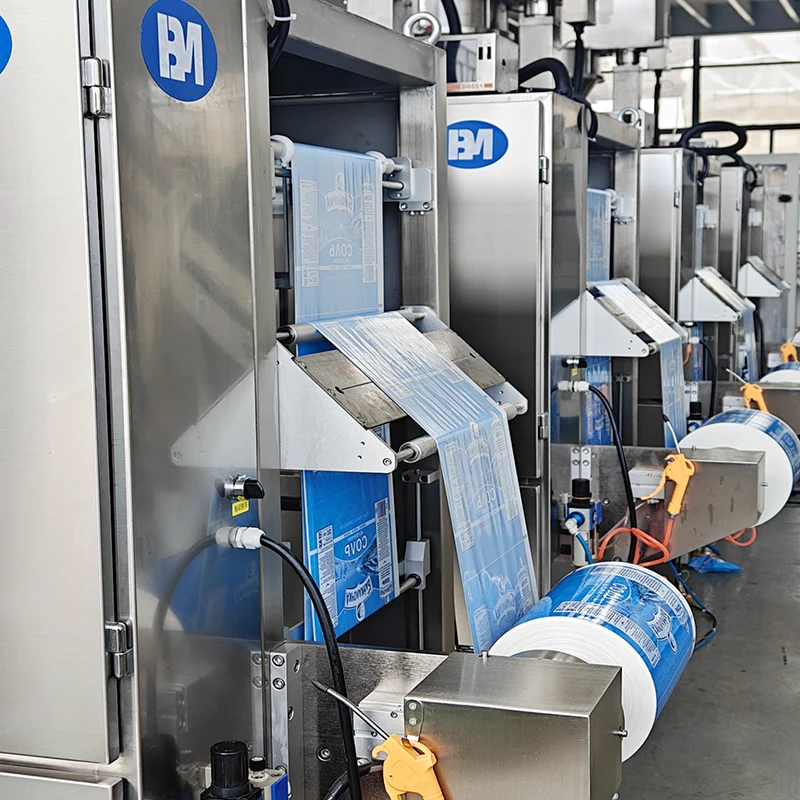
    Соль капризнее, чем может показаться на первый взгляд. Она пылит, впитывает влагу и быстро показывает слабые места в механике, если натяжение пленки плавает или подача идет рывками. Когда ролики, раскладка и узел размотки собраны грамотно, машина не тратит смену на борьбу с отклонениями по геометрии пакета.

    Back unwinding section of VFFS machines with blue salt film rolls and tension shafts

    На практике это означает простую вещь: каждая следующая упаковка повторяет предыдущую без лишнего люфта. Для соляного завода это особенно важно, потому что неровный шов, смещенная пленка или нестабильная подача быстро превращаются в брак, а брак насыпных и фасованных продуктов почти всегда означает повторную работу и дополнительный расход материала.

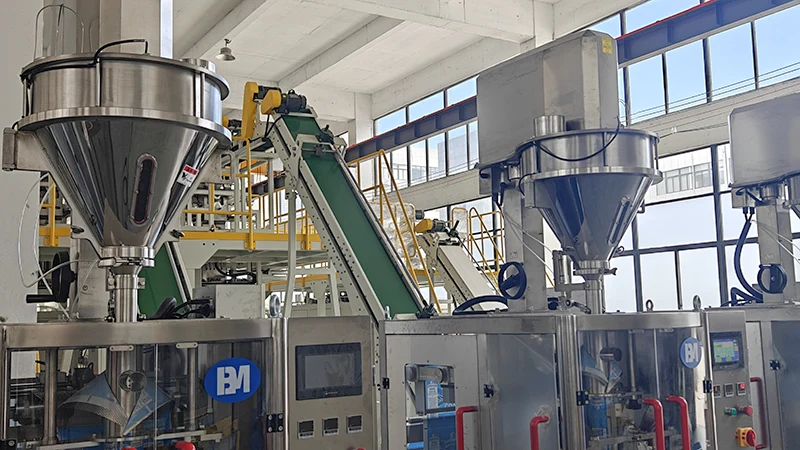
    Dosing hoppers of packaging line with automated bucket elevator conveyor in background

    Поэтому рядом с фасовочным узлом всегда должен быть не просто бункер, а нормальная логика подачи. Когда верхний узел работает без перебоев, линия не дергается, а оператор меньше вмешивается в процесс. Это и есть первый шаг к предсказуемой отгрузке.

    Управление должно быть понятным, а не декоративным

    На промышленных линиях вопрос не в том, есть ли экран, а в том, помогает ли он смене работать быстрее. Если интерфейс показывает скорость, состояние цикла, ошибку и сброс в понятной форме, оператор не гадает, а действует. Для предприятия с несколькими сменами это снижает количество лишних остановок и ускоряет возврат в рабочий режим.

    MCGS industrial touch screen interface displaying Russian language packaging control parameters

    Русифицированный экран особенно полезен там, где люди работают в режиме высокой повторяемости. Оператору не нужно переводить команды в голове и искать нужный пункт меню. Он видит параметры так, как привык их видеть на производстве: запуск, сброс, скорость, счетчик, авария. Это экономит секунды, а на длинной смене дает уже вполне ощутимый выигрыш.

    Но одного экрана мало. Линия должна еще и стабильно кормить машину материалом, иначе даже хороший интерфейс будет только показывать проблему. Поэтому на соляных линиях важна связка: надежная подача, понятное управление и аккуратная механика вокруг узла фасовки.

    Где партия превращается в складскую единицу

    После фасовки главная задача уже не в том, чтобы просто сделать мешок. Нужно собрать мешки так, чтобы их можно было перемещать, хранить и грузить без повторной пересборки. На этом этапе ценность вторичной упаковки становится особенно заметной: мешок перестает быть отдельной единицей и превращается в устойчивую партию.

    Loaded secondary woven PP sack compressed by pneumatic side clamping plates

    Боковое сжатие помогает выровнять форму и убрать лишний воздух. Для склада это означает более ровную геометрию, лучшее штабелирование и меньшее смещение при переносе. Для отгрузки это означает меньше ручной корректировки перед паллетированием или загрузкой в транспорт.

    Top opening of filled woven bag clamped by dual belt feeders to sewing head

    Когда горловина мешка подается в зону прошивки ровно и без перекоса, шов получается предсказуемым, а край не уходит в сторону. Это простая механика, но именно она убирает один из самых частых источников брака на участке отгрузки. На соли такая дисциплина особенно важна, потому что потеря формы мешка быстро приводит к потере скорости на складе.

    Что получает завод в итоге

    Если свести все вместе, картина простая. Стабильная подача пленки снижает сбои на фасовке. Понятный экран ускоряет работу смены. Вторичная упаковка делает из множества отдельных мешков готовую транспортную единицу. В результате линия меньше зависит от ручных действий, а партия быстрее доезжает до склада или машины без лишних касаний.

    Для соляного предприятия это особенно ценно в пиковые периоды, когда важно не просто сделать объем, а сделать его ровно, чисто и без повторной обработки. Именно поэтому мы смотрим на упаковочную линию не как на отдельную машину, а как на связку процессов, где каждый узел должен поддерживать следующий.

    Real industrial photo of a stainless steel BIBPU secondary packaging line with conveyors and buffering bin

    BIBPU для соли и других сыпучих продуктов
    Стабильная вторичная упаковка, аккуратная форма мешка и понятный промышленный контур управления для отгрузки без ручной пересборки.

  • How Salt Packaging Manufacturers Can Keep a VFFS Line Stable From Dosing to Dispatch

    How Salt Packaging Manufacturers Can Keep a VFFS Line Stable From Dosing to Dispatch

    Salt looks simple from the outside, but in production it behaves like a harsh test material. It pulls moisture, wears metal, and turns a clean sealing window into a leak problem when the line is not built for it. If you are running a vffs bagging line for table salt, sea salt, or refined salt, the real goal is not only filling pouches faster. The goal is keeping the line stable from dosing to sealing to dispatch.

    That is why a salt packaging line should be designed as an automation system, not a single bagging machine. The dosing head, film path, sealing zone, controls, and downstream transfer all have to work together. When one part is generic, the whole line slows down.

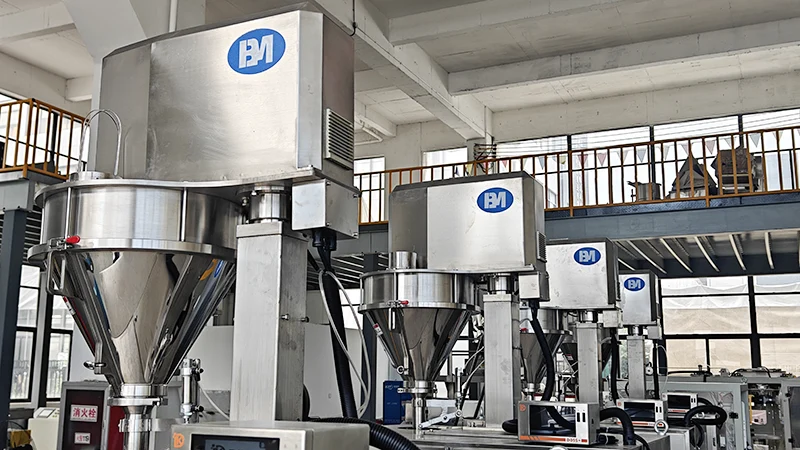
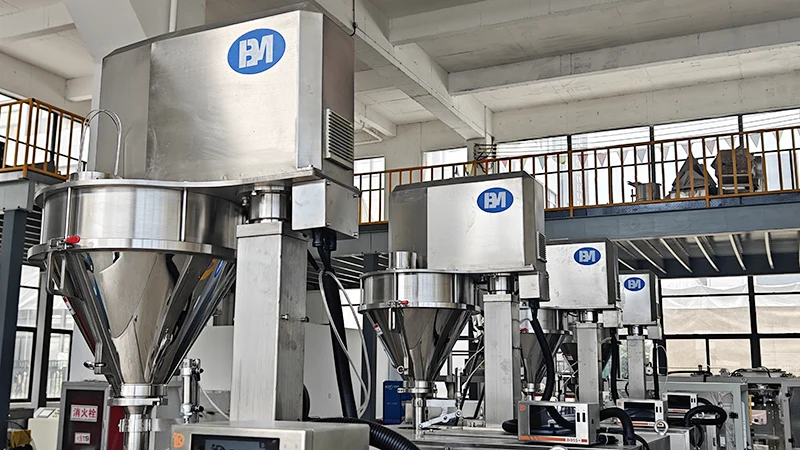
    Upper auger dosing systems and structural columns of four VFFS machines
    Corrosion-aware dosing hardware matters before the pouch is even formed.

    Start with the salt, not just the bag

    Salt packaging manufacturers usually feel the first losses at the feed point. Salt is abrasive enough to wear cheap contact parts, and humid plant air can accelerate build-up around the hopper and dosing path. A line built around 316L stainless steel contact parts gives the dosing section a much better chance of staying clean and consistent over long shifts.

    The value is not only corrosion resistance. A stable auger dosing head keeps the fill weight predictable, which reduces rework and prevents the machine from fighting constant correction cycles. On a high-output salt packaging line, that stability is what keeps the downstream sealing section from being forced to compensate for uneven pouch volume.

    If you compare two lines, the better one is usually the one that controls material flow first. The faster one only looks better on the day of commissioning.

    Open Teflon-coated horizontal sealing jaws of VFFS machine with salt bag
    Clean sealing depends on jaw control and a film path that does not fight the product.

    Keep the film stable before the seal closes

    For salt products, the film path has to be forgiving. If the forming shoulder drags the film or the powder reaches the seal zone, operators start seeing weak seams, pinholes, or leakage at the cut. That is why a good vffs bagging line needs an anti-stick forming section and a sealing area that holds temperature and pressure consistently.

    The practical answer is simple: use a forming shoulder and sealing jaw setup that reduces film friction, keeps the bag shape controlled, and closes the seam before salt dust can interfere. In a humid environment, even small instability in the film path can lead to big losses at the case packing stage.

    When buyers ask what matters most, the answer is not “just speed.” It is whether the line can seal the pouch cleanly after the product has been dropped, settled, and aligned for the next cycle.

    Stainless steel secondary packaging machine with HMI control panel in an industrial factory
    Good automation gives operators visibility, not just buttons.

    Use controls that help operators keep the line steady

    Packaging automation only reduces labor when operators can see what is happening and correct it quickly. A readable HMI, clear access doors, and a machine frame that is easy to service matter because salt lines run in real production conditions, not in a perfect demo room.

    For salt packaging manufacturers, this means the control system should make speed, alarms, temperature, and bag transfer status easy to follow. Changeovers should be straightforward, and the machine should be built so maintenance does not require dismantling half the line just to reach a wear part.

    That is what turns an ordinary machine into a production tool. The operator is no longer guessing where the problem started.

    Industrial secondary packaging line with stainless steel frame and integrated flow conveyor
    Secondary packaging keeps finished pouches stable for transport and warehouse handling.

    Do not stop at the pouch: stabilize the dispatch unit

    Many salt plants focus only on the primary pouch and forget what happens after sealing. But if the finished pouches arrive loose, scattered, or hard to stack, the plant pays for it in handling damage and slower dispatch. This is where secondary packaging becomes part of the line value.

    An integrated transfer and secondary packaging section turns finished pouches into a more stable shipping unit. That reduces manual sorting, improves stacking, and helps the plant move from individual bags to organized dispatch-ready packs. For a busy salt packaging line, that downstream control is often the difference between a line that simply fills bags and a line that supports shipment.

    In other words, packaging automation should protect the bag after it leaves the sealer, not only while it is inside the machine.

    Build the salt line around real production pressure

    If you are planning a new salt packaging line or upgrading an existing vffs bagging line, specify the line around three things: corrosion-resistant contact parts, stable film and sealing control, and downstream transfer that keeps finished pouches organized. BPM can help you match the machine structure to the salt grade, output target, and dispatch requirement.

    • 316L contact surfaces for corrosive salt environments
    • Anti-stick film handling and stable sealing control
    • Integrated automation for transfer and secondary packaging

    Talk to BPM if you want a line that is built for salt production, not a generic bagger adapted later.

  • How a Siberian Salt Producer Prevents Bag Damage Between the Filler and the Truck

    How a Siberian Salt Producer Prevents Bag Damage Between the Filler and the Truck

    For a Siberian salt producer, the weak point is not the filler alone. The real damage starts when bags leave the line and enter the last transfer zone before the truck. Dust, cold air, humidity swings, and rough manual handling can turn a clean batch into unstable shipping units.

    Stainless steel secondary packaging machine with HMI control panel in an industrial factory
    A heavy-duty secondary packaging line gives the plant one controlled path from filled bag to dispatch-ready unit.

    1. Keep the dosing head stable in a chloride-heavy environment

    Salt is aggressive. The contact surfaces have to resist corrosion, and the feeding section has to stay stable under continuous duty. That is why a hopper and dosing zone built around stainless steel matter so much. When the feed stays consistent, the bag weight stays consistent, and the operator does not spend the shift chasing small deviations. On a salt line, small deviations become expensive very quickly.

    Upper auger dosing systems and structural columns of four VFFS machines
    316L contact parts and rigid support structure help the line stay stable under salt exposure.

    2. Stop film drag before it turns into sealing defects

    Salt packaging does not forgive poor film tracking. If the forming shoulder drags, the tube gets unstable, the seal edge shifts, and the bag mouth starts to look uneven. A dimpled forming shoulder reduces sticking and gives the film a cleaner path. That sounds simple, but it is exactly the kind of detail that protects a production line over a long winter season when condensation and temperature swings make every surface behave differently.

    Dimpled stainless steel forming shoulder of VFFS machine to reduce film sticking
    Anti-stick forming geometry keeps the film moving without extra drag.

    3. Seal fast, but flatten first

    Sealing speed is not enough if the bag still holds air or if the top edge is not even. For salt, a stronger seal starts with a controlled cross-seal step and a clean flattening action before final closure. That is how the line keeps pouches from bulging, slipping, or tearing during downstream handling. The goal is not only a good seam. The goal is a bag that survives the next transfer, the next lift, and the next stack.

    Heated cross-sealing jaw mechanism of vertical bagger during sealing process
    Controlled heat sealing gives each bag a reliable top closure before the next handling step.

    4. Convert filled bags into a shipping unit

    This is where a salt plant usually loses time. A primary bag can be filled correctly and still become fragile if it is moved manually too many times. Secondary packaging turns loose bags into a tighter shipping unit. In a bag-in-bag flow, the inner bags are collected, stabilized, and placed into a woven outer sack. That reduces scuffing, improves stacking behavior, and makes dispatch easier to plan. It also helps the plant keep the product cleaner because the unit moves as one controlled block instead of a pile of loose bags.

    Loaded secondary woven PP sack compressed by pneumatic side clamping plates
    Pneumatic side compression helps the loaded outer sack hold its shape before sewing.

    5. Finish with a bag that is ready for cold storage and transport

    The last step is the one that decides whether the pallet stays stable in the warehouse and on the road. A sewn woven sack is better than a loose, overfilled bundle because it keeps the contents aligned and makes the unit easier to move with forks and conveyors. For a salt producer, that means fewer bag ruptures, less dust at the dock, and less rework before shipment. The dispatch crew gets a unit that is easier to stack, easier to count, and easier to load into the truck.

    Industrial Newlong sewing machine head stitching the opening of filled woven sack
    Industrial sewing closes the outer sack and finishes the shipping unit.

    For salt plants that still depend on manual overbagging and repeated handling, the fix is not a bigger forklift. The fix is to move protection into the machine flow. When dosing, film handling, sealing, compression, and sewing are tied together, the line stops producing fragile bags and starts producing dispatch-ready units.

  • How a Siberian Salt Plant Turns Loose Pouches into Stack-Ready Units

    How a Siberian Salt Plant Turns Loose Pouches into Stack-Ready Units

    (cat <<'EOF'

    For a salt plant, the hard part is not only making a clean pouch. The real pressure starts after the pouch is sealed: the pack has to stay flat, survive handling, resist dust contamination, and arrive at the pallet as a unit that can be stacked, shipped, and sewn without drama. That is where a bag-in-bag secondary packaging line earns its place.

    Stainless steel bag-in-bag secondary packaging machine with integrated conveyor and enclosed frame
    Integrated stainless-steel secondary packaging line built for controlled handoff and easy service access.

    On this project, the goal was simple: turn many small salt pouches into one outer woven sack that is easier to move, easier to count, and far more stable on the pallet. The line is built around a stainless-steel frame with an enclosed structure and an integrated conveyor path, so the product flow stays controlled instead of bouncing from one manual station to another. That matters in salt packaging, because loose handling usually creates dust, crushed corners, and inconsistent stacking.

    Clean transfer into the outer sack

    The first job is to place the inner packs into the secondary bag without losing timing. In the bagging station, pneumatic clamps hold the woven PP sack open while the filled salt pouches drop in from above. The logic is not complicated, but it is important: a stable opening, a repeatable drop zone, and enough guidance to keep the packs centered. When the transfer is steady, the plant avoids hand stuffing and reduces the kind of random damage that shows up later at dispatch.

    Refined salt packets falling into secondary woven PP bag held by pneumatic clamps
    Pneumatic clamping keeps the woven sack open while inner packs enter the outer unit.

    This stage is especially useful when the plant wants to keep the line compact. The transfer is short, direct, and readable for operators. If something needs adjustment, they can see the bag mouth, the product drop, and the alignment point without hunting through a crowded machine body.

    Why compression before closing pays off

    After filling, the sack is not yet ready for shipment. The load usually sits a little bulged, and that trapped air becomes a problem when the bag is stacked, sewn, or loaded for transport. A side compression station solves that. Two side clamping plates push the filled sack into a flatter shape before the closing step. This does two things at once: it removes excess air and gives the outer package a more regular profile.

    Loaded secondary woven PP sack compressed by pneumatic side clamping plates
    Side compression helps the filled sack stay flat and stable before final closure.

    For a salt producer, that flatter profile is not cosmetic. It improves pallet stability, reduces shifting in transit, and makes the final sewing step more reliable. A bag that has been compressed before closing is much less likely to spring back, snag, or create a weak top edge.

    The closing step that locks the unit down

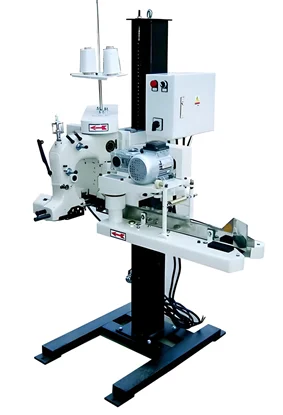
    The final closure is done with an industrial sewing head. In this line, the bag opening is guided to a Newlong DS-9C head that stitches the sack with a strong double-line chain seam. The photoelectric thread-cutting function keeps the finish clean, so the sack comes out with a consistent top edge and a dependable seal. In dust-prone environments, that matters more than people expect: a sloppy closure is often the first place where a packaging unit starts to fail in real logistics.

    Industrial Newlong sewing machine head stitching the opening of filled woven sack
    Heavy-duty sewing head provides the final closure for the loaded woven sack.

    Once the sack is sewn, the unit is no longer a loose collection of pouches. It becomes a transport-ready block that can move through warehouse handling, truck loading, and warehouse stacking with far less breakage and rework.

    What the plant gains in daily operation

    For a Russian salt operation like this, the value is in the boring part: fewer interruptions, fewer broken packs, less cleanup around the line, and a more stable outbound unit. The enclosed stainless structure gives the plant a cleaner machine envelope, while the conveyor layout and service access make maintenance less disruptive. Operators get a line they can read quickly, and the dispatch team gets a sack that behaves like a finished industrial unit instead of a pile of loose product.

    That is the real job of secondary packaging in salt: not to make the product look fancy, but to make the shipment unit strong, repeatable, and easy to move. When the fill, compression, and sewing stages work together, the plant gets a cleaner handoff from production to logistics—and that is where the savings start.

    EOF
    )

  • Why Feed Bagging Lines Need a Cleaner Handoff

    Most feed lines do not fail in the same place twice by accident. They fail where one stage hands off to the next. If the bag is not picked, opened, filled, and released cleanly, the whole line starts to absorb small delays that add up fast.

    The handoff is the real bottleneck

    Plants often blame the filler, but the real problem is the move between stations. That is where bags get twisted, tipped, or hit harder than they should be.

    Why handoff quality matters

    A good line keeps the bag moving in a straight path. A weak one makes the operator recover the bag by hand. That is more than a nuisance. It changes the pace of the whole shift.

    Feed bags are heavy enough that a small mistake at the transfer point becomes visible quickly. Once the motion gets rough, the bag shape changes and the next station has to work around it.

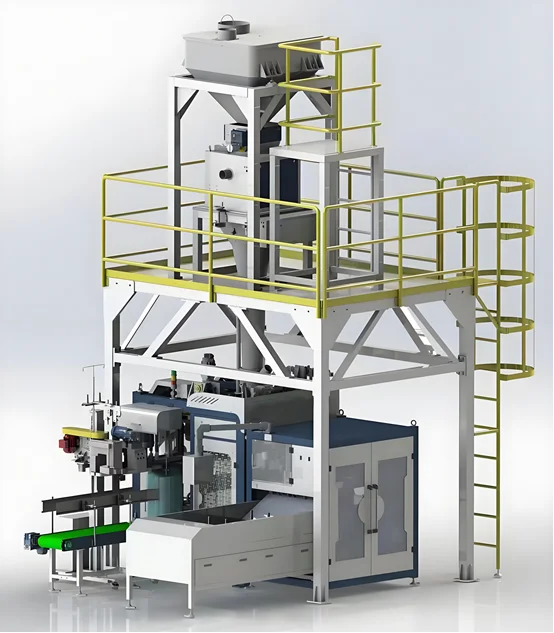
    QZK-1200 secondary bagging line CAD render with accumulation belt and discharge conveyor

    BPM Engineering Insight: A cleaner handoff does not just protect the bag. It protects the schedule. Less correction at each station means the line can keep moving without building a backlog.

    What improves when transfer is smoother

    When the bag moves from station to station without a rough drop, the crew has fewer reasons to stop. The stack area stays tidier, the bag shape stays more consistent, and the machine spends less time waiting for someone to fix a recoverable problem.

    That is the difference between a line that looks automated and a line that really behaves like one.

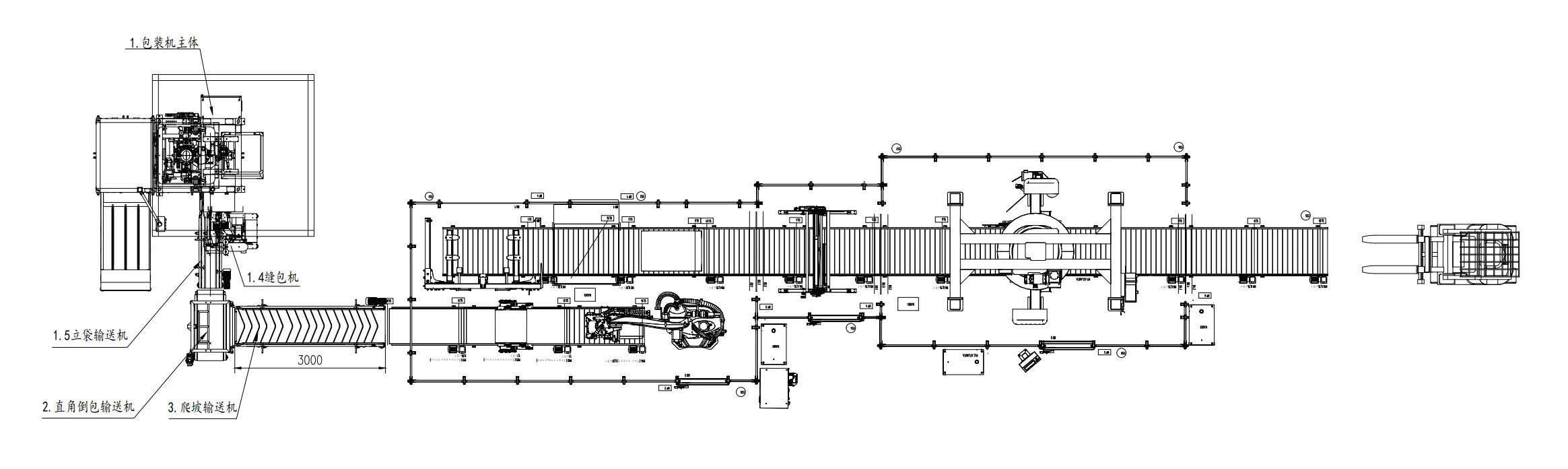
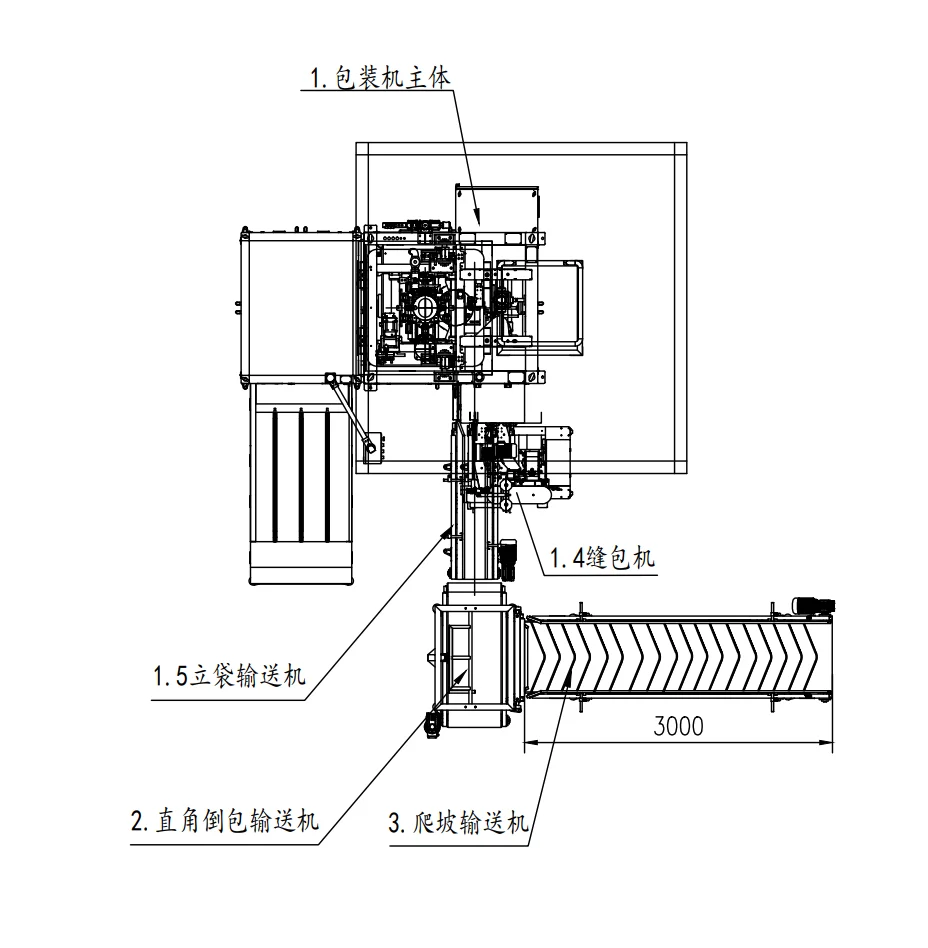
    Dual-view technical CAD blueprint of automatic bagging machine with bag magazine and robotic arm

    Rough transferClean handoff
    More manual correctionLess intervention between stations
    Higher chance of bag distortionBag shape stays more stable
    Backups around the exitSteadier line movement

    Frequently Asked Questions

    Q: Is the handoff only about conveyor speed?

    A: No. Bag support, alignment, and release timing matter just as much.

    Q: Can a line be fast and still have a rough handoff?

    A: Yes, but it usually creates more cleanup and more corrections later.

    Q: What should be reviewed first?

    A: The transfer point between filling, discharge, and stacking.

    Ready to review the handoff path?

    If the line keeps stalling at the same transition, send the layout and ask for a packing review.

    Request a packing review

  • Why Feed Plants Keep Fixing the Same Bag Mouth Problem

    Bag mouth problems are frustrating because they look small and keep coming back. One bag opens badly, one seal drifts, one clamp slips, and the crew ends up making the same correction again and again. After a while, the issue stops looking like a machine fault and starts looking like a line habit.

    Repeated bag-mouth fixes cost real time

    When the same adjustment is needed every shift, the plant is not paying for a single fault. It is paying for a weak handoff that never got tightened up.

    Where the problem starts

    The bag does not need to be dramatic to cause trouble. If the mouth is not aligned, the product falls off center, the fill starts rough, and the operator is forced to intervene. That breaks the rhythm of the whole station.

    In feed packaging, consistency matters more than a one-time fast cycle. The mouth has to open, hold, and release in the same way every time if the line is going to stay calm.

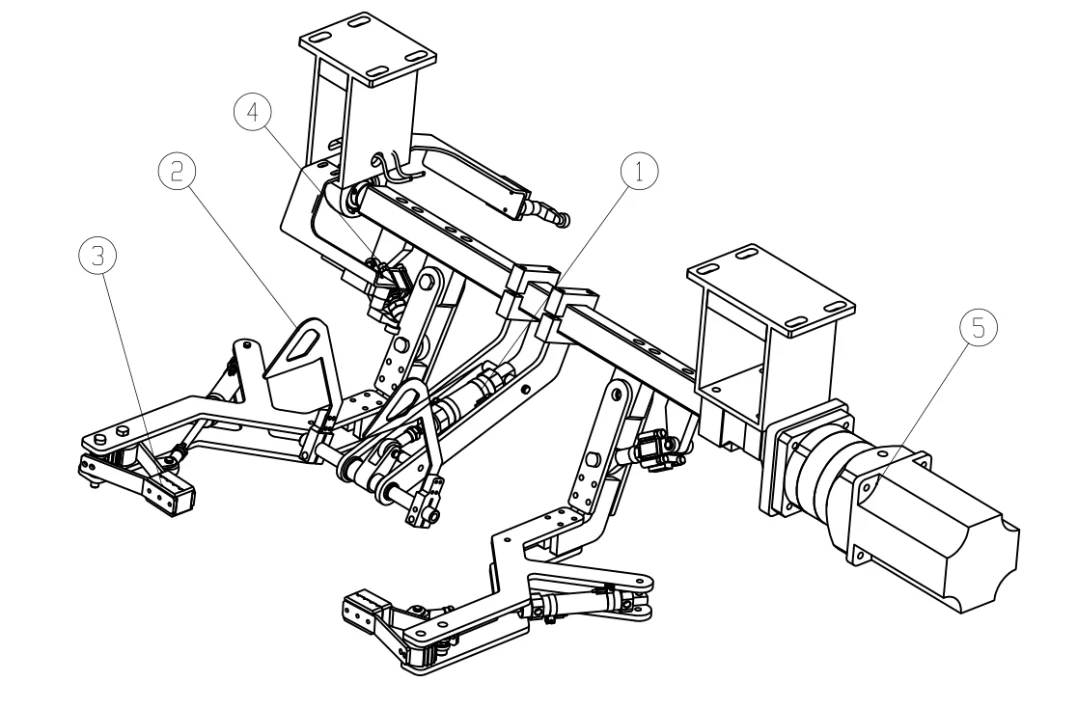
    Technical CAD drawing of bag clamping and bottom support assembly

    BPM Engineering Insight: Most bag-mouth trouble is a positioning issue. If the bag is held square and the opening sequence is stable, the line stops drifting and the operator stops chasing the same fault.

    What a tighter grip changes

    A better clamp does not just make the machine look neat. It keeps the mouth where it should be, so the fill lands cleanly and the next step does not have to compensate. That saves more time than most plants expect.

    It also makes the shift easier to manage. The crew spends less time checking the same point, and the machine behaves like a machine instead of a repeated workaround.

    Isometric product photo of bagging machine with HMI touchscreen and outfeed belt conveyor

    Repeated manual adjustmentStable bag-mouth control
    Same correction every shiftMore repeatable bag alignment
    More operator touch pointsLess intervention at the station
    Slower line rhythmSmoother fill-to-discharge flow

    Frequently Asked Questions

    Q: Is the bag mouth issue always mechanical?

    A: Not always. Sometimes the problem is in how the bag is held and guided.

    Q: Can this be improved without changing the whole line?

    A: Often yes. The clamp, alignment, and opening sequence are the first places to inspect.

    Q: What is the clearest sign that the fix worked?

    A: The same adjustment stops showing up every shift.

    Ready to check the bag-mouth station?

    If the same fault keeps returning, send the layout and ask for a packaging review.

    Request a packaging review

  • Why Feed Plants Slow Down at the Pallet Stage

    Many feed plants think the bottleneck is the filler. In practice, the delay often appears later, when filled sacks need to move, settle, and stack. Once the pallet area backs up, the whole line starts to feel slower than the machine itself.

    Pallet staging is where output gets trapped

    One filled bag sitting in the wrong spot can force a second hand movement, then a third. That is how a clean packing shift turns into a traffic jam.

    Why the pallet stage becomes the bottleneck

    The line may be filling fast enough, but the exit path is not keeping pace. If the conveyor is too abrupt or the stack pattern is messy, operators end up correcting every sack by hand. That cuts into real throughput.

    When a plant is dealing with feed bags all day, the issue is not just speed. It is keeping each bag in the right position so the stack can move without a fight.

    Industrial powder packaging line with conveyors and bagged product stacks

    BPM Engineering Insight: A line only feels fast when the exit is calm. If the discharge path is chaotic, the packing room is doing work that should have been solved at the transfer point.

    What a better layout changes

    A cleaner discharge path gives operators a chance to stack instead of chase. Bags reach the pallet in better shape, the stacking rhythm becomes easier to hold, and the crew spends less time correcting alignment errors that keep repeating.

    That is why layout matters so much. The plant does not need more noise. It needs less friction between filling and storage.

    On-site modular industrial processing line with hopper feeder and inclined conveyor

    Weak pallet stagingStable discharge and stack flow
    Frequent manual correctionsCleaner handoff to the pallet area
    Uneven stacking rhythmMore predictable loading sequence
    Backlog around the exitSteadier line movement

    Frequently Asked Questions

    Q: Is the pallet stage really part of the packaging problem?

    A: Yes. If the sack does not leave the machine cleanly, the bottleneck moves downstream.

    Q: What should be checked first?

    A: The outfeed path, the bag orientation, and how much manual handling happens before stacking.

    Q: Can the line still run fast with a simple layout?

    A: It can, but only if the discharge is smooth and the stack area is easy to work in.

    Ready to review your dispatch rhythm?

    If the pallet area keeps slowing the shift, send the layout and ask for a packing review.

    Request a packing review