
Automatic Bagging Machine & Palletizing Systems Manufacturer

Category: English

  • How Secondary Packaging Stabilizes Salt Shipment Units

    Many salt producers focus on filling speed first. That makes sense. But shipment quality is often decided later, during the secondary packaging stage. If that stage is weak, the line may still hit output targets while quietly producing unstable outbound units.

    That is why secondary packaging matters. It turns individual finished bags into something the plant can move, stack, store, and ship without constant correction.

    Why shipment units fail even when filling is fine

    The primary bag can be sealed well and weighed correctly. That still does not guarantee a stable delivery unit. Once small bags are grouped for wholesale movement, inconsistency shows up fast if no proper outer-bag logic exists.

    This is where plants start seeing dust, uneven pack shapes, weak handling rhythm, and too much labor involved in a step that should already be standardized.

    What secondary packaging really solves

    It gives the plant a structured way to turn several finished bags into one transport-ready unit. That sounds simple. It is simple. But the impact is real because it removes guesswork from a stage that often depends too heavily on operator habits.

    For salt production, that means better control over what leaves the plant, not just what leaves the filler.

    Why this becomes urgent as volume grows

    Low-volume disorder can hide for a while. High-volume disorder cannot. Once dispatch volume grows, every small inconsistency multiplies through labor, loading, customer perception, and handling quality.

    That is when a structured secondary packaging system stops looking optional and starts looking overdue.

    Frequently Asked Questions

    Q: Does secondary packaging replace the main bagging machine?

    A: No. It supports the stage after the main bag has already been made.

    Q: Is this relevant only for export?

    A: No. The same logic applies to domestic wholesale and industrial distribution where unit stability matters.

    Want a cleaner outbound unit?

    If your salt bags are fine individually but still messy in shipment, the problem is probably downstream of filling.

    Talk to Our Packaging Team

  • Why Salt Bags Break Down In Wholesale Distribution

    Salt plants rarely lose margin because they do not know how to fill a bag. They lose it when a filled bag stops behaving well in storage, transfer, and wholesale dispatch. Torn outer layers, dust leakage, unstable stacking, and ugly outbound units are not cosmetic problems. They are operating costs that show up every day.

    For a producer like ОАО Тыретский солерудник, this matters because shipment discipline starts after the first bag is already made. If the downstream packaging logic is weak, the line keeps paying for rehandling and damaged presentation long after filling is finished.

    Where the real damage starts

    In many salt operations, the primary bag is acceptable. The trouble begins when those bags are grouped, moved, dropped into outer sacks, or prepared for pallet shipment. That is where abrasion, leaks, and bag shape inconsistency get expensive.

    The problem is not theoretical. Once the outbound unit looks unreliable, warehouse teams slow down, customers complain more often, and the plant spends too much labor correcting what should have been controlled by process.

    Why manual patchwork does not hold up

    Manual secondary packing looks cheap until volume rises. Then every weak step becomes visible. Operators improvise. Bag counts vary. Outer sacks close differently from batch to batch. The plant starts carrying a packaging standard that depends on who happens to be standing at the line.

    That is usually the point where overbagging and bag-in-bag systems enter the conversation. Not because they sound advanced, but because the old method has already become a hidden tax.

    What a stronger secondary packaging stage changes

    A proper secondary packing setup gives the line a defined logistics unit. Small finished bags stop behaving like loose pieces that need rescuing by labor. They become part of a controlled outbound format that stacks better and moves better.

    That change matters in salt far more than people admit. Salt is cheap by the kilo, but expensive when packaging disorder keeps multiplying across dispatch volume.

    Frequently Asked Questions

    Q: Is poor dispatch packaging really a machine issue?

    A: In many plants, yes. Once the packaging result depends on manual compensation, it is no longer just a staffing issue. It is a process issue.

    Q: Does this only apply to retail salt?

    A: No. The same weakness shows up in wholesale and industrial supply when the outer logistics unit is not controlled properly.

    Ready to tighten your salt packaging flow?

    If your filled bags still create problems during grouping, outer bagging, or pallet dispatch, it is time to review the secondary stage instead of blaming the first one.

    Get a Free Quote

  • Integrated Solution for Automated Seed Packaging

    Integrated Solution for Automated Seed Packaging

    Technical Case Study

    Integrated Solution for Automated Seed Packaging

    Modern seed processing industries demand maximum bagging efficiency and extreme dosing precision. This project showcases the complete automation of a high-speed seed bagging line for corn, sunflower, soybean, and rapeseed, delivering a stable output of over 700 bags per hour with a dynamic dosing tolerance under ±0.1%.

    bpmpack automated seed packaging line
    700+ b/h Packaging Speed
    7-30 kg Bag Capacity
    ±0.1% Weighing Precision

    Project Snapshot & Scope

    📋 Line Specifications

    Target Material: High-value agricultural seeds (corn, sunflower, soy, rapeseed)
    Bag Specifications: Multi-wall paper, woven PP, PE bags (7 kg to 30 kg)

    ⚙️ Automation Scope

    Mechanical Scope: High-density volumetric dosing, active soft-fill hopper buffer, auto sewing and sealing closures, inline print-and-apply labeling.

    🎯 Project Objectives

    Primary Goals: Reclaim 40% of packaging floor footprint, minimize seed skin damage during high-velocity drops, and establish full digital batch traceability.

    The Core Engineering Challenge

    A leading agricultural seed producer needed to automate its downstream packaging operations. The main objectives were to guarantee gentle handling of high-value seeds and to integrate a print-and-apply labeling system directly into the production line for active batch trace and track.

    🔥 Severe Production Bottleneck

    Traditional manual and semi-automatic bagging processes led to significant product giveaway due to wide weighing deviations and structural damage to fragile seed coats during gravitational transfers.

    QZK-1200 High-Precision Bagging Integration

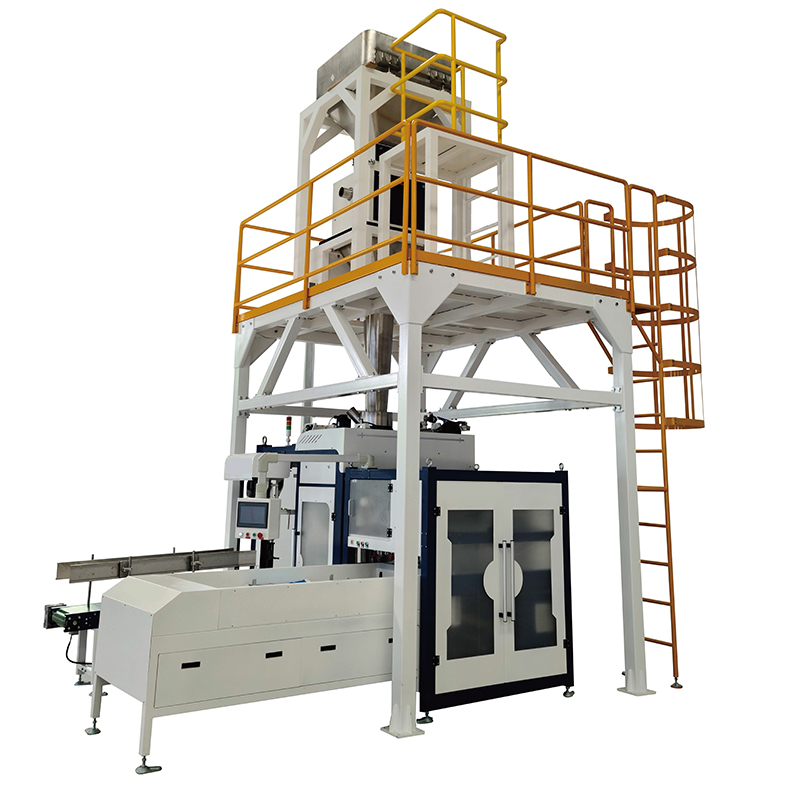
    The core of the line features the QZK-1200 automated packaging system, designed to handle multiple bag sizes and structures (including three-layer multi-wall paper bags). We integrated a high-speed servo-driven dosing scale utilizing Mettler Toledo load cells. A custom soft-fill buffer chamber was introduced inside the hopper to minimize terminal velocity, preventing seed impact damage during the high-speed filling cycle. Siemens PLCs and SMC pneumatic actuators ensure continuous duty cycles.

    Automated seed packaging machinery

    Technical Solution Specifications

    Technical Characteristicbpmpack Solution Specification
    Production ThroughputOver 700 bags/hour sustained dynamic rate
    Dosing Accuracy±0.1% tolerance via Mettler Toledo load cells
    Bag Material CompatibilityMulti-wall paper, woven PP, and PE bags
    Control ArchitectureSiemens industrial PLC with SMC pneumatic manifolds

    Risk Mitigation & Operating Guidelines

    • Maintain strict pneumatic feed pressures to ensure high-strength bag stitching closures.
    • Clean dust accumulation from photoelectric bag-detection sensors weekly to prevent cycle pauses.

    bpmpack Engineering Insight: Placing the print-and-apply industrial labeler immediately downstream on the outfeed conveyor allowed for real-time batch validation without introducing a line bottleneck.

    Why bpmpack B2B Integration

    🚀 Dynamic Systems Competence

    Unlike generic packaging suppliers, bpmpack focuses exclusively on customized, high-capacity, turn-key bagging integration. Our systems provide absolute material safety, material flow analytics, and overseas site installation with local engineering commissioning support.

    100% Turnkey

    From silos to palletizers

    Global Compliance

    CE & ISO Wafer-level specs

    Ready to Optimize Your Agricultural Bagging Operations?

    Submit Your Bagging Volume & Accuracy Requirements for Assessment