
For a Siberian salt producer, the weak point is not the filler alone. The real damage starts when bags leave the line and enter the last transfer zone before the truck. Dust, cold air, humidity swings, and rough manual handling can turn a clean batch into unstable shipping units.

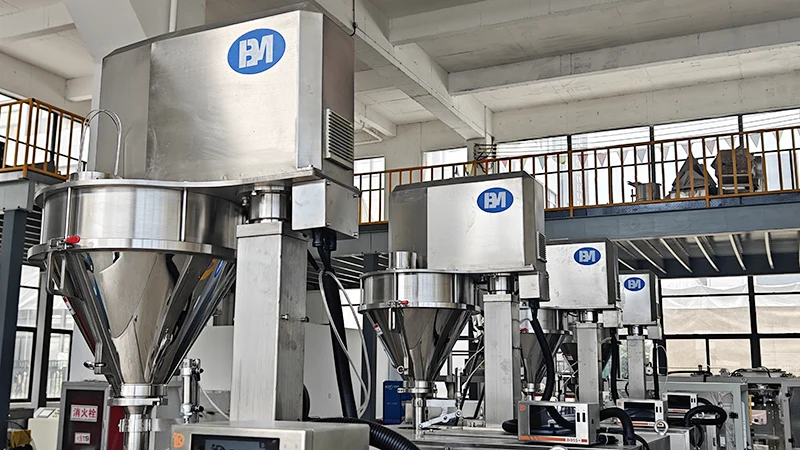
1. Keep the dosing head stable in a chloride-heavy environment
Salt is aggressive. The contact surfaces have to resist corrosion, and the feeding section has to stay stable under continuous duty. That is why a hopper and dosing zone built around stainless steel matter so much. When the feed stays consistent, the bag weight stays consistent, and the operator does not spend the shift chasing small deviations. On a salt line, small deviations become expensive very quickly.
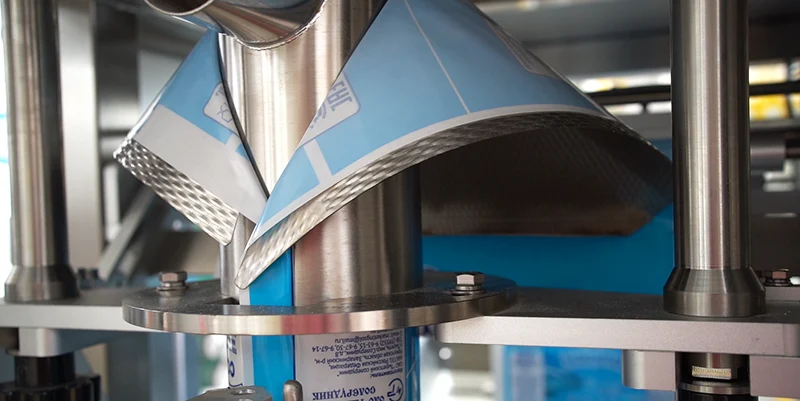
2. Stop film drag before it turns into sealing defects
Salt packaging does not forgive poor film tracking. If the forming shoulder drags, the tube gets unstable, the seal edge shifts, and the bag mouth starts to look uneven. A dimpled forming shoulder reduces sticking and gives the film a cleaner path. That sounds simple, but it is exactly the kind of detail that protects a production line over a long winter season when condensation and temperature swings make every surface behave differently.
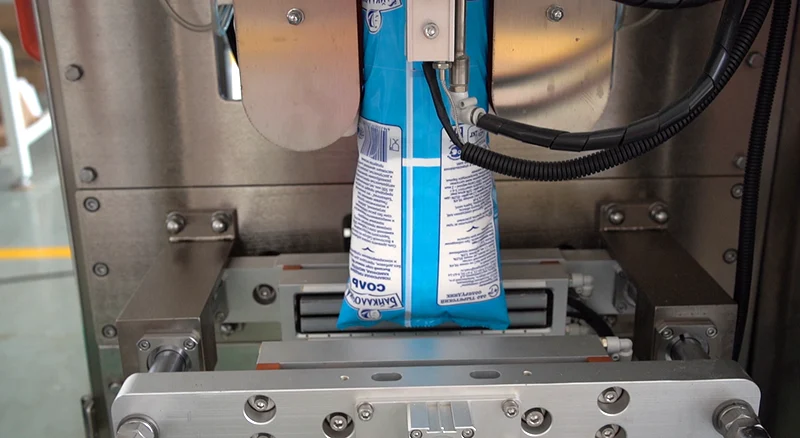
3. Seal fast, but flatten first
Sealing speed is not enough if the bag still holds air or if the top edge is not even. For salt, a stronger seal starts with a controlled cross-seal step and a clean flattening action before final closure. That is how the line keeps pouches from bulging, slipping, or tearing during downstream handling. The goal is not only a good seam. The goal is a bag that survives the next transfer, the next lift, and the next stack.
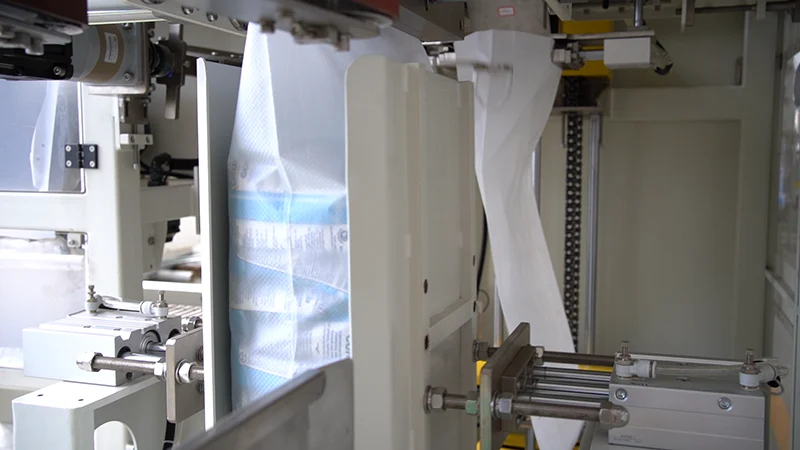
4. Convert filled bags into a shipping unit
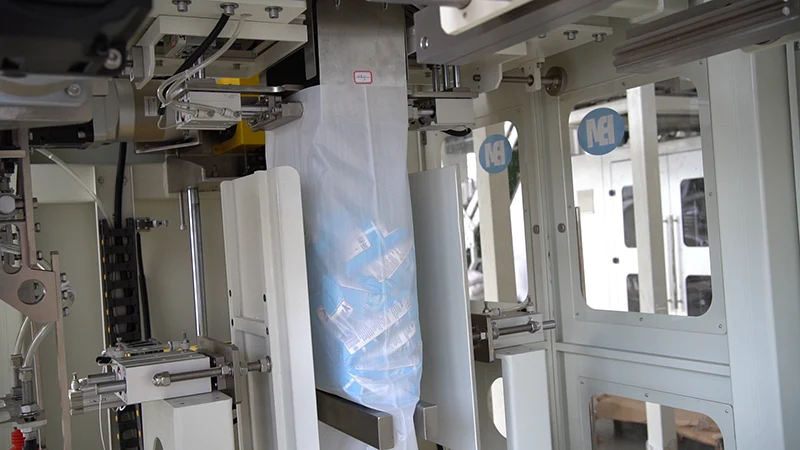
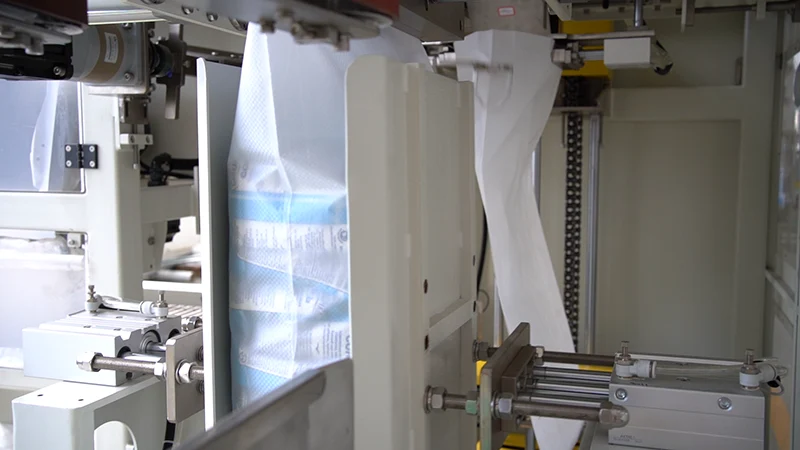
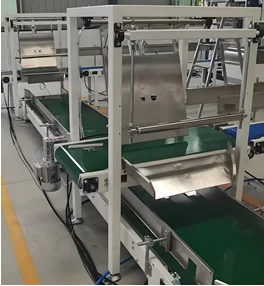
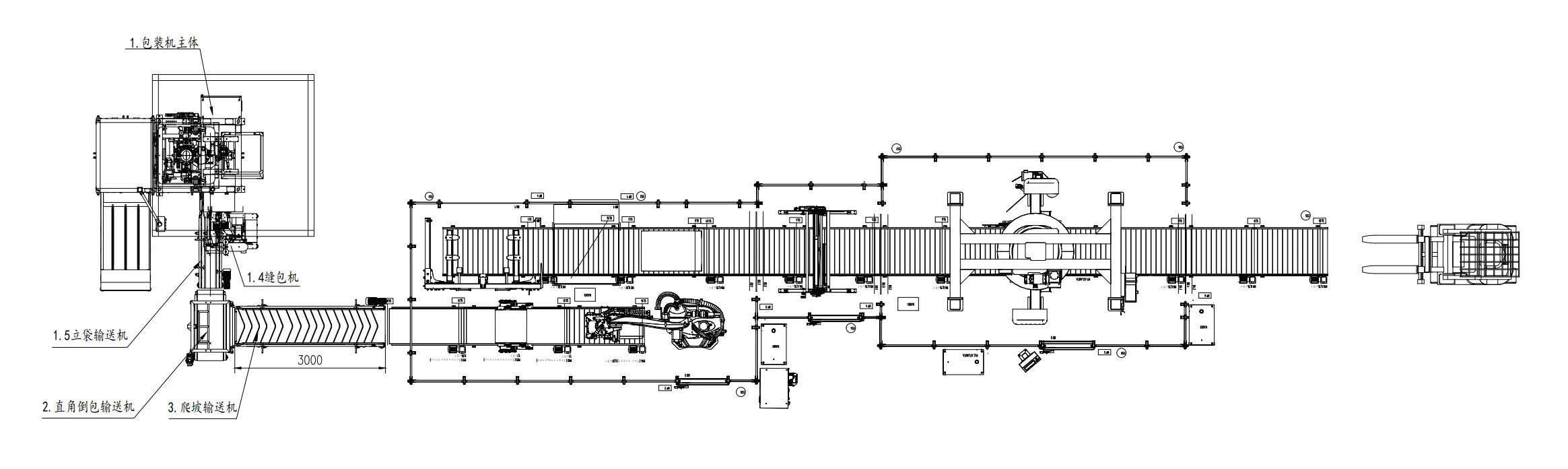
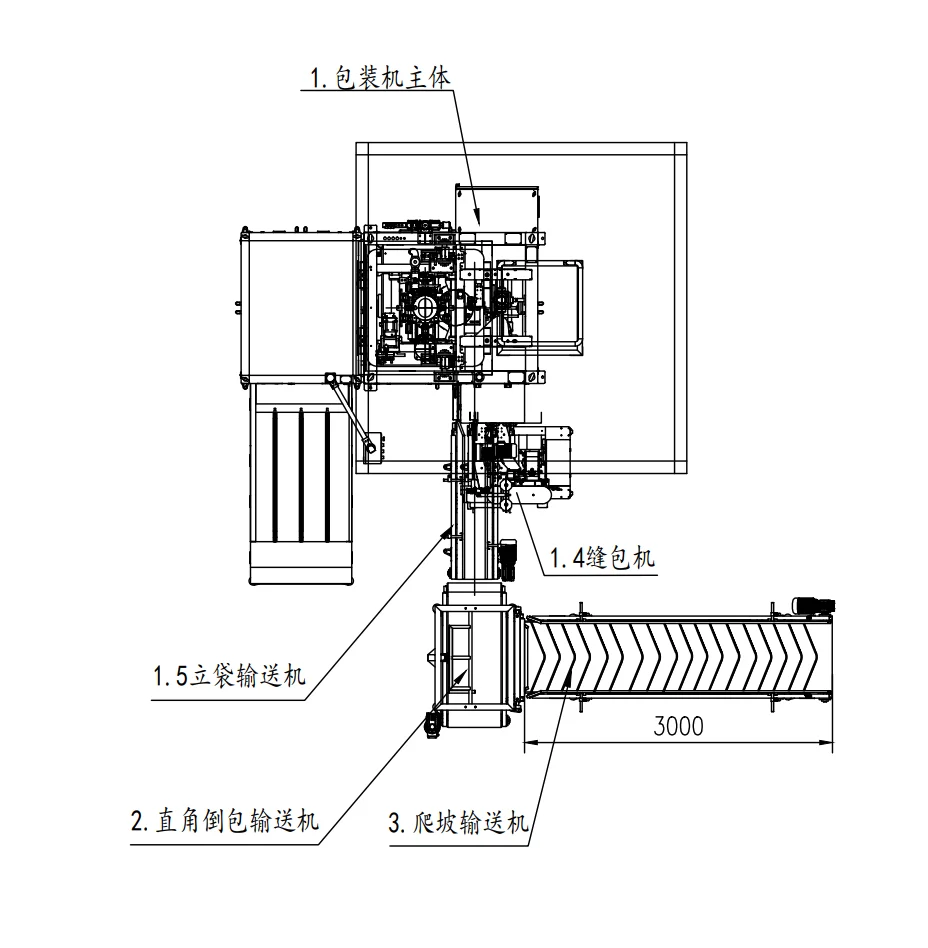
This is where a salt plant usually loses time. A primary bag can be filled correctly and still become fragile if it is moved manually too many times. Secondary packaging turns loose bags into a tighter shipping unit. In a bag-in-bag flow, the inner bags are collected, stabilized, and placed into a woven outer sack. That reduces scuffing, improves stacking behavior, and makes dispatch easier to plan. It also helps the plant keep the product cleaner because the unit moves as one controlled block instead of a pile of loose bags.
5. Finish with a bag that is ready for cold storage and transport
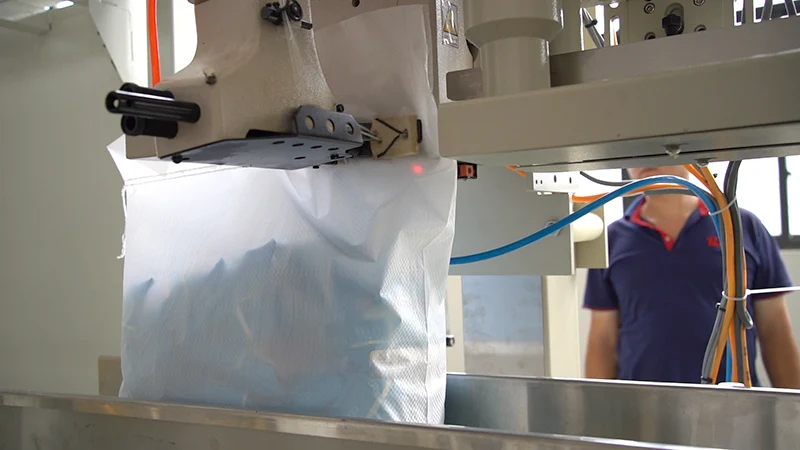
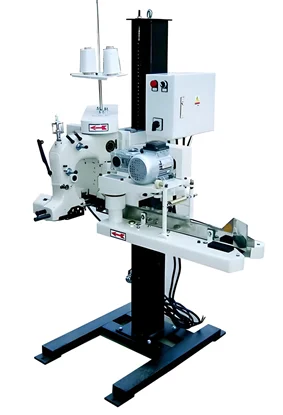
The last step is the one that decides whether the pallet stays stable in the warehouse and on the road. A sewn woven sack is better than a loose, overfilled bundle because it keeps the contents aligned and makes the unit easier to move with forks and conveyors. For a salt producer, that means fewer bag ruptures, less dust at the dock, and less rework before shipment. The dispatch crew gets a unit that is easier to stack, easier to count, and easier to load into the truck.
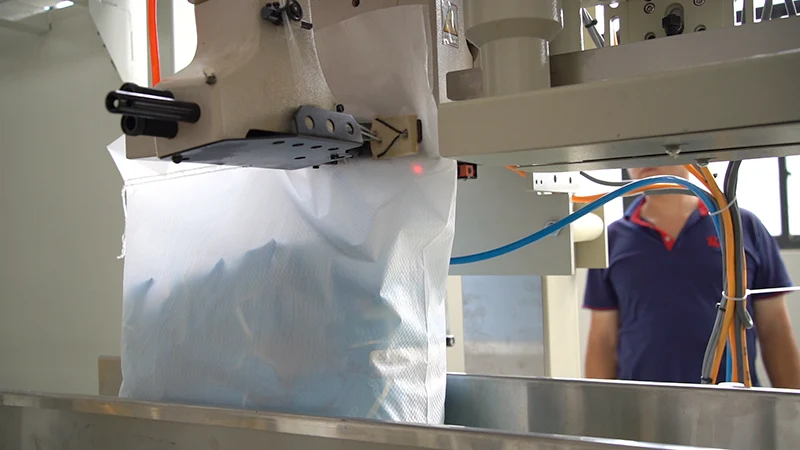
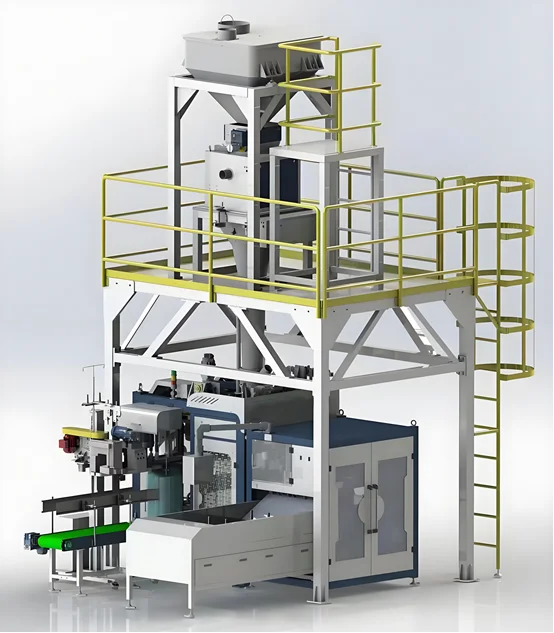
For salt plants that still depend on manual overbagging and repeated handling, the fix is not a bigger forklift. The fix is to move protection into the machine flow. When dosing, film handling, sealing, compression, and sewing are tied together, the line stops producing fragile bags and starts producing dispatch-ready units.


 English
 Русский