
FFS packaging line: 25 kg fertilizer flow
For a fertilizer producer shipping 25 kg bags, an FFS packaging line connects roll-film bag making, controlled filling, sealing, inspection, and palletizing so granular material reaches dispatch in a stable, traceable format.
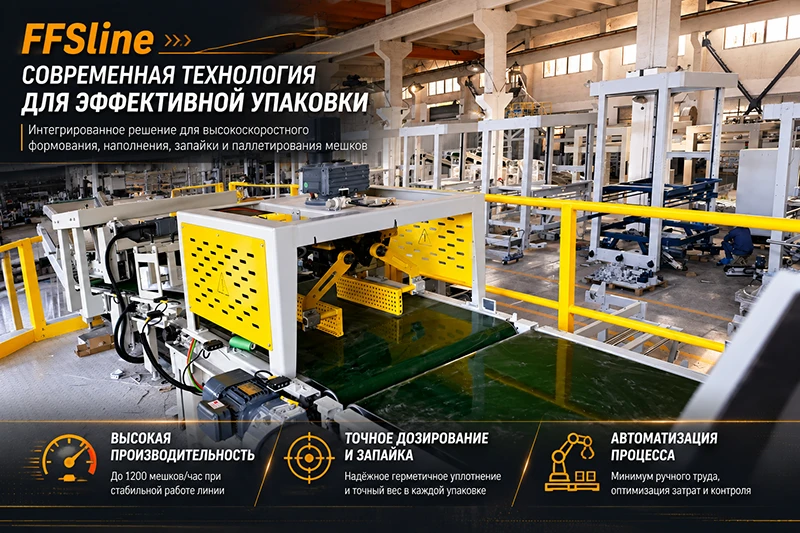
From manual fertilizer bagging to a connected line
A fertilizer, polymer-granule, or feed producer usually starts with a simple target: fill a heavy bag and move it to the warehouse. The difficulty appears when output increases. Open woven bags or paper sacks require bag staging, manual positioning, separate weighing, sewing, label application, and hand palletizing. Each handoff adds a queue, a chance of weight variation, and another point where a freshly closed bag can be damaged.
An FFS packaging line addresses this sequence at its source. PE or PP roll film is formed into the bag on the machine, then the product is metered, filled, heat sealed, cooled, checked, and transferred to the end-of-line section. The route is intended for free-flowing granules and suitable coarse powders; the final film, bag geometry, material density, and 20 kg, 25 kg, or 50 kg format still require a project trial and technical confirmation.
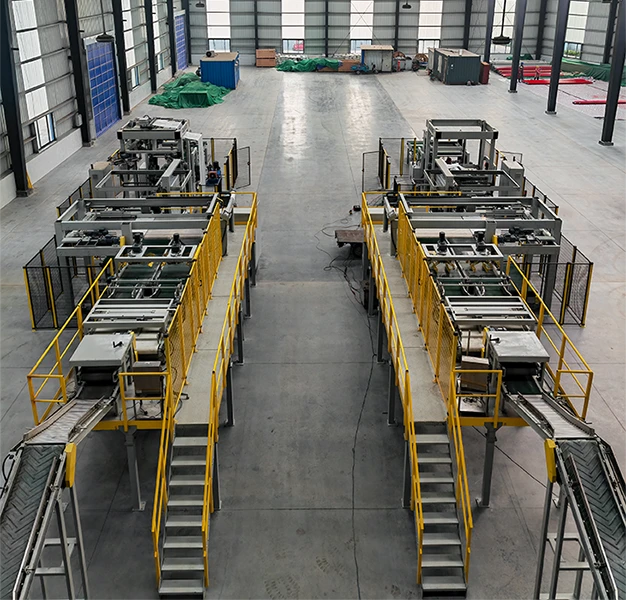
Manual bag handling hides the real production loss. Operators compensate for unstable feed, interrupted weighing, bag-bottom impact, and uneven stacking by slowing the line or correcting every sack. The result is labor tied to repetitive handling, inconsistent pallet shape, and more rework when a bag leaks or falls outside the accepted weight.
Why an FFS packaging line fits heavy granular materials
The FFS packaging line is configured as a sequence rather than a single filler. A transition hopper can buffer supply; the blog brief identifies a 3 m³ example for a project solution, with vibration, anti-bridging, or sampling features selected according to the fertilizer and feed behavior. A single-head servo weigher, PLC, and HMI coordinate the target quantity, while the forming collar and film-pull system keep bag production synchronized with filling.
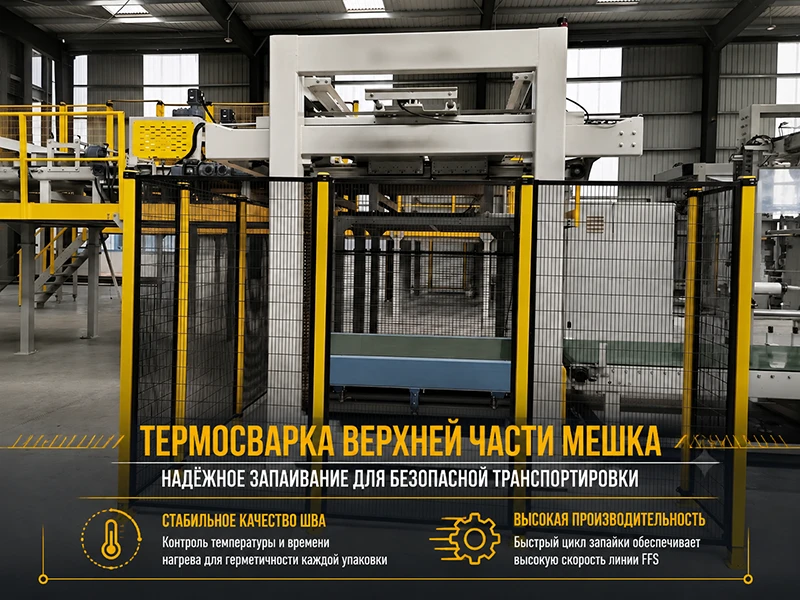
Heat sealing and cooling matter after the product has entered the bag. The bottom and mouth sealing zones need time and controlled contact before the filled sack is accelerated into downstream conveying. This protects the seal against impact-related leakage. Optional checkweigher and reject equipment can separate underweight or overweight bags; metal detection, dust collection, coding, bag labels, and pallet labels can be added when the quality and traceability plan requires them.
Engineering note: Published figures must be read as design targets, not universal guarantees. A project may reference 500 bags/h for a fertilizer line or a higher 1,000–1,200 bags/h class, but flowability, particle-size distribution, moisture, continuous feeding, film, bag dimensions, and acceptance conditions decide the verified result.
Structure and end-of-line evidence
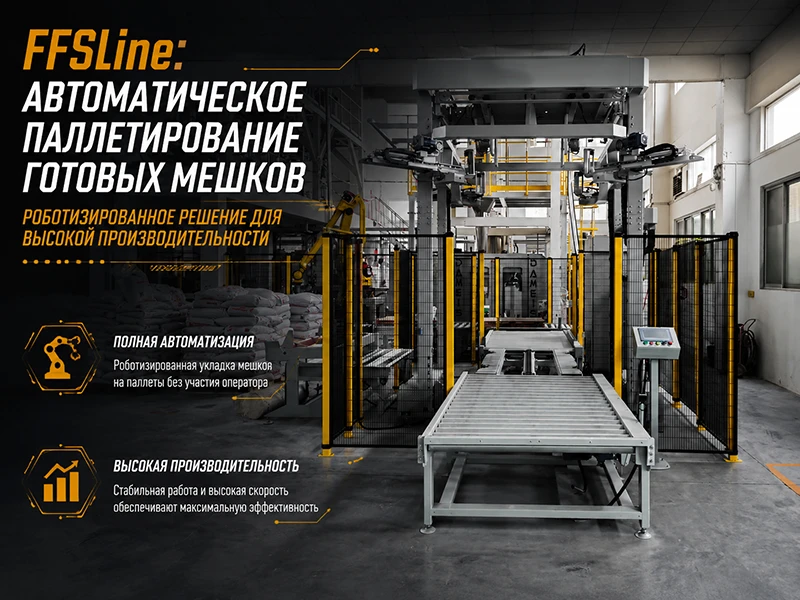
The visible structure of an FFS packaging line explains the operating logic. A guarded forming and filling section handles the roll film and product contact zone. Downstream conveyors carry the sealed bags through settling, weight verification, coding, labeling, and rejection where specified. The layout can then connect to high-level or robotic palletizing, an automatic pallet store, and a cold stretch-hood unit so a finished pallet is ready for forklift transfer rather than manual rebuilding.
Robotic palletizing is not only a labor-saving accessory. It controls the placement pattern and keeps the pallet profile repeatable for export loading and warehouse logistics. Bag-face identification and full-pallet identification are separate traceability tasks, so the label positions and data sources should be defined in the technical agreement. The same discipline applies to film width, film thickness, roll diameter, compressed air, power, and the available installation envelope.
| Project checkpoint | FFSline design response | Confirmation required |
|---|---|---|
| Product and bag | PE/PP roll film, commonly M-style heavy film, for granular or suitable coarse material | Bulk density, moisture, particle size, bag size, and film trial |
| Nominal format | 25 kg fertilizer is the reference scenario; 20 kg and 50 kg can be reviewed | Bag geometry, film width, seal dimensions, and changeover scope |
| Quality loop | Cooling, checkweighing, reject, coding, and optional metal detection | Acceptance accuracy, inspection points, and product safety plan |
| Dispatch | Settling, conveyor transfer, robotic or high-level palletizing, and stretch hood | Throughput, pallet pattern, warehouse route, and forklift interface |
Define the right fertilizer packaging route
The final result is not simply a filled bag. It is a controlled flow from bulk material to sealed, inspected, labeled, and pallet-ready output, with less manual intervention and clearer responsibility at each handoff. Share the product, target bag weight, film data, required bags per hour, and floor plan with BPM for a project review of the FFS packaging line and its optional downstream modules.
Request a project review English
 Русский