
Plastic Pellet Packaging Line: Polyethylene Output
For a polyethylene resin producer shipping PE granules in 25 kg bags, a plastic pellet packaging line replaces manual weighing and separate bag closing with roll-film forming, controlled filling, heat sealing, inspection, and pallet-ready outfeed. The result is a repeatable bag flow for warehouse and export dispatch, subject to material, film, and acceptance trials.
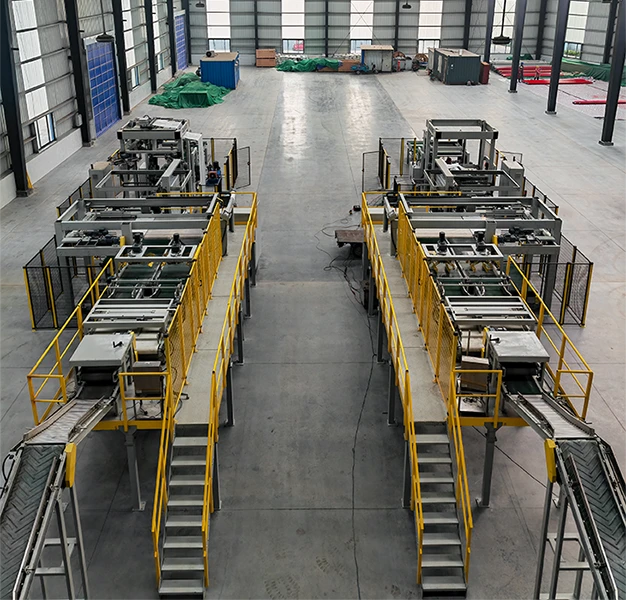
The production scene: from PE granules to pallet-ready bags
A polyethylene and polypropylene pellet plant often has a clear dispatch requirement: turn free-flowing plastic granules into consistent heavy bags, identify each production batch, and move finished pallets to storage or a loading area without relying on a large manual packing crew. The same need appears in resin, color masterbatch, recycled polymer, and related bulk-material operations where a 20 kg, 25 kg, or 50 kg format must be confirmed against density, particle shape, and customer handling rules.
The older route commonly combines pre-made woven or paper-plastic bags, manual weighing, hand positioning, sewing, and a separate palletizing step. That arrangement can work at low volume, but the handoffs create variation: operators correct bag position, rework weights, close bags at different speeds, and reshape units before stacking. A plastic pellet packaging line is a better fit when the plant wants one controlled sequence from roll film to sealed sack, while still keeping the final design conditional on trials.
Manual bagging separates weighing, bag closing, inspection, labeling, and pallet handling into different jobs. A small interruption at one point can stop the next point: unstable feeding causes weight variation, a newly sealed bag can be damaged during transfer, and a pallet may leave the line without the same batch information as the individual bags. Open handling can also increase product exposure and housekeeping work. These are process-control issues, not simply labor issues.
Why this plastic pellet packaging line fits polyethylene granules
A plastic pellet packaging line uses PE or PP roll film to form the bag online, then combines metered filling with bottom sealing, upper sealing, and post-seal cooling. This form-fill-seal route removes the need to store a matching quantity of pre-made bags and gives the engineering team a direct way to set film width, bag length, and sealing conditions around the selected pack. For free-flowing granules, the weighing unit can be configured around the product density and target bag weight rather than treated as a universal setting.
The FFSline arrangement can include a transition hopper of about 3 m³, a servo weighing unit, PLC and HMI control, and a downstream sequence for settling, checking, rejecting, coding, labeling, palletizing, and stretch-hood wrapping. The standard project example is a 25 kg fertilizer-style heavy bag, while polyethylene pellets may require a different feeding profile, film structure, or discharge speed. Heat-seal cooling is important because it protects the fresh seal from impact while the filled bag moves into the transfer section.
Engineering note: A 500 bags/h design level is a useful reference for the main line example. Product literature also describes 1,000–1,200 bags/h class configurations, but actual output depends on pellet flowability, particle-size distribution, moisture, continuous feeding, bag format, film behavior, and the agreed acceptance test. Weighing accuracy, film thickness, and optional inspection equipment must be confirmed in the project technical specification.
What this plastic pellet packaging line controls before dispatch
The control chain starts with a steady material feed and continues through forming, filling, sealing, cooling, and outfeed. A checkweigher with reject handling can be added after the bag has settled; metal detection is also an option rather than an assumed standard. Bag-side date or batch marking and pallet-side logistics labeling serve different traceability tasks, so the line layout should reserve space for both when the export workflow requires them.
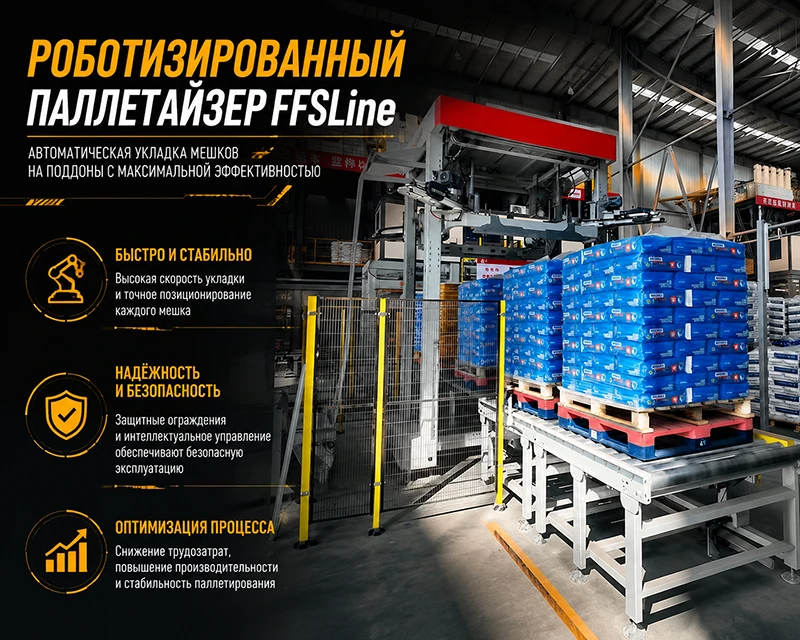
At the end of the line, guided conveyors keep filled sacks moving toward a high-level or robotic palletizing cell. The palletizer, automatic pallet store, bag shaping, and stretch-hood machine are selected against the required rate and floor plan. This lets the customer start with a stable bag and inspection process, then add downstream automation where warehouse turnover and labor economics justify it. For a related granular-material reference, compare the 25 kg granular packaging line example; for a powder-flow comparison, see the automatic powder bagging line.
| Item to confirm | FFSline planning reference | Why it matters for PE pellets |
|---|---|---|
| Material and pack | PE or PP pellets; commonly 20, 25, or 50 kg after trials | Bulk density and particle shape affect the feeder, scale, and bag dimensions. |
| Roll film | PE or PP film; typical width 350–450 mm, outer diameter about 1,500 mm, core 150 mm | Film behavior determines forming, sealing, and the final bag footprint. |
| Film thickness | Common project range 0.14–0.18 mm, subject to supplier confirmation | Strength and sealing conditions must match the filled sack and handling route. |
| Supply and control | About 3 m³ transition hopper, servo weighing, PLC and HMI | Buffering and feedback help maintain a repeatable filling cycle. |
| End of line | Checkweigher/reject, coding, pallet labeling, robotic or high-level palletizing, stretch hood as required | Inspection and pallet stability connect the packing cell to warehouse dispatch. |
Plan a plastic pellet packaging line around the actual material
Before selecting the final machine arrangement, provide the pellet type, bulk density, particle-size range, target bag weights, film specification, required bags per hour, labeling rules, and available floor space. BPM can then match the forming, weighing, sealing, inspection, conveying, and palletizing stages to a documented trial and acceptance route. This is how a polyethylene packaging project moves from a nominal machine speed to stable, pallet-ready output.
Request a project review English
 Русский