
Mipline 25 kg Automatic Bagging Line for Granular and Powder Products
A bottom-filling automatic bagging solution that handles weighing, bag pickup, opening, filling, sealing, and transfer in one linked line, reducing manual handling and keeping the 25 kg packaging flow stable.
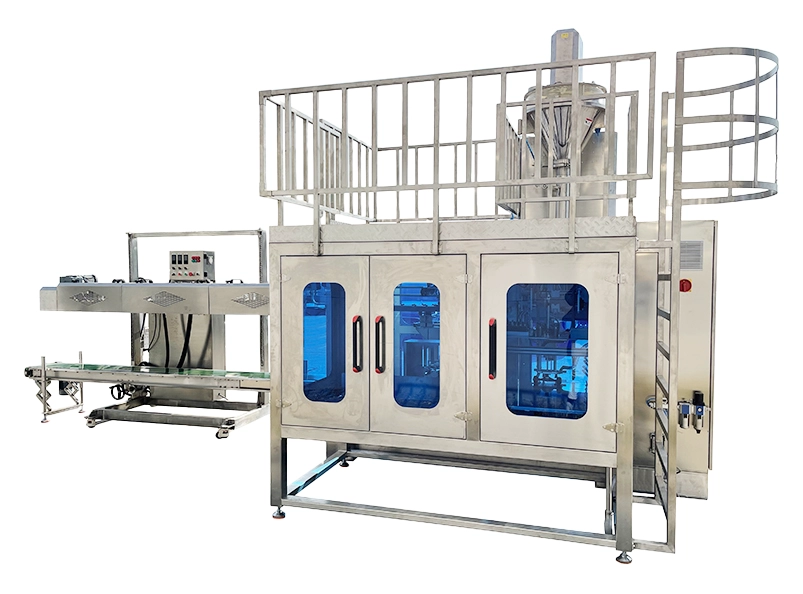
The 11889 solution is built around a 25 kg bottom-filling automatic bagging line for granular and free-flowing powder products. The system covers automatic weighing, bag pickup, bag opening, filling, sealing, and downstream transfer so the line can stay continuous without depending on manual bag handling.
For this project, the line layout also leaves room for dust control, checkweighing, metal detection, and centralized electrical control. That matters when the packaging target is not only speed, but also repeatability, bag appearance, and stable operation across long shifts.
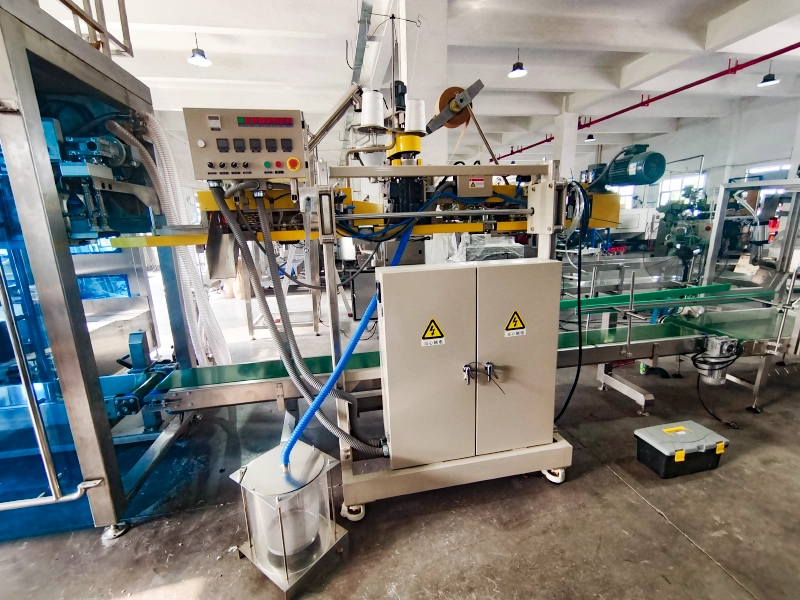
Manual loading and bag alignment usually become the bottleneck in 25 kg packaging. If the bag magazine, pick-up station, clamping discharge, and transfer conveyor are not synchronized, the line starts to lose speed, accuracy, or both.
Automatic bag pickup and feeding
The line uses a bag magazine, pick-and-place feeding structure, and guided bag positioning to reduce size tolerance issues at the bag source. That makes the system less dependent on perfect bag quality and keeps the feeding action stable during continuous runs.
Weighing, filling, and sealed transfer
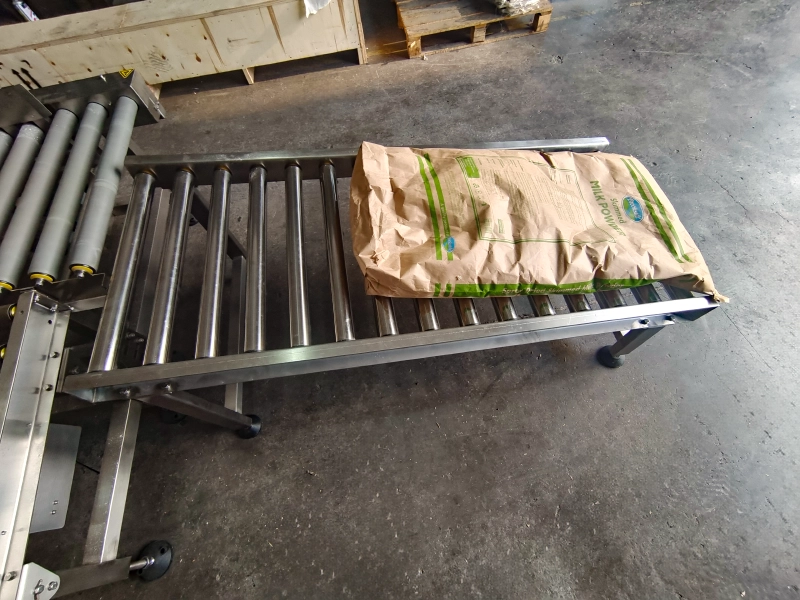
Servo-driven screw feeding and net weighing control are used to keep the filling action accurate and responsive. After filling, the bag moves into the sealing and transfer section, where the conveyor interface supports the next process step without extra manual repositioning.
Core technical parameters
| Item | Specification |
|---|---|
| Applicable bag weight | 25 kg |
| Output | 1.5-2 bags per minute |
| Filling precision | ≤ ±0.1-0.2% |
| Main functions | Automatic weighing, bag opening, filling, sealing, and transfer |
What matters in the final layout
- Keep the bag magazine, clamping point, and conveyor height aligned from the start.
- Allow enough space for dust collection and routine maintenance access.
- Match the transfer section speed with the filling cycle so bags do not back up.
- Keep the electrical cabinet and control interface close enough for fast troubleshooting.
Engineering note: In this kind of case, line stability comes from synchronization. The best result is usually not a single fast station, but a chain of stations that move at the same pace with clear controls and minimal manual intervention.
 English
 Русский