
How ppline QZK-1200 Kept Woven-Sack Handoffs Steadier Before Sewing in a Grain Warehouse
Bulk products • warehouse transfer • sewing line stability
How ppline QZK-1200 Kept Woven-Sack Handoffs Steadier Before Sewing in a Grain Warehouse
A southern grain warehouse needed cleaner bag transfer, less manual straightening, and a calmer outfeed before sewing. The fix was not a single machine swap; it was a modular ppline layout built around steel framing, controlled discharge, platform access, and a clearer material flow from silo to pallet.
The old problem: good product, poor handoff
In bulk-product plants, the trouble rarely starts at the filling point. It shows up a few meters later: a sack leaves the machine slightly skewed, an operator has to square it by hand, the sewing station waits, and the palletizing rhythm loses its pace. That kind of stop-start behavior creates drag in a warehouse that already has to manage forklift traffic, stacked pallets, and limited floor space.
For a grain warehouse, the real cost is not only labor. Uneven transfer can bruise woven sacks, make the sewing operator chase the bag mouth, and create a messy interface between packaging, inspection, and outbound logistics. The ppline answer is to organize the line so the sack moves in a more predictable path instead of being rescued at every station.
Why the modular layout fits this kind of site
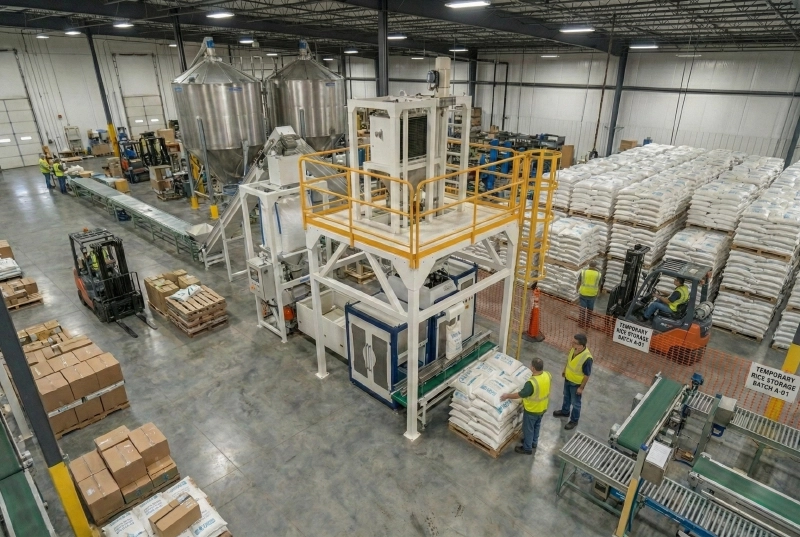
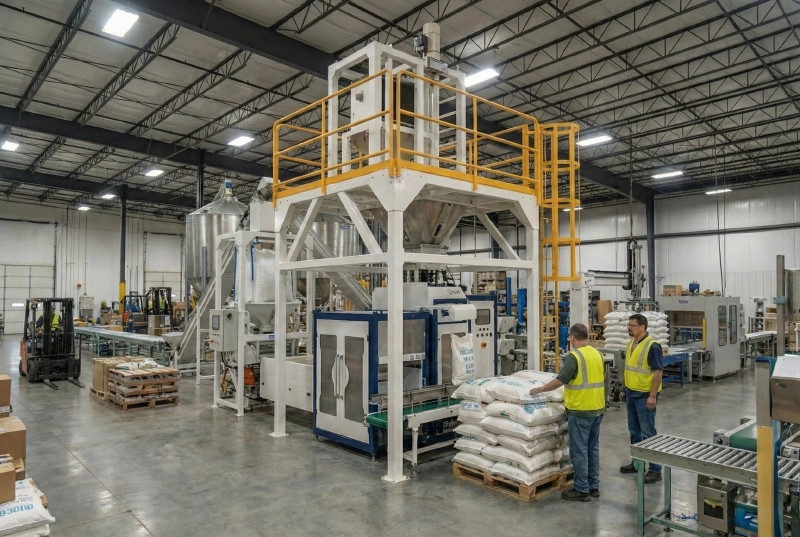
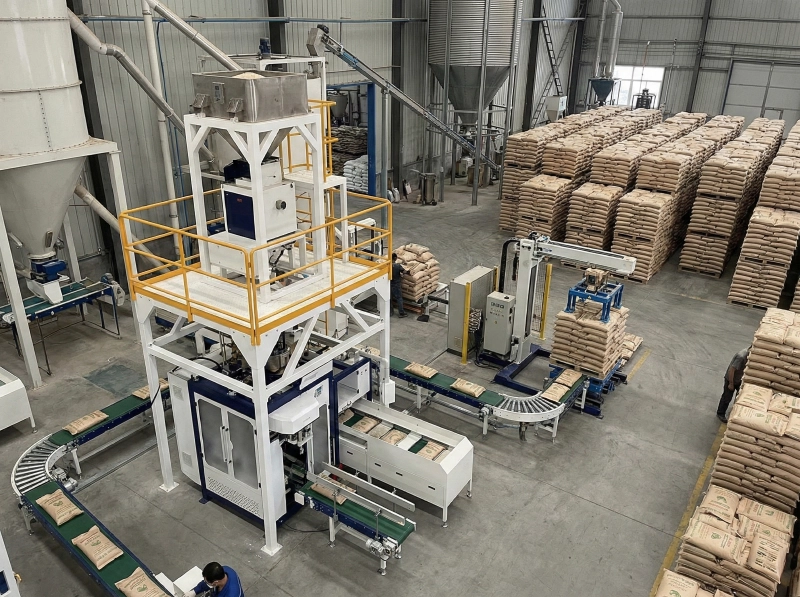
The photo set shows a bagging plant built around two stainless steel storage silos, conveyors, and an elevated working zone. That matters because bulk-product lines need gravity, access, and clearance at the same time. When the storage point sits above the process point, the line can feed more steadily; when the access platform is integrated into the frame, operators can inspect, clean, and adjust without breaking the production rhythm.
On this type of site, the machine is only part of the solution. The steel platform, the enclosed cabinet, and the transfer path are what keep the handoff stable. The ppline layout reduces the chance that a sack leaves the machine off-center and then has to be corrected by hand before sewing.
Structure details that support a steadier bag flow
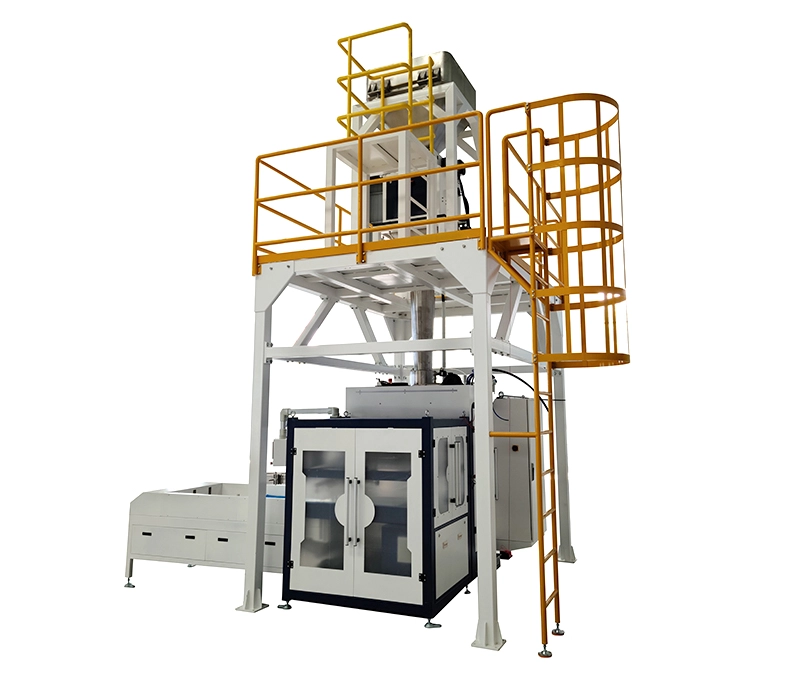
The front-view machine photo makes the mechanical logic easy to read. The elevated steel framework gives the system a rigid body. The safety cage ladder and platform are not cosmetic; they make maintenance and inspection practical, so the line can stay consistent instead of drifting after repeated manual intervention. The enclosed cabinet also helps keep the working area organized around the process point.
For a bagging line that has to feed woven sacks toward sewing, that structural rigidity matters more than a flashy specification sheet. A steadier frame means steadier alignment. Steadier alignment means less rework at the sewing station and less handling at the pallet edge.
Control at the discharge point is where the gain appears
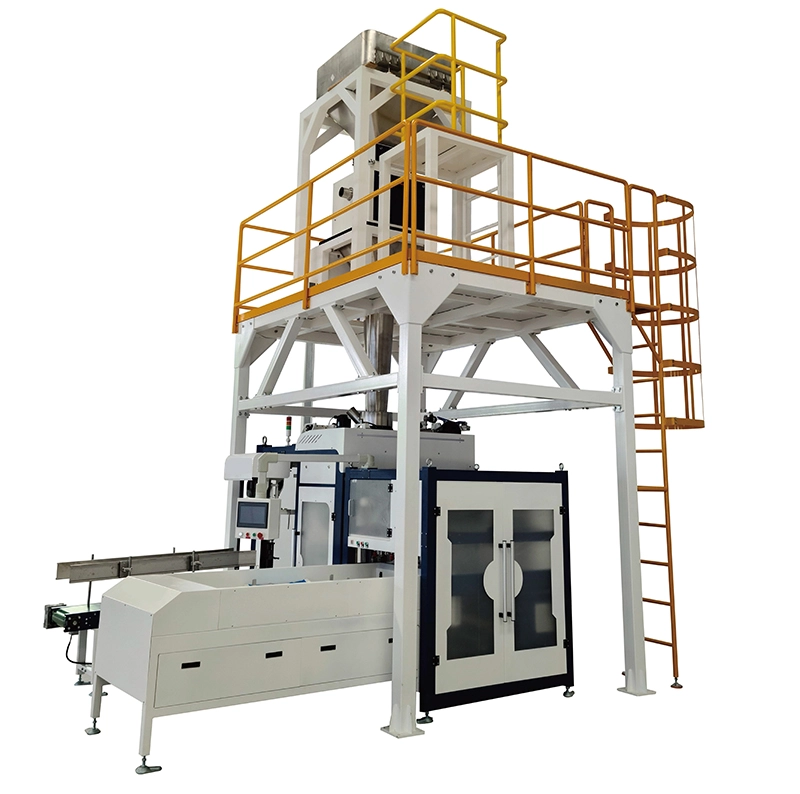
The isometric view shows the swing-arm HMI, the outfeed belt conveyor, and the platform in one frame. That combination is exactly what a warehouse team needs when it wants repeatable bag transfer. The operator can monitor the line without stepping into the flow, and the outfeed conveyor can move the bag toward the next station with less manual correction.
In practical terms, this is how ppline helps a bulk-products plant. It does not only fill bags; it helps the plant preserve bag shape and direction after filling. That is what keeps the sewing point calmer, especially when the site is busy and forklift traffic is not optional.
What changed at the warehouse level
| Site pain point | ppline response | Result |
|---|---|---|
| Bag leaves the machine slightly skewed | Rigid steel frame and controlled outfeed path | Cleaner approach to the sewing station |
| Manual straightening slows the line | Platform access and visible HMI control point | Less interruption between filling and stitching |
| Forklift logistics crowd the floor | Elevated process layout with organized conveyor flow | Safer transfer zone and easier pallet movement |
The final result: steadier transfer, less rework
The biggest improvement was not a dramatic redesign of the warehouse. It was a cleaner sequence: storage, transfer, bagging, discharge, sewing, and palletizing. Once the line was arranged around that sequence, the team spent less time correcting bags and more time moving product.
The robotic palletizer concept shown in the line render represents the same logic extended downstream. When the discharge side is predictable, automation becomes easier to add later. That is why ppline suits bulk-product sites that want a practical path from manual handling to a more controlled line.
For bulk-product plants that need steadier woven-sack handoff before sewing, a modular ppline layout is the faster way to reduce rework and keep the floor moving.
 English
 Русский