
How a Dry-Bulk Bagging Line Improves Woven-Sack Handoff Before Sewing and Palletizing
At a southern Russian salt plant, the problem was not only filling bags. The real bottleneck was the handoff after filling: sacks needed to stay square, stable, and easy to move into sewing and palletizing without extra rework. A QZK-1200 dry-bulk bagging line was a better fit because it combined controlled bag transfer, a rigid steel platform, and a clean outfeed path in one production flow.
Why the bag transfer stage was the weak point
In dry-bulk packing, the filling unit gets attention, but the downstream handoff decides whether the line runs smoothly. If a woven sack leaves the machine skewed, soft, or poorly supported, operators waste time straightening it before sewing or pushing it onto the pallet. That means more manual touchpoints, more floor congestion, and a higher chance of damaged sack edges.
The plant needed a line that did more than discharge product. It needed a machine that could keep the sack aligned through the last meter of the process, from filling to outfeed to stacking. That is where the QZK-1200 layout makes sense: the machine body, platform, and conveyor path are designed as one controlled transfer sequence.
Unstable woven sacks forced operators to re-square each bag before sewing. The result was slower throughput, inconsistent pallet layers, and more handling damage on the factory floor.
Why the QZK-1200 fit this salt plant
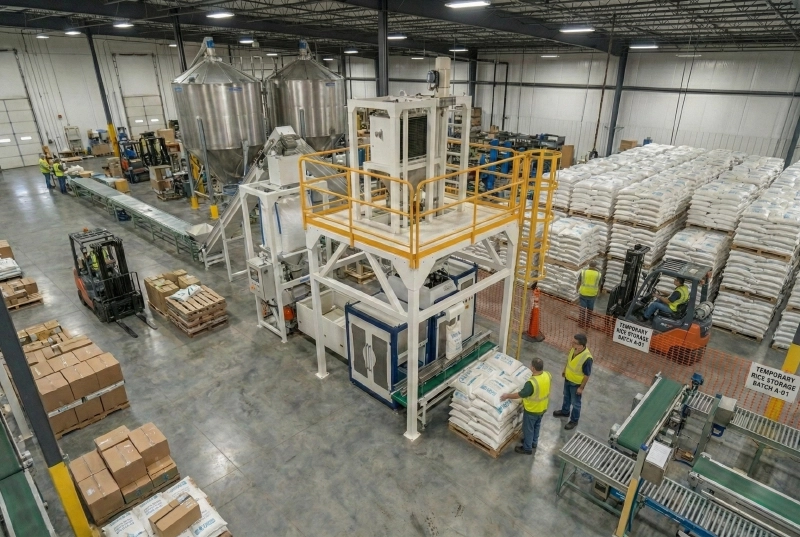
The selected line suits dry bulk products because it combines a steel-framed elevated structure with a controlled discharge path. The visible twin silo layout supports steady feed, while the conveyor sections help move filled sacks away from the machine without abrupt handling. For a salt plant, that matters because salt packaging often needs repeatable bag shape control, clean transfer, and simple operator access.
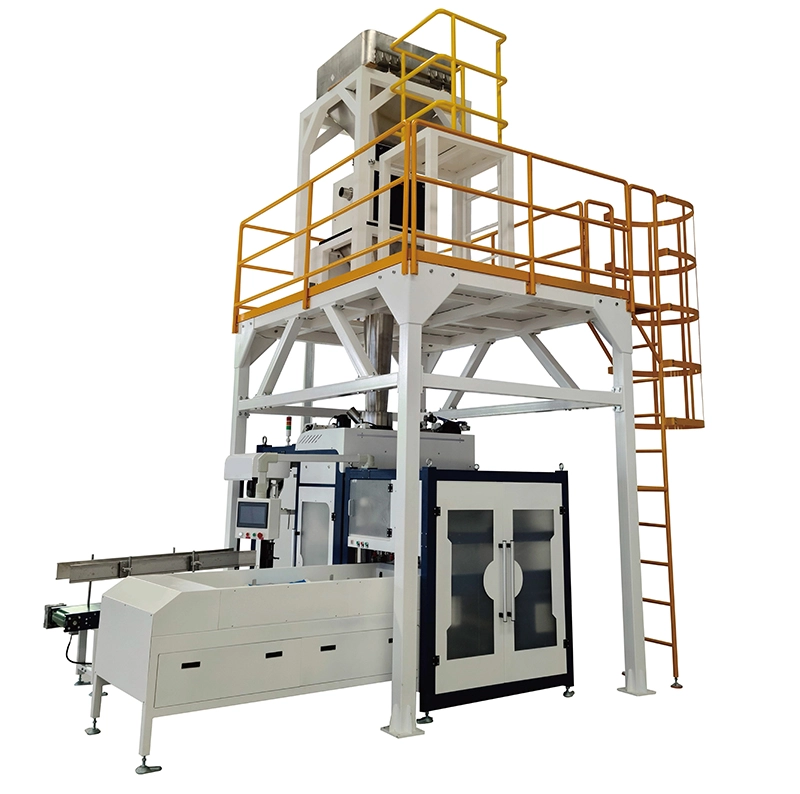
The swing-arm HMI panel is another practical detail. Operators do not need to walk into the main structure to watch the line or make basic adjustments. The control point stays accessible, the bagging station stays organized, and the transfer zone remains clear for the next operation. The same logic applies to the safety cage ladder and platform: the machine is built for industrial access, not improvised floor-side intervention.
bpmpack Инженерный взгляд: a dry-bulk line becomes more reliable when the machine frame, transfer conveyor, and operator access points are treated as one system. That is how you reduce sack deformation, keep the outfeed path straight, and make sewing or palletizing easier without adding another manual station.
What changed in the structure, and why it mattered
The line evidence is visible in the product photos. The high-angle plant image shows the full workflow: silos above, bagging station in the middle, conveyors below, and palletized sacks at the end. The isometric machine image shows the smaller but equally important details: swing-arm control, rigid platform support, and a clear outfeed belt. Together, they explain why the line is more than a filler. It is a transfer system for dry bulk sacks.
For the customer, the payoff was practical. Less manual straightening. Cleaner bag handoff. More predictable stacking. And a better chance that the final sewing step happens with the bag in the right shape, not after an operator has had to fix it by hand.
| Area | Before | After the QZK-1200 layout |
|---|---|---|
| Bag shape at outfeed | Soft, skewed, inconsistent | Cleaner, straighter, easier to sew |
| Operator handling | Frequent manual correction | Lower touchpoint count |
| Palletizing | Uneven layers and slow stacking | More stable stack formation |
| Line flow | Stop-start handoff | Continuous transfer from fill to outfeed |
Need a cleaner dry-bulk handoff before sewing?
If your woven sacks are leaving the line too soft, too crooked, or too hard to palletize, a bagging line should be judged by its transfer path, not only by its filling speed. bpmpack can help you match the machine layout to the material, the sack format, and the downstream handling step.
Запросить аудит линии English
 Русский