
FFS Bagging Line for Bulk Materials: Where a 10–50 kg Bag Is Actually Lost
A salt, sugar, flour, fertiliser or polymer granule plant rarely loses output at the dosing screw. It loses it in the last metre, where a filled 25 kg sack turns, twists and reaches the closing station out of square. An FFS bagging line removes that metre: the bag is formed from roll film on the machine, filled while clamped, cooled on both seams and handed to the palletizer already square.
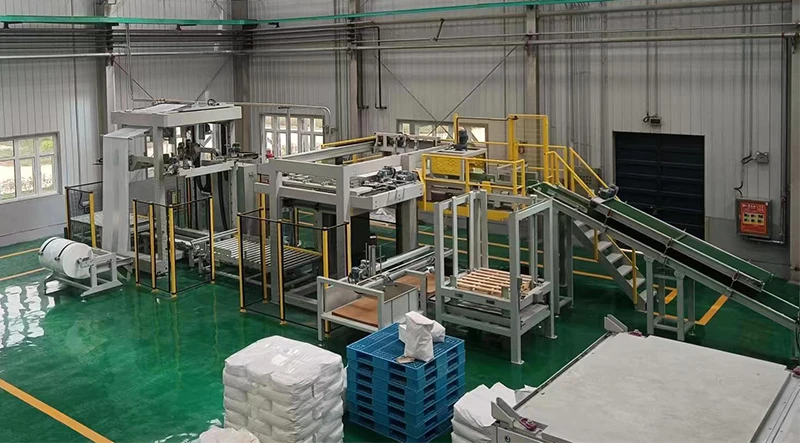
What Pre-Made Sacks Cost Before the Filler Ever Starts
The conventional layout is familiar. Open-mouth woven polypropylene, kraft or laminated sacks arrive palletised, are loaded into a magazine, a pick-up head or an operator opens the mouth, a weighing head doses the product and a sewing machine closes the top. Each of those steps is a separate purchase, a separate spare-parts line and a separate failure point. Empty sacks need dry storage. Kraft softens in a humid season and stops feeding cleanly. Thread, needles and a sewing head carry their own maintenance rhythm.
The stoppages that actually end a shift are mechanical only on the surface. An aerated powder or a free-flowing granule keeps moving after the dosing gate shuts, so the mouth will not stay open on its own. Dust leaves the open mouth during filling and settles on the thread path. And the packaging itself is the largest recurring cost in the whole exercise: woven, kraft and laminated sacks sit far above roll film per bag, and the empty sacks must be bought, trucked in and warehoused weeks before the first one is filled.
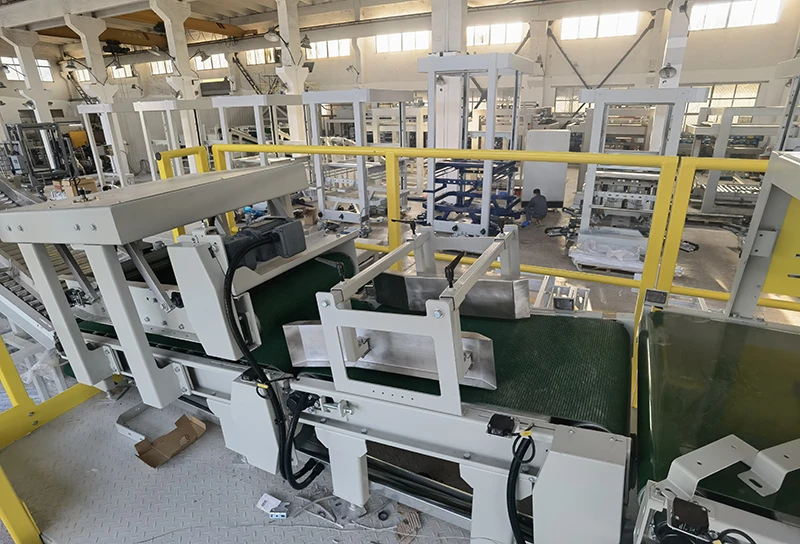
Empty sack purchase and storage, sack rejects at the closing station, dust escaping an open mouth, and a filled bag that leaves the line out of square and jams the palletizer.
Why an FFS Bagging Line Fits Bulk Solids From 10 to 50 kg
The FFS bagging line builds the bag on the machine, around the product, from PE or PP roll film. Film width runs from 200 to 1200 mm at 7–11 µm thickness, formed as a flat or M-type gusset bag, so the same roll serves the whole shift and the bag only exists for the seconds it takes to fill it. There is no empty-sack warehouse, no magazine to reload every few hundred bags and no weekly delivery of pre-made packaging to schedule around.
Filling is weight-based at ±0.1–0.2%, up to 1200 bags per hour on a single lane, with high-level palletizing reaching 1500–2000 bags per hour downstream. Both the bottom seam and the mouth seam are pneumatically cooled after the heating wire closes them, because a bag whose seams are still soft cannot be stacked — it deforms under the weight above it and the pallet leans by the third layer.
What to specify, and how the machine answers it. Film width and gusset type are covered by the 200–1200 mm film range and M-type forming; bulk density and dust class are covered by the enclosed weigher body and IP65/IP66 protection with positive pressure in the control cabinet; bag weight is covered by the 10–50 kg fill range; and metal or weight contamination is closed by the optional in-line metal detector and checkweigher with reject.
Structure and Numbers Behind a Bag That Survives the Pallet
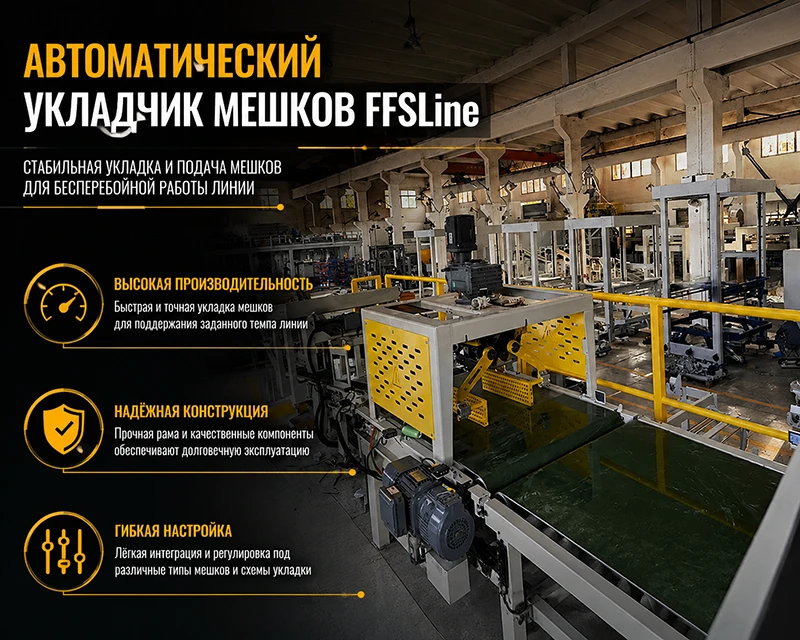
On the FFSline the electrical cabinet is built into the packaging machine rather than standing beside it as a separate room, which keeps the whole cell near 5.5 × 5 × 6 m on the plant floor. Positive pressure inside the control cabinet keeps fine powder away from the electronics, the weigher body is fully enclosed, and an explosion-proof configuration — control cabinet, conduit and servo motors — is available where the product or the site classification demands it. Bag length and width change with the film and the forming collar, not with a new set of magazines.
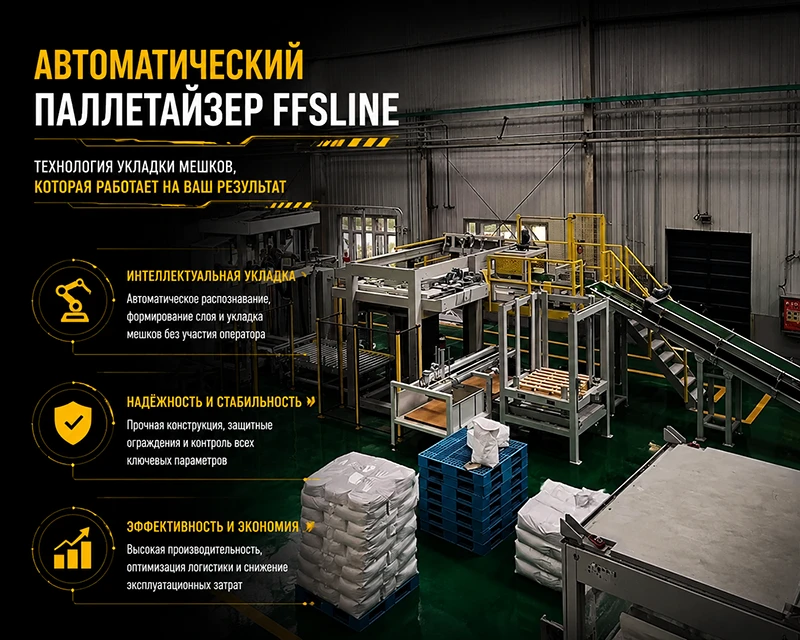
Downstream, the closed bag runs on a transfer conveyor with adjustable side guides that stop a 25 kg sack rotating before the palletizer grips it, and the palletizing station takes over at up to 1500–2000 bags per hour. The measurable result on an FFS bagging line is not only speed: roll film replaces paper, woven or laminated sacks at more than 30% lower material cost, the empty-packaging warehouse disappears, and bags arrive at the stretch wrapper square, sealed and dimensionally identical.
| Параметр | FFSline specification |
|---|---|
| Bag fill range | 10–50 kg per bag |
| Dosing accuracy | ±0.1–0.2% of target weight |
| Output | Up to 1200 bags/hour; palletizing 1500–2000 bags/hour |
| Film width | 200–1200 mm |
| Film thickness | 7–11 µm |
| Film type | PE or PP roll film, flat or M-type gusset bag |
| Sealing | Imported heating wire, pneumatic cooling on bottom and mouth seam |
| Dust protection | IP65/IP66, fully enclosed weigher, positive pressure control cabinet |
| Inspection options | In-line metal detector and checkweigher with reject |
| Line footprint | Approx. 5.5 × 5 × 6 m, cabinet integrated in the machine frame |
Send the Product, the Bag Weight and the Film
Tell us the bulk material, the target bag weight between 10 and 50 kg, the film you already buy and the floor space you have available. We will come back with a line layout, the film width and the palletizing rate for your site.
Request an FFS line layout English
 Русский