
How a Bulk-Products Packing Line Kept Woven-Sack Transfer Steadier Before Sewing
A Southern grain operator needed a cleaner way to move filled sacks from the bagging station into the next step without constant hand-straightening, edge snags, or uneven bag posture. The answer was a ppline layout built around stable conveying, controlled bag support, and a compact operator-friendly transfer zone.
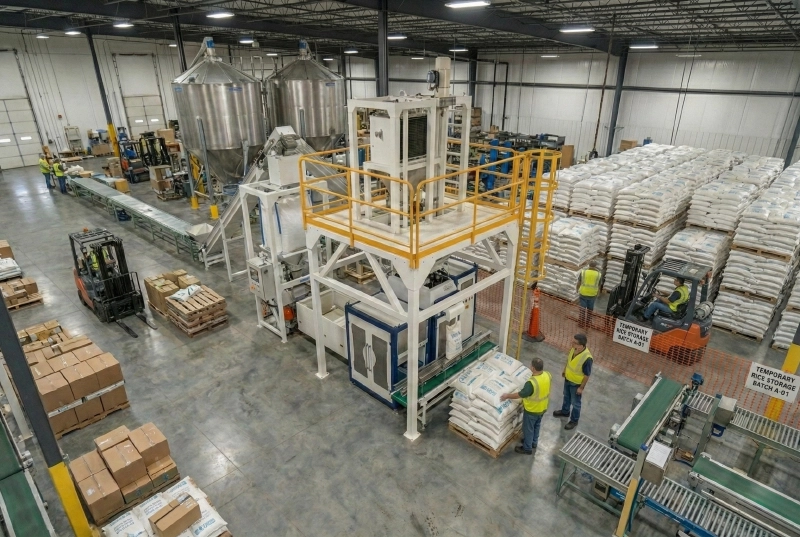
From a busy warehouse floor to a steadier sack handoff
The customer’s situation was straightforward: bulk products were already being packed, but the filled woven sacks were not leaving the station in a stable condition. Bags arrived at the next step with a skewed mouth, a soft belly, or a slight twist after discharge. That sounds minor on paper, but in a real warehouse it creates three direct costs: extra manual correction, slower sewing, and a greater chance of scuffed corners or spilled product at the transfer point.
That is where the ppline approach made sense. Instead of treating packing, transfer, and downstream handling as separate jobs, the line was organized as one controlled flow. The filled sack leaves the bagging unit, settles on the outfeed, and moves through a transfer zone that keeps the sack posture predictable. For an operator, that means less grabbing, less rotating, and less re-positioning by hand.
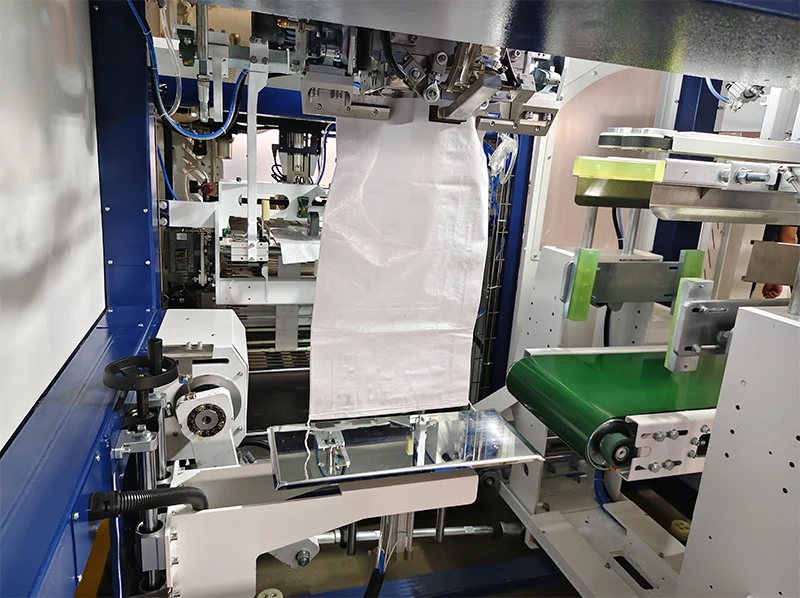
Old transfer layouts usually fail for the same reason: the bag is released, but it is not yet controlled. If the belt speed, support height, or clamp release timing is off, the sack starts moving before it is fully formed. The result is a transfer that looks acceptable from a distance but creates friction for sewing, palletizing, and inspection.
Why this ppline configuration fit the job
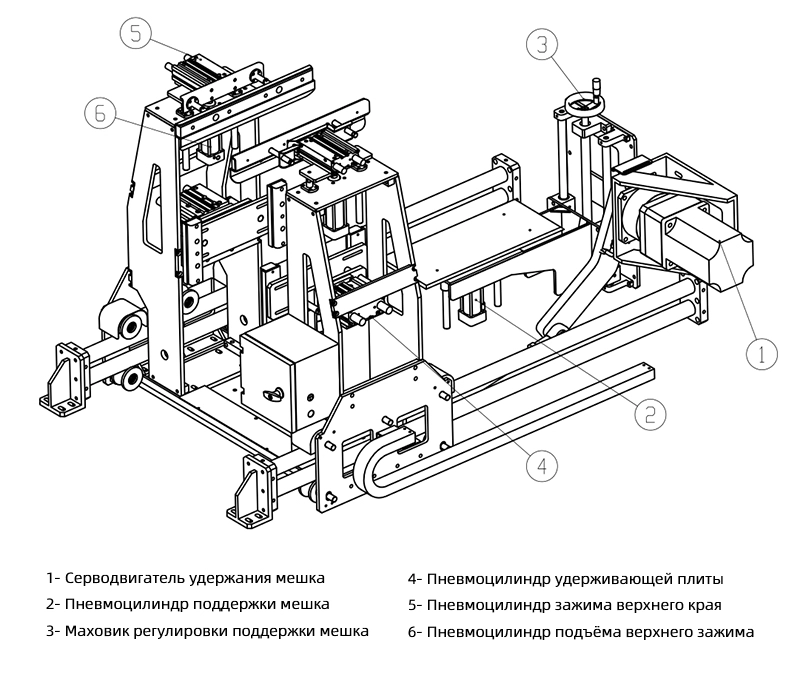
The line matched the customer’s needs because it solved the weak point at the exact place where the problem appeared. The bagging unit keeps the sack aligned with vacuum-assisted placement and a compact support structure. The conveyor section then carries that sack without forcing a hard drop or an abrupt turn. On a bulk-products line, that matters more than a big headline capacity number, because stable handoff keeps the downstream rhythm intact.
From the visual evidence, the machine is not just a generic conveyor package. The internal close-up shows a controlled bagging area with vacuum suction cups, a placing arm, and a green belt carrying a woven sack through the transfer path. That structure is exactly what reduces the need for manual straightening and helps the bag mouth stay square before the next operation.
Practical takeaway: the main improvement is not only packing speed. It is consistency. When each sack leaves the station in a repeatable position, the sewing operator, the pallet stacker, and the forklift team all work with fewer interruptions.
Structure, proof points, and the end result
The photo set gives the structure proof. The high-angle plant image shows a full warehouse environment with storage silos, conveyors, and active forklift movement, which is the right background for a bulk-products packing line that must serve real logistics pressure, not just a clean showroom. The close-up machine image shows the transfer mechanics. Together, they support the same conclusion: the system was built to keep the sack path calm from discharge to next-handling step.
For this customer, the result was a cleaner operation sequence. Operators spent less time correcting sack posture, the sewing step received more consistent bag presentation, and the packing zone became easier to keep orderly during peak throughput. In other words, the line did not merely pack bulk products; it reduced the friction that usually appears between packing and downstream handling.
| Issue in the old workflow | What the ppline layout changed |
|---|---|
| Bag mouth drift after discharge | Vacuum-assisted placement and tighter support keep the sack aligned |
| Manual straightening before sewing | More repeatable sack posture reduces hand correction |
| Busy transfer zone at peak output | Stable belt movement makes the packing-to-handling handoff smoother |
Need a bulk-products packing line that stays steady at the transfer point?
If your warehouse is losing time to sack straightening, uneven transfer, or awkward downstream handoff, we can map the flow and recommend a ppline layout around your product, bag size, and output target.
Request a packing-line layout review English
 Русский