
Bibpu Secondary Packaging Automation for Salt Bag Compression, Alignment, and Sewing Consistency
When filled salt bags move out of the primary packer, the line usually fails at the handoff: bags carry trapped air, edges drift on the conveyor, and the sewing station gets an uneven feed. Bibpu is built to keep that transfer stable with welded conveyor frames, guided accumulation, corrosion-resistant contact parts, and a packaging flow that stays controlled from alignment to final closure.
Why the handoff becomes unstable after filling
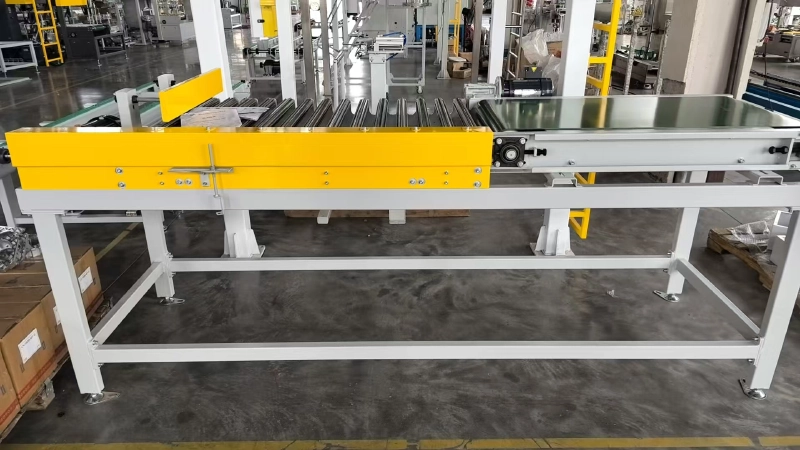
A secondary packaging line for salt bags looks simple until the bags start arriving at speed. The packer may discharge a decent pillow bag, but the product still needs to be transferred, grouped, flattened, aligned, and presented to the sewing station without twisting the sack mouth or letting the load shift. If the conveyor surface is inconsistent, or if the guide rails are too loose, the whole line starts to drift.
That is why the front half of the Bibpu system is designed around controlled movement rather than brute speed. The line uses a welded steel frame, safety guarding, and conveyor modules that keep the bag path steady before the sewing or outer-sack closing step. For salt applications, that matters because every extra burst of trapped air or every sideways slip increases the chance of poor closure, bulging stacks, and unstable pallet build-up later.
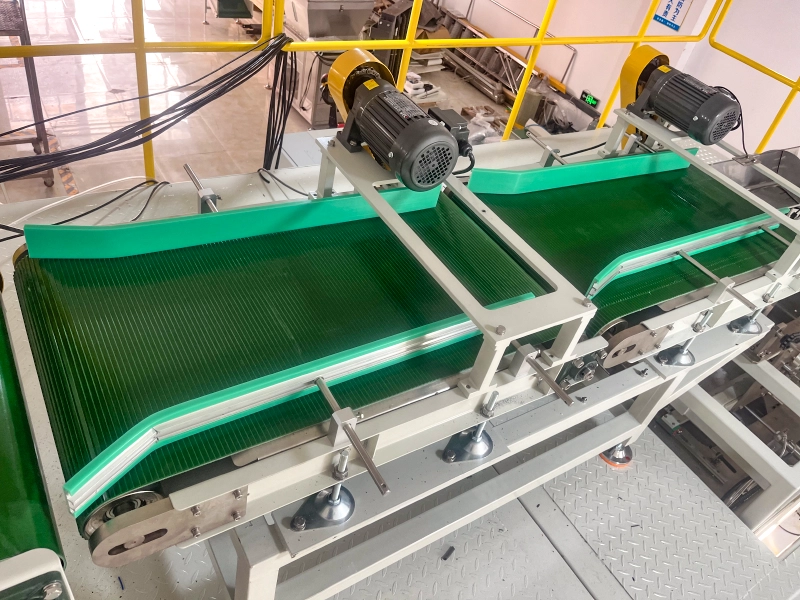
Filled woven sacks or secondary bags often leave the line with uneven top edges, soft corners, and too much internal air. Once that happens, the sewing head or bag-closing station has to fight the product instead of closing it cleanly.
What makes Bibpu fit this job
Bibpu solves the problem with hardware that treats the transfer path like a controlled process. The contact side of the line uses UNS S31603 316L corrosion-resistant stainless steel where product exposure demands it, while the structure relies on Q235B welded framing for rigidity. That combination is practical for salt, where humidity and corrosion are part of the operating reality, but stiffness and alignment are just as important as material selection.
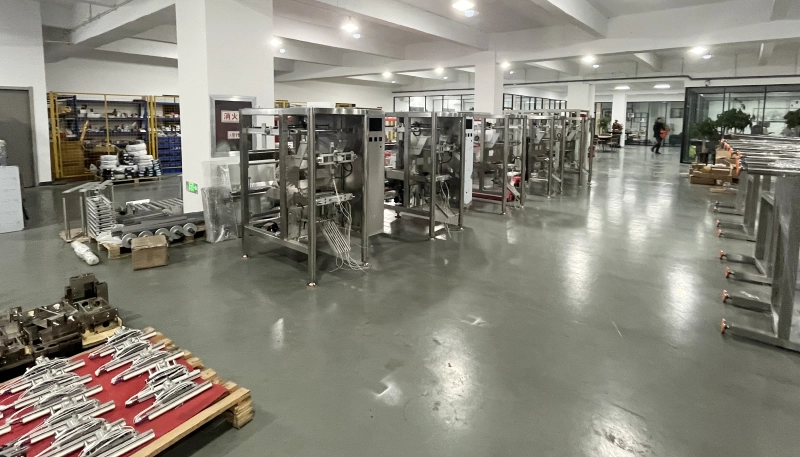
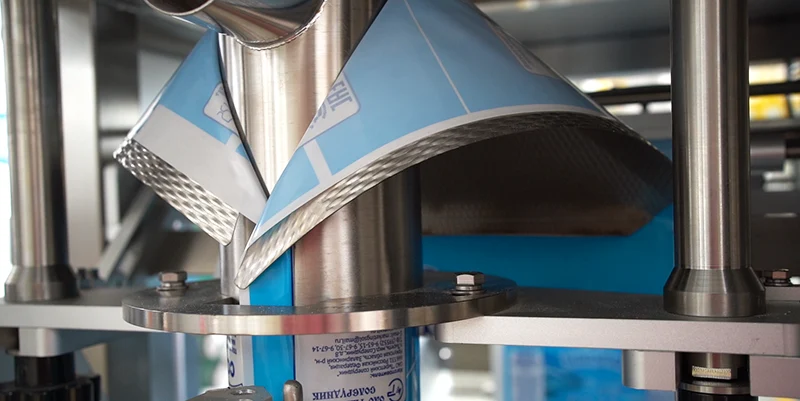
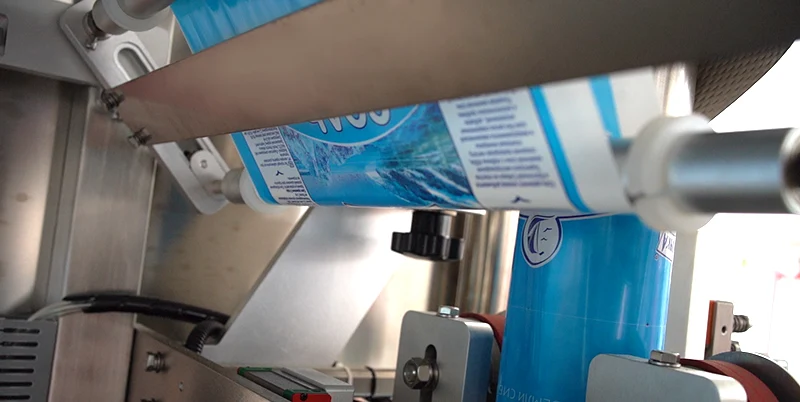
The image set shows the line from multiple angles: the workshop assembly view confirms the machine is built as a complete modular system, the dimpled forming shoulder reduces film sticking, and the film guide rollers give the operator a straightforward way to keep the web tracking centered. In other words, the line is not trying to fix a bad transfer with software only. It is using mechanical geometry, guide surfaces, and repeatable supports to make the bags behave before the final closure point.
Engineering note: when the line keeps the bag mouth aligned and the bag body flattened before the sewing station, the closure becomes faster, cleaner, and less dependent on constant manual intervention.
How the line turns the problem into a stable result
The final result is not just a cleaner-looking bag. It is a line that produces steadier transfer, more consistent sealing or sewing presentation, and a better foundation for downstream palletizing. Once the bag body is properly flattened and guided, the operator spends less time correcting drift and less time reacting to random jams.
For salt packaging, that stability matters at three levels. First, the product keeps moving through the line without excessive bouncing or twisting. Second, the bag mouth arrives at the closing station in a more predictable position. Third, the finished packs stack more neatly, which helps the warehouse later when the bags must be bundled, transported, and loaded. The system is therefore not only a packaging machine; it is a process control layer for the full secondary packing chain.
| Проблема на линии | Bibpu design response | Результат на производстве |
|---|---|---|
| Bag drift after discharge | Guided conveyor modules with rigid welded support | Cleaner transfer and fewer manual corrections |
| Bulging or trapped air before closing | Flattening geometry and stable presentation before sewing | More reliable closure quality |
| Moisture and corrosion risk in salt service | 316L contact-side stainless steel where exposure matters | Better long-term durability in harsh environments |
| Unstable stack-up downstream | Controlled alignment and repeatable bag handling | Neater pallet build and easier logistics |
For plants that want to move from manual correction to repeatable output, this is the key change. The equipment layout is built to support the operator, protect the bag, and keep the line moving at a steady pace instead of forcing the crew to rescue every misaligned sack.
Need a secondary packaging line that keeps salt bags aligned?
Tell us your bag size, target throughput, and whether the final step is sewing, outer-sack compression, or pallet-ready grouping. We can match the conveyor flow, material exposure points, and closing station to the way your plant actually runs.
Contact BPMPack English
 Русский