
How an FFS Line Handles 25 kg Bags with Cleaner Filling, Safer Access, and Steadier Dispatch
For plants moving 25 kg material bags, the issue is usually not the target weight alone. The real pressure comes from keeping hopper feed steady, protecting operators around the forming zone, and moving full bags into downstream handling without slowing the shift.
Why 25 kg bagging gets unstable fast
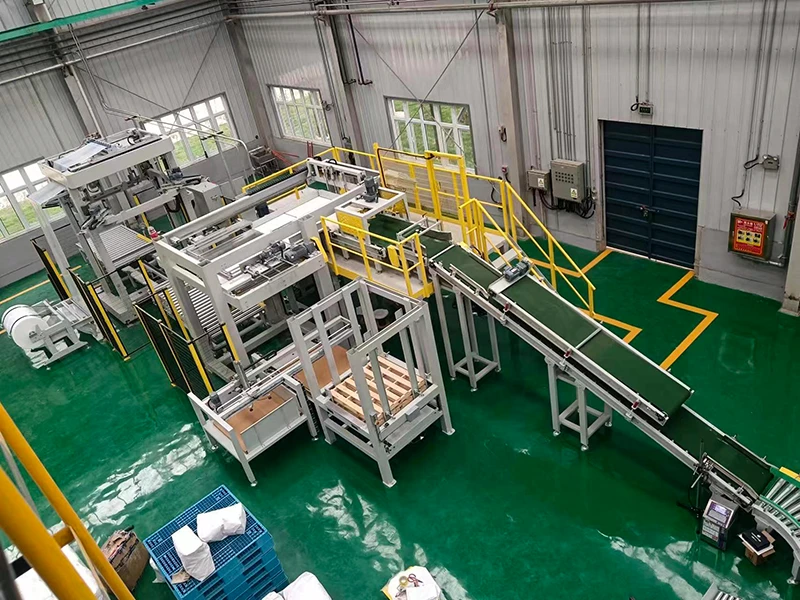
At 25 kg, every small interruption becomes visible in the finished bag. If the hopper feed slips, the bagging cycle starts to drift. If the transfer zone is too narrow, operators spend more time waiting than controlling the line. And if the bag leaves the machine without a clean path to the next station, the whole output rhythm turns uneven.
That is why an FFS line is usually judged by the layout first and the speed second. The machine must let the plant move material, form the bag, and clear the discharge point in one controlled sequence. If those three points do not match, the line may still run, but it will not run steadily.
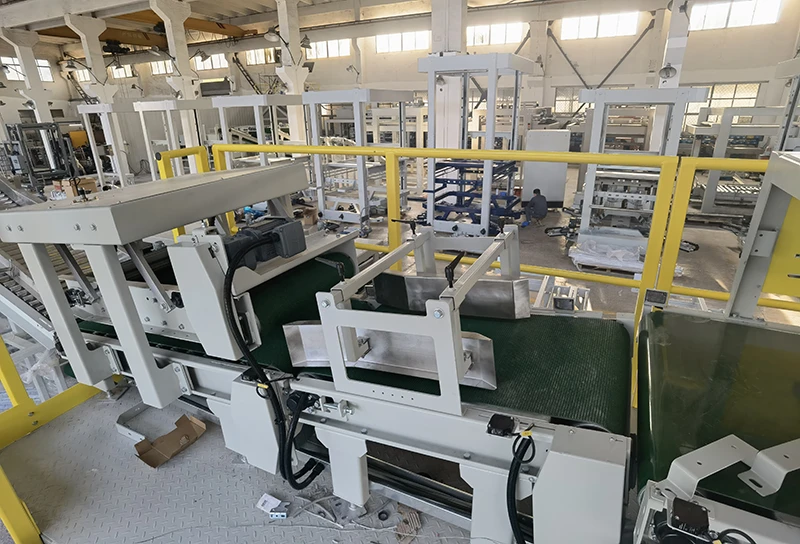
Manual bag positioning, tight access around the forming section, and short discharge paths create stoppages right where 25 kg bags need the most control.
How the FFS layout solves the weak points
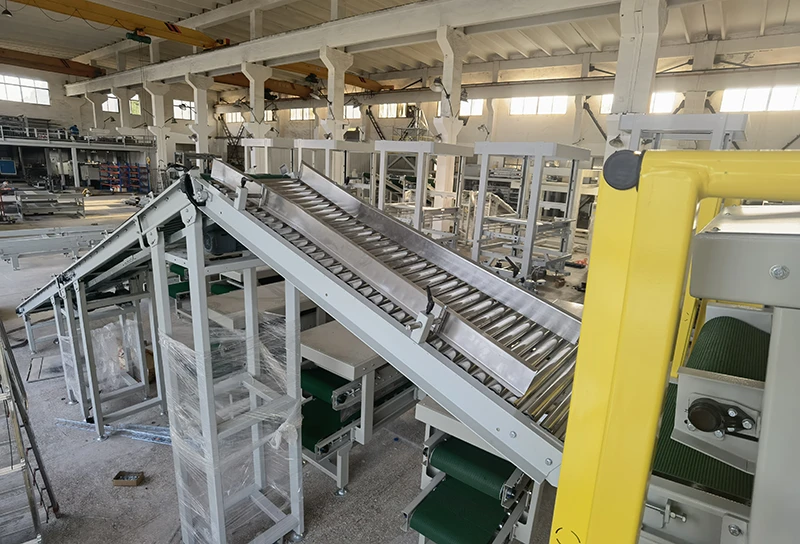
The FFS structure shown here works because the machine is built as a sequence, not as separate boxes. The elevated platform keeps the working area organized. The guarded forming and filling section keeps the operator away from moving points while still leaving the machine visible. The side conveyor and downstream route reduce the gap between bag creation and bag transfer.
That layout matters on 25 kg work because the bag is heavy enough to punish sloppy handling, but common enough that plants do not want a custom process for every batch. A stable frame, clear access, and a direct outfeed path give the plant a repeatable routine instead of a constant correction job.
Practical view: When the hopper, bag forming zone, and discharge route stay visible in one frame, operators can detect a feed issue before it becomes a line stop.
What to check before you plan a 25 kg FFS line
For 25 kg bags, the useful questions are simple: can the feed stay consistent, can the operators see the working points, and can the discharge move without crowding the next station? Those checks are not abstract. They are the exact areas where an FFS line either keeps pace or starts to lose time.
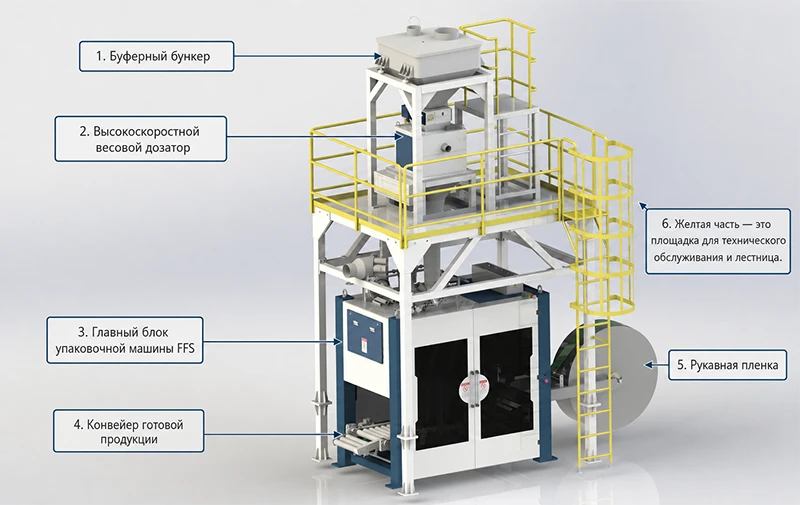
The annotated machine view helps connect the structure to the job. It shows the process modules, control area, film handling, and service points in one place, which is exactly what a plant needs when it plans access, maintenance, and daily operation. The goal is not just to install a machine. The goal is to keep the 25 kg bag flow readable, serviceable, and steady over long production runs.
| Planning point | What causes trouble | What the FFS line does |
|---|---|---|
| Hopper feed | Uneven feed leads to unstable fill cycles and bag-to-bag variation | The machine layout keeps the feed path visible and easier to manage from the platform |
| Operator access | Tight access around the forming zone slows inspection and correction | Guarded structure and service points keep the working zone organized without hiding the process |
| Discharge flow | Short or blocked transfer paths create pileups after filling | Side conveyor and downstream handling keep the bag moving toward the next step |
Need a 25 kg bagging line that stays readable on the floor?
If your plant needs cleaner filling, safer access, and steadier discharge for 25 kg bags, the right FFS layout should make those goals visible in the machine structure itself. That is the best sign the line will stay practical after installation.
Talk to BPM English
 Русский