
How a Russian Polymer Warehouse Built a Cleaner Granule Bagging Flow with an FFS Line
When a warehouse has to turn incoming granules into stable bagged dispatch, the problem is rarely just filling. The real pain is the chain around it: feed, transfer, access, palletizing, and the constant risk of a line that forces too much manual handling.
Customer scenario: a busy polymer warehouse needs steadier bagging and dispatch
A Russian polymer warehouse that handles granules usually works under a simple pressure: receive material, package it into bags, and move those bags out without creating a second bottleneck inside the building. If the old setup depends on scattered equipment, narrow access paths, or manual bag transfer, the line becomes hard to keep consistent.
The challenge is not only output. It is also cleanliness around the filling point, safe access around moving equipment, and a layout that keeps forklifts, pallets, and operators from competing for the same space. That is why the FFS line has to work as a system, not as a single filler.
Manual bagging, exposed transfer points, and weak downstream coordination create uneven flow. The warehouse gets more touchpoints, more cleaning pressure, and more chances for bags to back up before palletizing.
Why this FFS line fits the job
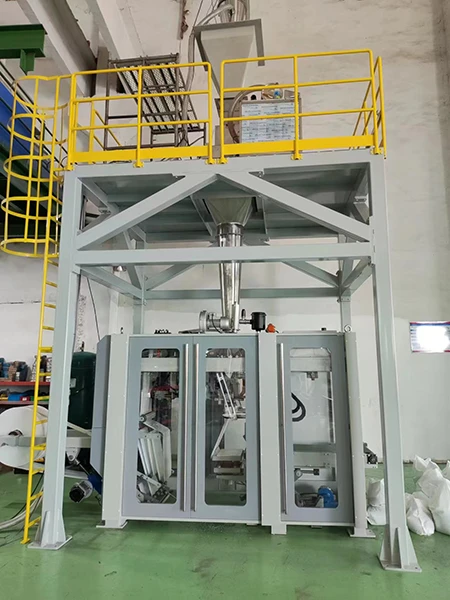
The line in the photos is built around a clear idea: keep the bagging point organized, move material through an elevated and protected structure, and send finished bags into a downstream handling chain that does not rely on guesswork. The enclosed cabinet, the platform, and the guard rails help the operator zone stay controlled.
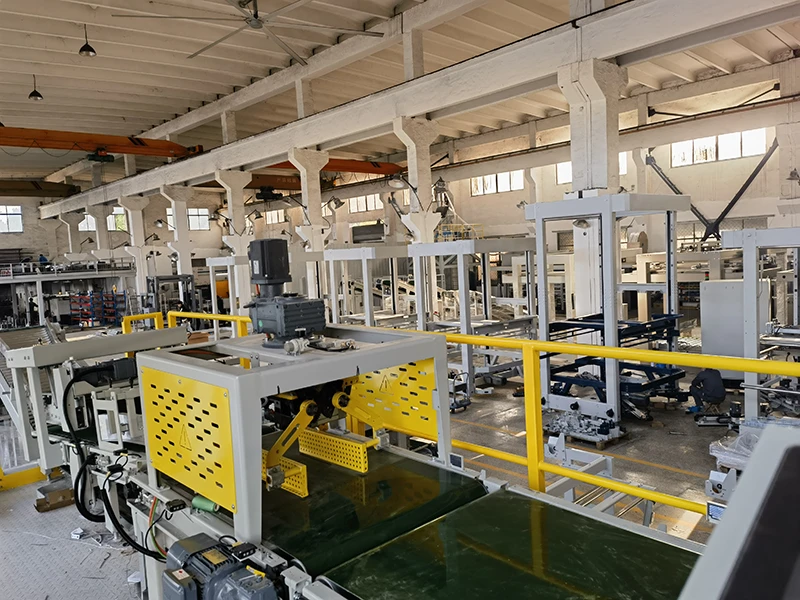
The line section photo shows why the setup is practical for granules. White machine frames, conveyors, and downstream handling units make the path from filling to exit easier to follow. That matters in a warehouse environment because the operator does not need to improvise around each transfer. The process is more repeatable, and repeatability is what keeps dispatch steady.
Why the structure matters: the elevated platform and safety rails are not cosmetic. They create service access, separate people from moving zones, and make the line easier to maintain in a real warehouse floor plan.
Structure, flow, and evidence from the machine layout
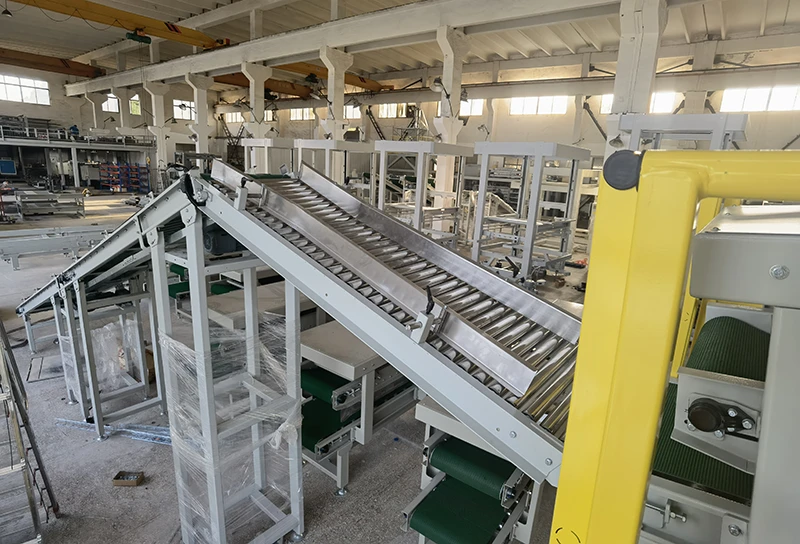
The inclined conveyor and elevated platform image adds a second proof point: the line is arranged for practical flow, not just for a showroom view. Granules move through a compact packaging chain, then into a transfer path that keeps finished bags moving toward the end of line.
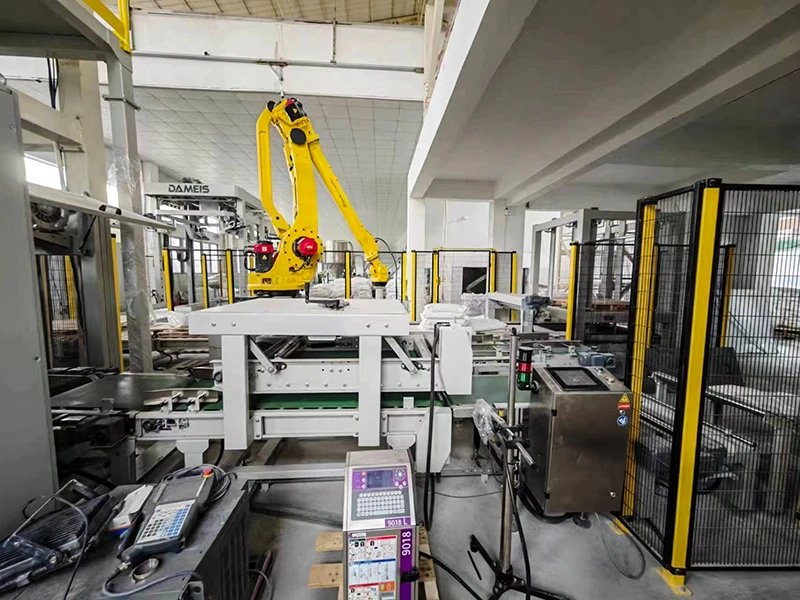
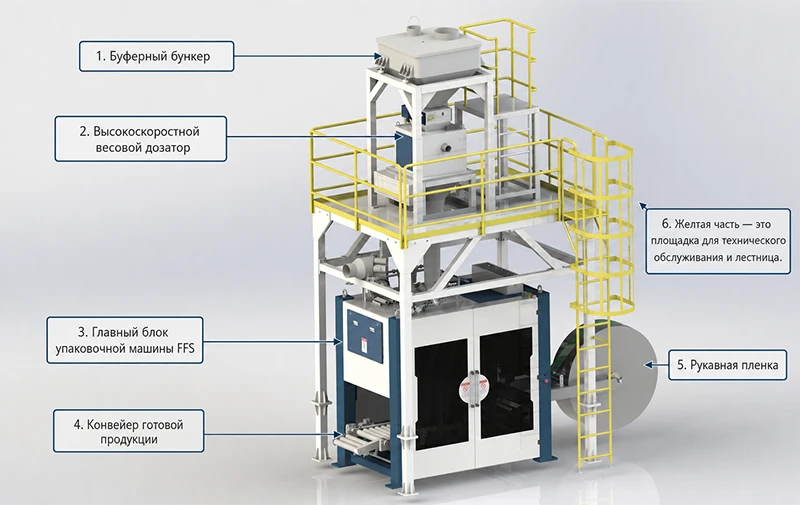
At the back end, the robotic palletizing station shows how the line can reduce repeated manual lifting. Once bag output is stable, automated palletizing turns the warehouse from a handoff-heavy area into a coordinated dispatch zone. The annotated diagram then helps explain the machine modules: process section, frame, control area, film handling, and service points. Together, these photos show a line that is designed to be understood, serviced, and scaled.
| Изобразительные доказательства | What it proves | Why it matters for a polymer warehouse |
|---|---|---|
| Front machine view | Enclosed main body, hopper, platform, and guard rails | Cleaner operating zone and safer access around the bagging point |
| Line section view | Conveyors, frames, and downstream handling | More consistent transfer from filling to dispatch |
| Robot and annotated layout | Automated palletizing and clear module identification | Less manual touch, easier maintenance, and better end-of-line control |
When bagging must stay clean, safe, and steady, the line has to work as one system
For a Russian polymer warehouse, the value of an FFS line is not just faster bagging. It is the ability to keep feed, transfer, palletizing, and service access aligned so the dispatch zone stays predictable under daily load.
Talk to BPM about an FFS line English
 Русский