
How a Powder Packaging Line Keeps Feeding, Sealing, and Secondary Bagging Steadier
For bulk powder operations, the real risk is not only output speed. Bridging in the hopper, dust at the seal, film sticking at the collar, and loose secondary bags all create rework downstream. A stable powder packaging line has to solve those failure points as a system, not as isolated machine features.
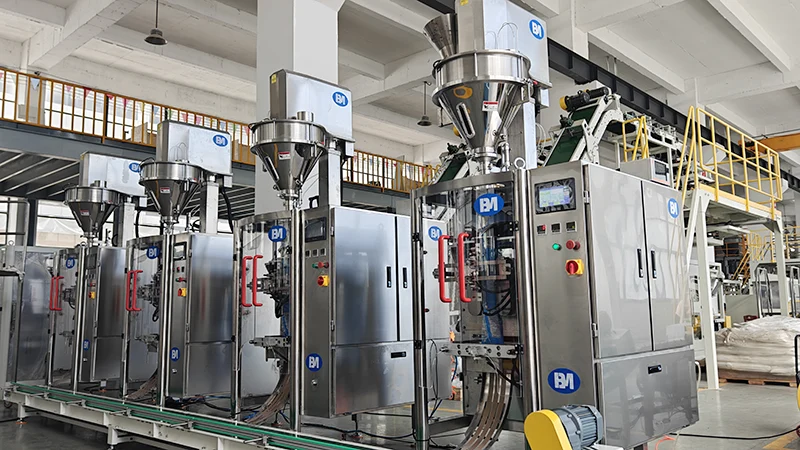
Where the old powder line usually breaks down
Many powder plants start with a line that can fill a bag, but not keep the bag quality steady. The first weak point is feed stability: when the hopper, dosing head, or transfer path lets material hang up, the whole cycle becomes uneven. The second weak point is sealing. Fine powder escapes into the jaw area, heat transfer becomes inconsistent, and the seam loses integrity. The third weak point is bag handling after fill. If the package is still soft or full of trapped air, stacking, sewing, and palletizing become harder than the actual filling step.
That is why powder packaging has to be judged by the full flow: feeding, metering, sealing, discharge, and outer bag handling. If one step is weak, the line looks productive but creates unstable bags and more manual correction later.
Powder lines fail when the machine can fill fast but cannot keep the bag clean, sealed, and square enough for downstream packing. The result is dust, unstable seams, and weak stacking quality.
Why BIBPU fits powder work better than a generic bagging setup
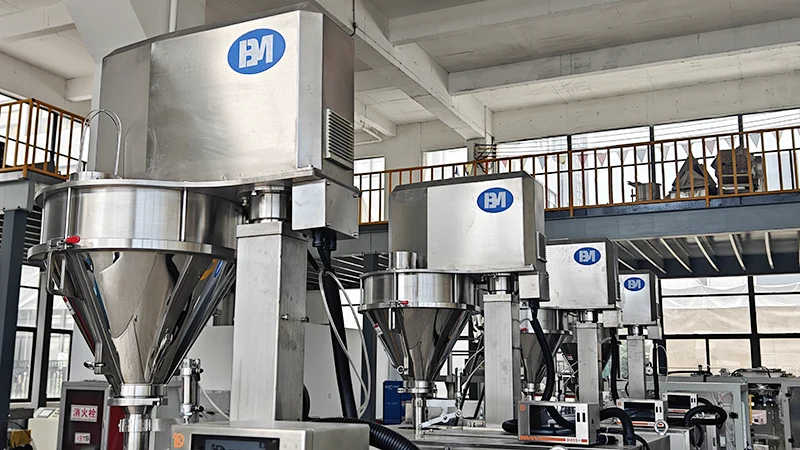
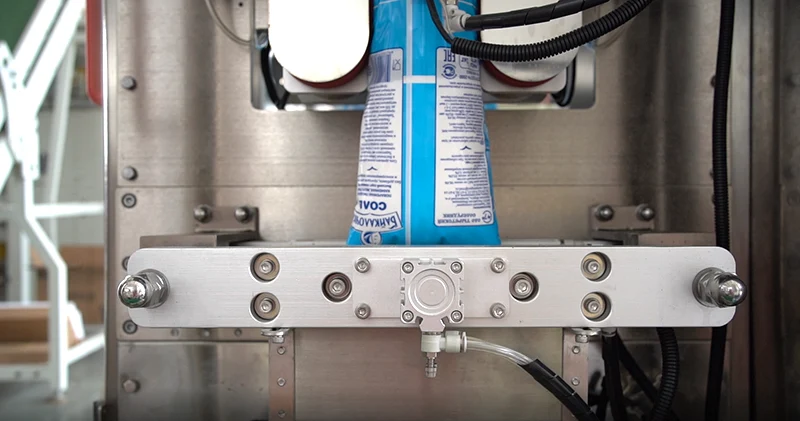
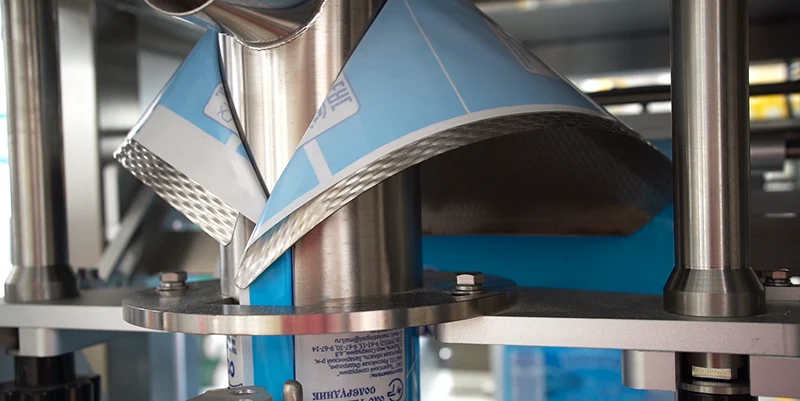
BIBPU is built as a packaging system for bulk products, so its value is in the interfaces between modules. The dosing section is designed to keep the product feed controlled, while the vertical form fill seal section keeps the bag forming and closing stable. The sealing jaw area uses controlled heat and a rigid mechanical layout, which matters when powder contamination is always trying to interfere with the seam. The forming shoulder is equally important: when film drag drops, the film tracks more predictably and the bag shape stays consistent.
For powder applications, the downstream handling matters as much as filling. Cleanly formed bags are easier to group, transfer, and prepare for secondary packaging. That is why the line should be read as one chain: hopper stability protects the dosing step, dosing stability protects the seal, and the seal quality protects the final palletizing and dispatch stage.
System insight: In powder packaging, the best machine is not the one with the most promises. It is the one that keeps the same bag shape, the same seal quality, and the same transfer behavior through the full shift, including the messy hours when powder flow is less cooperative.
What the structure and process evidence show
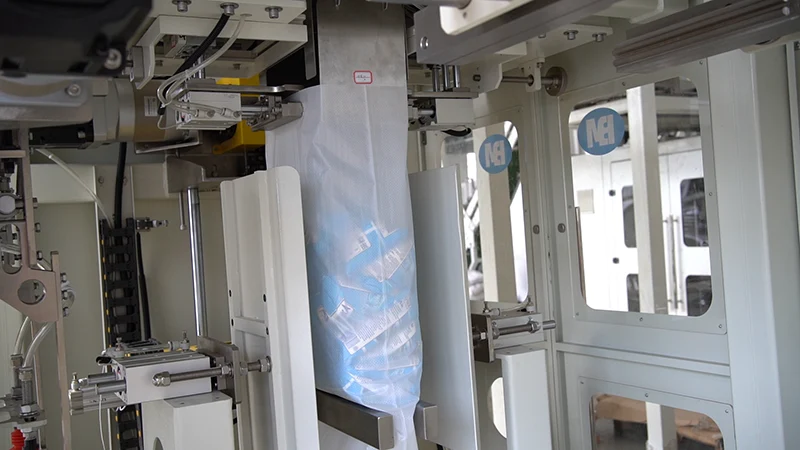
The pictures tell a practical story. The dosing module shows that the line is not relying on loose gravity flow alone. The sealing jaw image shows a controlled closure point, which is what powder packing needs when dust must be kept out of the seam. The dimpled forming shoulder image shows a detail that helps film release more smoothly, reducing drag and helping the bag form consistently. The secondary bagging image proves the line is not stopping at the primary pouch; it also supports transfer into woven sacks for cleaner shipping and easier warehouse handling.
That structure matters because powder customers rarely buy only a single machine. They need a repeatable result: less dust around the seal, fewer bag rejects, more regular bag geometry, and a cleaner path to dispatch. A line that can hold those four outcomes is far more valuable than a line that only claims speed.
| Powder line issue | Machine-side response | Ожидаемый результат |
|---|---|---|
| Bridge risk at feeding | Stable auger dosing and controlled structural support | More even fill cycles |
| Dust contamination at sealing | Rigid horizontal sealing jaw and controlled closure point | Cleaner seam quality |
| Film sticking and shape drift | Dimpled forming shoulder with smoother film release | More regular bag geometry |
| Soft bags in dispatch | Secondary woven PP bag handling with pneumatic clamping | Cleaner transfer and stacking |
Need a steadier powder packaging result?
If your current line struggles with feeding stability, seal cleanliness, or downstream bag handling, BIBPU gives you a more complete packaging chain. It is built to turn powder packaging from a sequence of weak handoffs into one controlled flow from dosing to dispatch.
Talk to BPM about your powder line English
 Русский