
How a Bulk Product Bagging Line Keeps Dosing, Repacking, and Woven Sack Dispatch Steadier
For salt, resin pellets, grains, powders, and other bulk materials, the real challenge is not only filling the bag. The hard part is keeping feed stable, film tracking under control, the secondary sack shape flatter, and the final sewing step consistent enough for daily dispatch.
Why bulk lines start to slip when feed and transfer are not matched
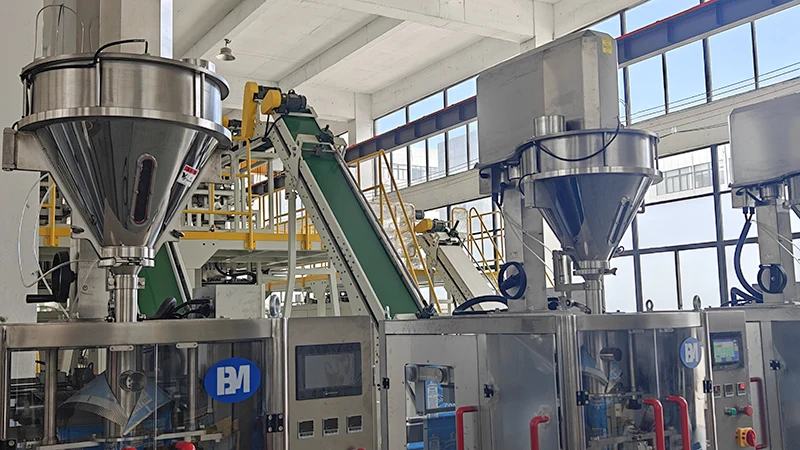
In a typical bulk-product workshop, the first problem appears upstream. The feeding hopper may run steady for a while, then bridge, surge, or lose rhythm when the material changes. That is why the line needs a dosing zone that is easy to keep full and a transfer path that keeps the material moving without unnecessary interruption.
The image evidence matters here. The hopper-and-elevator layout shows a compact feeding structure that is designed to keep the line supplied. For bulk products, this is not a cosmetic detail. Stable feed is what protects the rest of the process from empty cycles, repeated restarts, and avoidable operator intervention.
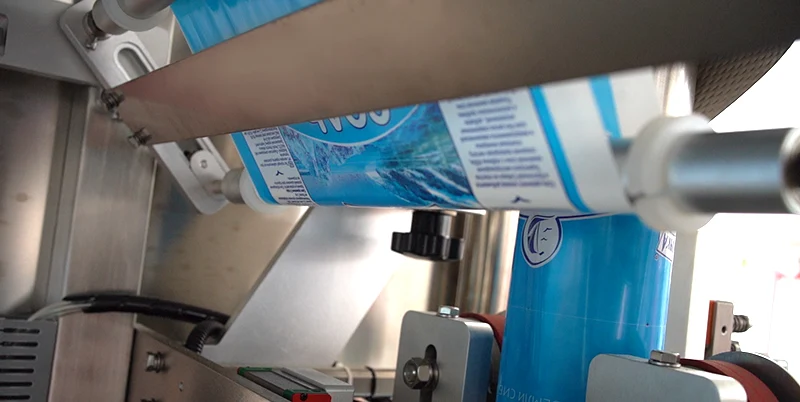
When film tracking drifts, the bag shape changes. When the transfer alignment is loose, the sack mouth is harder to control. When the discharge timing is inconsistent, the next station inherits the problem. Bulk-product packing usually fails as a chain, not as a single point.
Why this BIBPU setup fits the job better
The guide roller and manual alignment collar show a practical answer: the film path is not left to chance. It can be aligned and kept in position, which helps protect sealing consistency and reduces scrap caused by wandering film. For bulk-product lines, that stability is often more valuable than raw speed.
At the same time, the line uses UNS S31603 / 316L contact surfaces on the product-facing side, which is important for corrosive or chloride-heavy materials. That material choice supports durability in salt and similar environments, while the mechanical layout keeps the line easier to maintain during long shifts.
What the structure is doing: the machine is not just filling and closing bags. It is controlling feed, guiding film, compressing the finished sack, and handing the product off into a more stable discharge sequence.
From swelling sacks to cleaner handoff
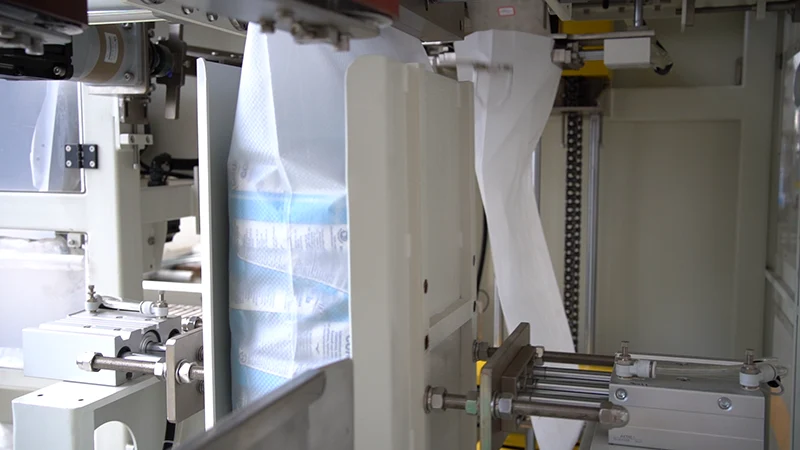
After filling, the next risk is volume control. A loaded woven sack may bulge, shift, or arrive at the sewing station with too much trapped air. That is where the side compression stage becomes useful. It reshapes the sack before closure, so the bag is easier to feed and easier to close.
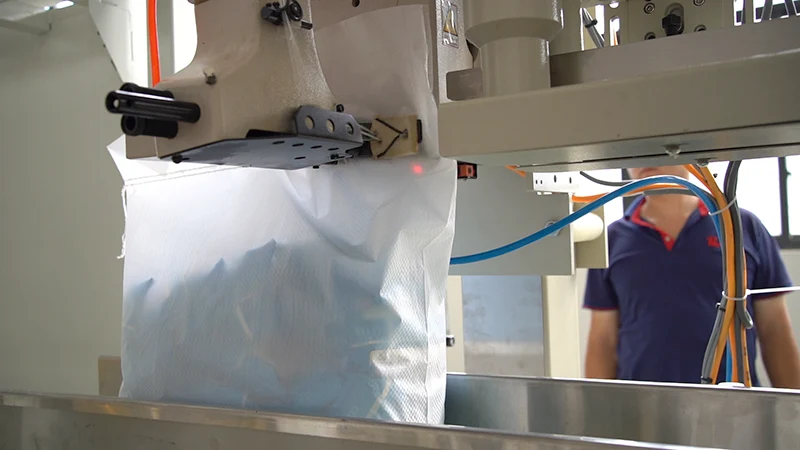
The compressed-sack image shows exactly that step: pneumatic side clamping plates are used to flatten the load before sewing. This is one of the clearest ways to improve output quality without asking operators to correct every bag by hand. It keeps the sack profile more uniform and gives the sewing head a better starting point.
What the final handoff changes at the sewing station
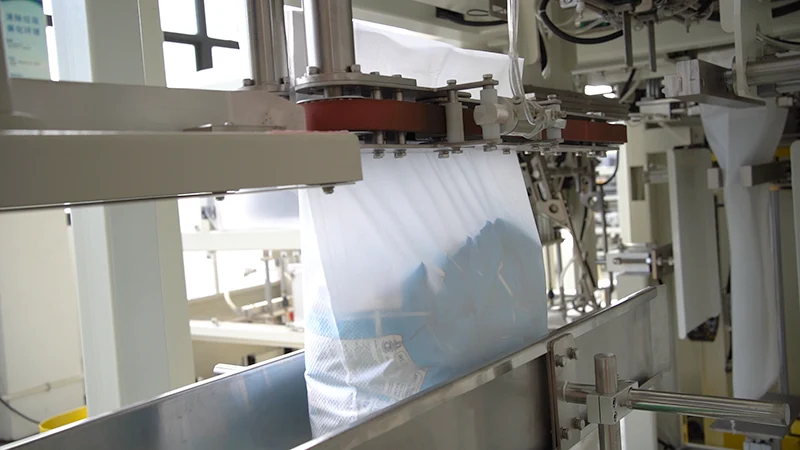
The last station decides whether the line feels organized or messy. If the bag mouth is not aligned, sewing slows down. If the feed to the closer is unstable, the output becomes inconsistent. The dual-belt handoff shown in the next image solves that by holding and guiding the filled woven bag in a more controlled way before it reaches the sewing head.
Then the Newlong sewing head finishes the job with a proper industrial closure. That is the result customers want: fewer manual corrections, fewer deformed sacks, and a dispatch flow that is easier to count, stack, and ship. The whole line makes more sense when the feeder, film path, compression step, and sewing station are treated as one chain.
| Problem | Structural answer | Изобразительные доказательства | Result |
|---|---|---|---|
| Unstable feeding | Compact dosing and transfer layout | Hopper and elevator scene | Steadier upstream flow |
| Film drift | Manual alignment collar and guide rollers | Film path detail | Cleaner tracking and fewer rejects |
| Bulging secondary sack | Pneumatic side compression | Loaded sack compression | Flatter bag profile before closure |
| Slow sewing handoff | Dual-belt mouth guidance plus industrial closer | Bag feed and sewing head | More consistent dispatch-ready output |
Need a steadier bulk-product bagging and repacking line?
If your current setup is losing time to feed instability, film tracking drift, bag swelling, or inconsistent sack closing, the BIBPU line is built to tighten that chain with a more controlled transfer, compression, and sewing sequence.
Talk to BPM about your packing flow English
 Русский