
Bulk Product Bagging Line for 25 kg Woven Sacks: Cleaner Handoff and Steadier Dispatch
Granule bagging line for bulk products
From hopper to pallet, this QZK-1200 setup shows how a granule bagging line can keep 25 kg woven-sack dispatch steadier in a busy warehouse. The point is simple: fewer handoffs, clearer flow, and a packaging layout that stays readable for operators on the floor.
- Hopper-fed bulk product handling
- Weighing, bagging, and outfeed in one visible flow
- Platform access and pallet-side logistics in the same line
What usually goes wrong before the line is upgraded
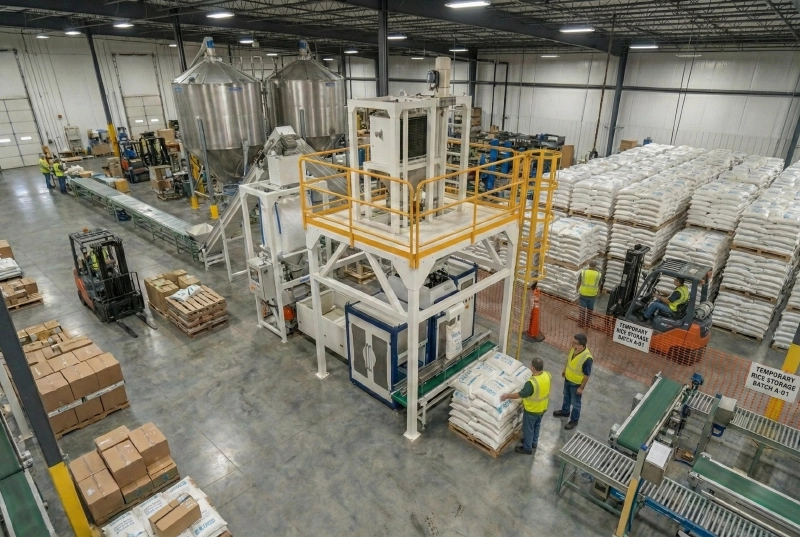
In many bulk product workshops, the old setup looks busy but works against the crew. Bags move through too many touchpoints, the bag mouth is harder to keep aligned, and forklifts end up compensating for a packaging flow that is not visually organized. The result is familiar: slower dispatch, more rework, and more chances for a woven sack to be bumped, tilted, or re-staged.
Why this QZK-1200 layout fits the problem
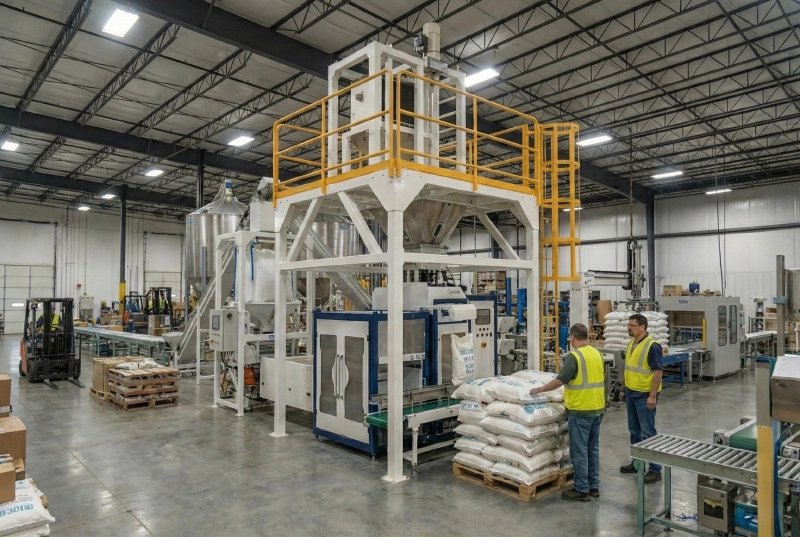
The photo shows the real advantage of the line: a high steel platform, safety cage ladder, enclosed machine body, and a clean outfeed path. That combination matters because bulk product packaging is not just about filling a bag. It is about keeping the bagging point stable, keeping the operator close enough to supervise, and keeping the downstream pallet area clear enough to move product without confusion.
- Elevated structure keeps the bagging process compact and legible.
- Enclosed machine sections help the line look and feel controlled.
- Operators can manage sacks without fighting the conveyor path.
Evidence from the internal bagging unit
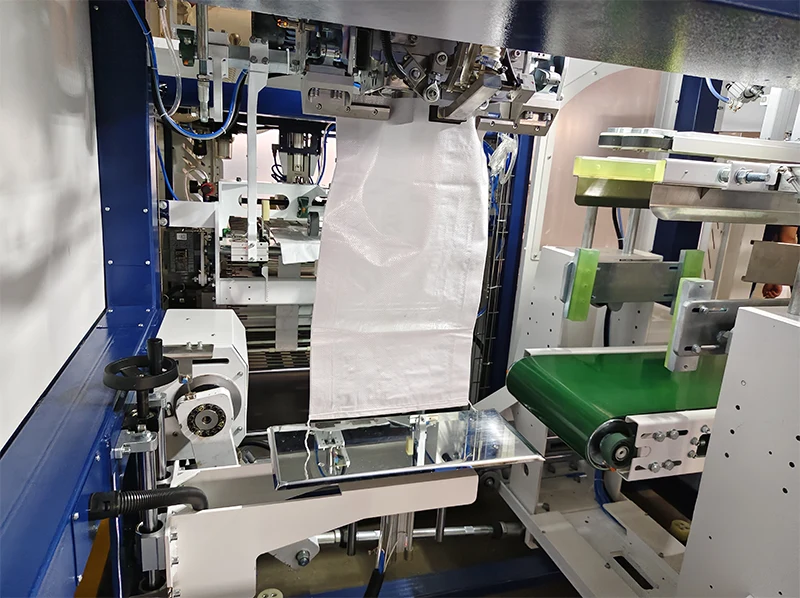
| Observed part | What the image proves | Operational result |
|---|---|---|
| Vacuum suction cups | The bag is picked and held at the transfer point instead of drifting by hand. | Cleaner bag handoff and fewer crooked starts. |
| Robotic placing arm | The line has a mechanical positioning element built into the bagging process. | More repeatable bag placement before discharge. |
| Green conveyor | Outfeed is continuous and visually separated from the filling zone. | Less crowding at the station and smoother dispatch. |
How the pallet side closes the loop
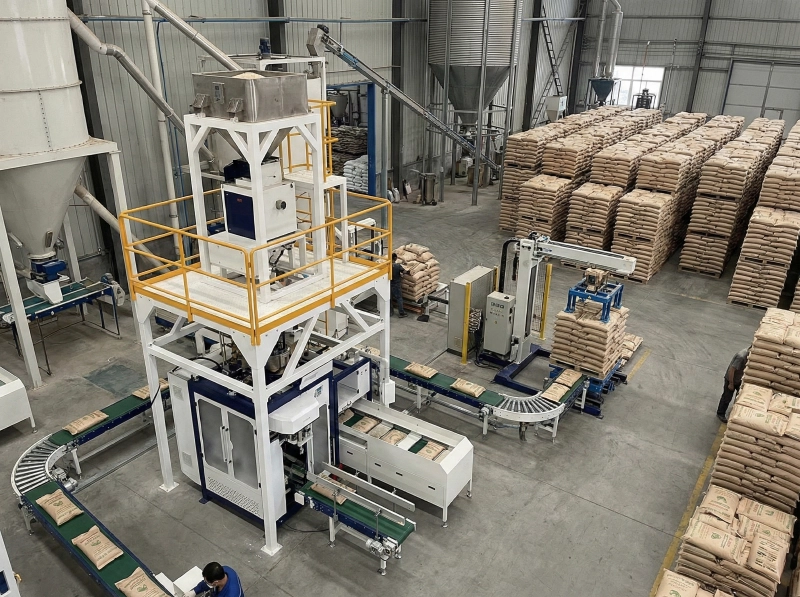
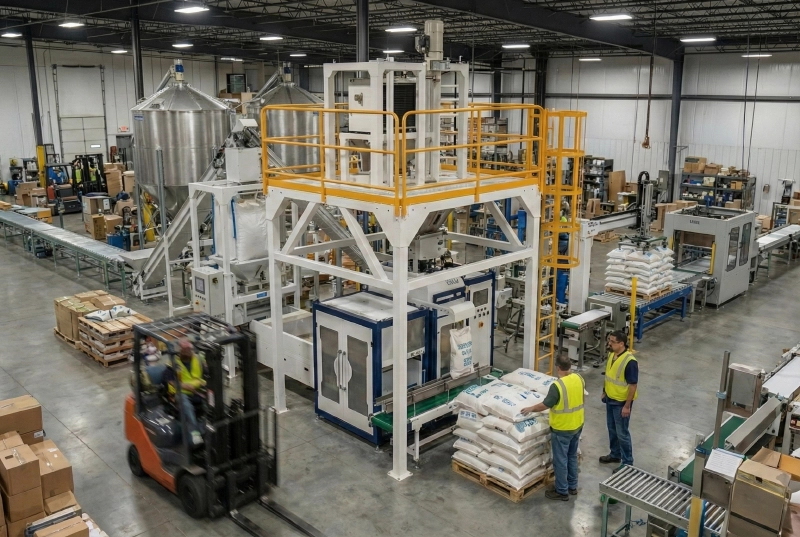
That is the strongest outcome of the ppline approach: the line is not only filling bags. It is creating a warehouse rhythm where bagging, pallet handling, and dispatch stay aligned. For bulk product teams, that usually means less re-handling, better visibility, and a more dependable route from filling point to warehouse exit.
Need a steadier bulk-product packaging flow?
If your workshop is still relying on a loose bagging point and a separate pallet routine, the QZK-1200 style granule bagging line is the kind of layout that makes the next upgrade easier to explain, easier to operate, and easier to scale.
Request a packaging line discussion English
 Русский