
Secondary Packaging Machine for Granular Products and Salt Bagging Lines
For salt, powder, and other free-flowing materials, the packaging challenge is rarely only filling. The real issue is stable transfer, clean bag handling, compacting, sealing, and consistent output in a secondary packaging line.
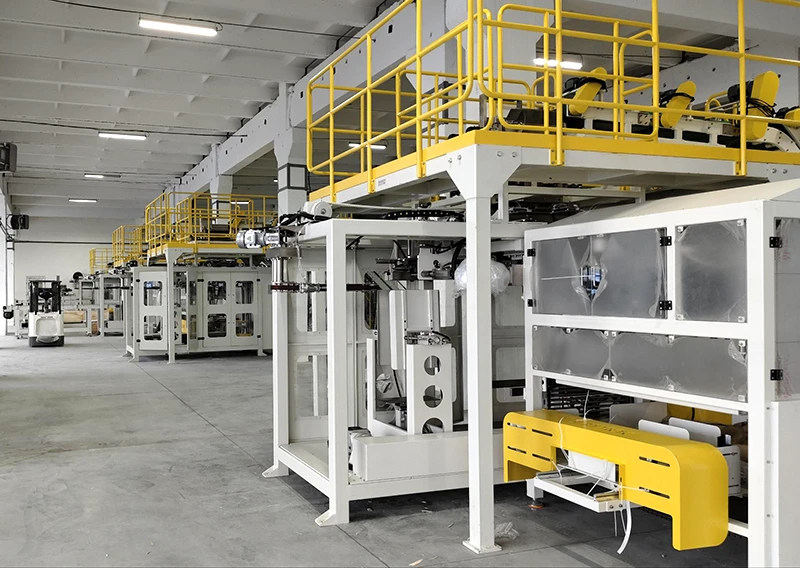
When manual packing slows the line, the whole workshop feels it
Many factories start with manual loading, irregular bag stacking, or a simple bagging step that looks acceptable on paper but becomes unstable in daily use. Bags shift, corners catch, dust control gets worse, and the downstream sewing or palletizing stage loses rhythm.
This is where a secondary packaging machine matters. The goal is not only to move product into a sack, but to keep the transfer controlled from the first bag clamp to the final sewn closure. The line needs a clear flow: feeding, holding, compacting, sealing, and discharge.
Loose flow, poor bag alignment, and unstable closing are the most common reasons a secondary packaging line loses speed. For salt packaging and other granular products, the problem is usually not the material alone — it is the machine sequence around it.
Why bibpu fits this job
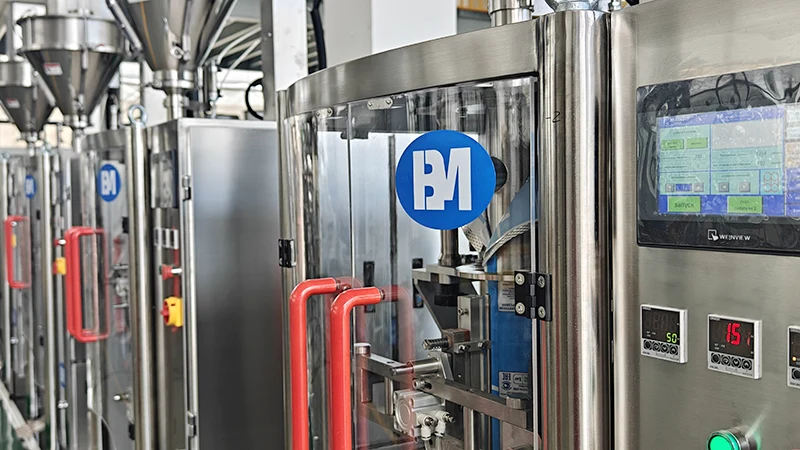
bibpu is built around the exact kind of visible structure this application needs: stainless dosing hardware, controlled bag gripping, side compression before closing, and a sewing station that finishes the job without breaking the line rhythm. The product traffic profile also points to the same use case: granule packaging machines, secondary packaging automation, dosing accuracy testing, and a secondary packaging line for granular products.
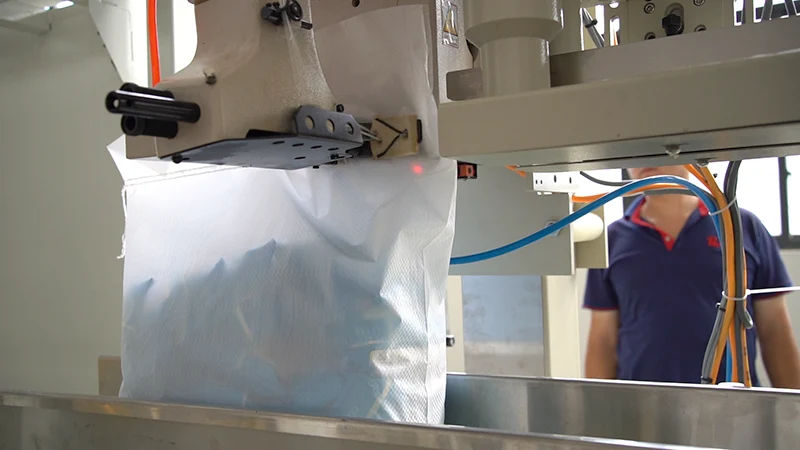
For customers running salt or other free-flowing materials, that combination matters. The workflow supports a cleaner transfer from product feed to woven PP bag handling, then to compression and stitch closing. In practice, that means fewer jams, better bag shape control, and a more stable final stack.
What the line is trying to solve: keep granular products moving through a controlled secondary packaging process, not a series of disconnected manual steps.
Visual evidence from the machine structure
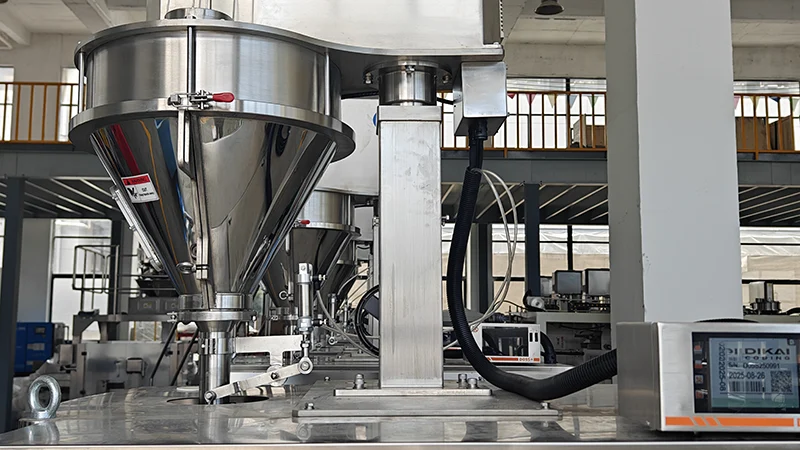
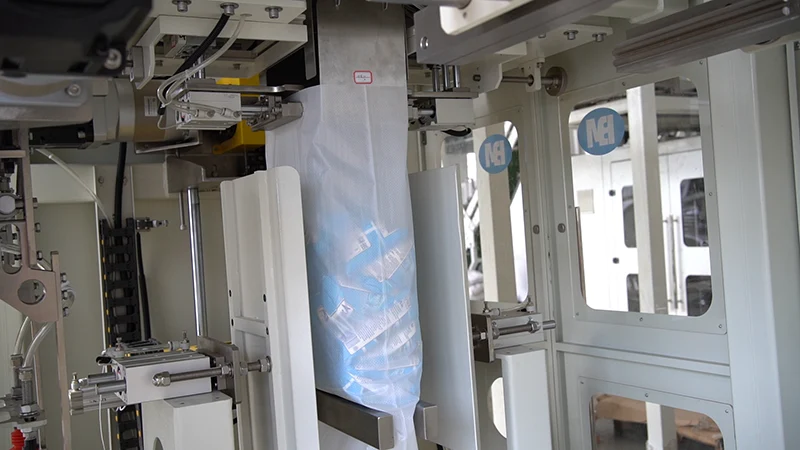
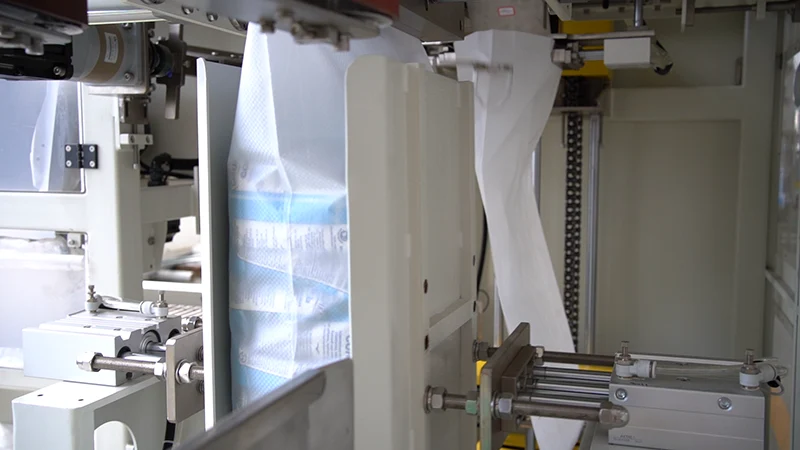
The images show the main functional chain clearly. A stainless steel dosing hopper manages feed at the top. The bag handling area holds the woven PP sack in position. Side clamping plates compress the load before closing. The sewing head finishes the mouth of the bag. Together, these details explain why the line is suitable for salt bagging and other granular packaging jobs.
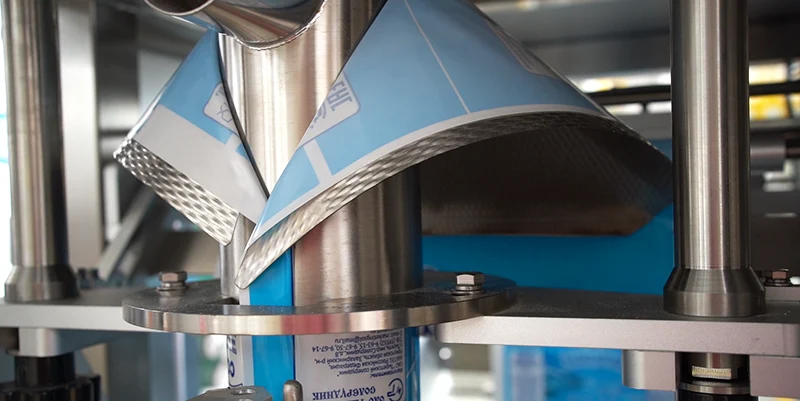
The forming shoulder and HMI console complete the picture. The forming shoulder helps the film path stay stable, while the control console shows that the operator can manage the machine from a central interface rather than scattered local controls. That is the kind of layout factories expect from modern packaging and filling equipment.
| Observed element | What it indicates |
|---|---|
| Stainless dosing hopper | Stable feed handling for granular products |
| Pneumatic bag clamps | Controlled bag positioning during transfer |
| Side compression section | Bag shaping before final closing |
| Industrial sewing head | Reliable closure for woven secondary bags |
| HMI control console | Operator-friendly line control and monitoring |
Need a secondary packaging line for salt or other granular products?
bibpu is designed for controlled bag handling, stable compression, and dependable closure in secondary packaging workflows. If you are planning a new line or upgrading an existing one, this is the right direction to discuss.
Request a packaging solution English
 Русский