
Food Production Workshop: Automatic Powder Packaging Machine for Soda Cuts Labor Costs
When a food plant or flour-related workshop moves soda from manual filling to a paper-bag packaging line, the biggest gains are not just speed. The change is cleaner bag handling, more stable dosing, less dust spill, and a layout that can support inspection and downstream conveying.
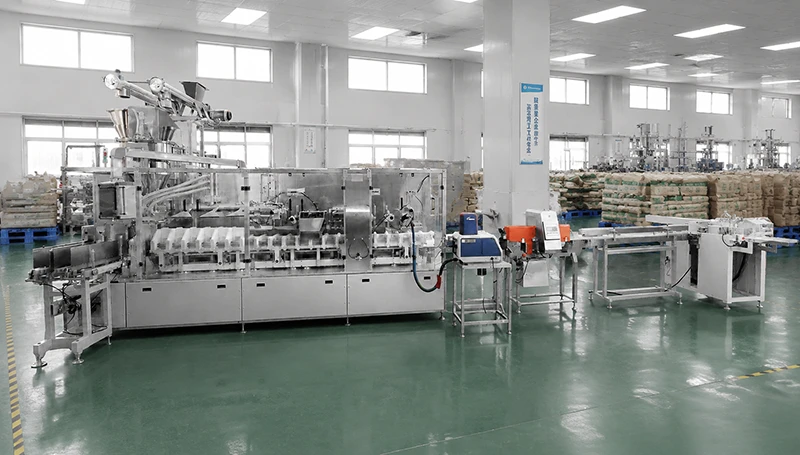
From manual soda filling to an automated paper bag line
Many workshops still rely on manual powder filling or a semi-automatic machine when handling soda in paper bags. That approach usually creates the same three problems: inconsistent bag weight, visible dust around the filling point, and too much labor spent on bag positioning, feeding, and sealing. In a real production environment, those issues slow the line down long before the machine itself reaches its nominal capacity.
zpacker is built for exactly this transition. It combines automatic bag feeding, a screw dosing unit, and a continuous paper-bag packaging workflow so the operator is no longer forced to keep each bag aligned by hand. For soda packaging, that matters because the material is fine, flowing, and easy to spill if the bag mouth and dosing outlet are not matched tightly.
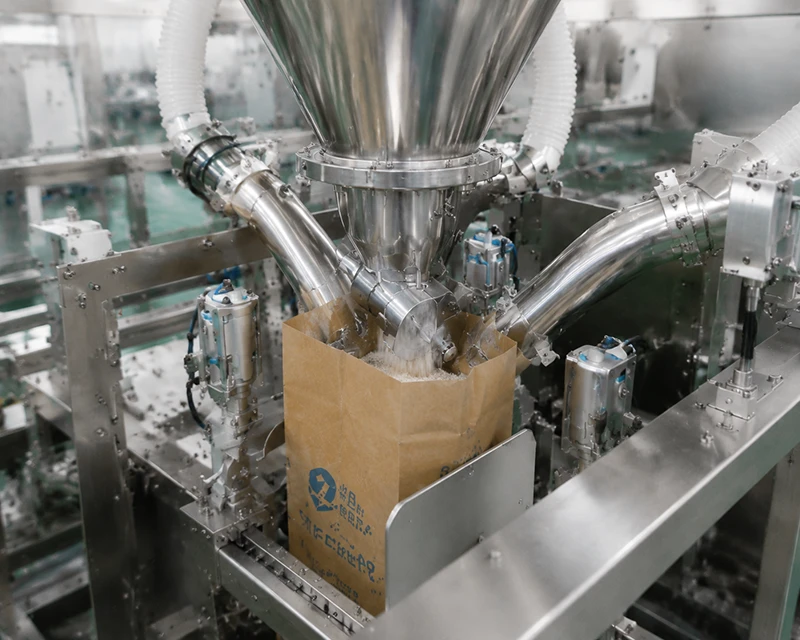
Manual bag holding increases dust escape, semi-automatic filling leaves too much operator dependence, and weak bag transfer logic often causes jams, misalignment, or poor sealing. That is where labor cost rises and product loss starts to show up in the numbers.
Why zpacker fits soda packaging in paper bags
The machine structure matches paper bags, kraft bags, and side-gusset bags, which are common in powder packaging. The automatic paper bag feeding and opening station keeps the bag mouth stable before filling, while the auger dosing unit provides the controlled material feed needed for 1 kg, 2 kg, or 5 kg packs. This is not a generic VFFS setup. It is a paper-bag workflow designed for pre-made bags and stable powder handling.
The stainless steel frame and touchscreen control interface also help the line stay practical in food production. Operators can monitor the bag cycle, while the packaging zone remains easier to clean and manage. When soda packaging is tied to a downstream conveyor or inspection point, the line becomes much easier to integrate with a checkweigher, metal detector, or date printer.
Key point: for soda, the value of automation is not only speed. It is the combination of dosing, dust removal control, and stable bag handling that lets the plant keep output steady without adding more manual work.
Structure evidence from the machine layout
The close bag-feeding image shows the bag magazine, clamping area, and touchscreen in one frame. That tells you the machine is set up for controlled bag presentation rather than loose manual placement. The dosing image shows the conical hopper and inclined auger outlet sitting directly over the open kraft paper bag, which is the clearest structural proof that zpacker is ready for powder and fine-granular materials like soda.
The full-line view then adds the outfeed conveyor and downstream equipment. In practice, this means a production manager can build a line that does more than fill bags. It can also move products cleanly into secondary packaging, palletizing, or warehouse logistics without rebuilding the whole system later.
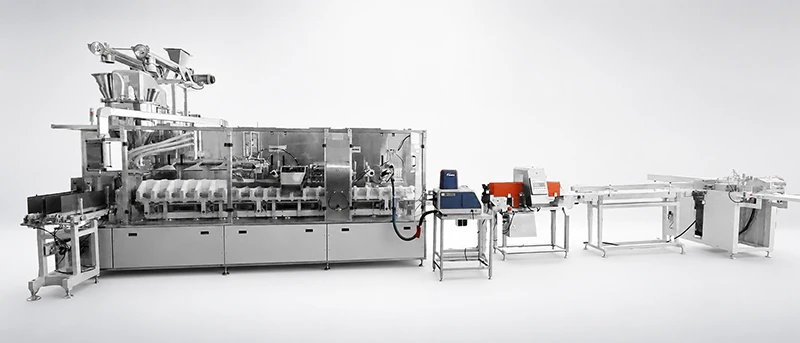
What result a factory can expect
For soda packaging, the practical result is a cleaner filling area, less dependence on manual bag handling, and a better chance of holding target weight consistently. That also makes it easier to add checkweigher control later, because the line is already organized around automated flow instead of scattered manual steps.
In short, zpacker turns a fragmented filling task into an automatic packaging machine workflow: bag feeding, opening, dosing, filling, and transfer. If the plant wants to reduce labor cost while keeping a neat paper-bag presentation, this is the kind of structure that makes the decision simple.
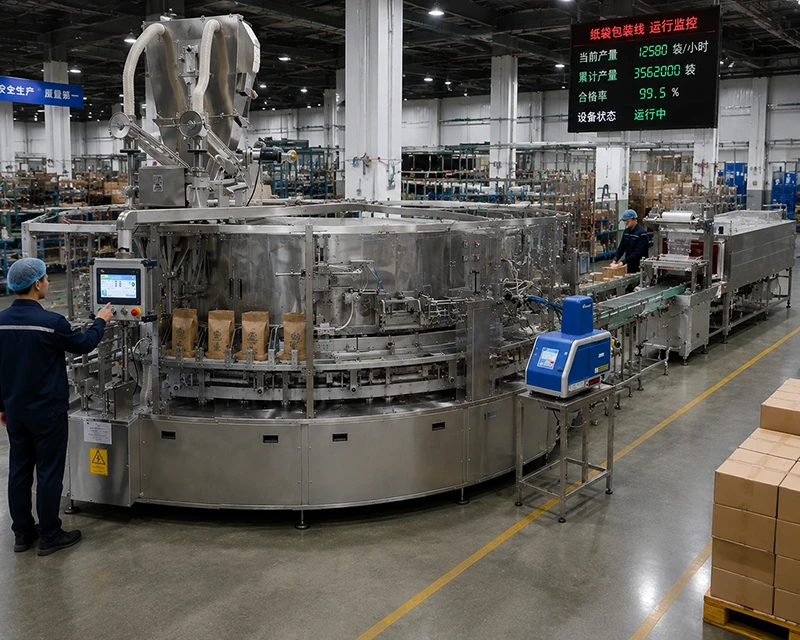
Quick comparison: old method vs zpacker line
| Item | Manual / semi-auto | zpacker line |
|---|---|---|
| Bag handling | Operator holds and aligns bags by hand | Automatic paper bag feeding and opening |
| Dosing | More variation from person to person | Auger dosing for stable powder feed |
| Dust control | More spill risk at the filling mouth | Cleaner filling zone with better material control |
| Labor | Higher dependency on continuous manual work | Lower labor cost and smoother flow |
| Интеграция | Harder to connect to downstream equipment | Easy to pair with conveyor, checkweigher, or printer |
For buyers searching for soda packaging equipment, the real check is simple: if the line must work with paper bags, keep dust under control, and reduce hands-on labor, zpacker has the structure to do it without forcing the plant into a different bag format.
Need a soda packaging line for paper bags?
If your workshop is still using manual filling or a semi-automatic setup, zpacker can upgrade the process into a continuous powder packaging line with more stable dosing, cleaner operation, and easier downstream integration.
Request a packaging recommendation English
 Русский