
Sugar Packaging Equipment for Stick-Pack Projects: Check the Bag Format Before Choosing Zpacker
Buyers looking for sugar stick-pack packaging equipment need to verify one basic point first: is the project for film stick packs, or for premade paper bags? Zpacker is an automatic paper bag packing machine for powder products in M-fold square-bottom bags, with a complete route from bag feeding and screw dosing to dust removal, sealing and downstream inspection.
Start with the customer’s package, not the machine name
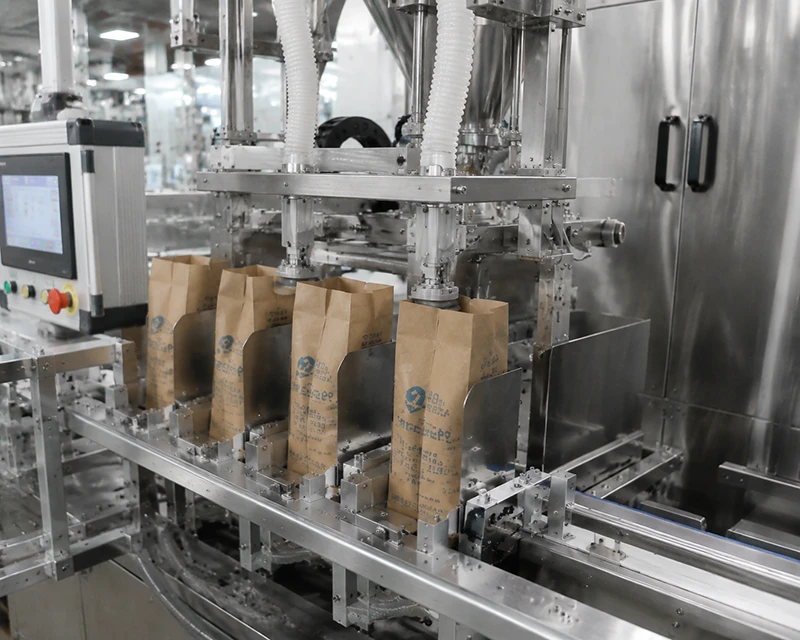
A sugar producer may describe the requirement as stick-pack filling because the retail product is sold in small portions. That wording does not by itself define the packaging technology. A vertical packaging machine normally forms bags from roll film. Zpacker instead receives premade paper or paper-plastic bags, picks each bag from a magazine, opens it, holds it in position and carries it through the filling and closing sequence.
This distinction matters for procurement. If the required package is a narrow, film-formed stick, the bag-making and sealing concept must be confirmed separately. If the customer already has M-fold paper bags or wants a paper-based 1 kg, 2 kg or 5 kg sugar pack, Zpacker becomes a relevant automatic packaging line to evaluate. Paper-plastic bags also require a sample check for layer bonding and hot-melt adhesive compatibility.
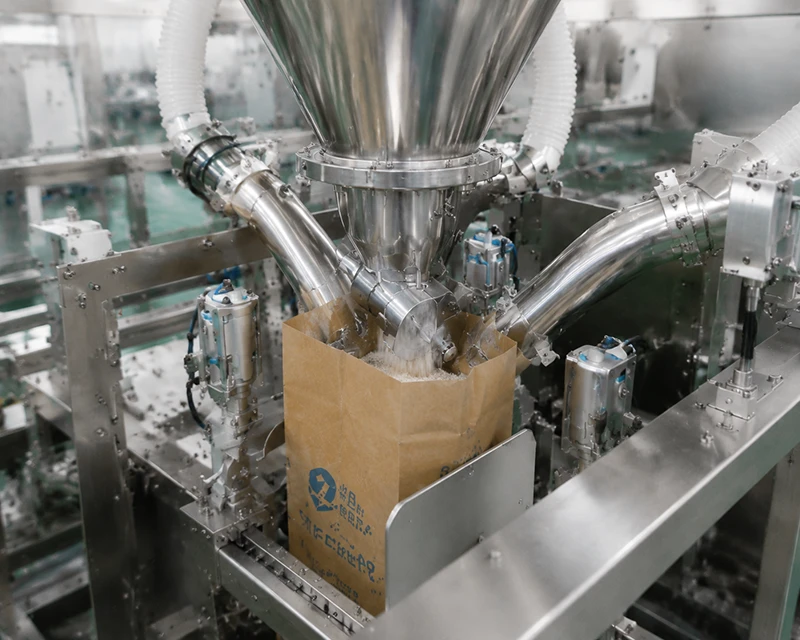
Manual bag feeding, opening, weighing and closing adds handoffs at exactly the points where sugar dust, inconsistent settling and sealing contamination can appear. A semi-automatic machine may fill the product, but still leave bag forming, M-edge preparation and downstream handling to operators. The result is harder-to-repeat dosing, more labour input and a packaging line that stops between processes.
How Zpacker adapts the process to a premade powder bag
The machine is built around a double-station linear process. A belt-fed bag handling system takes the premade bag from the magazine, opens it into its three-dimensional form and positions it below the dosing point. A screw doser then delivers the powder into the bag. For the recorded configuration, the reference ranges are about 30–35 bags per minute for 1–2 kg packs and about 15–20 bags per minute for 2.5–5 kg packs. Actual speed depends on sugar flowability, feeding capacity, bag samples and acceptance conditions.
After filling, the route is not finished. Vibration and dust-removal stations help the product settle and reduce powder around the mouth. The M-fold side edges can then be folded, trimmed, rolled, hot-melt sprayed and pressed closed. This is the reason Zpacker should be assessed as equipment for a specific premade-bag process rather than as a generic sugar filler.
Engineering checkpoint: confirm the bag direction, width, length and M-edge before quotation. Reference dimensions are W 80–140 mm, L 240–320 mm and an M-edge of about 60–80 mm; the final bag drawing and physical sample take priority.
What the line can cover—and what must be confirmed
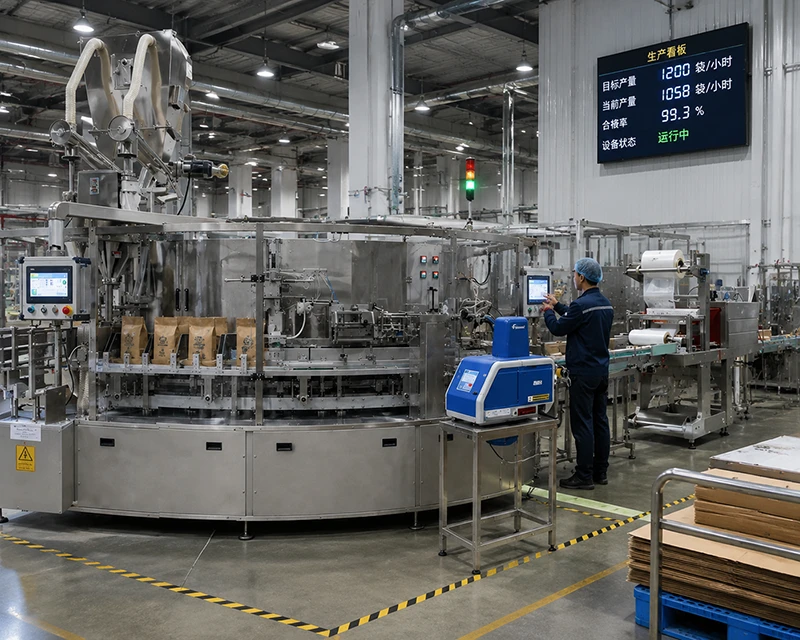
The equipment concept connects the core packaging operation with the checks and handling required by a food production line. A project may include screw conveying, dual screw dosing, weighing inspection, metal detection, date printing, bag arranging and secondary packaging by shrink film or manual outer-bag loading. The correct combination depends on the sugar grade, target pack, retail requirements and factory layout.
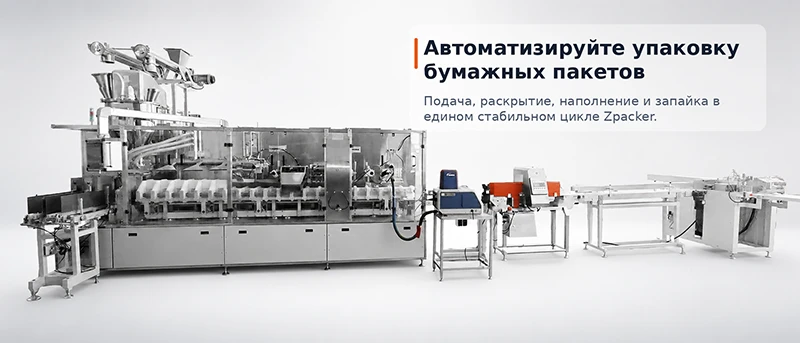
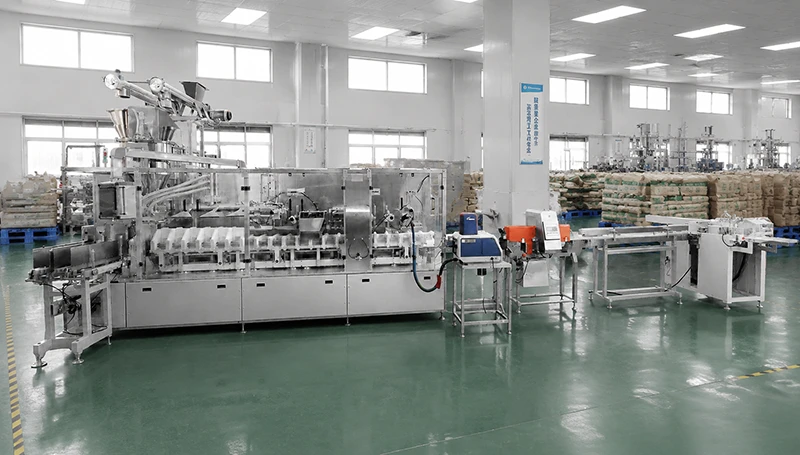
The images show the evidence that matters during technical review: the bag magazine and clamps, the conical hopper and screw outlet, the main machine, the touchscreen and the outfeed route. These are practical checkpoints for replacing manual powder filling with an automatic packaging line while keeping the product and bag format aligned.
| Project item | Zpacker reference | Buyer confirmation |
|---|---|---|
| Bag format | Premade paper or paper-plastic M-fold square-bottom bag | Confirm it is not a roll-film stick pack |
| Pack range | 1–2 kg or 2.5–5 kg reference configurations | Provide target sugar weights and bag samples |
| Dosing and accuracy | Screw dosing; approximately ±0.5% reference precision | Test material flowability and define acceptance limits |
| Line follow-up | Checkweigher, metal detector, printer and grouping can be connected | Confirm inspection, packing and palletizing requirements |
Confirm the package before requesting a sugar line proposal
Send the sugar sample, target weight, bag drawing, M-edge size, bag direction, desired speed, available air supply and layout limits. BPM can then determine whether Zpacker’s premade paper bag process fits the project, or whether a different stick-pack format should be evaluated. The wide line view below represents the connected process; final dimensions and equipment scope follow the confirmed layout.
 English
 Русский