
Flour Mill Packaging: How Zpacker’s Automatic Paper Bag Packing Machine Controls Dust and Labor
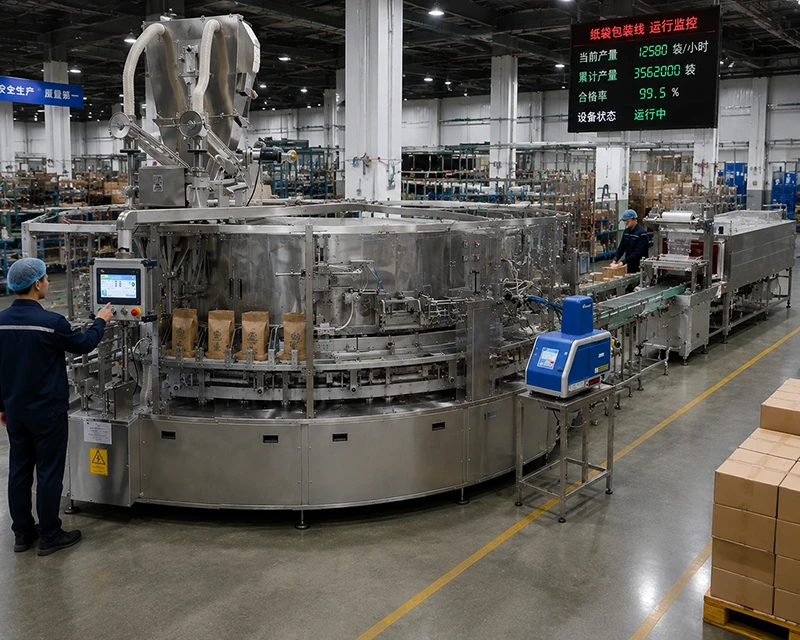
For a flour mill or food production plant handling 1–5 kg retail packs, Zpacker combines premade paper bag handling, screw dosing, dust removal and downstream inspection in one automatic packaging line. The result is a more controlled route from flour silo to sealed bag, without relying on separate manual operations at every station.
Why manual flour bagging becomes a production bottleneck
In a flour mill, the difficult part is not only putting powder into a bag. Operators may need to pick a flat kraft bag, open it, hold it under the filling point, settle the powder, clean the mouth and close the bag. With manual handling or a semi-automatic machine, each handoff creates variation in timing, fill level and sealing cleanliness. Dust can also escape when the bag is not supported or when the product has not settled before closing.
Zpacker is intended for this specific process: automatic packaging of flour and compatible powders in premade paper or paper-plastic M-fold, square-bottom bags. It is not a vertical film-forming machine and not a liquid filler. That distinction matters when a plant already has a supply chain for finished paper bags and needs the bag opening, filling and closure stages to work as one sequence.
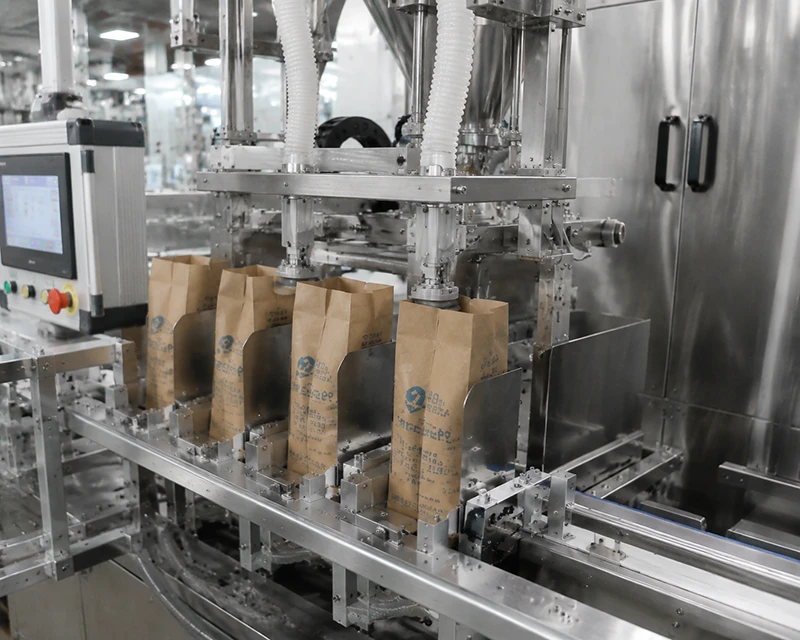
Before specifying an automatic packaging machine, confirm the flour’s flow and dust characteristics, the bag direction, M-fold dimensions, paper or paper-plastic construction, required pack weights and available utilities. These details determine whether the machine can open the bag cleanly, dose consistently and apply adhesive to a suitable sealing surface.
How the Zpacker process matches a premade M-fold bag
The line uses a belt-fed bag path. A bag magazine and pickup mechanism take a flat bag, open it into its three-dimensional form and position it at the filling station. The screw dosing unit then delivers flour from the hopper into the supported bag. The filling area includes dust-control measures, while subsequent vibration and dedusting stations help the powder settle and reduce air before closure.
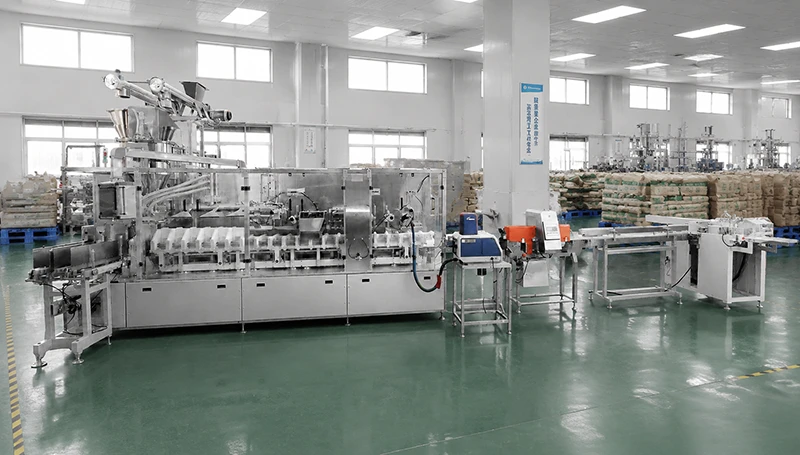
After filling, the sequence handles the operations that a conventional powder filler may leave to operators: folding the M sides, trimming and rolling the mouth, applying hot-melt adhesive by dot or line spray, and pressing the top into shape. The machine can then connect with a conveyor, checkweigher, metal detector, date printer, bag arranger and secondary packaging route such as shrink bundling or manual over-bagging.
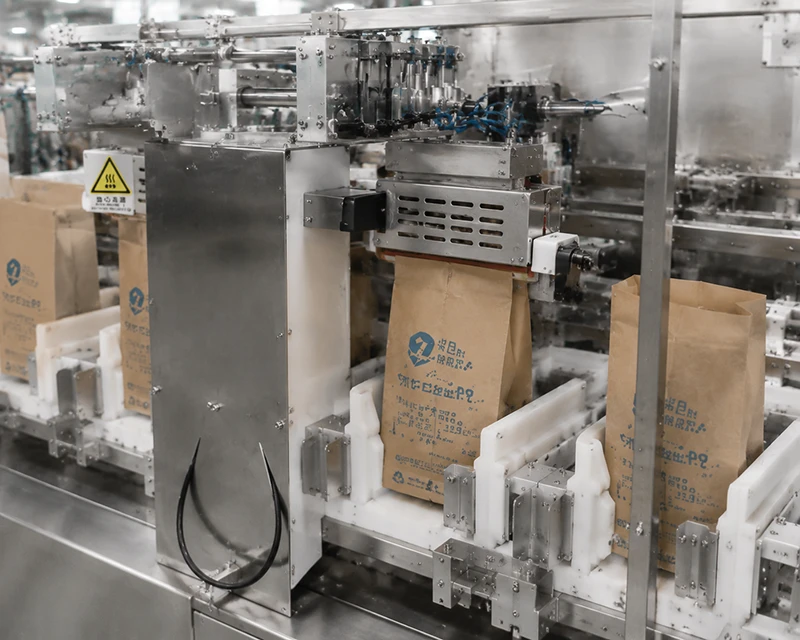
Engineering note: The dual-station straight-line arrangement is designed so a station without a bag can stop and alarm while the available station continues, subject to the final configuration and acceptance logic. This should be verified with the approved technical proposal rather than treated as an unconditional output guarantee.
Reference configuration for 1–5 kg flour packaging
Retail flour formats commonly include 1 kg, 2 kg and 5 kg paper bags. Zpacker separates the reference weight ranges so the dosing and bag-handling setup can be matched to the requested format. The figures below are planning references; final performance depends on the material, bag sample, feeding system and site test.
For a flour packaging line, the practical design question is therefore how the packaging machine connects to the upstream silo or buffer hopper and downstream quality-control equipment. A screw conveyor or elevator can feed the dosing hopper, while inspection and conveying equipment keep manual intervention focused on checks and exceptions rather than repetitive bag handling.
| Reference item | Zpacker planning information | Почему это важно |
|---|---|---|
| Pack formats | About 1–2 kg and 2.5–5 kg by configuration | Matches common 1 kg, 2 kg and 5 kg flour retail bags |
| Reference speed | About 30–35 bags/min for 1–2 kg; 15–20 bags/min for 2.5–5 kg | Use the final proposal and acceptance test for the confirmed rate |
| Filling accuracy | Approximately ±0.5% (5‰) | Provides a starting point for weight-control discussions |
| Bag envelope | W 80–140 mm; L 240–320 mm; M-side about 60–80 mm | Sample-bag confirmation is required before final engineering |
| Utilities | 380 V ±10%, 50 Hz; about 15.5 kW; air consumption about 0.76 m³/min | Allows the plant to check electrical and compressed-air capacity |
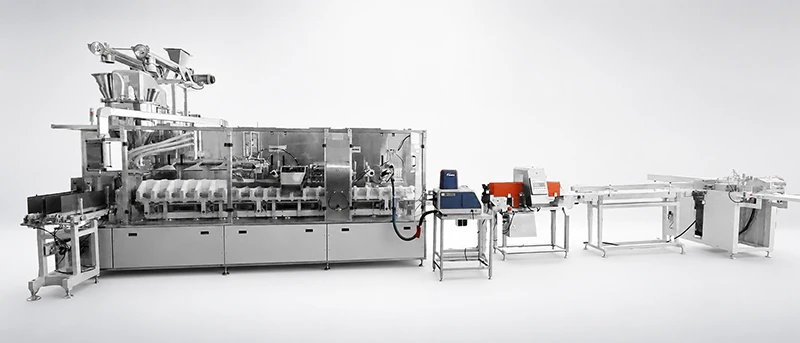
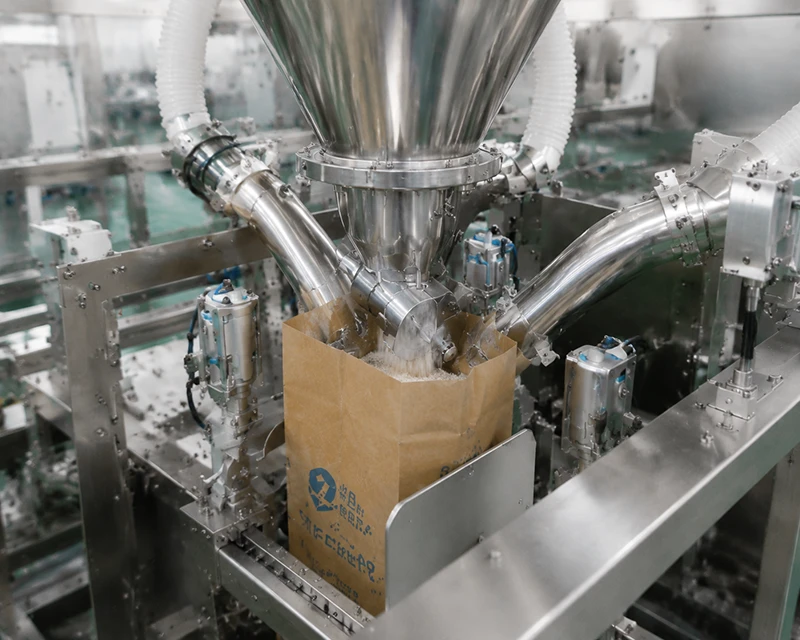
The machine is built around a 304 stainless steel product-contact area, a 10.4-inch touchscreen and automatic alarms for missing bags, abnormal air pressure, safety opening, drive faults and adhesive temperature. Component brands and the exact air-pressure range should be confirmed in the final BOM. A reference layout of roughly 17 m by 3.6 m has been discussed for a complete line, but it is not a fixed machine footprint.
Specify the bag before selecting the line
Send the flour specification, target weights, sample M-fold bags, expected output, bag direction, available air and electrical supply, and floor-plan constraints. BPM can then define the suitable screw dosing, paper bag handling, dust-removal and inspection configuration for your automatic flour packaging line.
Discuss your flour packaging project English
 Русский