
25 kg Powder Bagging Line: Keeping Bags Stable Before Sewing
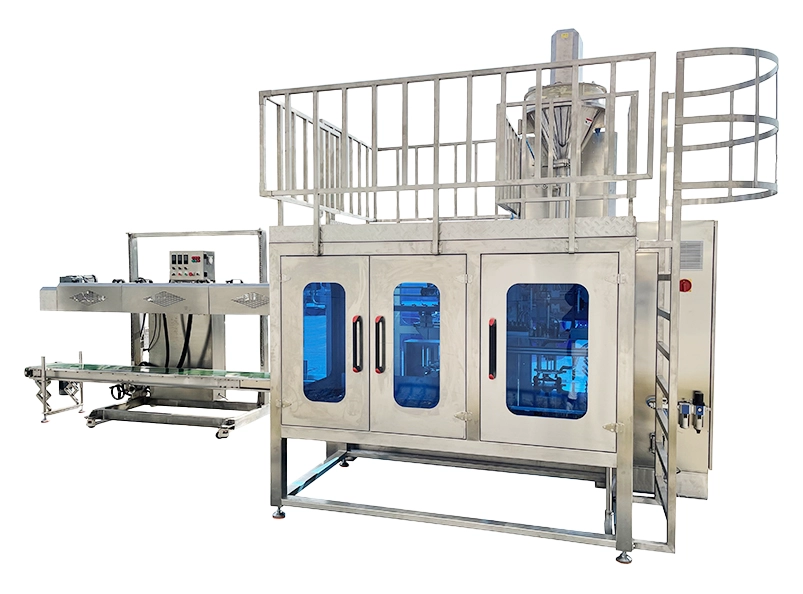
For milk powder, flour, starch, and other dry-powder plants, the difficult point is often not filling the bag—it is handing a full 25 kg bag to the sewing or sealing station square, clean, and under control. Mipline combines bag supply, bottom-up filling, clamping, guided transfer, stabilization, inspection, and discharge into one configurable powder packaging line.
Why the last meter becomes the bottleneck
A dairy powder or flour plant may already have a reliable filler, yet still depend on an operator to straighten the filled bag before sewing. Free-fall filling can leave powder around the mouth, while an unsupported bag can twist, sag, or arrive skewed. A conventional conveyor moves the bag forward, but movement alone does not create a stable bag handoff before sewing.
Mipline addresses the process as a powder bagging line rather than a standalone automatic powder packing machine. The configured sequence can include bag magazine supply, vacuum pickup, bag opening, controlled clamping, bottom-up filling, closure, turning, shaping, inspection, checkweighing, reject, and roller discharge. The correct combination depends on powder flowability, aeration, moisture, bag construction, target weight, and the selected closure method.
When operators manually straighten every bag, the last transfer becomes a variable workstation. Skewed presentation can interrupt sewing, dirty the closure area, and make the line harder to supervise. The engineering target is a guided conveyor handoff that keeps the bag aligned long enough for the next operation—not simply a faster belt.
How Mipline controls the bag from filling to closure
Bottom-up filling keeps the fill point close to the material inside the bag and is intended to reduce the free-fall distance associated with open filling. The source configuration uses three-stage screw feeding—fast, medium, and slow final dosing—while weighing control manages the target fill. For a nominal 25 kg application, the final configuration still needs confirmation against powder behavior and bag dimensions.
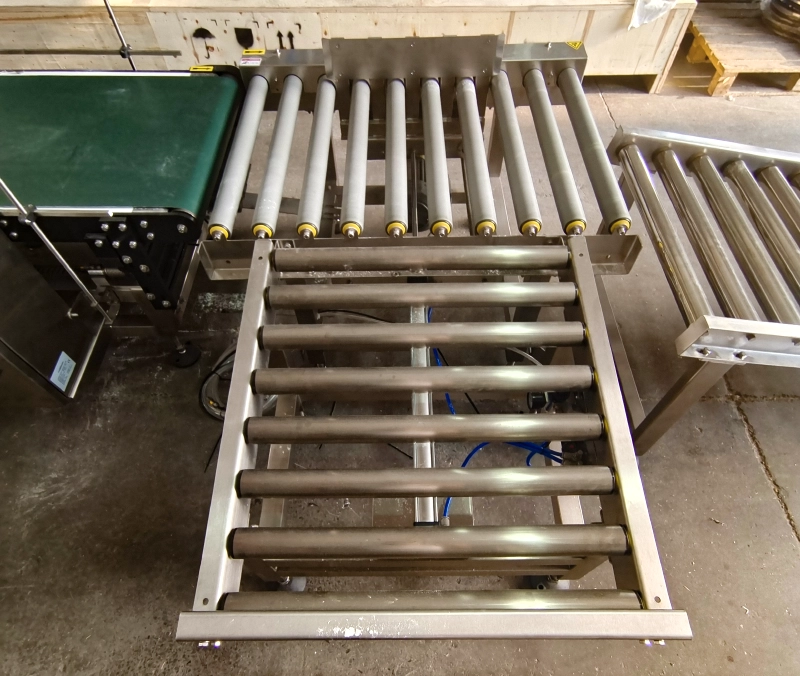
The bag clamp station establishes the reference before transfer. Adjustable guides and roller sections then support a cleaner bag alignment, while optional vacuum extraction or de-aeration can be placed before closure. Depending on the bag and project, the downstream sealing sequence may combine dust removal, trimming, inner heat sealing, pressing, sewing, hot-melt paper tape, and final pressing. 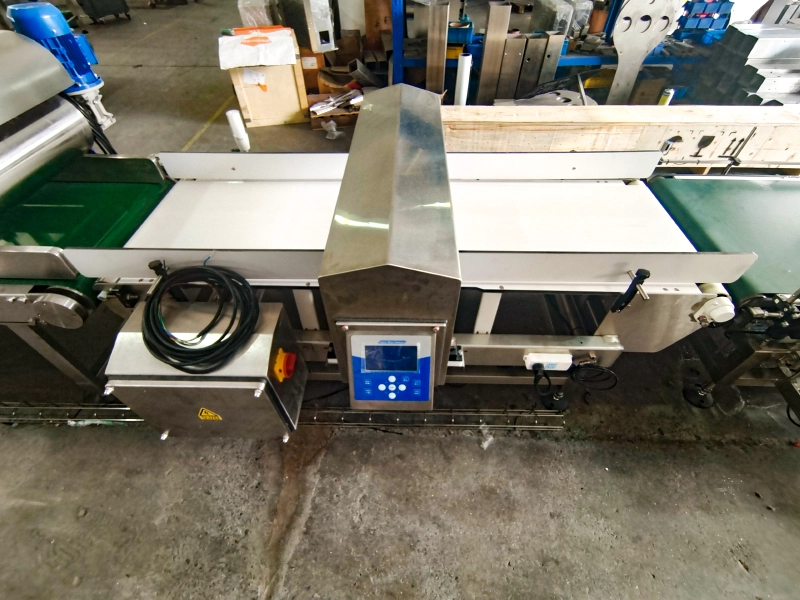
Engineering view: A stable bag handoff is produced by the relationship between clamp alignment, guide geometry, transfer speed, bag stiffness, and the sewing or sealing inlet. These items should be tested together on the actual powder and bag—not specified as isolated components.
Evidence to check when specifying a powder filling and bag sewing line
Factory evidence for Mipline shows enclosed stainless-steel bagging stations, blue inspection windows, bag magazine conveyors, green transfer conveyors, roller conveyor sections, control cabinets, emergency stops, and adjustable guides. These visible details support the practical requirements of a dairy powder bagging line: supervision, access, controlled movement, and a defined connection between filling and closure.
The same logic applies to a flour bagging line or starch powder packaging line. After closure, shaping and settling can help prepare the bag for metal detection, checkweighing, reject, and final discharge. The inspection configuration must be selected from the approved project datasheet because checkweigher range, accuracy, throughput, and product effect vary by model and application. 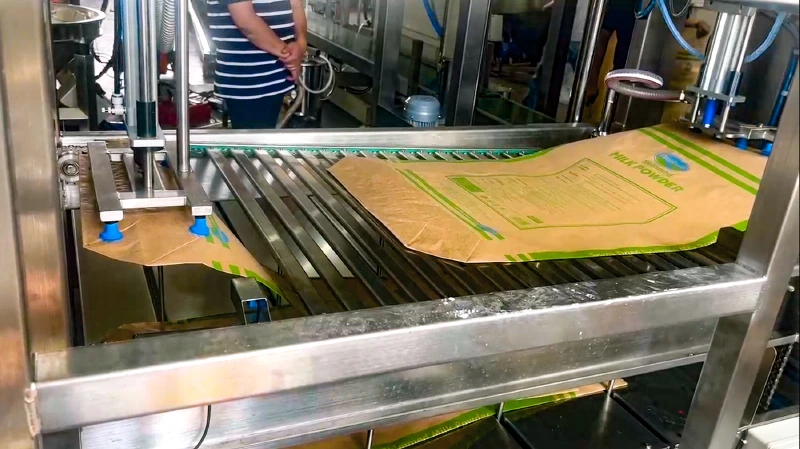
| Specification point | What the buyer should confirm | Ответ Mipline |
|---|---|---|
| Bag and material | 25 kg target, dimensions, kraft paper or woven construction, bulk density and flowability | Configured filling, clamp, and transfer settings for the actual bag |
| Filling and dust | Free-fall sensitivity, dosing stages, extraction requirements | Bottom-up tracked filling with three-stage screw feeding and optional vacuum/de-aeration |
| Closure handoff | Bag mouth presentation, sewing or sealing inlet, required manual touches | Bag clamp alignment, guided transfer, shaping, and closure modules arranged as one line |
| Quality release | Metal detection, checkweighing range, reject path, records | Optional inspection, checkweighing, reject, and roller discharge after forming |
Plan a cleaner 25 kg powder bag handoff
Share the powder type, bag construction and dimensions, target weight, closure method, required capacity, utilities, and palletizing layout. BPM can then match the automatic bagging machine for powder to the transfer and inspection requirements instead of treating filling as a separate machine purchase.
Discuss Your Powder Packaging Line English
 Русский