
Flour Mill 1 kg Packaging: How the Zpacker Automatic Paper Bag Packing Machine Controls Dust and Labor
For a flour mill or food production plant handling retail-size packs, zpacker combines automatic paper bag feeding, screw dosing, dust removal and sealing in one line. This is a practical route to 1 kg flour packaging in premade kraft or M-fold paper bags without turning each bag into a separate manual task.
Why manual 1 kg flour packing becomes a production bottleneck
One-kilogram flour packs look simple at the retail shelf, but the factory process includes several separate actions: taking a flat premade bag, opening it, filling it, settling the powder, closing the top and transferring the finished pack. With manual powder packing or a basic semi-automatic machine, operators often have to coordinate these actions by hand. The result is an uneven rhythm, more labor at the filling station and a higher chance that flour reaches the sealing area before the bag is properly settled.
There is also a packaging-material issue. Zpacker is not a vertical packaging machine that forms bags from roll film, and it is not a liquid filler. It is designed around premade paper or paper-plastic bags, including the M-fold square-bottom format used for retail flour. That distinction matters when a mill already has a paper-bag supply chain and needs an automatic paper bag packing machine rather than a new roll-film process.
A stable 1 kg pack also depends on bag orientation, controlled powder dosing, air release, dust removal and a clean sealing zone. These requirements must be solved as one process, not as a list of disconnected operator checks.
How zpacker matches the 1 kg flour bag process
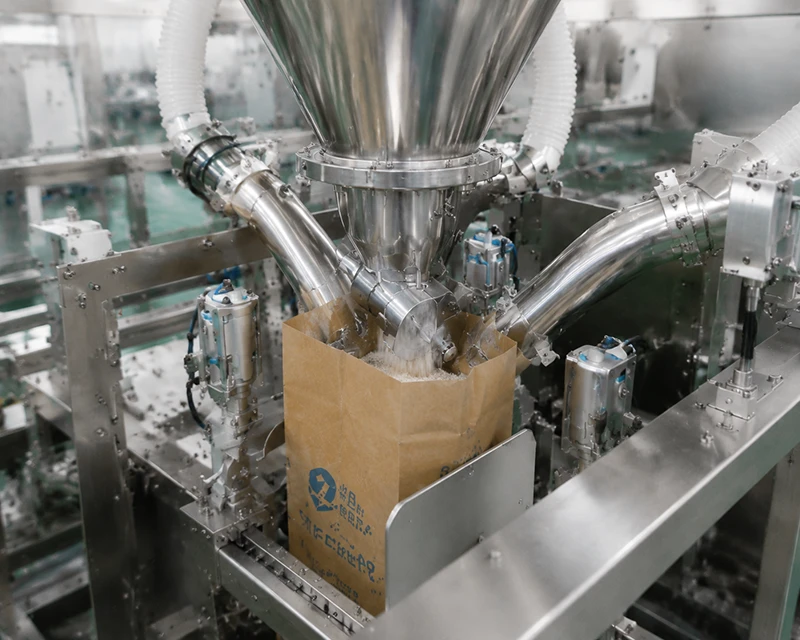
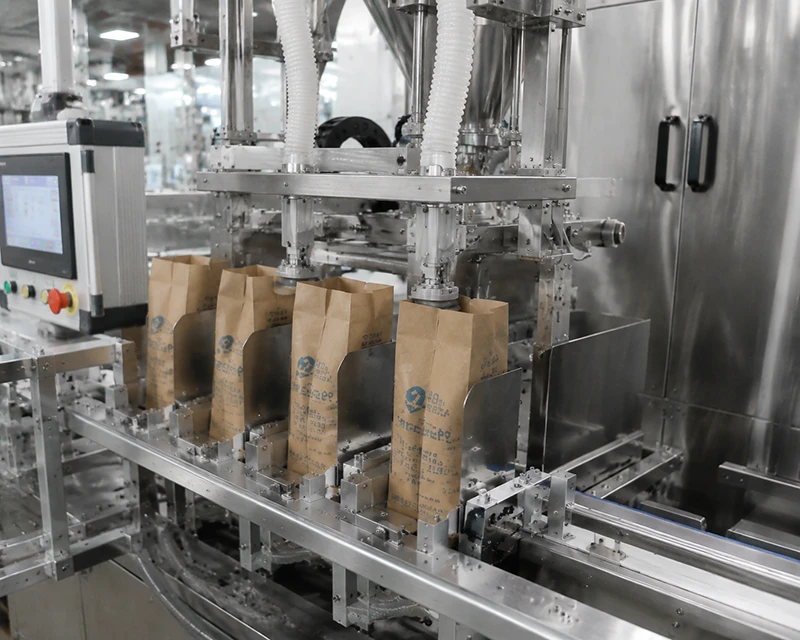
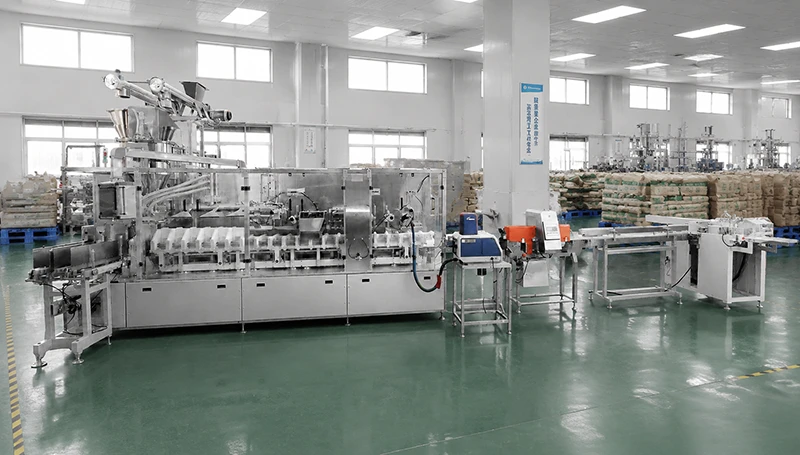
The machine uses a belt-based bag feed and automatic bag handling. A bag magazine supplies the premade bag, the bag is opened into its three-dimensional form, and clamps keep it positioned at the filling station. The conical hopper and screw dosing assembly shown below are directly suited to powder handling. For a one-kilogram product, the reference speed is approximately 40–50 bags per minute; the final rate depends on flour behavior, feeding capacity, bag quality and the agreed acceptance conditions.
After filling, the process continues with vibration and dust-removal stages to help the flour settle and reduce powder around the mouth. The M-fold edges are then returned to shape, followed by trimming, edge rolling, hot-melt glue application by dot or line spray, and top pressing. This sequence is why a premade-bag system can cover more of the real paper bag process than a general-purpose filler alone.
Engineering point: the bag sample must be confirmed before final configuration. Width, length, M-fold side width, bag direction, paper or paper-plastic construction and glue compatibility all affect reliable automatic handling.
What the line should include beyond the packing machine
For a flour mill, the automatic packaging line should be planned from the silo or buffer hopper forward. A screw conveyor can feed the machine, while a double screw dosing arrangement handles the powder at the two bagging positions. Downstream equipment can include a conveyor, checkweigher, metal detector, date printer, bag arranger and secondary packaging. Several small 1 kg bags may then be grouped in shrink film, placed into a larger bag or prepared for case packing and palletizing according to the logistics plan.
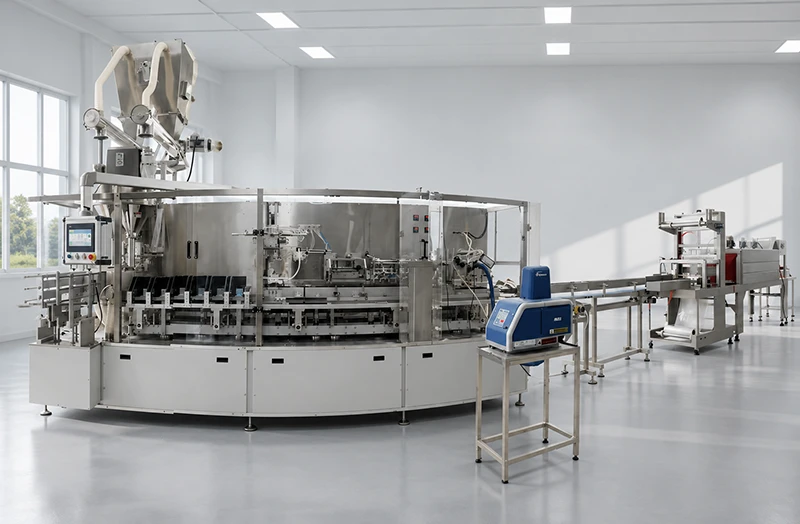
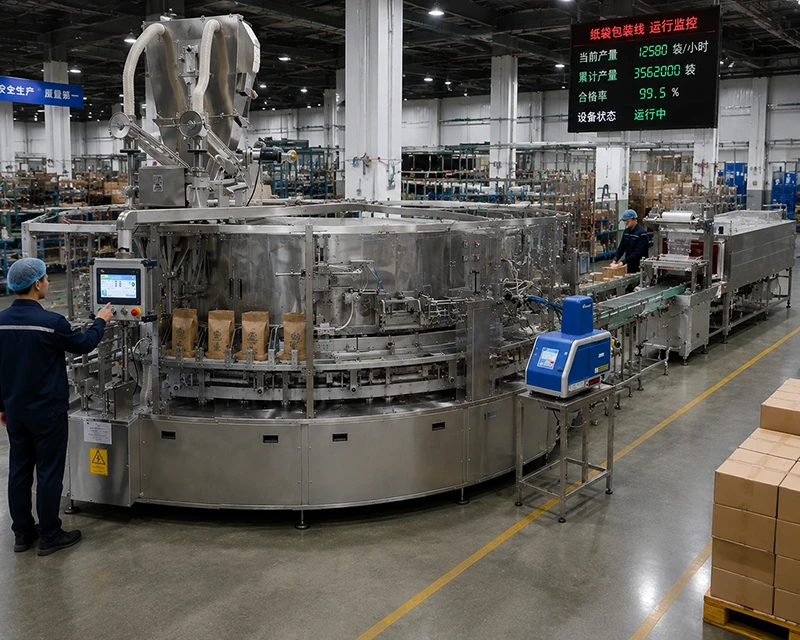
The images from the workshop show the practical relationship between the rotary bagging unit, the upper feeding structure, the touchscreen and the outfeed. The 304 stainless steel material-contact and exposed product-related parts support food-hygiene requirements, while the control system includes a 10.4-inch touchscreen. Safety logic is intended to prevent opening, filling or sealing when a bag is absent, and abnormal air pressure, guard opening, motor or glue temperature conditions can trigger an alarm.
| Item | Reference for a 1 kg flour project | What to confirm |
|---|---|---|
| Bag format | Premade paper or paper-plastic M-fold square-bottom bag | Bag sample, direction, W/L and M-fold dimensions |
| Output | Approximately 40–50 bags/min reference | Flour properties, feeder capacity and acceptance test |
| Точность | Approximately ±0.5% reference | Material test and agreed weighing method |
| Utilities | 380 V ±10%, 50 Hz; about 15.5 kW; air consumption about 0.76 m³/min | Final BOM, air pressure and plant connection |
| Quality checks | Checkweigher, metal detector and date printer can be connected | Required sensitivity, reject logic and line layout |
Specify the bag before specifying the line
Send the flour sample, target 1 kg bag, expected output, bag drawings, available utilities and downstream inspection needs. The final zpacker configuration, speed and acceptance criteria can then be matched to the actual premade bag and production conditions.
Discuss a 1 kg flour packaging line English
 Русский