
Flour Packaging Line for 1–5 kg Paper Bags: How Zpacker Controls Dust and Labor
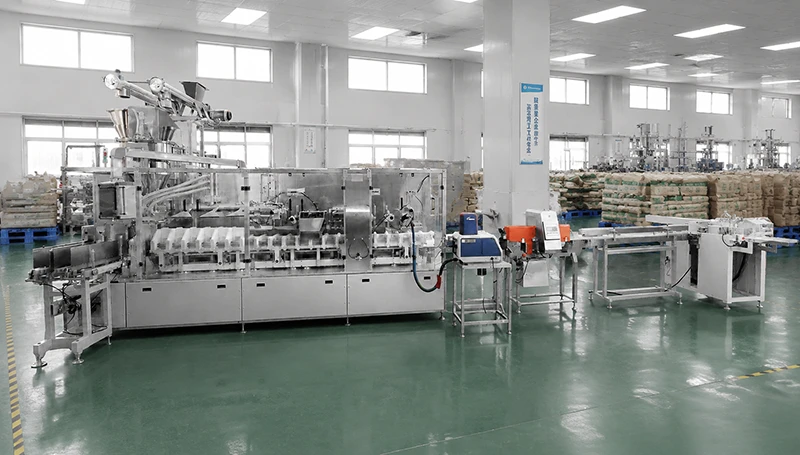
For a flour mill, bakery plant, or food production site searching for an automatic flour packing machine, Zpacker combines screw dosing, premade paper bag handling, dust removal, sealing, and downstream inspection in one automatic packaging line.
Why manual flour packing becomes a bottleneck
In a flour milling complex or bakery plant, the familiar starting point is manual packing of bulk powders or a semi-automatic machine. Operators take a flat bag, open it, hold it under a filler, settle the flour, fold the top, and close it. Each individual action may look simple, but the sequence becomes difficult to stabilize when the line must produce 1 kg, 2 kg, and 5 kg flour packs during the same production program. Manual handling also leaves more opportunities for inconsistent bag positioning, spilled powder, and a sealing area contaminated with flour.
Zpacker is designed for a different material flow: a premade paper bag or kraft bag enters from a bag magazine, is opened and positioned, then receives flour through a screw dosing unit. The equipment is not a vertical form-fill-seal machine that forms bags from film, and it is not a liquid filler or a valve-bag system. This distinction matters when a food producer already has a supply chain for M-folded, square-bottom side-gusset bags and needs to automate that bag format rather than replace it.
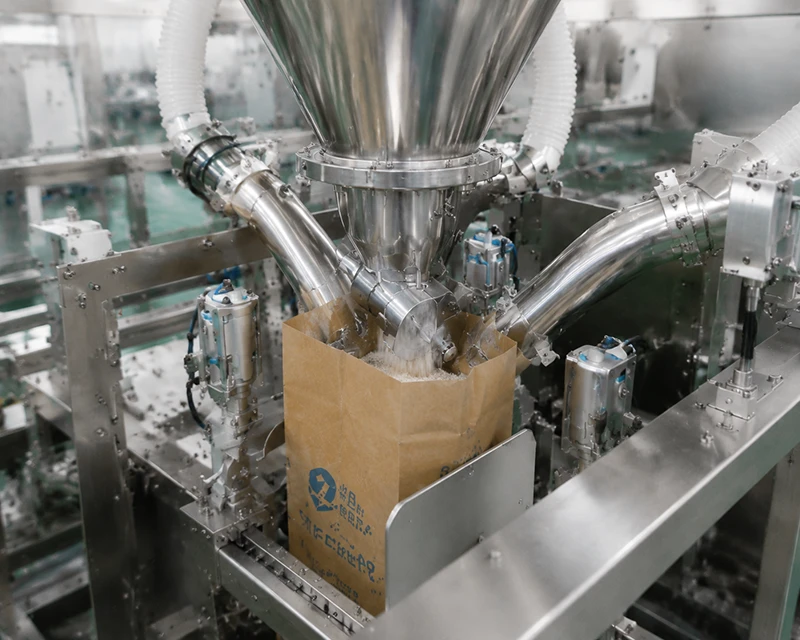
For flour and other powders, accurate automatic dosing is only one part of the result. The line must also manage air and dust, make the filled bag stable, return the M-fold top to its closing form, and transfer the finished pack to inspection without creating a new manual station.
How Zpacker adapts the process to premade M-fold bags
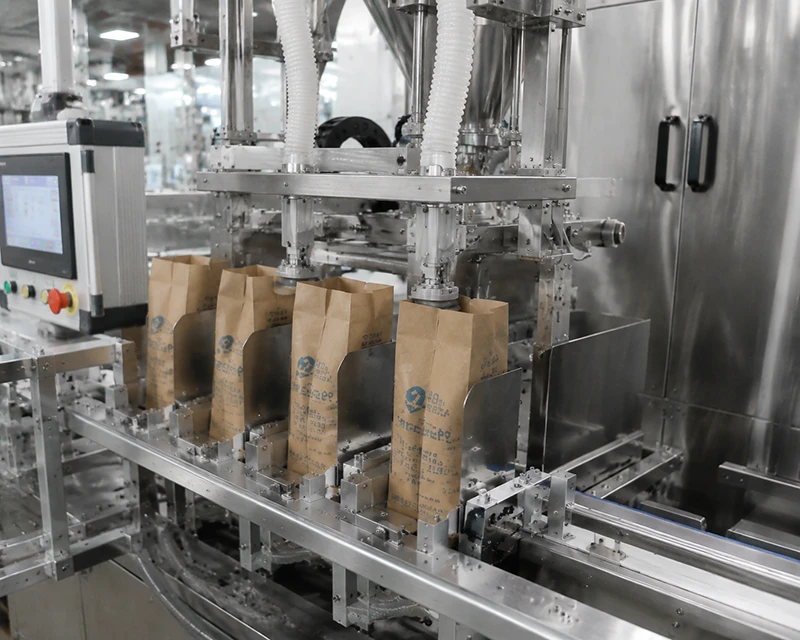
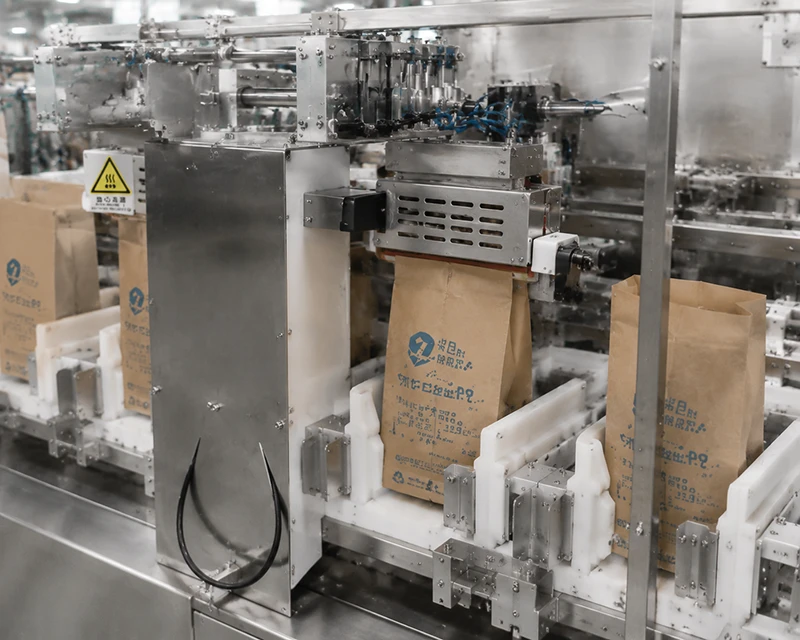
The Zpacker sequence covers automatic bag picking, opening, clamping, filling, vibration and dust-removal stages, M-edge folding, trimming, edge rolling, hot-melt glue application, and top pressing. The paper bag changes from a flat supplied format into a standing pack for filling, then returns to a controlled top shape for sealing. The feeding system uses a belt-based bag transfer, while the two-station straight-line layout coordinates bag supply and dosing. A station without a bag can stop and alarm while the available station continues, subject to the final configuration and acceptance conditions.
The operator interface is built around a 10.4-inch touchscreen. Product documentation also lists PLC control, servo-driven motion, stainless steel on material-contact and exposed relevant parts, and configurable downstream units. The exact bill of materials must be confirmed for the project, but the control and safety logic is intended to prevent opening, filling, or sealing when a bag is missing. Pressure, guard, motor, and glue-temperature faults can also trigger an alarm or stop.
Selection insight: A flour plant should confirm the bag sample, bag direction, width, length, and side-gusset dimensions, material flowability, dust behavior, target weight, and available utilities before ordering. Zpacker provides the matching process architecture, but final speed and acceptance should follow the tested bag, material trial, final layout, and agreed technical solution.
Reference configuration for a 1–5 kg flour packaging line
A typical food production layout can run from a flour silo or buffer hopper through a screw conveyor or elevator, horizontal feeding, and dual screw dosing into the paper bag machine. After sealing, the pack can move to a belt conveyor, checkweigher, metal detector, date printer, pack arranging, and either group shrink wrapping or manual outer-bag handling. This lets the buyer address weighing compliance and product protection without pretending that the main bagger alone performs every downstream task.
Published reference figures are configuration-dependent. The 1–2 kg format is approximately 30–35 bags per minute in one technical table, while other records cite about 40–50 bags per minute for 1 kg and 30–35 for 2 kg. The 2.5–5 kg format is approximately 15–20 bags per minute, with 5 kg commonly around 16–20. Filling accuracy is approximately ±0.5% or 5 per mille. These values should be treated as planning references, not guaranteed production results.
| Project item | Zpacker reference | What to confirm |
|---|---|---|
| Product and pack | Flour or compatible powder in premade paper or paper-plastic M-fold square-bottom bags | Flowability, dust behavior, bag layers, direction, and sample-bag test |
| Weight range | One format around 1–2 kg; another around 2.5–5 kg | Required changeover scope and retail mix |
| Bag dimensions | Reference width 80–140 mm, length 240–320 mm, side gusset about 60–80 mm | Final dimensions from approved bag drawings |
| Utilities | About 15.5 kW; 380 V ±10%, 50 Hz; air figures vary by configuration | Final air pressure, approximately 0.76 m3/min consumption, and site capacity |
| Inspection and logistics | Checkweigher, metal detector, marking, arranging, shrink wrapping, or packing can be connected | Required rejection logic, line space, and palletizing or warehouse flow |
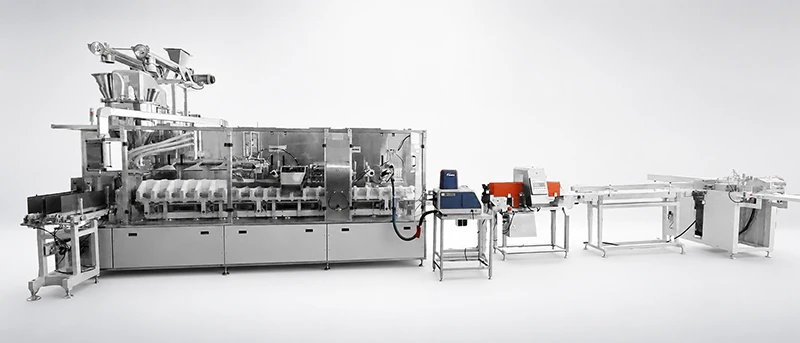
Plan the right automatic flour packaging line
Send the flour specification, target weights, approved paper bag samples, expected output, utility conditions, and available layout. BPM can use those inputs to define the appropriate Zpacker configuration, dust-removal path, inspection modules, and secondary packaging connection for your project.
Discuss your flour packaging project English
 Русский