
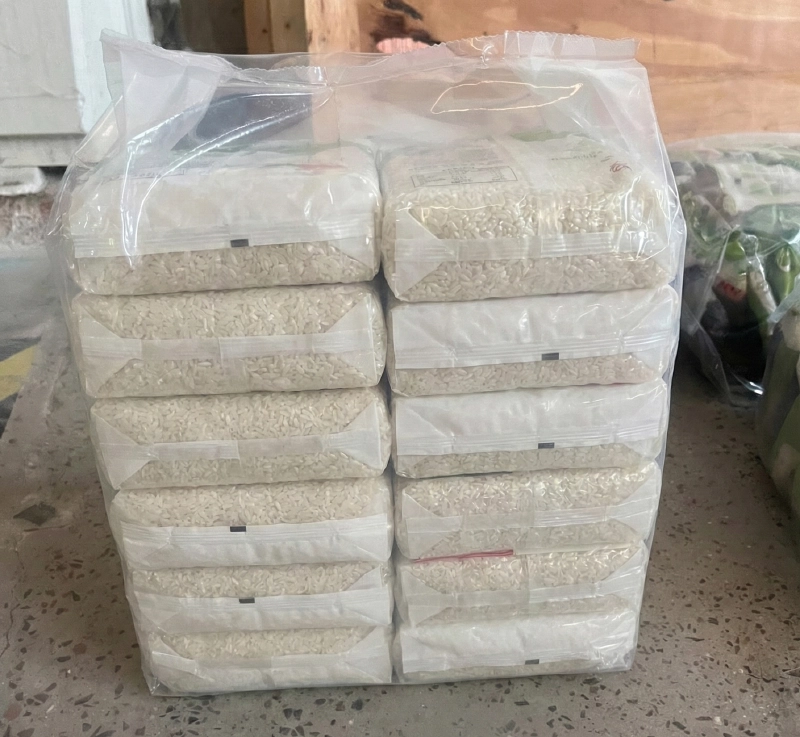
Автоматическая вторичная пакетировочная упаковочная машина расход воздуха
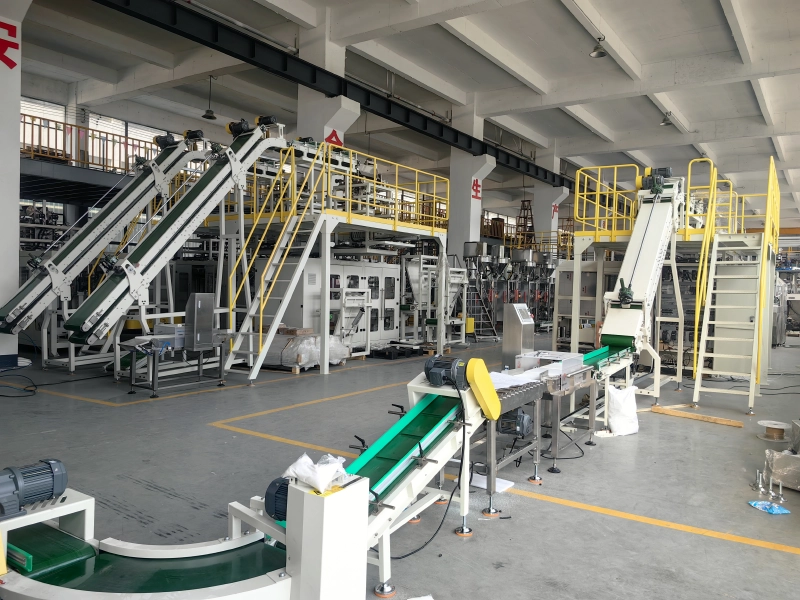
In the salt and fertilizer processing industry, compressed air is your “fourth utility”—and often the most expensive one. A drop in pneumatic pressure doesn’t just mean a slower line; it means Автоматическая вторичная пакетировочная упаковочная машина fails to open the master bag, leading to catastrophic salt spillage, equipment corrosion, and hours of downtime. Stop letting air leaks drain your profit margins.
The Hidden Pneumatic Cost in Bulk Solids Packaging
If you are managing a packaging line for hygroscopic materials like sea salt, urea, or starch, you know that your environment is the enemy of standard machinery. The air around your line is filled with corrosive micro-dust. When we discuss the air consumption of a secondary packaging line, we aren’t just talking about the size of your compressor; we are talking about the reliability of every single actuation in a hostile environment.
In a typical “Bag-in-Bag” (BIB) system, compressed air (0.6 MPa – 0.8 MPa) is the lifeblood for three critical functions: Vacuum Generation for bag picking, Cylinder Actuation for bag clamping/opening, and High-Speed Rejection for weight control.
1. The “Lung” of the System: Vacuum Bag Opening
The most air-intensive process in your secondary packaging line is the automatic bag feeding and opening. Unlike rigid cardboard boxes, woven PP bags are porous and “limp.” They don’t want to open.
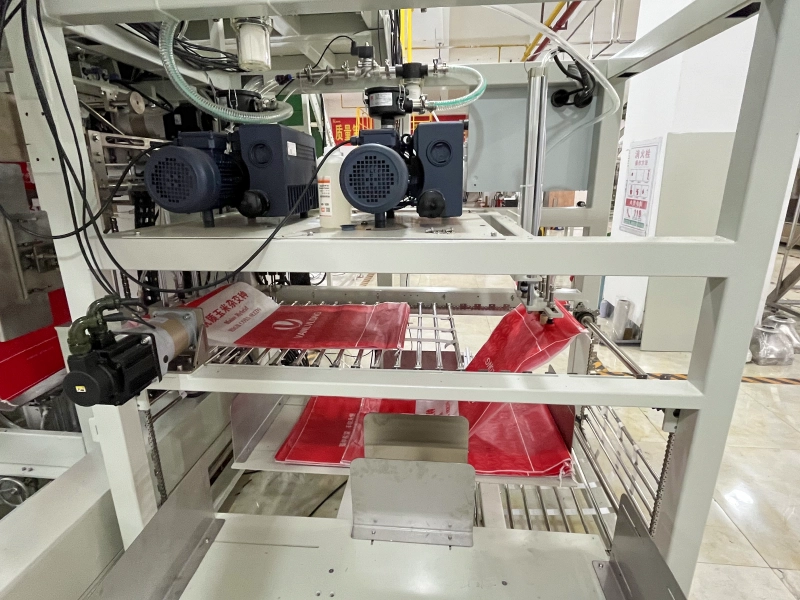
The precision suction cup system requires consistent air pressure to separate and open woven bags without failure.
Our system utilizes high-flow vacuum generators driven by compressed air. Here is the specific challenge in the salt industry: if your air consumption calculation is off, or if your plant pressure fluctuates due to other equipment coming online, the vacuum cups will fail to separate the bag lips. The result? The machine attempts to stuff 20 packs of salt into a closed bag. This causes a “jam-up” that forces your operators to stop the line and manually clear corrosive salt spills—a safety hazard and an efficiency killer.
2. Rejection Systems: Speed Requires Pressure
Consistency is king. Before the master bag is even filled, every single 1kg consumer unit passes through a checkweigher. When a bag is underweight (a sign of bridging in the auger filler) or overweight, it must be rejected instantly.
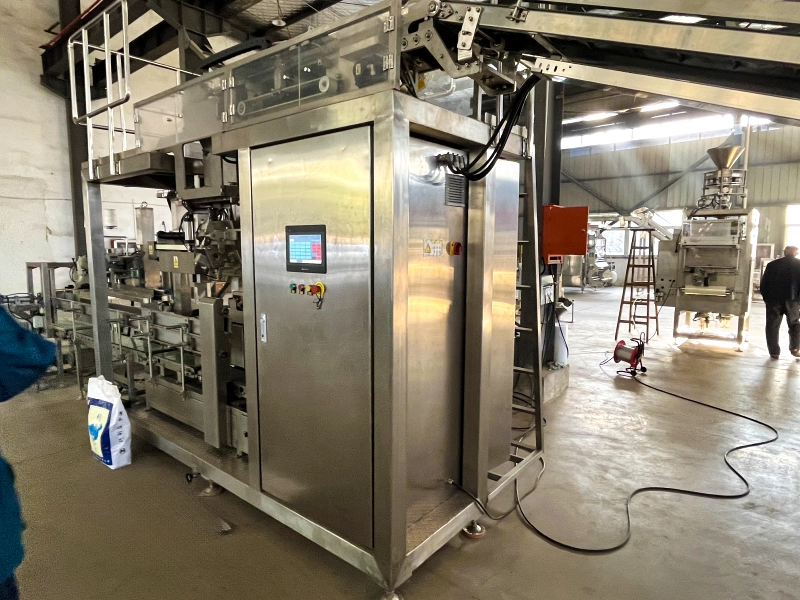
Pneumatic rejectors on the checkweigher demand instant, high-pressure air bursts to remove non-compliant packs at high speeds.
The rejection arm is purely pneumatic. It relies on a “burst” of air consumption. If your Автоматическая вторичная пакетировочная упаковочная машина is starved of air, the rejector becomes sluggish. A sluggish rejector might only partially hit the bad bag, causing it to jam the conveyor rails, or worse, let an underweight bag pass through to the master pack, leading to a batch rejection by your retail client.
3. The Heavy Lifting: Bag Turning and Shaping
Once the 50kg master bag is sewn, it stands vertically. To be palletized by the robot, it must be laid flat. This is not done by motors, but by a heavy-duty pneumatic pusher.
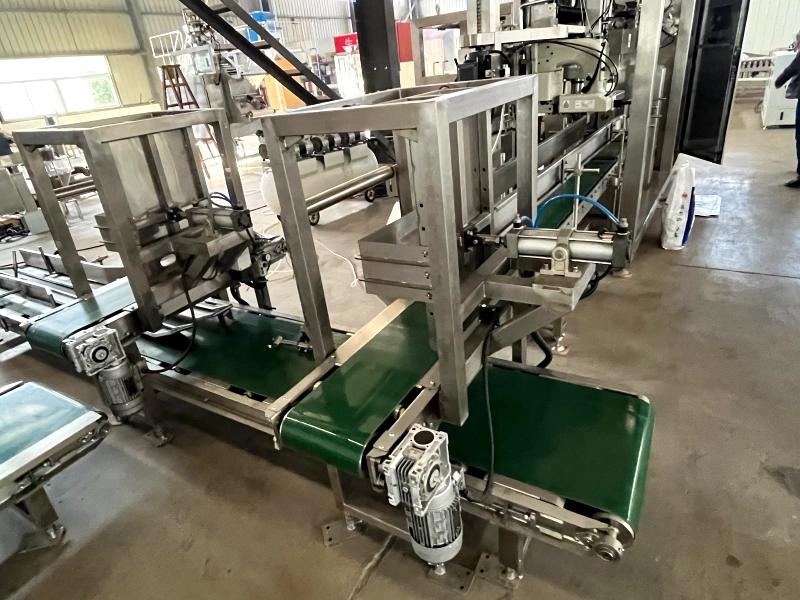
The bag turning mechanism relies on robust pneumatic cylinders to knock down heavy 50kg bags for palletizing.
This single motion represents a significant portion of the cycle’s air consumption. In salt and fertilizer plants, the cylinder rod is exposed to dust every time it extends. If you use standard cylinders, the seals will degrade within months, leading to massive air leaks. We utilize Airtac and SMC components with specific dust-wipers and, where necessary, stainless steel fittings to ensure that air consumption remains stable over years of operation, not just weeks.
Optimization: How We Reduce the “Air Bill”
We don’t just consume air; we manage it. Our systems integrate Servo Motors (Inovance) for the precise, variable movements (like film pulling and counting), leaving pneumatics only for the binary “open/close” or “push/pull” actions. This hybrid design significantly lowers the CFM (Cubic Feet per Minute) requirement compared to older, fully pneumatic machines.
By upgrading to a modern secondary packaging line, you are effectively sealing the leaks in your balance sheet. You get consistent bag opening, reliable rejection, and a pallet that doesn’t collapse during transport.
Frequently Asked Questions (FAQ)
Q1: What is the typical air pressure requirement for this secondary packaging line?
The system requires a stable air supply of 0.6 MPa to 0.8 MPa. Stability is key; we recommend a dedicated air tank buffer near the machine to prevent pressure drops when other plant equipment cycles on.
Q2: My plant processes urea fertilizer which is highly corrosive. Will the pneumatic fittings survive?
Yes. For corrosive environments like urea and salt, we upgrade critical pneumatic fittings to 316L Stainless Steel and use corrosion-resistant cylinder bodies. We also recommend installing air dryers to prevent moisture from mixing with fertilizer dust inside the lines.
Q3: Does the machine stop if air pressure drops?
Yes, the system is equipped with low-pressure sensors (SICK/Omron). If the pressure falls below the safe operating threshold (e.g., 0.5 MPa), the Автоматическая вторичная пакетировочная упаковочная машина will auto-pause to prevent half-opened bags or incomplete seals, protecting your product and equipment.
Q4: How much air does the machine consume per minute?
Air consumption depends on the speed (bags per minute). For a standard 20kg line running at 4-5 bags/minute, consumption is moderate. However, the momentary flow rate is high during the vacuum generation phase. We can provide a precise CFM calculation based on your specific speed requirements.
Q5: Why use pneumatics for the rejector instead of an electric pusher?
For high-speed 1kg salt bags, pneumatic rejectors offer the fastest reaction time (milliseconds) and the high force-to-weight ratio needed to “punch” a heavy bag off the line instantly without the risk of motor burnout in a stall situation.
Нужна консультация по упаковочному оборудованию?
СВЯЗАТЬСЯ С НАМИ → English
 Русский
Leave a Reply