
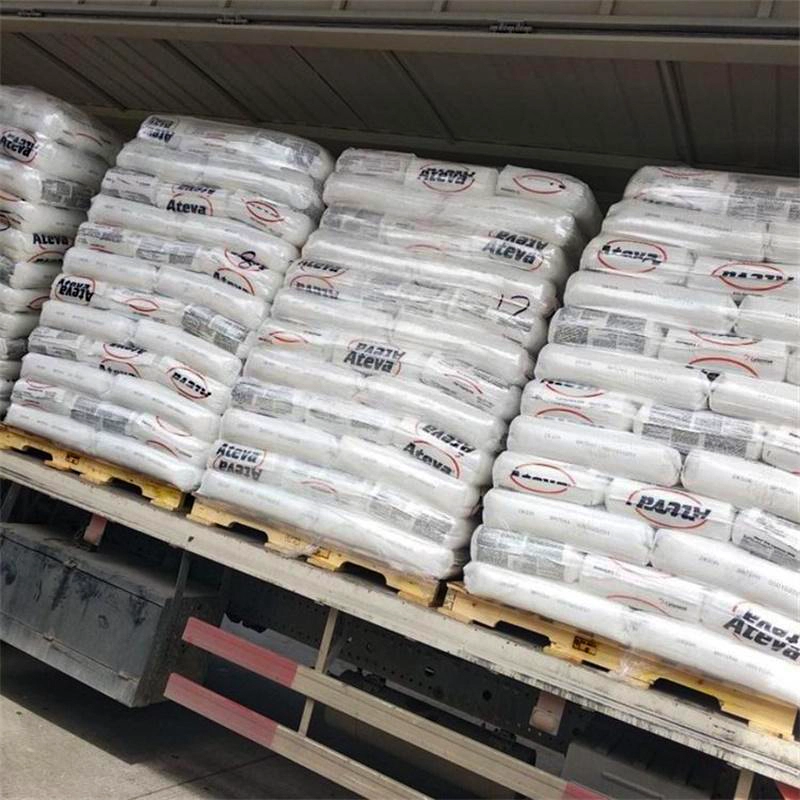
Срок окупаемости линии фасовки сыпучих продуктов при 2-х сменах
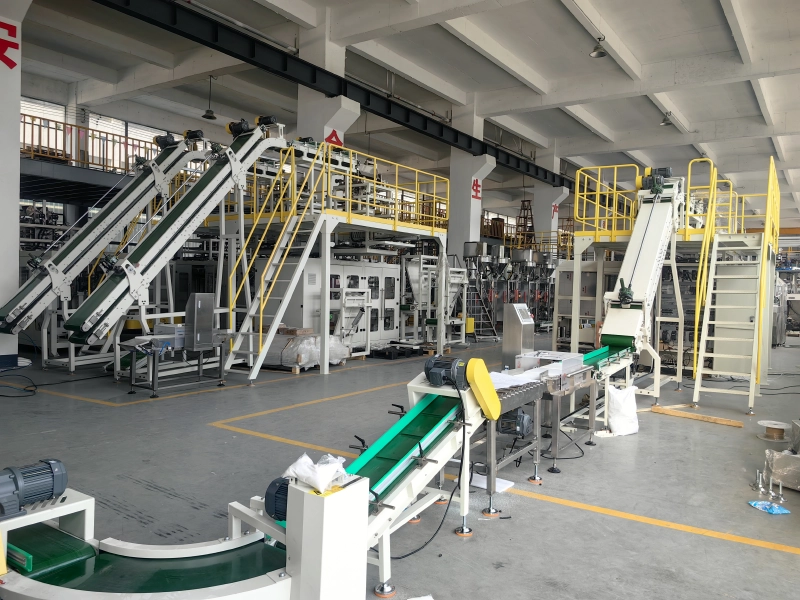
Your VFFS machines can output 80 bags/minute, but your end-of-line is staffed by 10 people per shift struggling to keep up. You’re paying for a high-speed engine but are stuck in first gear. Every shift, you lose money to escalating labor costs, product giveaway, and production bottlenecks. The question isn’t *if* you should automate, but how fast the right system will pay for itself.
A Sobering Look at the Numbers: The True Cost of a 2-Shift Manual Packaging Line
For any plant manager in the bulk products sector—be it salt, seeds, or chemical fertilizers—the end-of-line packaging is often a source of hidden financial drain. Before we can calculate the payback of an automated system, we must first honestly assess the daily costs of the status quo. Let’s model a typical facility running two 8-hour shifts.
The costs break down into three critical areas:
- Direct Labor Costs: This is the most obvious expense. A manual secondary packaging station, responsible for gathering small bags, counting them, placing them in a larger woven bag, and moving it to a pallet, typically requires 5-8 workers. For a 2-shift operation, that’s 10-16 people dedicated solely to this repetitive, physically demanding task.
- The “Invisible” Cost of Product Giveaway: To avoid penalties for underweight packages, manual operators instinctively overfill. A mere 5-10 grams extra in each 1kg bag seems insignificant. But when your Вертикальная упаковочная машина (VFFS) is producing 40,000 bags per shift, this “giveaway” adds up to 200-400 kg of free product every single shift. Annually, this translates to tens of tons of lost revenue.
- The Bottleneck Effect & Lost Opportunity: Your primary VFFS packers are high-performance machines. But their output is throttled by the manual pace of the secondary packaging crew. The entire production line is forced to run at the speed of its slowest link, meaning your capital investment in high-speed primary packers is never fully realized.
When you combine these factors, the true cost of manual packing is far higher than just the payroll.
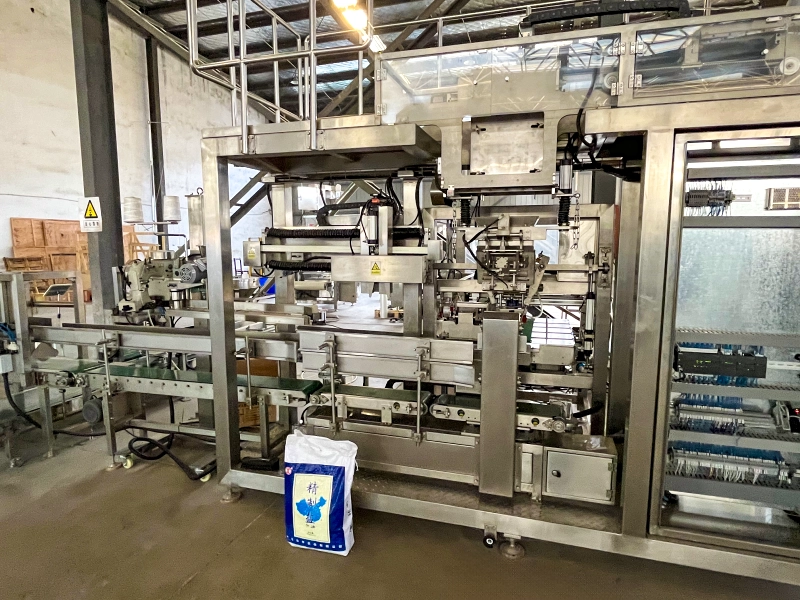
The core of the automated system: an integrated unit that performs automatic bag placing, filling, and sewing, replacing multiple manual steps.
The Payback Engine: Deconstructing the ROI of an Automated Line
An Автоматическая вторичная упаковочная машина (Automatic Secondary Packaging Machine) isn’t just a piece of equipment; it’s a financial instrument designed to systematically eliminate these costs. Here’s how it directly contributes to the payback calculation:
1. Radical Labor Reduction (From 16 Workers to 2 Supervisors)
The most immediate and quantifiable saving. A fully automated line, from collation to palletizing, requires only one or two operators per shift. Their role shifts from manual labor to supervision—monitoring the HMI, replenishing consumables like large woven bags, and overseeing the system. This reduces your direct labor dependency by over 80%.
2. Precision That Pays: Eliminating Giveaway with In-Line Checkweighing
Our automated lines integrate high-speed, high-precision checkweighers. Every single small bag is weighed after it leaves the VFFS machine. Any bag outside the defined tolerance (e.g., ±2g) is automatically rejected before it can be grouped. This surgical precision stops product giveaway dead in its tracks. The savings on raw materials alone can be substantial, directly boosting your profit margin on every bag you sell.
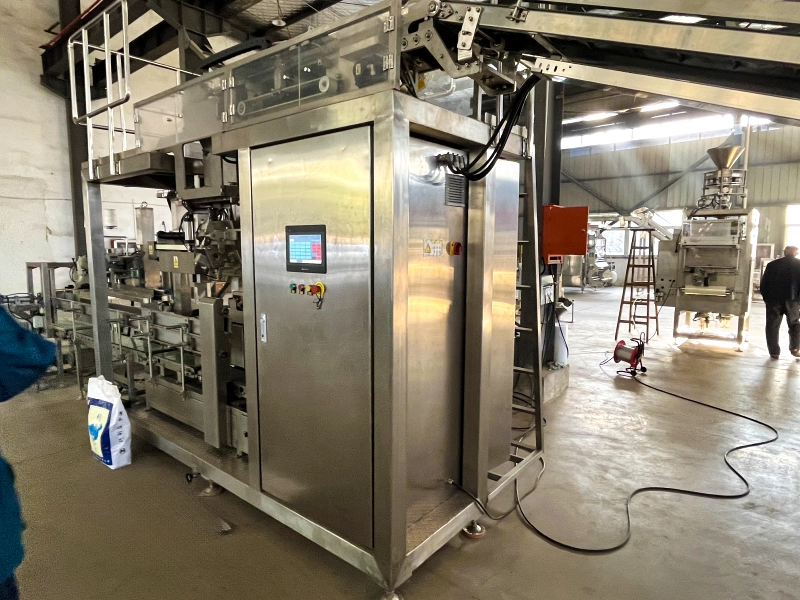
An integrated Checkweigher ensures every package meets exact weight specifications, eliminating costly product giveaway.
3. Unlocking Full Production Capacity
The Линия для групповой упаковки is engineered to match or exceed the output of your primary packers. The system acts as a perfectly synchronized buffer and accumulator, ensuring a constant, uninterrupted flow. This removes the bottleneck, allowing you to run your entire plant at its true maximum rated capacity, increasing total output and enabling you to fulfill larger orders without adding shifts.
The Bottom Line: A Sample 2-Shift Payback Calculation
Let’s put these savings into a simplified model. Assumptions are based on industry averages and can be adjusted for your specific operational costs.
| Cost Category | Manual Line (Annual Cost) | Automated Line (Annual Cost) | Annual Savings |
|---|---|---|---|
| Direct Labor (14 workers vs 2) | $420,000 | $70,000 | $350,000 |
| Product Giveaway (5g/bag) | $150,000 | $0 | $150,000 |
| Increased Throughput (Value of 15% extra output) | $0 (Bottlenecked) | N/A | $200,000 |
| Total | $700,000 |
With a total annual saving of $700,000, even a significant capital investment of $900,000 to $1,200,000 for a complete, high-quality line (featuring components like Siemens PLCs and KUKA robots) results in a payback period of just 15 to 20 months. After this point, the system transitions from a capital expense to a pure profit-generating asset.
More Than Just Money: The Strategic Value of Automation
The financial calculation is compelling, but the strategic benefits provide long-term competitive advantages:
- Absolute Consistency: Every bag, every pallet, every shipment is packed with robotic precision. This consistency enhances brand perception and reduces customer complaints related to damaged or sloppy packaging.
- Enhanced Safety: Automating the repetitive lifting and handling of 25kg or 50kg bags significantly reduces the risk of workplace injuries, lowering insurance premiums and creating a safer environment.
- Data-Driven Production: Modern automated systems provide a wealth of data on efficiency, downtime, and output, allowing for continuous process improvement.
Investing in a fully automated secondary packaging line is one of the highest-impact capital decisions a bulk products manufacturer can make. The payback is not a matter of years, but months, and the operational benefits will strengthen your business for the decade to come.
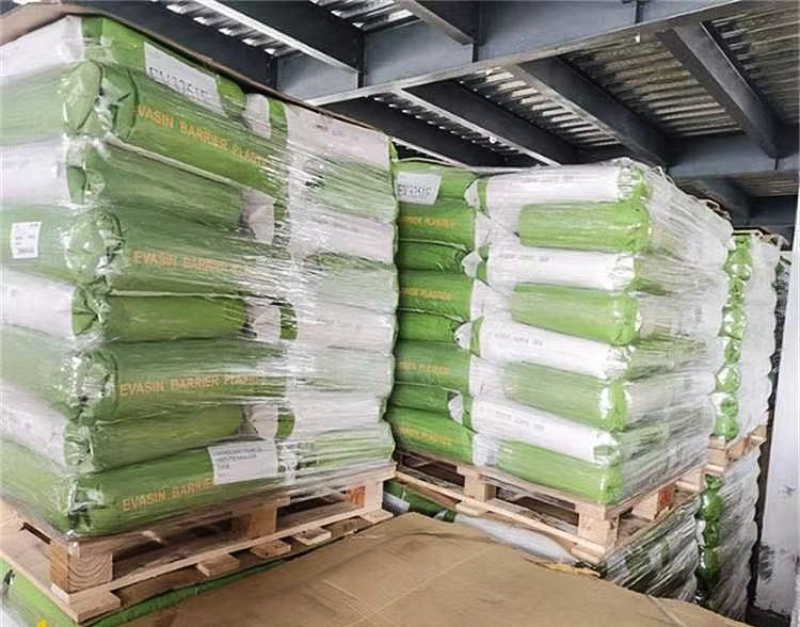
The end result: perfectly uniform, stable pallets ready for warehousing and shipping, a hallmark of a professional, automated operation.
Часто задаваемые вопросы
1. How does the system handle corrosive materials like salt or fertilizer?
This is a critical design consideration. For corrosive environments, all product-contact surfaces and key structural components are upgraded from standard 304 stainless steel to 316L stainless steel. Furthermore, the machine frame undergoes special anti-corrosion coating processes to ensure long-term durability and reliability, even when handling materials like Техническая соль (Industrial Salt).
2. What is the typical footprint of a full line like this?
There is no “typical” footprint. Our systems are modular and engineered specifically for your facility. We conduct a thorough analysis of your existing plant layout to design a line that optimizes floor space, material flow, and operator access, whether it’s a single-floor plan or a multi-level mezzanine structure.
3. How many operators are truly needed per shift?
For a complete line from secondary packing through to the Робот-паллетайзер (Palletizing Robot), the standard requirement is 1-2 personnel. Their responsibilities are supervisory: monitoring the line’s performance via the central HMI, replenishing consumables (e.g., empty bags, stretch film), and performing basic quality checks.
4. Can the line handle different bag sizes and product recipes?
Yes. The system is designed for flexibility. Product changeovers are recipe-driven and managed through the Siemens HMI touch screen. Adjustments for different small bag sizes, counts per large bag, or palletizing patterns can be pre-programmed and selected in minutes, minimizing downtime between production runs.
5. What about integration with our existing VFFS machines?
Seamless integration is a core part of our solution. We specialize in designing the “handshake” between your upstream equipment (like VFFS machines from various manufacturers) and our secondary packaging system. Through intelligent conveyor and buffering logic, we ensure a smooth, synchronized production flow that maximizes the efficiency of your entire line.
Нужна консультация по упаковочному оборудованию?
СВЯЗАТЬСЯ С НАМИ → English
 Русский
Leave a Reply