
Stabilizing powder bag transfer in a Russian packaging line before sewing
When a powder plant moves from filling to sewing, the problem is rarely the seam itself. The real risk sits one step earlier: a bag that arrives skewed, stretched, or unstable will slow the operator, distort the stitch line, and create avoidable rework. For a regional dairy powder producer, the packaging line had to do one thing well: keep each kraft bag steady from the bagging station to the closing point.
Why the old handoff caused trouble
In many powder lines, the bag leaves the filling point and enters a short transfer zone that looks simple on paper but is hard in practice. If the conveyor is not rigid enough, if side guiding is inconsistent, or if the bag body is not supported through the transition, the package twists before sewing. That twist is enough to create a crooked top fold, poor thread alignment, or a bag that operator staff needs to re-position by hand.
The issue is amplified in kraft paper packaging, where the bag surface can catch, slide, or pick up slight deformation if the transfer section is too aggressive. The line then depends on labor rather than geometry. That is the exact point where this package line had to improve: not by increasing speed first, but by making the bag path predictable.
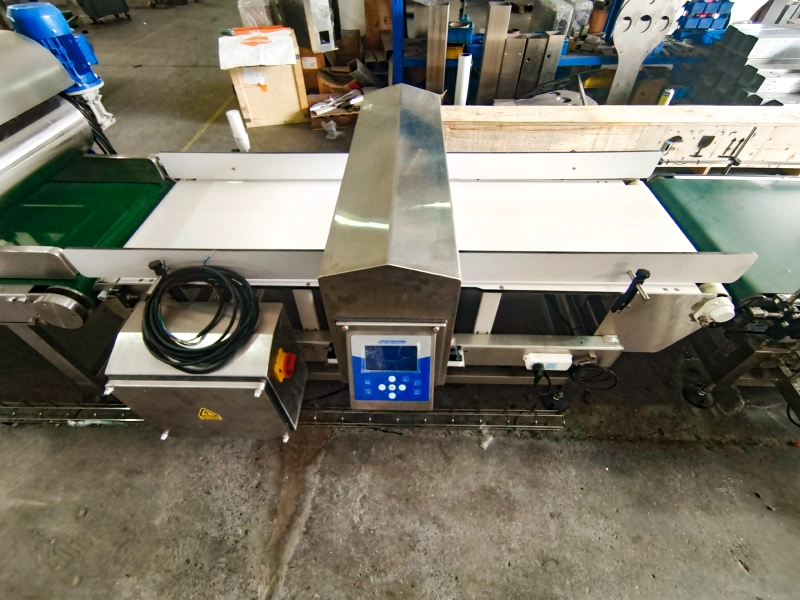
The most expensive failure is not the stitch itself. It is the gap between filling and closing, where a bag can drift off center, ride unevenly, or arrive too loose for reliable sewing. Every manual correction adds time, inconsistency, and a higher chance of damaged packaging.
Why the Mipline configuration fits the job
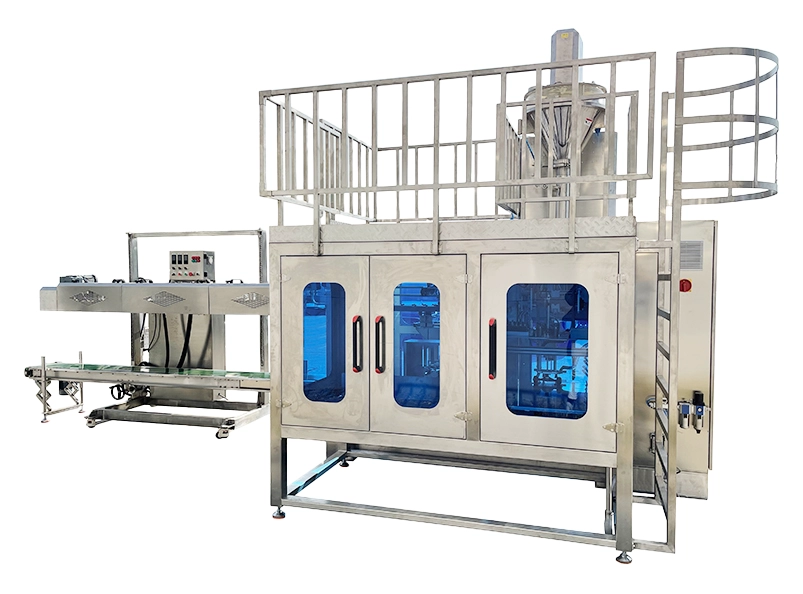
The Mipline layout works here because the packaging station is built around controlled movement and visible access. The enclosed automatic bagging machine keeps the working zone organized, while the transfer section uses guided conveying instead of a loose free-run transition. Blue inspection windows, a rigid stainless-steel frame, and a top access platform are not cosmetic details; they support easier monitoring and faster intervention when the line changes bag type or product flow.
For powder products, that matters. The operator needs a line that protects the bag shape without making the process delicate. A twin-belt or guided transfer section is especially useful when the packaging sequence must keep the top of the bag aligned for the next closing step. In other words, the machine is not only filling bags; it is preparing them for a clean finish.
bpmpack Инженерный взгляд: When the line is designed for stable transfer first, sewing becomes easier, faster, and more repeatable. The right answer is not extra manual correction. It is a mechanical path that keeps the bag centered, supported, and ready for the next station.
What the structure solves in real production
The stainless-steel machine frame gives the line the stiffness needed for continuous operation, while the adjustable side guides help the system stay compatible with different bag dimensions. That combination matters in powder packaging because small deviations in bag width or fill level can otherwise turn into repeated hand adjustments. The line is also easier to maintain when the main working elements are visible and accessible instead of hidden behind a cluttered transfer path.
From a production point of view, the result is straightforward: fewer corrections, smoother bag handoff, and a closing station that receives bags in a consistent position. That lowers the pressure on operators and helps the plant keep pace without sacrificing package quality. For a dairy powder plant, that consistency is what turns a packaging line from a bottleneck into a stable process asset.
| Production problem | Line feature | Result at sewing |
|---|---|---|
| Bag drifts off center | Guided transfer conveyor | Cleaner top alignment before closing |
| Manual re-positioning slows output | Rigid stainless-steel machine structure | Less operator correction and less downtime |
| Weak visibility during changeover | Inspection windows and open access platform | Faster line checks and quicker adjustments |
Need a powder line that keeps the bag steady before sewing?
If your current line is losing time between filling and closing, the answer is usually in the transfer section. A controlled bag path, a rigid frame, and the right access design can remove a lot of manual work from the process. That is where the Mipline packaging line is strongest.
Запросить аудит линии English
 Русский