
Automatic Bagging Line for 25 kg Heavy-Bag Projects
An automatic bagging line from BPMpack links hopper feed, vacuum bag pickup, servo weighing, sealing, and pallet handoff so feed, seed, fertilizer, and plastic pellet plants keep 25 kg woven sacks moving without manual rework.
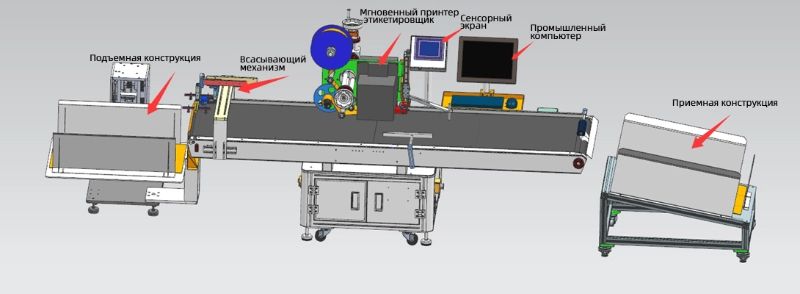
What a 25 kg Heavy-Bag Project Really Needs on Site
Heavy-bag packaging in feed, seed, fertilizer, and plastic pellet plants is rarely a one-machine decision. A 25 kg woven sack must travel from a stainless steel buffer hopper through servo weighing, vacuum bag pickup, filling, heat sealing or sewing, and finally onto a pallet — without tipping, spillage, or a single manual straightening step. The line owner wants an automatic bagging line that keeps the front-end bagging speed matched to the back-end palletizing speed, because mismatched stations are exactly where the shift starts losing hours and the operators start improvising handoffs that should never have existed in the first place.
BPMpack builds the ppline family around that reality. Instead of a standalone filler bolted to a conveyor, the project starts from a CAD-driven factory layout. The bag magazine, weighing scale, sealing or sewing unit, checkweigher, reject conveyor, labeler, and either a robot or high-level palletizer are all sized against the same site drawing, the same aisle width, and the same column positions. Standard builds run on Inovance PLCs; higher-speed and higher-demand projects move to Siemens, so the line stays matched to the actual plant cycle instead of forcing the plant to slow down to match the machine.
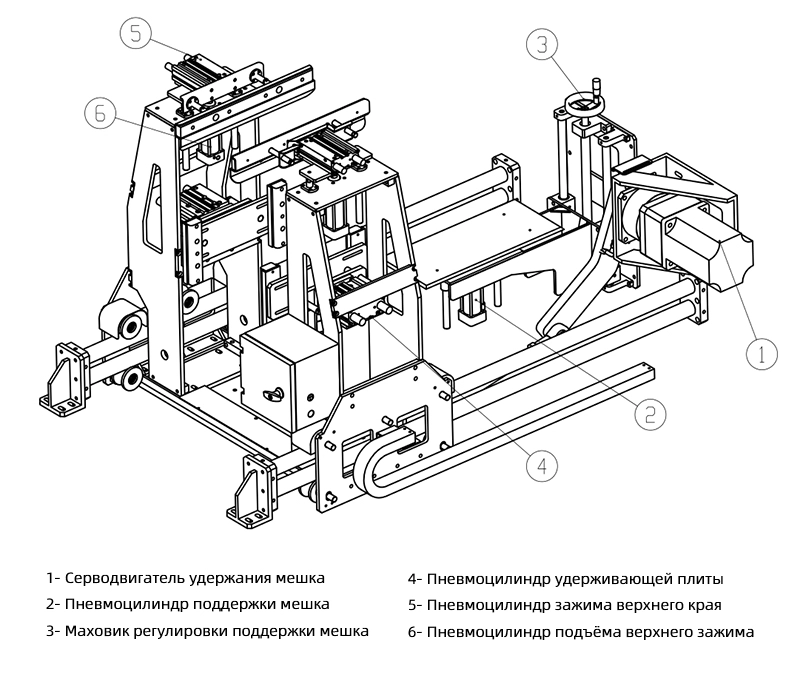
Plants that buy only a filler soon discover the bottleneck is not filling — it is what happens to the 25 kg sack after it leaves the spout. Without a guided transfer, an upright-bag turner, and a checkweigher with a reject lane, every rejected bag has to be pulled by hand and the palletizer becomes the new bottleneck that nobody planned for.
From Spout to Pallet: How the Automatic Bagging Line Stays in Sync
An automatic bagging line running at 700 bags per hour in standard builds — and up to about 800 bags per hour with optimized stations — only stays stable if every transfer station between the bagger and palletizer is sized for the same cycle. BPMpack matches this by selecting the scale head against the project: a single-head servo scale handles 5 kg or 25 kg dual-spec work at roughly 15 to 25 cycles per minute; a double-bucket scale stabilizes standard granular throughput on feed and fertilizer lines; a single-bucket four-servo scale steps up the cycle for higher-speed lines. The right scale is what lets one project switch between 5 kg, 25 kg, and 7 to 30 kg dual-spec work without a full rebuild.
The transfer path matters as much as the scale. A right-angle bag turner converts upright filled bags into horizontal bags for the next station. A dual-layer incline conveyor bridges the height gap between the filling floor and the palletizing floor. A checkweigher in the 5 to 50 kg range, with about plus or minus 10 g accuracy, 18 to 20 bags per minute throughput, and 100 recipe memories, catches out-of-spec sacks before they hit the pallet. Each station is what makes a heavy-bag setup a real line, not a filler plus accessories that drift apart after commissioning.
Engineer insight: The fill accuracy of any heavy-bag setup is set by the scale, not the conveyor. A servo-controlled single-head scale with proper load cells and rejection logic holds plus or minus 0.2% on feed projects and plus or minus 0.1 to 0.2% on seed projects, which is what stops the giveaway that quietly eats margin on every 25 kg sack.
Engineering Numbers Behind the Heavy-Bag Bagging Setup
For project planning, the line parameters that drive layout and procurement decisions are the same ones that appear on a BPMpack engineering data sheet. The core packaging weight range is 10 to 50 kg, with some project configurations covering 5 kg or 25 kg dual-spec work. Power supply is AC380V plus or minus 5% at 50Hz, total power around 15 kW, and air supply at 0.5 to 0.7 MPa with air consumption between 1200 and 2000 NL/min depending on the route and the number of pneumatic stations.
Sealing options — heat seal, sewing, heat seal plus sewing, or heat seal plus sewing plus hot-melt tape — are matched to bag type and dispatch route. Sewing units run at around 2700 rpm with a stitch width of 7 to 10.5 mm. The labeler stations around 12 to 13 pieces per minute. PLC, HMI, inverter, photoelectric and proximity sensors, load cells, cylinders, solenoid valves, servo motors, and the vacuum system all sit on a single electrical stack so one controls team can service the whole line instead of three. Standard builds use Inovance; higher-speed or higher-demand builds step up to Siemens for cycle stability and recipe handling.
| Module | Спецификация |
|---|---|
| Packaging weight range | 10–50 kg (5 / 25 / 7–30 kg dual-spec projects available) |
| Standard packaging speed | up to 700–800 bags/hour |
| High-speed configuration | up to 900–1200 bags/hour depending on route |
| Weighing accuracy | ±0.2% (feed); ±0.1–0.2% (seed) |
| Power supply | AC380V ±5%, 50Hz |
| Total power | ~15 kW |
| Air supply | 0.5–0.7 MPa |
| Air consumption | 1200–2000 NL/min |
| Single-head servo scale | 15–25 cycles/min, 5 / 25 kg dual-spec |
| Checkweigher | 5–50 kg, ~±10 g, 18–20 bags/min, 100 recipes |
| Sewing machine | ~2700 rpm, stitch width 7–10.5 mm |
| Labeler | ~12–13 pcs/min |
| PLC options | Inovance (standard) / Siemens (high-speed) |
Send Your Site Layout and Bag Specs
An automatic bagging line starts from your factory CAD — floor space, column positions, forklift aisles, bag size, and palletizing direction. Send your drawing and project data, and BPMpack will return a layout-matched proposal with the right scale, transfer path, and palletizing option for the actual material you are packing.
Request a Project Review English
 Русский