
How Bibpu Secondary Packaging Automation Stabilizes Woven-Sack Handoffs Before Sewing
When a line must move product from filling to compression, then into bag opening and sewing without spill or skew, the weak point is usually not the sealer. It is the handoff. Bibpu is built for that exact gap: a compact secondary packaging workflow that keeps woven sacks square, flatter, and easier to close.
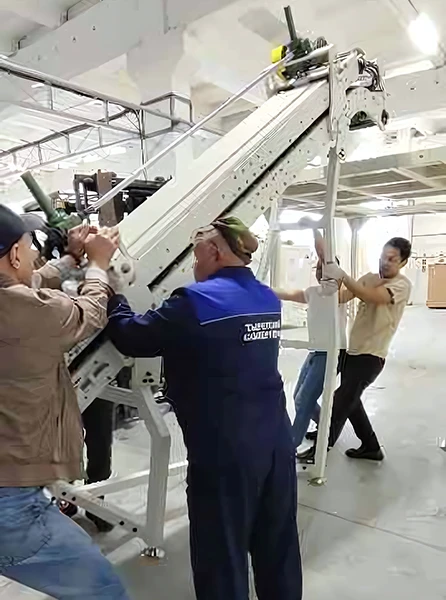
1) The real problem is unstable transfer before closing
In secondary packaging, the bag often arrives from the upstream filling section with trapped air, uneven shoulders, and a soft body shape. That makes the handoff to sewing inconsistent. Bags drift on the conveyor, the mouth opens unevenly, and the operator has to correct the position again and again. In a busy line, that means more rework, slower output, and a higher chance of thread breakage or poor seam alignment.
Bibpu addresses that stage first. The line is not designed as a single machine in isolation. It is arranged as a sequence: transfer, compression, clamping, feeding, and then sewing. That structure matters because the product stays controlled while it moves, instead of being pushed straight into the closing station with no shape correction.
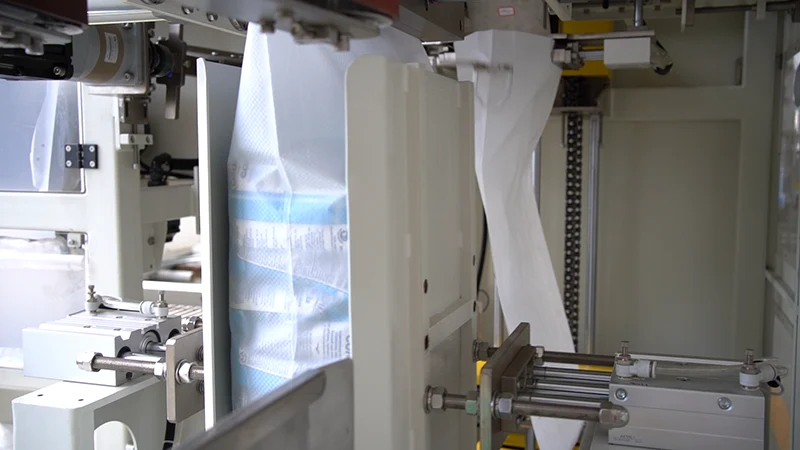
Loose sacks, inconsistent mouth alignment, and excess air before sewing create unstable handoffs and extra manual correction.
2) Why this layout fits secondary packaging work
The line uses side compression to square the sack body before the final closing stage. In the image, the compressed output section shows how the product is flattened and stabilized before it reaches the top-feeding path. That is the right approach for woven PP sacks and similar secondary packs because the bag needs geometry control more than raw speed at that point.
The next handoff is handled by dual belt feeders that grip and guide the bag mouth into the sewing station. That reduces wandering at the entrance of the closer and keeps the opening centered. The final sewing head then works on a more predictable seam line, which is exactly what secondary packaging needs when the job is to protect the primary package, not rebuild it.
What the structure solves: compression reduces bulging, the dual feeders reduce mouth skew, and the sewing head closes a more stable bag opening with less manual intervention.
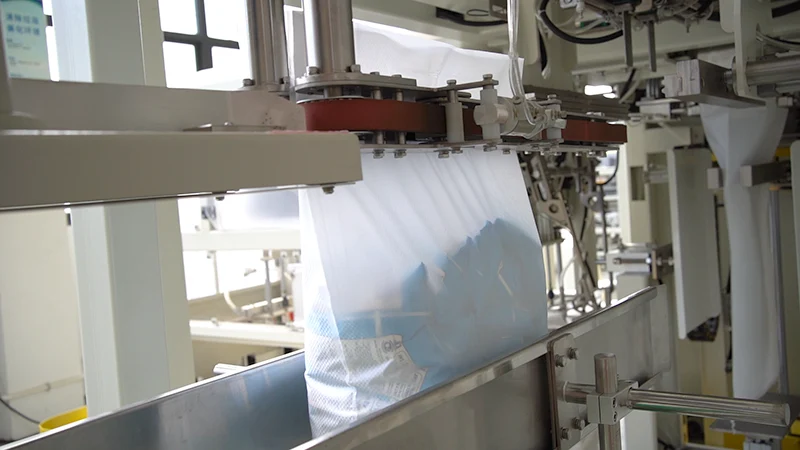
3) Evidence on the machine side
The workshop image shows the broader system context: inclined conveyors, elevated steel structure, and centralized control cabinets. That matters because secondary packaging is rarely one isolated station. It is usually a line that must synchronize feed, transfer, and closure. The control side has to be visible and reachable, and the mechanics have to be compact enough to keep the line moving.
The closing station adds the final proof. The sewing head image shows an industrial Newlong head stitching a filled woven sack directly at the mouth. This is the last step in the chain, and it only works cleanly when the previous two steps have already corrected the sack shape. That is why Bibpu’s layout is practical: it does not rely on the sewing unit to fix a bad handoff.
| Элемент линии | Visible evidence | Operational result |
|---|---|---|
| Compression section | Pneumatic side clamping plates | Flatter sack body before closing |
| Bag mouth transfer | Dual belt feeders | More stable mouth alignment |
| Финальное закрытие | Industrial sewing head | Cleaner sewn seam with less correction |
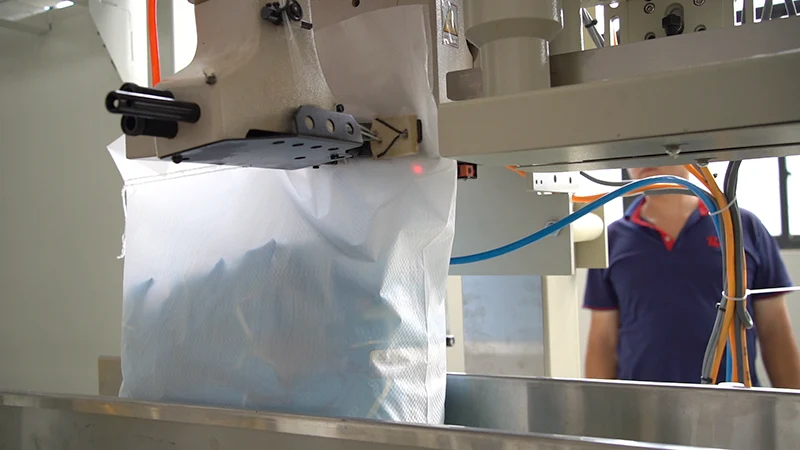
Secondary packaging works best when the handoff is controlled
If your line is losing time at the transfer point, the answer is usually not a bigger sewing machine. It is better control before sewing. Bibpu is built for that job: stabilize the sack, guide the mouth, then close it with less manual correction.
Discuss your secondary packaging line English
 Русский