
Why Pellet Producers Choose an FFS Line for Polyethylene Bag Filling, Elevation, and End-of-Line Dispatch
When pellets have to move from hopper feed to sealed polyethylene bags without unnecessary handling, the real challenge is not only filling speed. The line also has to keep access safe, transfer points clean, and the discharge flow stable enough for the next shift, the next pallet, and the next truck.
The operating problem behind pellet bagging
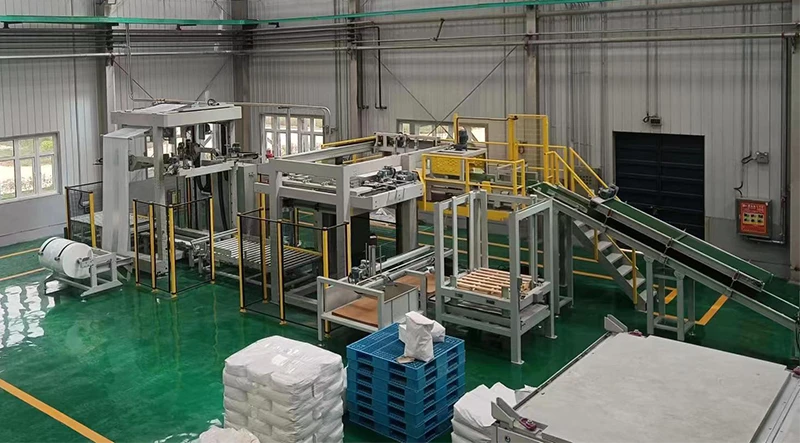
Pellet packing projects usually start with a simple request: fill free-flowing product into polyethylene bags and keep the output steady. In practice, the weak points appear between the hopper, the forming and filling station, the bag discharge point, and the operator’s walking path. If these zones are too cramped, operators lose time at each handoff. If the line is too low or too flat, pallets and finished bags start to block movement. If the transfer path is not guided, the bag stream becomes messy and the floor space turns into a daily cleanup job.
That is why pellet manufacturers often need more than a bagging head. They need a full FFS package that keeps the bagging section, the platform, and the downstream conveyor aligned as one continuous working path. The goal is not just to seal bags. The goal is to make every transfer cleaner and every dispatch cycle easier to repeat.
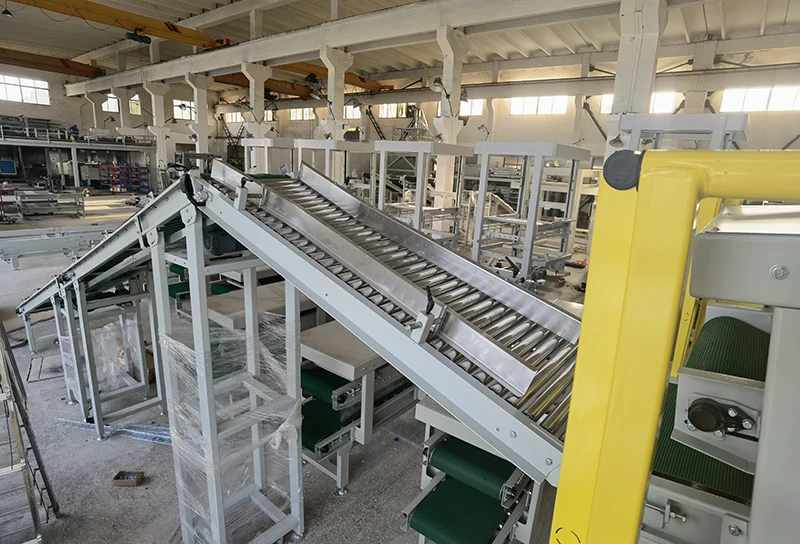
Most pellet lines do not fail at the bag seal. They fail at the points around it: poor access to the platform, awkward outfeed height, slow transition from filling to discharge, and a layout that forces operators to work around the machine instead of with it.
Why the FFS structure fits this job
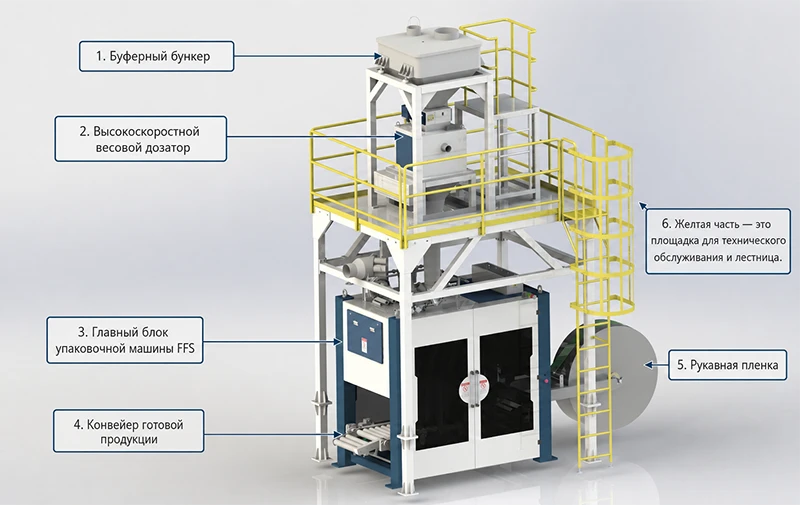
The FFS line is a good match because its layout already separates the main functions into visible, serviceable modules. The hopper sits above the forming and filling area, the machine body stays enclosed, and the service platform gives technicians a safer way to inspect the process. This is important for pellet bagging because the material itself is usually free-flowing, so the machine must control the product path while the plant keeps the human path clear.
The annotated layout makes the logic easy to read. The machine frame, control area, film handling section, and service points are not decorative details. They are the physical reason the line can run with fewer interruptions. For pellet producers, that means faster access for maintenance, more predictable feeding, and cleaner coordination between bag making, filling, and downstream handling.
Practical view: When the platform and conveyor are integrated into one line, the operator does not need to improvise around the machine. The result is less bag mishandling, less rework at the discharge end, and a more stable rhythm from batch to batch.
What the layout changes on the shop floor
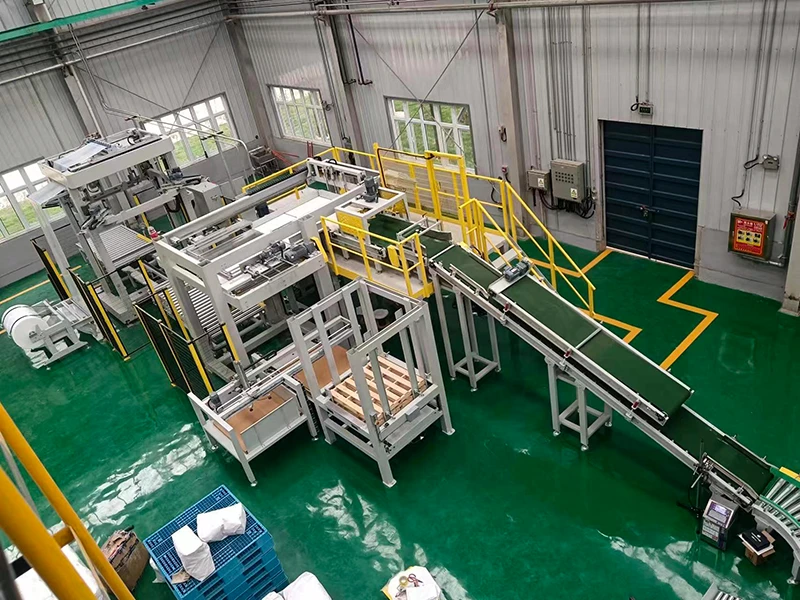
Once the line is arranged with a higher service platform and a clearer outfeed path, the shop floor becomes easier to manage. Finished bags travel into the next stage with less interference. Forklift traffic stays more predictable. Operators can see the line from above instead of working blind at ground level. That matters in polyethylene bag packing because bag handling is repetitive, and repetitive motion punishes weak layouts very quickly.
The high-angle view is the best proof of this point. It shows the conveyor direction, the platform position, and the bag handling area as one connected working zone. On a real project, that connection is what keeps the output from becoming fragmented across the workshop.
| Stage | What the pellet line needs | FFS structure that answers it |
|---|---|---|
| Feed | Stable product entry from hopper to bagging zone | Top-mounted hopper and enclosed main body |
| Access | Safer inspection and easier maintenance | Elevated platform with guarded working area |
| Transfer | Cleaner move from filled bag to outfeed conveyor | Integrated discharge path with guided handling |
| Dispatch | Steady handoff to palletizing and outbound logistics | Connected downstream conveyor and open circulation space |
For pellet producers, this is the difference between a machine that only fills bags and a line that actually supports production flow. Cleaner handoffs reduce floor clutter. Safer access reduces downtime risk. More stable dispatch helps the warehouse team keep pace with the packing team.
Need a pellet bagging line that keeps the flow cleaner?
If your project requires pellet filling into polyethylene bags with better access, cleaner transfer, and a steadier outfeed rhythm, an FFS layout is usually the right starting point. The key is to connect the hopper, platform, and discharge path as one system instead of treating them as separate machines.
Request a layout discussion English
 Русский