
How a Granule Bagging Line Keeps 25 kg Dispatch Steadier in a Polymer Warehouse
For polymer and bulk-material warehouses, the bottleneck is rarely just weighing. The real issue is keeping granules moving cleanly from hopper to bag, from bag to conveyor, and from conveyor to pallet without dust, twist, or repeated rework.
Why woven sacks and sewing slow down granule dispatch
In many warehouses, the old route is still the same: an open-mouth bag, a manual fill step, a stitch-sealing machine, and a lot of hand movement around the bag neck. That works, but it usually becomes the weakest part of the line as soon as volume rises. Granules spill more easily during transfer, bag mouths shift during sewing, and every small error becomes another handling step before shipment.
That is why the old scheme often creates three familiar problems at once: slower output, more product loss around the fill point, and more labor at the exact moment the dispatch area needs to stay stable. For a 25 kg bagging flow, those issues are not abstract. They show up as uneven bag presentation, dirty seams, and a queue of bags waiting for the next operator action.
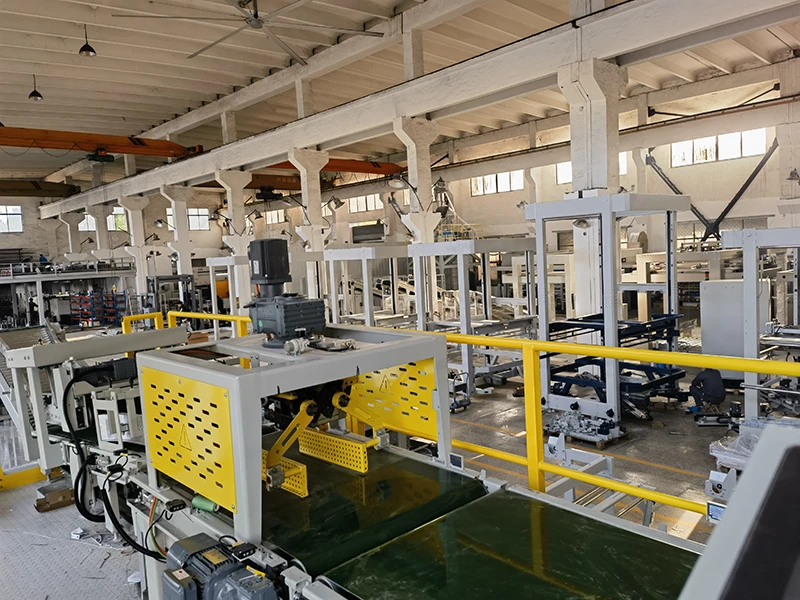
When a granule line is unstable, the problem is often a rough product path: open transfer, extra manual handling, and a bagging step that cannot keep up with downstream dispatch. Once that happens, operators spend time correcting the bag instead of moving the product.
Why the FFS line fits granules and 25 kg bags
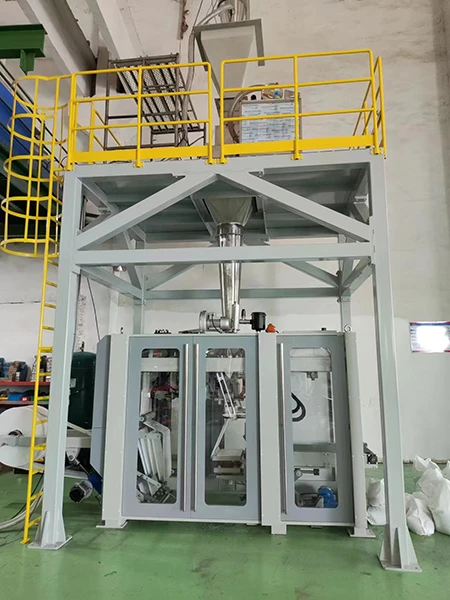
The FFS line is a better fit because it turns the job into one continuous flow: film forming, bag making, filling, sealing, outfeed, and palletizing. The product is fed into a controlled bagging path through the hopper, the formed bag stays aligned during filling, and the discharge moves directly to the conveyor chain instead of back into manual handling. That is a practical answer to dust, bag twist, and uneven dispatch rhythm.
From the layout side, the machine is also built for real plant space. The elevated platform, enclosed cabinet, and compact line structure help keep the footprint manageable in a warehouse or production room. The product profile also supports the search intent around granule bagging lines, bagging lines, and automatic palletizers, which is exactly the combination many bulk-material sites need when dispatch has to stay steady.
Field note: the line works best when the bagging section and the outfeed section stay physically connected. That is why a granule project usually benefits more from a clean in-line structure than from a patchwork of separate machines.
What the structure and numbers tell you
The value of an FFS granule bagging line is not just visual. The machine structure supports the process with a controlled frame, hopper section, safety rails, and connected conveyors. In practice, that means the bagging point is easier to guard, easier to maintain, and easier to align with downstream packaging or palletizing equipment.
On the performance side, the line is designed for high output and stable dosing. The product notes in the traffic profile point to output up to 1200 bags per hour, with weighing accuracy in the ±0.1 to ±0.2 percent range. That matters because bag accuracy affects not only the fill cost, but also the amount of rework and the confidence of the dispatch team. Optional checkweigher and metal detector stages can be added when the site needs tighter control before shipment.
| Old scheme | FFS response | Result |
|---|---|---|
| Open-mouth woven sack plus sewing | Inline film forming and sealing | Cleaner bag handoff and fewer manual corrections |
| Separate loading and transfer steps | Hopper-fed controlled filling path | Less dust at the fill point and steadier bag alignment |
| Manual bag staging before dispatch | Connected conveyors and optional robot palletizing | Faster downstream flow and better pallet rhythm |
| Pre-made bag inventory and storage | Roll film online bag making | Lower packaging logistics and less warehouse space for bags |
That is the core reason the FFS line is attractive for polymer granules, grain-like products, and other bulk materials that need a clean 25 kg dispatch format. It reduces the number of touchpoints, keeps the product path shorter, and makes the line easier to run with fewer operators.
Need a steadier granule bagging flow?
If you are planning a 25 kg granule line, send us the product type, target bag weight, target bags per hour, and the available infeed and outfeed layout. We can match the line structure to the real dispatch rhythm instead of forcing the plant to adapt to the machine.
Talk to BPM English
 Русский