
Why a Granule Bagging Line Keeps Hopper Feed, Bag Transfer, and Pallet Flow Steadier
For plants moving granules into woven bags, the real problem is rarely the bag itself. The trouble starts when feed is uneven, the bag mouth drifts during clamping, and the discharge area forces every sack to travel through a narrow, rough handoff before it reaches palletizing. The ppline granule bagging line is built to remove those weak points with a cleaner mechanical path, clearer operator access, and a more stable transfer layout.
What usually goes wrong on the old line
In many bagging rooms, the old setup is built around shortcuts. The hopper sits too close to the floor, the control point is tucked away, and the bag discharge route relies on the operator to correct every small deviation by hand. That works when the line is slow and the sack flow is forgiving. It breaks down when the plant wants steadier granule bagging and cleaner movement from filling to pallet transfer.
Once the bag mouth starts drifting, the whole sequence becomes sensitive. A loose clamp creates a messy fill. A weak frame flexes during discharge. A poorly planned conveyor path scratches the bag surface and makes stacking inconsistent. In practice, the issue is not only output speed. It is the repetition of small errors that forces rework, slows downstream handling, and makes the pallet zone harder to keep tidy.
When operators have to fight bag drift, access issues, and a cramped discharge path at the same time, the line stops behaving like a system and starts behaving like separate manual jobs.
Why ppline fits granule bagging work better
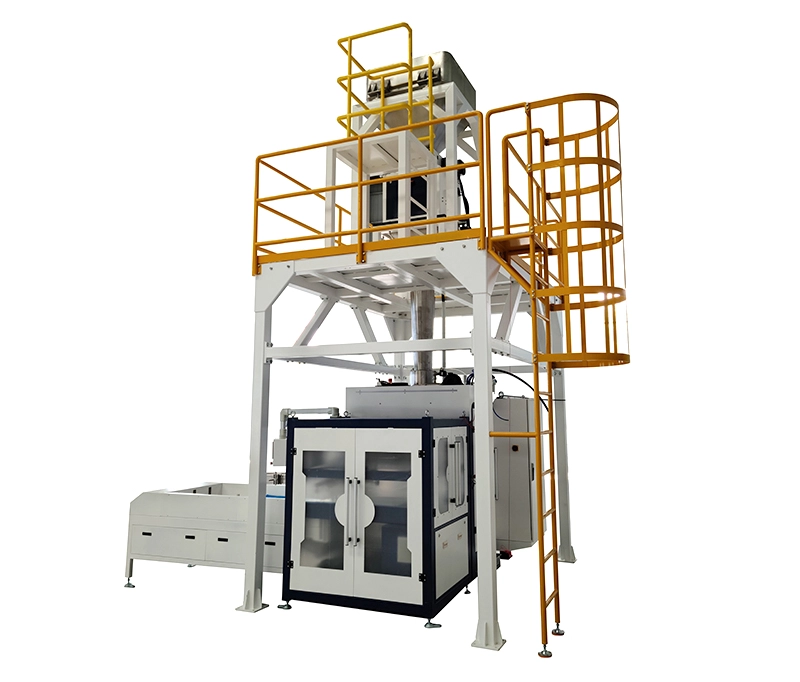
The ppline layout solves the problem by connecting the feeding, clamping, discharge, and access points into one readable structure. The elevated steel platform keeps the working zone organized. The safety cage ladder gives maintenance teams direct access without disturbing the floor flow. The enclosed cabinet reduces the impression of an exposed, improvised machine line, which matters when the plant wants a cleaner operating standard.
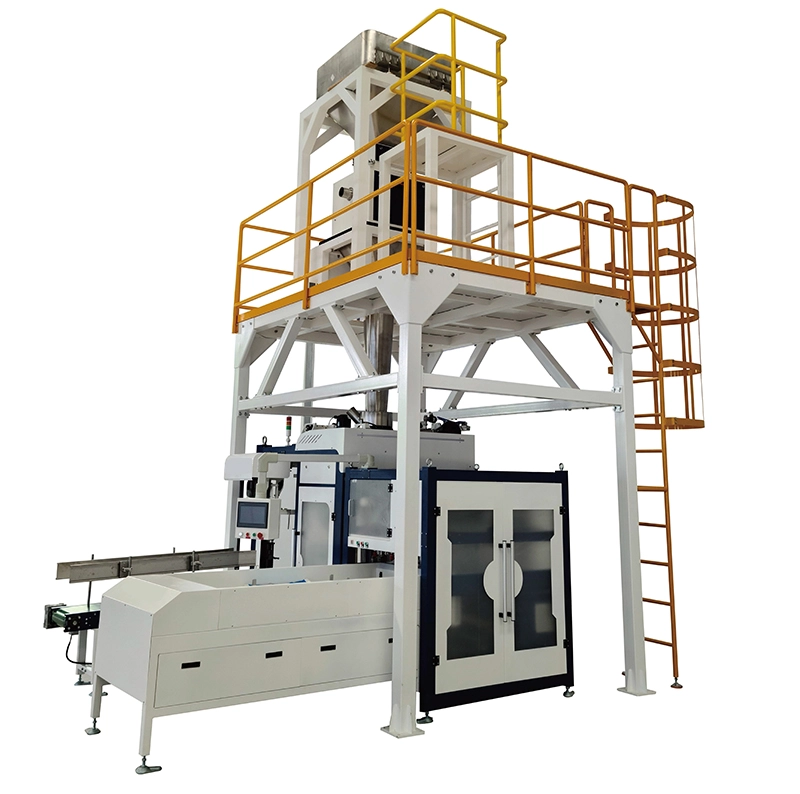
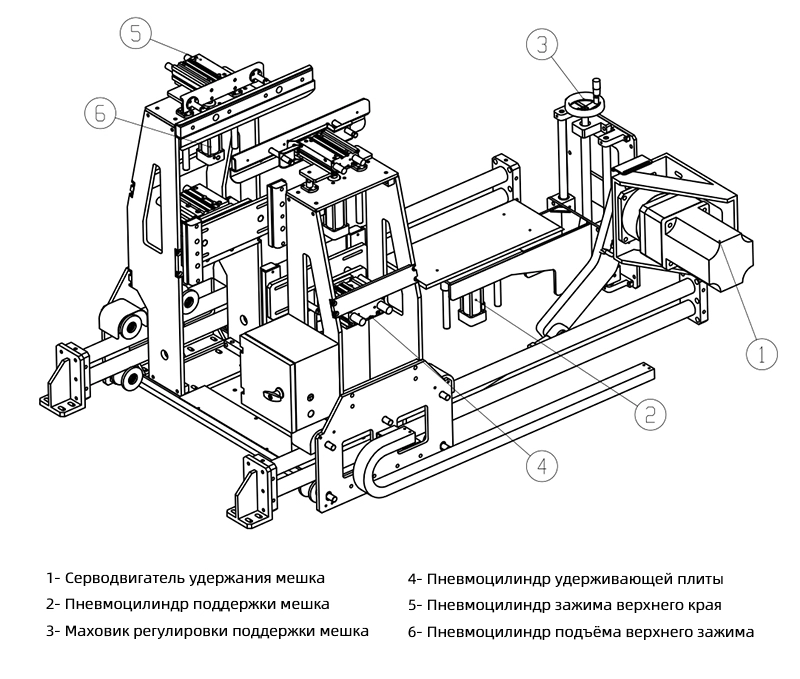
More importantly, the visible bagging mechanism is designed for control rather than guesswork. The swing-arm HMI gives the operator a clear interface at the side of the machine. The bag clamping and bottom support assembly uses pneumatic cylinders and servo adjustment, which helps keep the bag mouth aligned before and during discharge. That is the difference between a line that only fills sacks and a line that keeps the sacks ready for the next move.
Practical takeaway: when hopper feed, alignment, and discharge are built into one modular path, the line becomes easier to trust, easier to inspect, and easier to keep moving during a full shift.
What the images prove about the structure
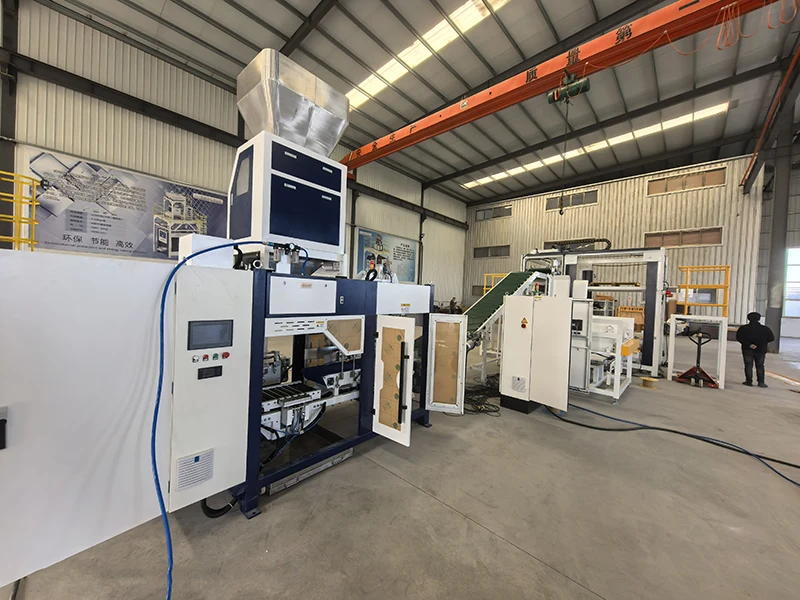
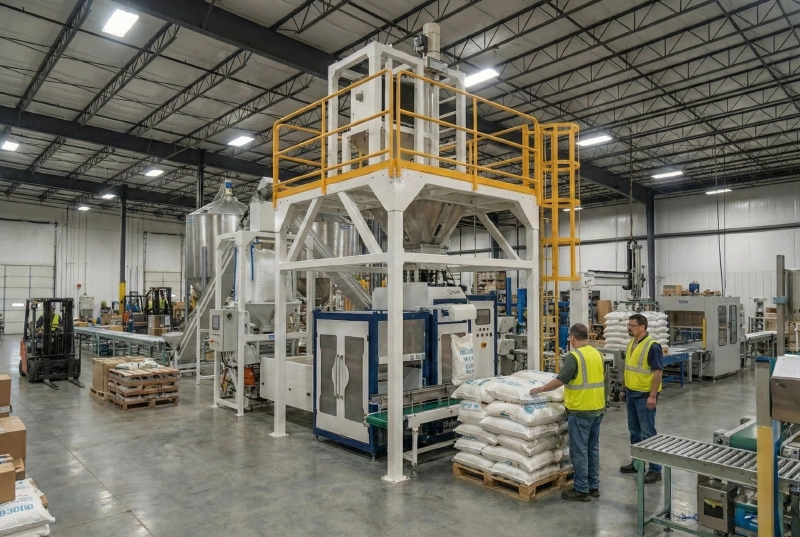
The image set shows the line from three useful angles: front view, side view, and live operating scene. Together they show a steel tower with a platform, a side-mounted HMI, a controlled bag support assembly, and a discharge path that leads cleanly toward the pallet area. That is not decoration. It is the physical evidence that the ppline granule bagging line was built to reduce handling confusion.
On the floor, this structure supports a more stable result. The operator can see the control point. The bag is supported before it leaves the fill area. The conveyor path is visible and short enough to inspect. And the pallet zone, shown in the operating photo, stays more orderly because the sack handoff is cleaner before stacking begins.
| Изобразительные доказательства | Visible structure | Operational result |
|---|---|---|
| Front product view | Steel platform, safety cage ladder, enclosed cabinet | Cleaner access and a more organized machine footprint |
| Side product view | Swing-arm HMI and outfeed conveyor | Clear operator control and steadier bag discharge |
| Mechanism close-up | Pneumatic clamps and servo-adjusted support | Better bag mouth alignment during fill and transfer |
| Live factory scene | Hopper feeder, inclined conveyor, pallet area | Smoother plant flow from feed to stacking |
Need a granule bagging line proposal for your plant?
If your current bagging room is losing time to bag drift, rough transfer, or a disorganized pallet area, ppline gives you a cleaner way to structure the feed, clamp, discharge, and operator access points. Send your bag size, target output, and transfer layout, and we will map the right line proposal for your site.
Request a line proposal English
 Русский