
Mipline at the Last Meter: Keeping 25 kg Powder Bags Controlled Before Sewing
At a Belarus dairy powder plant, the critical problem is not only filling the bag. The real risk appears in the last meter before sewing, when a filled 25 kg bag can twist, drop out of square, or arrive to the stitch head with a skewed mouth. Mipline is built for that exact handoff.
Why the last meter before sewing decides line quality
In powder packaging, the bag leaves the filling point heavier, softer, and less stable than many operators expect. A 25 kg kraft paper or woven bag may look full, but if the support path is weak, the bag body can rotate, lean, or collapse as soon as it moves onto the next conveyor. That is where sewing problems start.
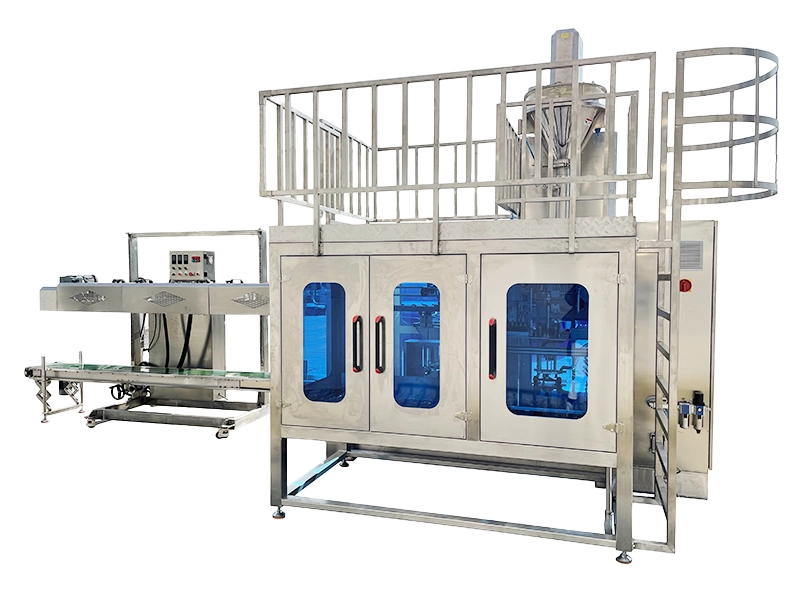
Mipline focuses on that transition. The enclosed stainless steel bagging station, bag magazine conveyor, and guided transfer sections are not decorative features; they keep the bag supported while it moves from filling to handling, so the sewing head receives a cleaner, more predictable bag position.
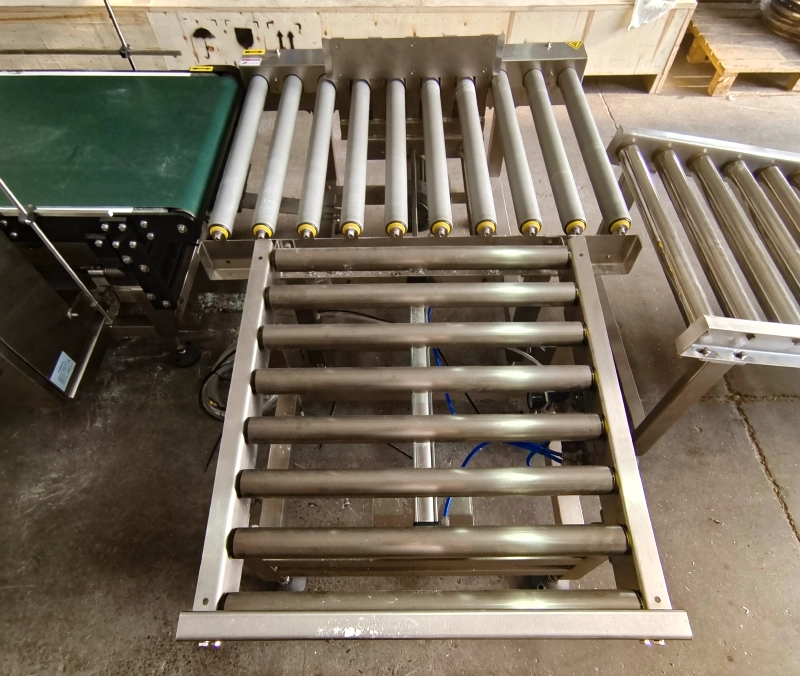
When the filled bag arrives crooked, operators spend time straightening it by hand before sewing. That manual touch slows the line, adds variability, and turns the last transfer into a labor point instead of a controlled process.
What the machine evidence shows on the floor
The hero image shows the enclosed bagging station with blue inspection windows and a top access platform. That tells us the line is designed for supervision, guarding, and maintenance access, while keeping the bagging area physically organized. The support image shows the roller transfer section, which is the practical proof that the bag is not simply dropped forward; it is carried across a controlled path.
This matters for dairy powder, flour, starch, and other dry powders because the bag is already under stress after filling. A stable handoff reduces bag twisting, keeps the mouth closer to square, and gives the sewing operator a calmer and more repeatable feed.
bpmpack Инженерный взгляд: The useful upgrade is not only speed. It is controlled bag posture. When the transfer conveyor, clamp station, and bag magazine work together, the line removes the need for constant manual correction and makes the sewing step more consistent from bag to bag.
What this setup changes in daily production
For a Belarus dairy powder producer, the result is a cleaner and more supervised bagging process. Operators see the bag path more clearly, the transfer between stations stays more controlled, and the final sewing step is less exposed to random bag skew. That is especially important when the plant wants stable output without turning the packaging line into a manual workstation.
If you are comparing powder bagging lines, the right questions are simple: what bag type is running, what target weight is required, what throughput is expected, and what must happen after filling. Mipline is built to answer those questions with a guided transfer path, stainless steel guarding, inspection windows, and a bagging layout that keeps the bag supported until it reaches sewing.
| Shop-floor issue | Mipline evidence | Operational result |
|---|---|---|
| Bag arrives crooked before sewing | Guided transfer conveyor and roller section | Cleaner bag posture at the stitch head |
| Operators straighten bags by hand | Controlled bagging station and bag magazine conveyor | Less manual correction at the last meter |
| Maintenance and supervision are difficult | Blue inspection windows and top access platform | Easier line oversight and service access |
Need a cleaner powder bag handoff before sewing?
Send us the bag type, target weight, throughput, and the operation after filling. We will map the right Mipline layout for your powder packaging line and show where the bag stays controlled before sewing.
Ask for a line proposal English
 Русский