
Flour Bagging Equipment for Cleaner 25 kg Bag Transfer Before Sewing
For flour plants filling 25 kg kraft-paper or coated woven bags, the difficult part is not only putting powder into the bag. Mipline connects controlled filling, bag clamping, closure, shaping, inspection, and guided conveying so the bag reaches sewing or sealing in a more stable condition.
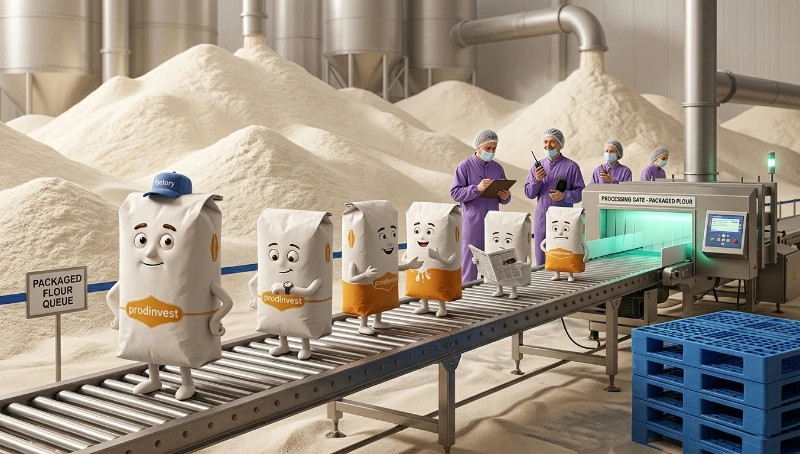
Why the last metre matters on a flour packaging line
In a flour bagging line, a filled bag can leave the filling point with trapped air, an uneven base, or a skewed mouth. If the next conveyor simply pushes the bag forward, the bag may twist or collapse at the handoff. Operators then straighten the bag by hand before the sewing head. That correction adds a manual task at the most sensitive point of the powder filling and bag sewing line.
The problem is mechanical as much as it is operational. A sewing or sealing head needs the bag mouth to arrive at a repeatable height and orientation. Flour dust around the mouth can also affect closure preparation. A controlled bag transfer conveyor, with the right guide and clamp logic, gives the line a defined transition rather than leaving the final alignment to the operator.
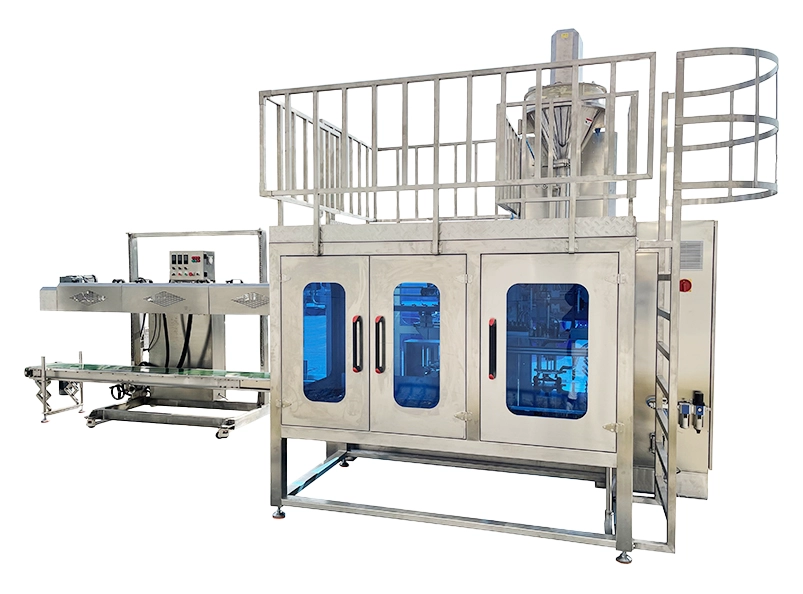
A standalone filler may achieve the target weight while leaving bag supply, mouth opening, closure, settling, and final transfer disconnected. The result is familiar in flour and starch plants: manual bag opening, hand straightening, a dusty sewing area, unstable bag shape, and no clear reject route when weight or metal detection results are outside the approved range.
How Mipline adapts the automatic powder packing machine to the process
Mipline treats the bag as a moving process item. A bag magazine and vacuum pickup can supply the empty bag; opening and clamping hold it at the filling head; a lifting platform follows the fill level during bottom-up filling. The reference system uses three-stage screw feeding—fast, medium, and slow final dosing—so the final weight stage is not handled as one unrestricted flow. Configuration still depends on powder bulk density, flowability, aeration, moisture, bag construction, target speed, and the site layout.
After filling, the line can be configured for de-aeration or vacuum extraction, dust removal, trimming, inner heat sealing, sewing, paper-tape wrapping, pressing, settling, shaping, metal detection, checkweighing, reject, and roller discharge. This is why Mipline is better specified as a powder packaging line than as a standalone automatic bagging machine for powder.
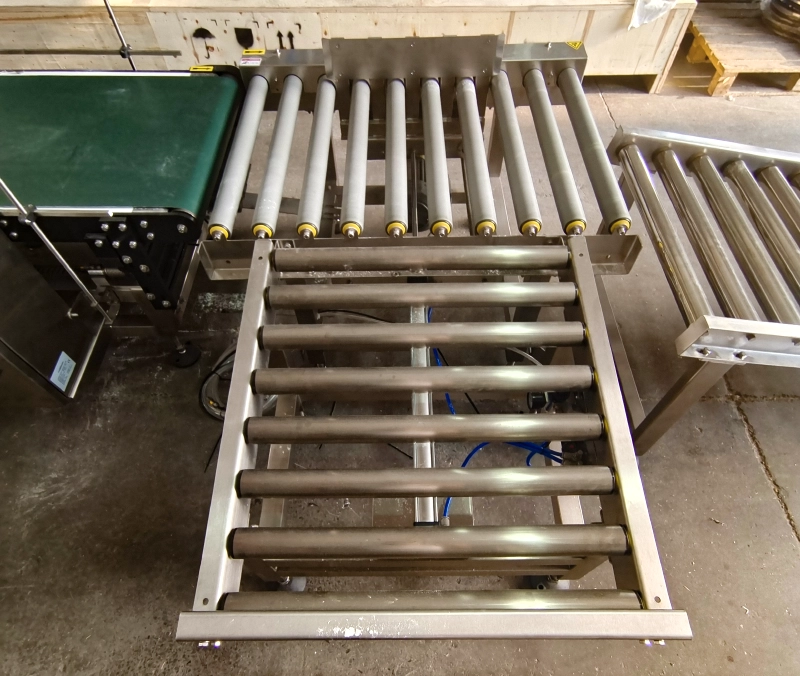
Engineering view: The useful handoff is not simply a longer conveyor. It is the coordinated relationship between bag clamp alignment, bag settling or shaping, side guidance, and the next closure or inspection station.
Visible structures and reference parameters to verify
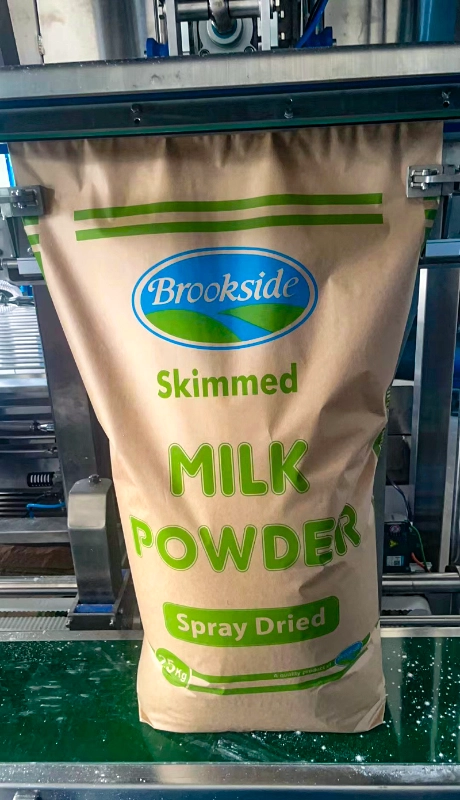
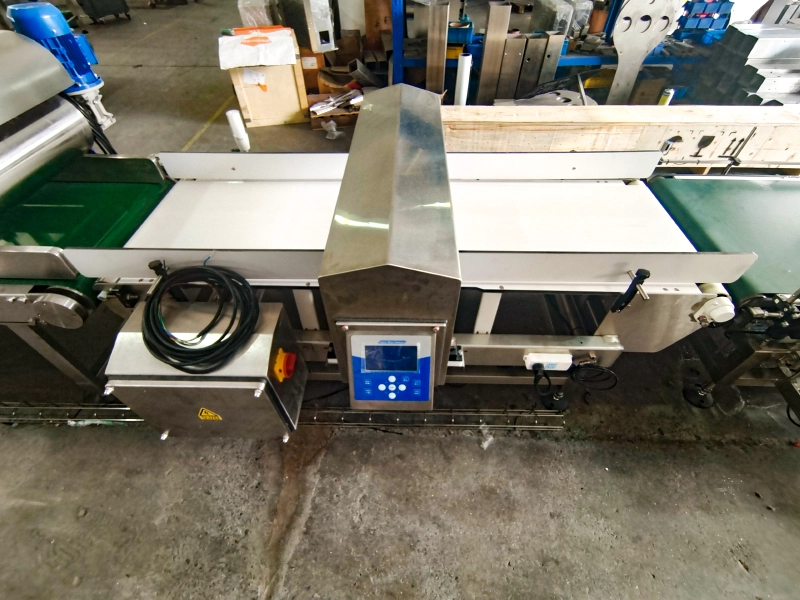
The production images show the hardware that supports this process: enclosed stainless-steel stations, blue inspection windows, a bag magazine conveyor, green belt sections, roller transfers, adjustable guides, emergency-stop controls, and maintenance access. These are useful evidence of the equipment architecture, but an image does not establish a universal speed or accuracy claim.
For a flour bagging line, the project review should connect each operating requirement to a confirmed configuration. The following reference points show how to frame that discussion before final engineering approval.
| Requirement to confirm | Mipline reference or design response |
|---|---|
| Bag and target weight | Nominal 25 kg industrial bags; DS25K reference covers 5–25 kg, subject to bag and material tests. |
| Filling control | Bottom-up lifting fill with vertical screw feeding and fast, medium, and slow dosing stages. |
| Line capacity | Reference variants state 1–3 bags/min or 1.5–2 bags/min; confirm the selected powder, bag, and configuration. |
| Bag-mouth stability | Bag magazine, opening, clamp alignment, guided transfer, closure preparation, and shaping are coordinated between stations. |
| Inspection and reject | Metal detection, checkweighing, alarm, and a defined reject path can be placed after forming and closure; use the approved project datasheet for accuracy and throughput. |
| Construction and access | Reference equipment uses SUS304 body sections, enclosed guarding, blue viewing windows, HMI/control cabinets, adjustable guides, and access platforms where configured. |
Specify the flour bagging line around the handoff
Share the flour properties, bag material and dimensions, target weight, required bags per minute, closure method, available power and air, dust-control expectations, and downstream palletizing layout. BPM can then match the automatic powder packing machine, bag transfer conveyor, inspection, and powder filling and bag sewing line to a verified project configuration.
Discuss Your Powder Packaging Line English
 Русский