
PE Pellet Packaging Machine: Film Width and Bag Weight
A polyethylene pellet plant that buys a PE pellet packaging machine is really buying a film specification, a bag geometry and a seal that has to survive a 25 kg drop. Pellets flow freely, so dosing is rarely the weak point. BPM FFSline forms M-type bags from PE roll film in line, cools both seals and hands a square bag to the palletizer.
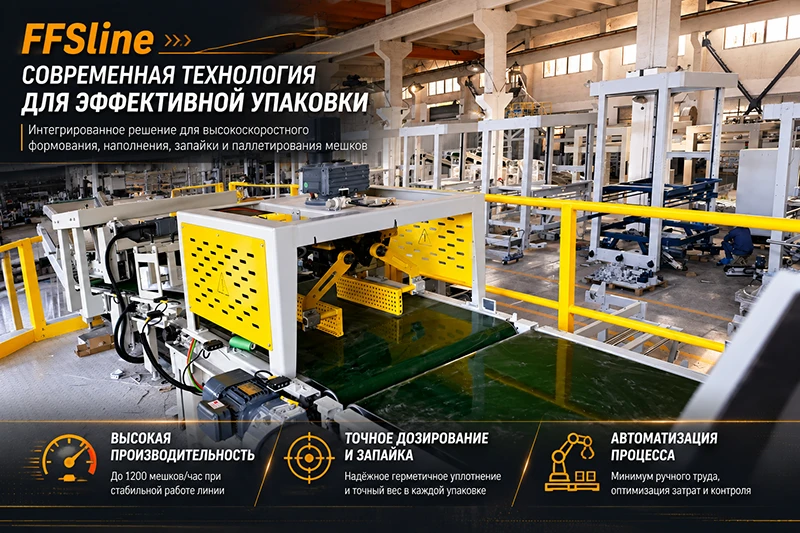
Where a PE pellet packaging machine loses bags
The losses on a pellet line almost never start at the weighing head. Polyethylene granules pour faster and cleaner than powder, so the weigher usually reaches its set weight inside the cycle. What breaks is downstream: the bag body, the seam and the pallet. A plant still running pre-made woven or paper sacks adds a magazine, an opening station, a sewing head and a bag straightener, and each of those stations carries its own jam. When the bag is formed from roll film on a PE pellet packaging machine, film feed, forming, filling and sealing sit on one frame, and the bag geometry stops depending on how a pre-made sack happened to be stacked.
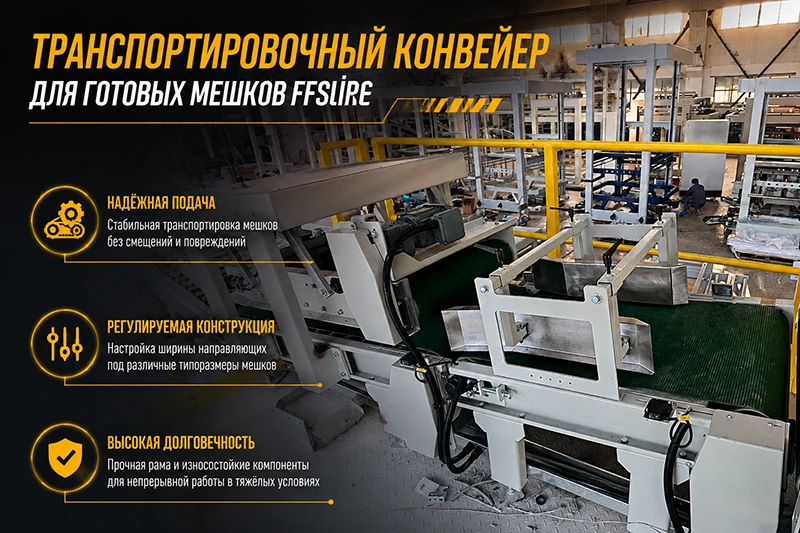
The second loss is thermal. A 25 kg charge of pellets hits the bottom seam in a fraction of a second, and if that seam is still warm, the film stretches just enough to open a hairline at the gusset. The bag passes a visual check at the spout, then leaks fines onto the conveyor, the checkweigher and the pallet. On FFSline the bottom seal, the mouth seal and the cooling section are separate stations with their own dwell times, so the bag arrives at the transfer conveyor with both seals set rather than still soft.
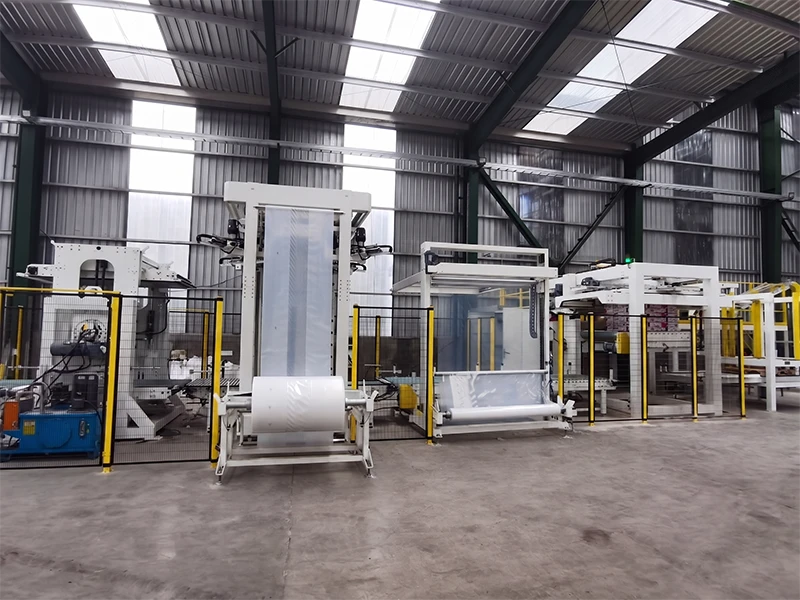
Bags leave the machine looking square and reach the palletizer with a wrinkled or split mouth seal. Operators blame the filler and ask for a slower cycle; the real cause is film tension and cooling time, not dosing accuracy.
How the FFSline PE pellet packaging machine matches the material
The film side is decided first. FFSline runs PE or PP heavy roll film in an M-type gusset, with a standard film width of 350–450 mm, a maximum roll outside diameter of about 1500 mm and a 150 mm core. Common film thickness sits at 0.14–0.18 mm, and project ranges of 0.12–0.20 mm or 0.125–0.25 mm exist, so the gauge is confirmed with the film supplier before the forming collar is set. The film is drawn over the collar, the vertical seam is closed, the bottom seam is made and cooled, and only then does the 25 kg charge enter the bag. That order is why the same PE pellet packaging machine can hold bag shape on a material that pours as fast as pellets.
The dosing side is deliberately simple: a single-head servo weigher on a 25 kg range, fed from a 3 m³ transition hopper that absorbs silo surges and keeps the cycle continuous. For grades that cake or bridge, the hopper can be configured with vibration or anti-bridging and a sampling point. After sealing, the bag can pass metal detection and a checkweigher that rejects underweight and overweight bags before they ever reach the palletizer, and the bag body is squared by a shaping station so the pallet stack is straight. Capacity is quoted against the material, not as a fixed headline: 500 bags/h is the design basis of the 2024 ammonium phosphate project, while 1,000–1,200 bags/h is the level stated for suitable free-flowing material — both depend on granule size distribution, moisture, continuous feed and the acceptance conditions written into the contract.
What we tell buyers before quotation: a PE pellet packaging machine is sized from three numbers — bag weight, film width and the number of bags per hour the silo can actually support. Send those three and the layout follows; ask for a capacity figure alone and every supplier will quote a different line.
Specifying a PE pellet packaging machine
Most pellet projects that go wrong start from a bag weight that was never matched to film width, or from a downstream scope that stopped at the sealing head. A 20 kg, 25 kg and 50 kg mix on one line is workable, but the bag geometry, film gauge and bulk density have to be checked together, not one at a time. The table below lists what an FFSline PE pellet packaging machine is built to, and what still has to be confirmed per project.
Each item below is answered by a physical arrangement on the machine rather than a promise: the 3 m³ hopper answers the interrupted-feed problem, the separate cooling section answers the warm-seam problem, the checkweigher with reject answers the overweight bag leaving the plant, and the palletizer with pallet magazine and stretch hood answers the demand for a forklift-ready pallet instead of a stack of loose bags. Downstream metal detection, labelling, coding and cold stretch hooding are configured per project, so they are quoted as scope, not assumed as standard.
| Item | FFSline reference | To confirm per project |
|---|---|---|
| Bag material | PE or PP heavy roll film, M-type gusset | Film supplier, seal layer, gusset depth |
| Film width | 350–450 mm standard | Bag width and finished bag face |
| Film roll | Max OD approx. 1500 mm, core 150 mm | Roll handling and splicing space |
| Film thickness | 0.14–0.18 mm typical | Project range 0.12–0.25 mm with film maker |
| Bag weight | 25 kg standard, 20 kg and 50 kg possible | Bulk density and bag geometry |
| Design capacity | 500 bags/h project basis; 1,000–1,200 bags/h level for suitable material | Flowability, granule uniformity, moisture, feed continuity, acceptance terms |
| Buffer feed | 3 m³ transition hopper | Anti-bridging, vibration, sampling if the grade cakes |
| Utilities | Main machine approx. 25–30 kW, air approx. 3,000–3,500 L/min; line-level totals differ | Full line power and air balance |
| Downstream scope | Checkweigher with reject, metal detection, shaping, coding, labelling, robot or high-level palletizer, pallet magazine, stretch hood | Which stations are in contract scope |
Size a PE pellet packaging machine on your own numbers
Send the pellet grade, the bag weight you sell, the film width you can source and the free floor area in the hall. BPM will answer with the machine arrangement, the dosing and buffer scope, and the downstream stations needed to reach a forklift-ready pallet.
Request a line proposal English
 Русский