
How a Polyethylene Pellet Packaging Machine Improves Clean Handoffs, Stability, and Warehouse Flow
When polyethylene pellets move from storage to bags, the weak point is usually not the filling itself. It is the handoff: dust, spilled granules, unstable sacks, slow pallet moves, and too much manual correction. This packing line is built to keep that transfer clean, controlled, and easy to run in a real warehouse.
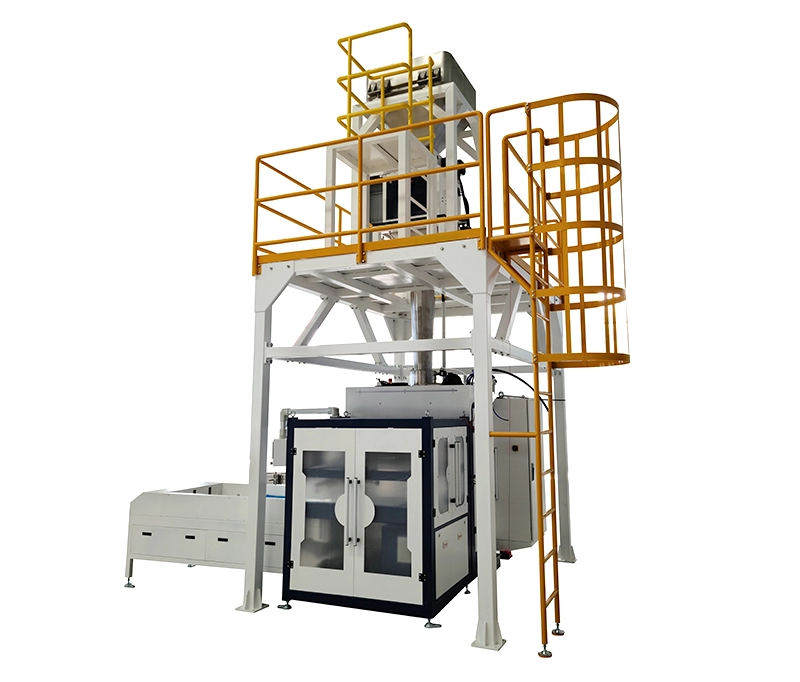
From manual bagging to a controlled pellet packing workflow
Many plants still rely on a mixed process: pellets are fed from a silo or buffer bin, bags are filled at one point, then operators carry the sacks to stacking and dispatch. That sounds simple, but in practice it creates loose granule loss, inconsistent bag shape, and a lot of stop-start movement around the machine. For polyethylene pellets, that means a cleaner product can still become a messy warehouse problem if the transfer path is not controlled.
The QZK-1200 style bagging setup is aimed at that exact gap. The machine keeps the product path enclosed, the bagging point elevated, and the discharge path clear. Instead of forcing workers to manage every transfer by hand, the system uses a steel platform, an enclosed cabinet, a bagging chamber, and a conveyor outfeed to keep the sequence steady from filling to palletizing.
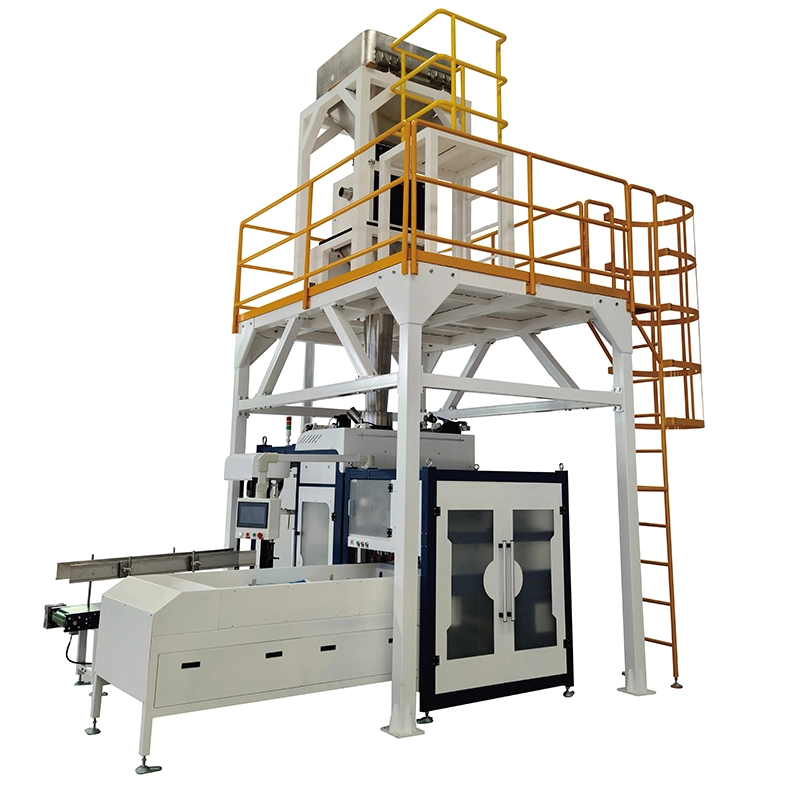
Pellet plants often lose control after filling: bags drift off alignment, the outfeed area becomes congested, and forklift traffic interrupts the workflow. The result is not only slower output, but also more chance of bag damage, floor contamination, and extra labor just to keep the line clear.
Why this machine fits polyethylene pellet packaging
The reason this machine fits is structural, not cosmetic. The elevated steel framework creates a clear working height for the filling and discharge section. The safety cage ladder helps protect access points while still allowing maintenance and supervision. The swing-arm HMI places the control point where the operator can make quick adjustments without walking into the process zone. For a pellet line, that matters because the operator needs fast control over bag handling, not a complicated walk-around routine.
The internal bagging unit also helps solve one of the most common problems with granular material: unstable bag mouth control. The vacuum suction and bag placer assembly shown in the close-up image gives the bag a more repeatable start position before discharge. That reduces the chance of product spill, crooked fills, and rework at the sewing or sealing stage. In short, the machine is not just moving pellets into a sack; it is keeping the sack predictable through the entire handoff.
Practical insight: for polyethylene pellets, the machine value is highest when filling, bag support, discharge, and pallet movement are treated as one flow. That is why the platform, conveyor, and operator access layout are as important as the filling point itself.
Structure evidence: platform, conveyor, silos, and warehouse coordination
The image set shows a complete industrial logic. The front-view machine confirms the steel frame and enclosed cabinet. The isometric view shows the HMI and outfeed belt conveyor, which are critical for stable line control. The high-angle warehouse photo adds the missing system context: twin stainless storage silos feed the packing area, conveyors link the process steps, and forklifts move finished pallets out of the line without blocking the core machine zone.
That matters because polyethylene pellet packaging is rarely a stand-alone task. Plants need a machine that can sit inside a broader warehouse rhythm. A good line must support steady bag output, clean transfer, and simple logistics around the pallet area. When the machine is placed on a raised platform with direct outfeed, it becomes easier to keep the bagging area separated from the traffic lane. That separation is what improves safety, reduces accidental bag damage, and keeps the process looking organized on the shop floor.
The operating photo makes the final point clearly. Operators are still involved, but their job is now coordination and stacking rather than constant correction. The line is doing the repeatable work, while the staff handles supervision and pallet management. For a polyethylene pellet plant, that is the right division of labor.
| What the photo proves | Why it matters for pellet packaging |
|---|---|
| Elevated steel framework and enclosed cabinet | Keeps the packing zone organized, accessible, and safer to maintain |
| Swing-arm HMI and conveyor outfeed | Supports quick control and smoother discharge to the next step |
| Vacuum suction bag placer | Helps stabilize the bag mouth and reduce spill during transfer |
| Twin silos and forklift-ready warehouse flow | Matches the machine to real storage and dispatch operations |
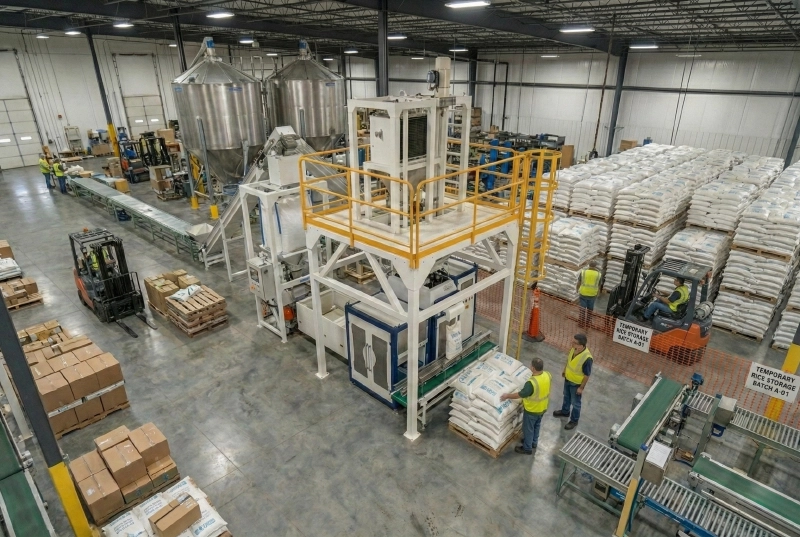
Final result: cleaner bags, steadier output, and less floor chaos
For polyethylene pellet packaging, the best outcome is not just higher speed. It is a line that keeps the bagging point controlled, the discharge path clear, and the warehouse movement predictable. That is what this machine setup delivers: cleaner handoffs, steadier bag shape, easier pallet staging, and fewer interruptions from spill cleanup or manual rework.
Request a pellet packaging layout review English
 Русский