
Cleaner Sack Transfer Before Sewing in a Grain Plant
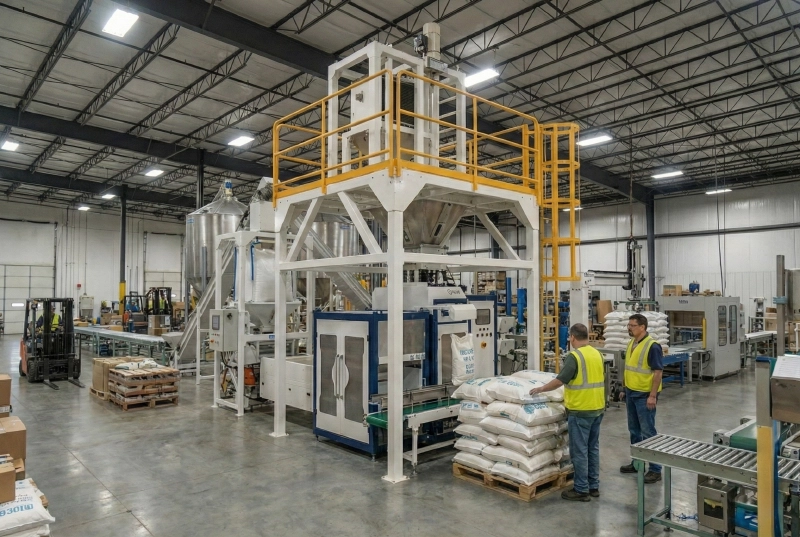
A ppline bulk packaging line helps a southern Russian grain plant keep woven sacks straight at the last handling point, so the bag mouth stays aligned before sewing and the finished load moves to palletizing with less rework.
Why the handoff point keeps causing trouble
In many grain plants, the packaging line is not judged by the filling step alone. The real losses start when a woven sack leaves the bagging station and has to be carried, squared up, and sent to sewing. At that moment the bag mouth can twist, the body can fold, and the outer layers can pick up scuffs from uneven transfer. If the line depends on manual correction, one operator may be able to save the bag shape for a while, but throughput quickly becomes inconsistent.
The result is familiar: a cleaner-fill machine still produces messy sacks downstream. Sewing speed drops, inspection becomes more frequent, and the palletizing crew has to pause for sorting. That is why the plant needs a line that protects the sack geometry after discharge, not just a machine that fills quickly.
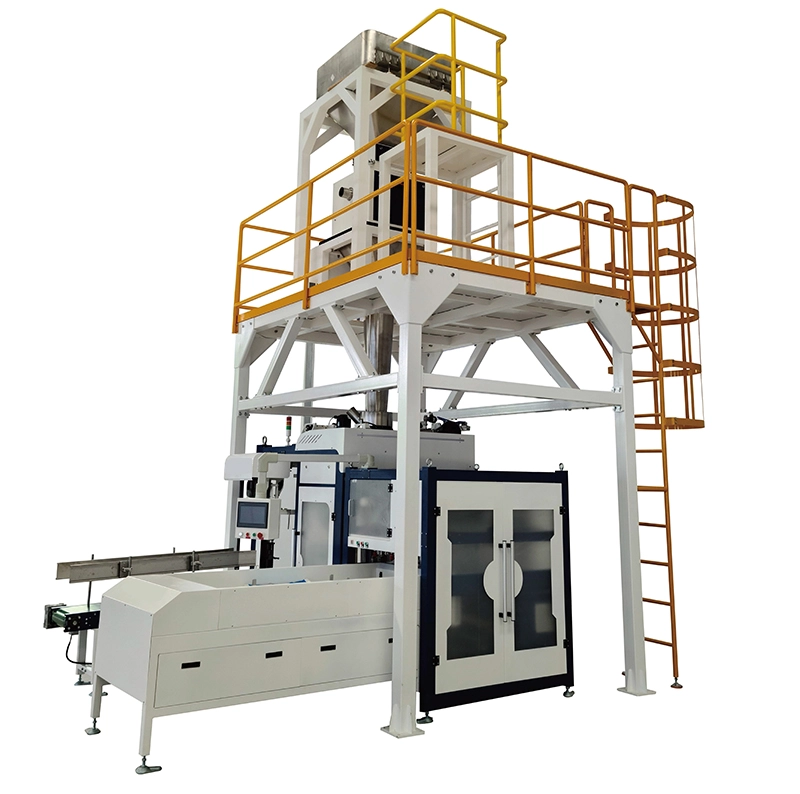
When a woven sack is already filled, small distortions are expensive. If the outfeed does not support a stable transfer, the mouth loses alignment, the seam line shifts, and the bag reaches sewing in a shape that the operator must correct by hand. The plant then pays for extra labor, slower cycles, and a higher risk of rejected bags.
Why ppline fits this job
The ppline layout is built around controlled movement, not loose handling. The steel platform, safety cage ladder, and guided conveyor create a predictable transfer path from the bagging point to the next operation. That matters because the bag is not simply “moving”; it is still a product under formation. A stable outfeed belt keeps the sack body supported, while the elevated machine layout makes the handoff easier to supervise from the working platform.
For a grain plant, that means the line can be tuned around the sewing station and the palletizing rhythm instead of forcing every downstream operator to adapt to unstable bags. The HMI on the swing arm also helps operators keep the discharge sequence consistent, which reduces the chance that a good bag becomes a damaged bag in the transfer zone.
bpmpack Инженерный взгляд: a good bulk packaging line is not only about output capacity. It must preserve bag shape between filling, sewing, and stacking. The combination of a rigid steel frame, elevated access, and a guided outfeed path is what keeps woven sacks square enough for the next step, especially when the line runs continuously.
What changes after the upgrade
Once the transfer point is stabilized, the plant usually sees three immediate improvements: fewer sacks need manual correction, the sewing station runs with less interruption, and palletizing becomes cleaner because the bags reach stacking in a more uniform condition. In practice, this is where a ppline-based setup adds value: it turns the last stage of packaging into a controlled process instead of a rescue operation.
For plants handling dry bulk and woven sacks, that controlled transfer is often the difference between a line that merely works and a line that stays productive on long shifts. The equipment does not replace the operator; it gives the operator a better physical process to manage.
| Plant issue | ppline response | Ожидаемый результат |
|---|---|---|
| Bag mouth twists before sewing | Guided discharge and stable conveyor transfer | Cleaner alignment at the sewing station |
| Manual reshaping slows the line | Elevated platform and predictable outfeed path | Less rework and steadier throughput |
| Uneven sacks complicate palletizing | More consistent bag geometry after handling | Cleaner stacking and fewer rejected bags |
Need a cleaner sack transfer line for your grain plant?
If your current setup fills sacks well but still loses quality before sewing or palletizing, a ppline bulk packaging line can be configured to keep the transfer stable and the workflow consistent.
Talk to bpmpack English
 Русский