
How ppline Keeps Woven Sacks Moving Cleanly from Bagging to Sewing in a Southern Grain Warehouse
For a southern grain warehouse operator, the hard part is not only filling sacks. The real issue is keeping each woven sack aligned, stable, and ready for the next step without extra handling, edge damage, or floor congestion. This ppline line is built around that transfer problem: a modular hopper-fed layout, a controlled inclined conveyor, and a raised steel platform that keeps the workflow organized from feed to discharge.
What the warehouse needed to solve first
The site was handling woven sacks in a busy bulk storage environment where the bagging area, transfer point, and downstream sewing or stacking area were too close to each other in practice, even if they looked separated on the floor plan. Bags were arriving with inconsistent posture, operators were spending time re-positioning them by hand, and the line was losing rhythm every time a sack left the filling point and had to be guided into the next process.
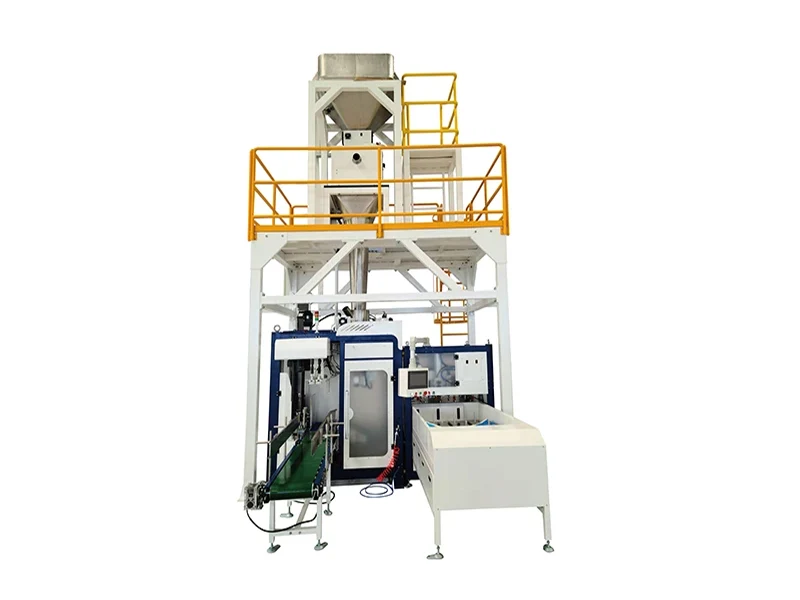
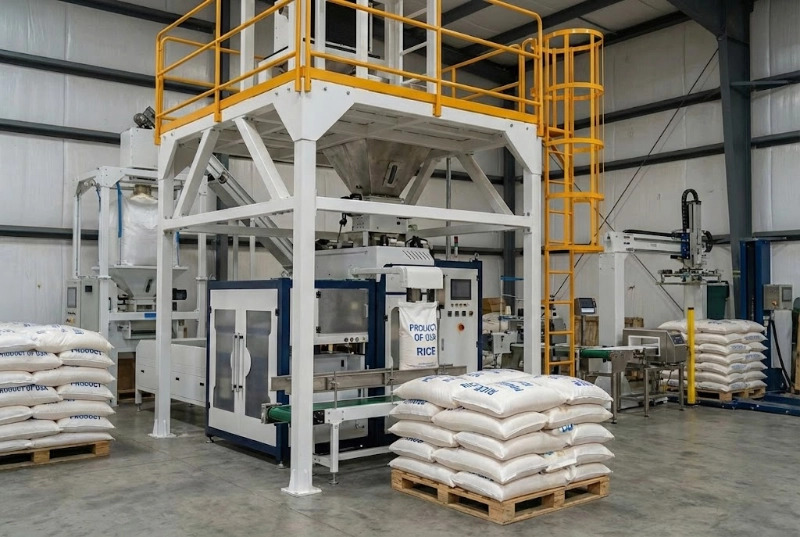
The ppline concept fits this kind of job because it is designed as a coordinated line rather than a single machine. The image evidence shows a top hopper, an enclosed machine body, side access points, and an inclined conveyor feeding the next movement stage. That combination matters in a warehouse because it reduces loose manual handoff and keeps the process visually readable for operators and supervisors alike.
When the output sack is not guided properly, the warehouse pays for it in three ways: more manual correction, more surface wear on woven bags, and more stop-start motion at the discharge point. That creates a bottleneck right where the line should be most predictable.
Why this layout matches the job better than a simple filling unit
ppline addresses the problem with layout discipline. The raised steel frame keeps the line off the floor and gives the operator clear access to the process path. The hopper and enclosure help isolate the feed area, while the inclined conveyor creates a controlled route for the next stage of handling. In other words, the line is not just filling product; it is organizing movement.
That is why the system suits dry-bulk packaging in a warehouse setting. The transfer path is visible, the machine body is modular, and the process can be integrated into a larger bagging and stacking sequence without turning every sack into a separate manual task. For operators, that means less chasing bags. For the warehouse, it means a cleaner rhythm between filling, transfer, and downstream handling.
bpmpack Инженерный взгляд: In bulk sack work, the biggest hidden loss is usually not the filling itself. It is the unstable transfer after filling. A line with a steel platform, protected machine body, and directed conveyor path helps keep the sack posture consistent so the next process step starts from the same condition every time.
What the structure tells us about the result
The photos show a practical industrial build rather than a showroom setup. You can see the control cabinet, the access doors, the support frame, and the conveyor angle all working together. Those details are evidence that the line is meant to stay serviceable in a real warehouse, not just look good in a render.
For the customer, that translates into a more stable workflow: sacks leave the filling zone in a more controlled manner, operators spend less time correcting position, and the line is easier to fit into a larger plant flow that includes sewing, stacking, and pallet movement. The end result is a cleaner transfer stage and a more predictable dry-bulk packaging process.
| Before | With ppline |
|---|---|
| Manual repositioning after filling | Directed transfer path with less hand correction |
| Loose floor-level workflow | Raised modular frame for clearer process control |
| Unstable sack handoff | Inclined conveyor and enclosed machine body support the next step |
| Harder to integrate into the warehouse flow | Better fit for sewing, stacking, and palletizing sequences |
Need a cleaner dry-bulk transfer layout for your warehouse?
If your line is still relying on manual correction between filling and sewing, ppline can be arranged around the actual sack movement you need to control. Share your material type, bag size, and target output, and we can map the layout to the real process instead of forcing the process to fit the machine.
Запросить проверку схемы размещения English
 Русский