
Sugar Powder Packaging: 25 kg Bagging Line or Stick Sachet Machine?
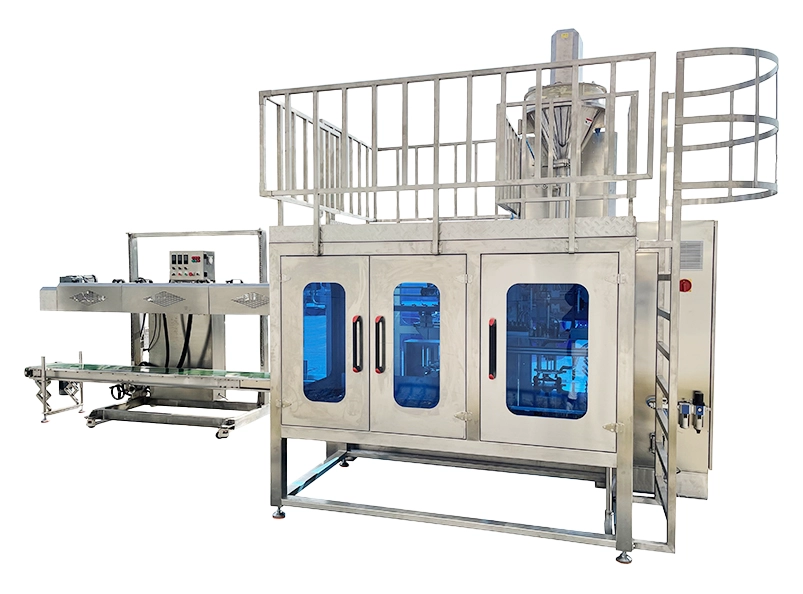
For a sugar processor, the right packaging route starts with the bag format—not the machine label. Mipline is a configurable powder packaging line for industrial 25 kg bags, with controlled filling, bag handling, closure, transfer, inspection, and discharge. It is not a stick sachet machine. That distinction prevents a costly mismatch between the required retail pack and the line actually specified.
Start with the customer scenario: industrial sugar bags, not stick packs
A sugar, food-powder, or dry-ingredient plant may use the phrase “sugar packaging machine” for two very different jobs. A stick sachet machine forms and fills narrow single-serve packets. An industrial powder bagging line fills larger bags for warehouse handling, palletizing, or later distribution. Mipline belongs to the second category. Its nominal application is a 25 kg industrial powder bag, with suitability determined by bulk density, flowability, moisture, aeration, bag construction, target weight, and the required closure.
The difference changes the complete process. Instead of only dosing product, Mipline coordinates bag supply, opening, clamping, bottom-up filling, closure, settling, shaping, inspection, reject, and final roller discharge. For sugar or another approved dry powder, the project team can define the bag material and downstream sewing or sealing route before equipment details are finalized. 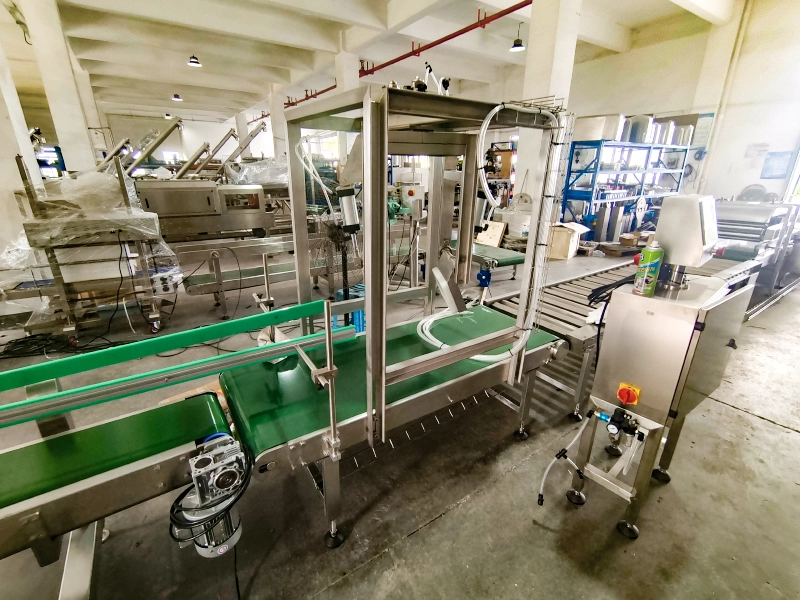
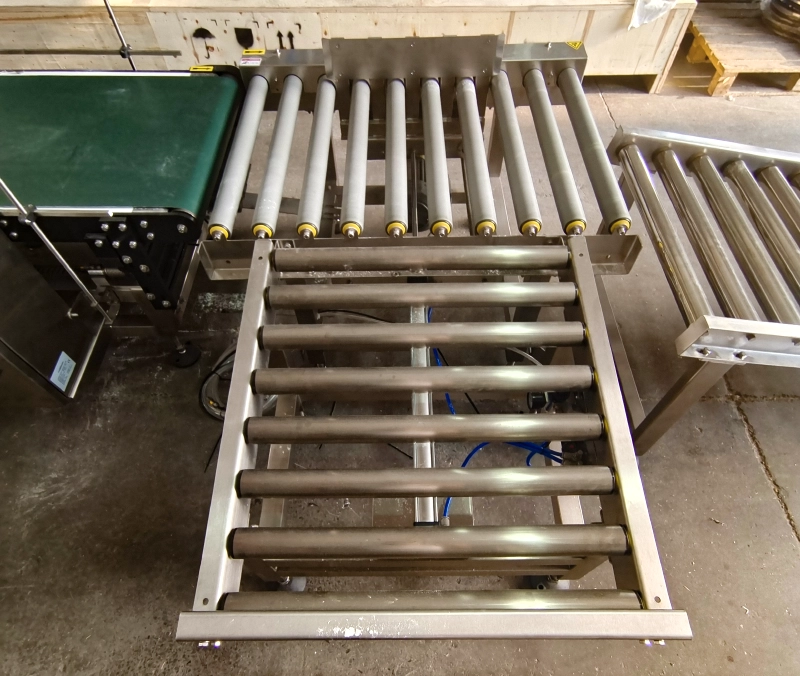
A basic filler can leave operators opening, holding, straightening, or repositioning a heavy bag by hand. The filled bag may retain air, arrive skewed at the sewing or sealing head, or move without a controlled handoff between stations. For sugar and food powders, dust around the bag mouth can also complicate closure and housekeeping. A conveyor alone moves the bag; it does not necessarily square it, stabilize it, or create a defined inspection and reject path.
Why Mipline fits a controlled powder bagging workflow
Mipline addresses the process as a sequence. A bag magazine and vacuum pickup support repeatable bag supply. Opening and clamping hold the bag at the filling head. Bottom-up tracked filling keeps the fill point close to the material, while the three-stage screw feed—fast filling, medium filling, and slow final dosing—supports controlled weighing rather than an uncontrolled free-fall drop. Where configured, vacuum extraction or de-aeration can be added before closure.
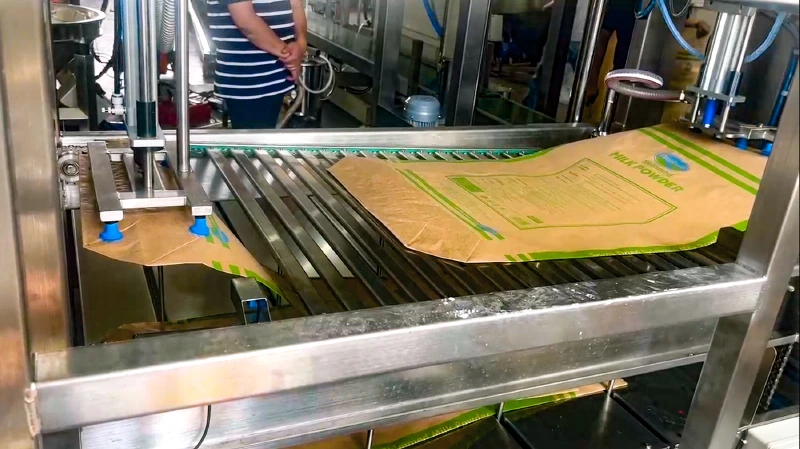
After filling, the line can be configured around dust removal, trimming, inner heat sealing, sewing, paper-tape wrapping, pressing, turning, settling, shaping, metal detection, checkweighing, reject, and roller discharge. The stainless-steel enclosed station, blue inspection windows, guide frames, and emergency-stop hardware visible in the factory evidence show how the equipment is arranged for an integrated industrial line. 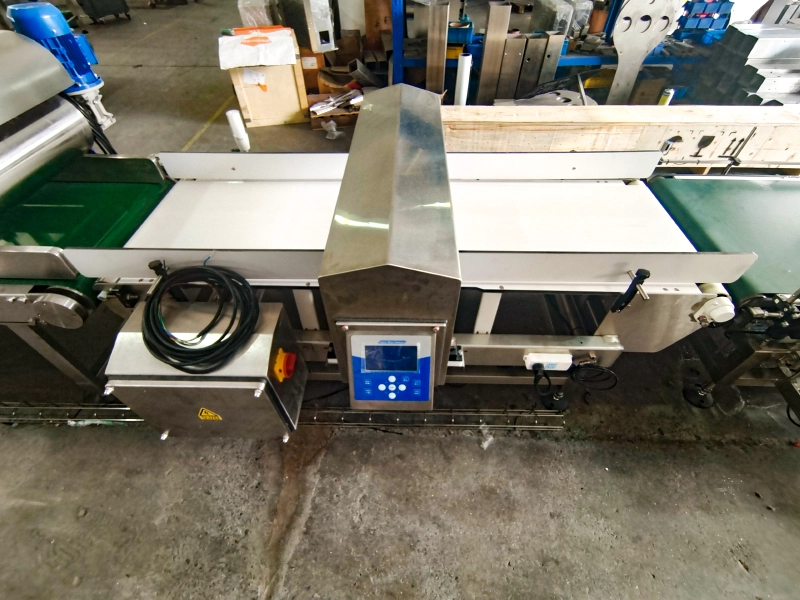
Engineering note: Do not specify a 25 kg powder bagging line from weight alone. Confirm powder behavior, bag dimensions, closure method, target speed, dust extraction, utilities, and palletizing layout. The Mipline configuration must follow those inputs; a stick sachet requirement would call for a different machine class.
Structure and parameter evidence to review before selection
For a 25 kg sugar or dry-powder project, the evidence should connect each operating problem to a physical station. The image record shows bag magazines, vacuum handling, clamps, stainless-steel frames, adjustable guides, roller transfers, control panels, and enclosed access areas. The technical brief identifies a vertical screw feeding system, weighing control, lifting fill platform, PLC/HMI control, and optional vacuum or nitrogen traction. These are the details that separate a complete powder filling and bag sewing line from a standalone filler.
Published references include 5–25 kg operation at 1–3 bags/min with accuracy stated up to ≤±0.2% for one DS25K configuration. Another 25 kg reference states 1.5–2 bags/min and ≤±0.1–0.2%. These figures are variant- and material-dependent, not a universal promise. 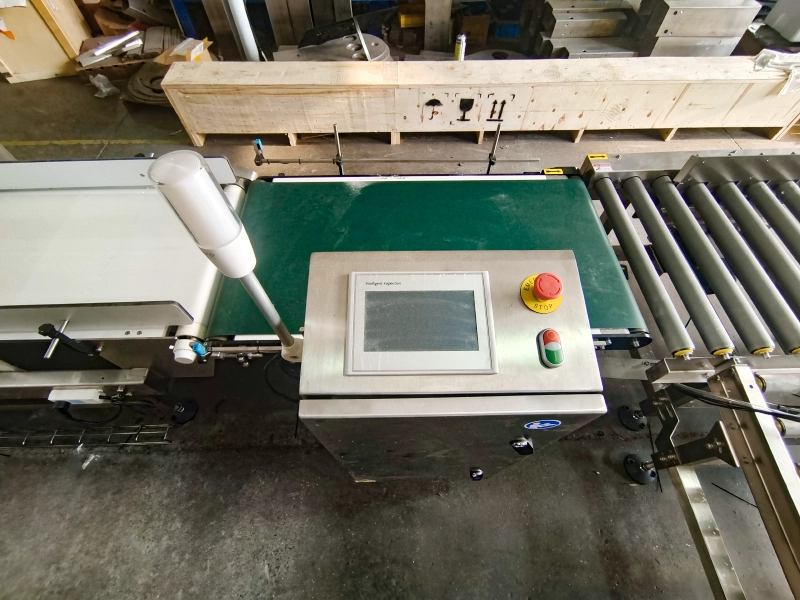
| Project question | What the Mipline specification must define |
|---|---|
| What pack is required? | 25 kg industrial bag versus stick sachet; confirm bag material, dimensions, and closure. |
| How is dust controlled? | Bottom-up filling, close material tracking, optional vacuum or de-aeration, and a defined closure sequence. |
| How does the bag reach sewing or sealing? | Clamp alignment, guided conveyor handoff, settling, shaping, and roller transfer layout. |
| How is quality checked? | Project-approved metal detector, checkweigher range, reject logic, alarms, and production records. |
Specify the right sugar powder packaging route
If the requirement is a 25 kg powder packaging line for industrial sugar bags, Mipline can be evaluated around the material, bag, closure, speed, inspection, and palletizing conditions. If the requirement is a retail stick sachet, state that format at the start so the project is directed to the correct equipment class. Contact BPM for a configuration review based on the actual powder and bag data.
Discuss your powder bagging line English
 Русский