
Mipline powder packaging line
25 kg Powder Bagging Line: Keeping Bags Stable Before Sewing
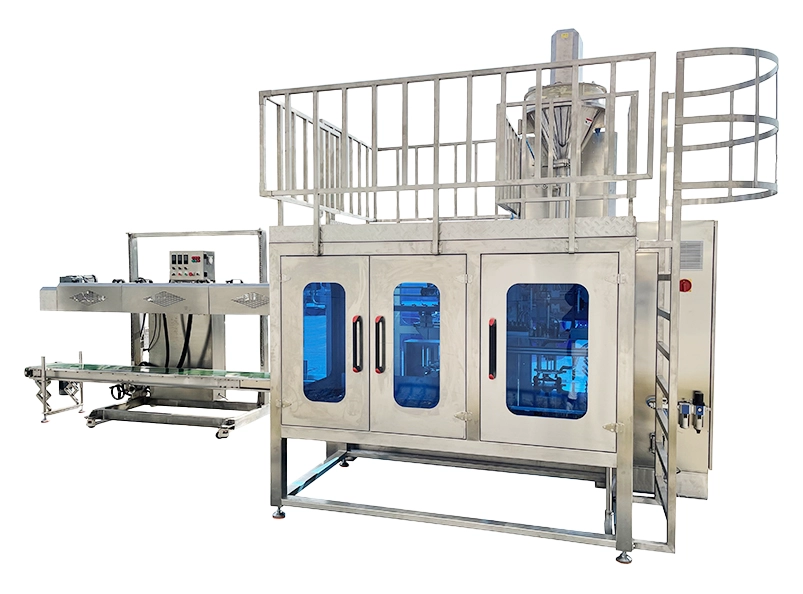
For milk powder, flour, starch, feed, and other dry powders, the last transfer before sewing or sealing can decide whether a filled bag arrives square, clean, and ready for the next operation. Mipline combines controlled filling, bag handling, guided transfer, shaping, inspection, and discharge into one automatic powder packaging line.
Why the last meter becomes a production problem
A dairy powder or flour plant may have a capable filler and a reliable sewing head, yet still lose stability between them. A filled 25 kg bag can twist, collapse, retain air, or arrive with a skewed mouth. When operators manually straighten the bag at the last meter, the line gains a hidden labor step and the sewing head receives inconsistent material. Dust around the bag mouth can also affect closure quality and housekeeping.
The issue is not simply conveyor speed. The handoff needs a controlled relationship between the bag clamp, supporting surface, side guides, roller transfer, and the next closure station. That is the practical difference between moving bags and managing bag transfer.
How Mipline fits the powder-bagging application
Mipline is configured for industrial dry-powder bags, especially 25 kg kraft paper, paper-plastic composite, and coated woven bags when the material and bag construction are confirmed for the project. The process can include bag magazine supply, vacuum pickup, bag opening, controlled clamping, bottom-up filling, closure, transfer, settling, shaping, inspection, reject, and roller discharge.
For powders that become aerated or dusty during filling, the bottom-up tracked filling concept keeps the fill point close to the material as the lifting platform follows the fill level. Where specified, vacuum extraction or de-aeration can be integrated before closure. These functions address the earlier problem at its source instead of asking the sewing operator to correct every bag downstream.
Bag handling evidence: clamp, guides, and transfer
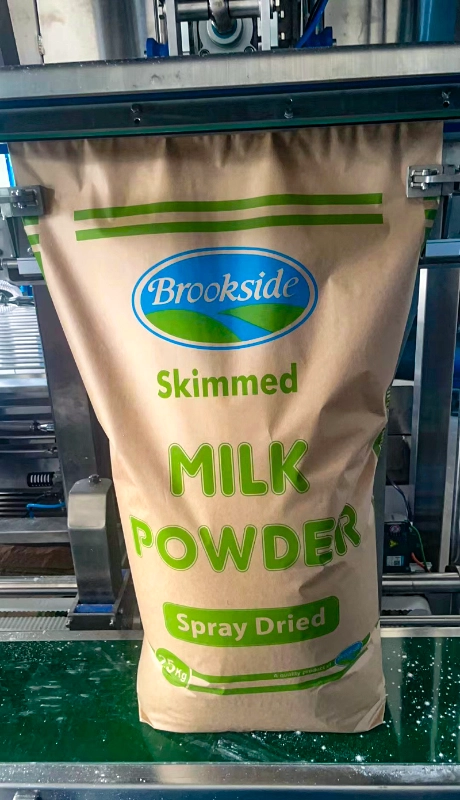
The bag shown at the clamp station illustrates the operating requirement: the bag must be opened, held, and presented to the filling and closure sequence without relying on continuous manual repositioning. A bag magazine, pickup and opening sequence, and controlled clamp can be selected around the bag material, dimensions, powder behavior, and target speed.
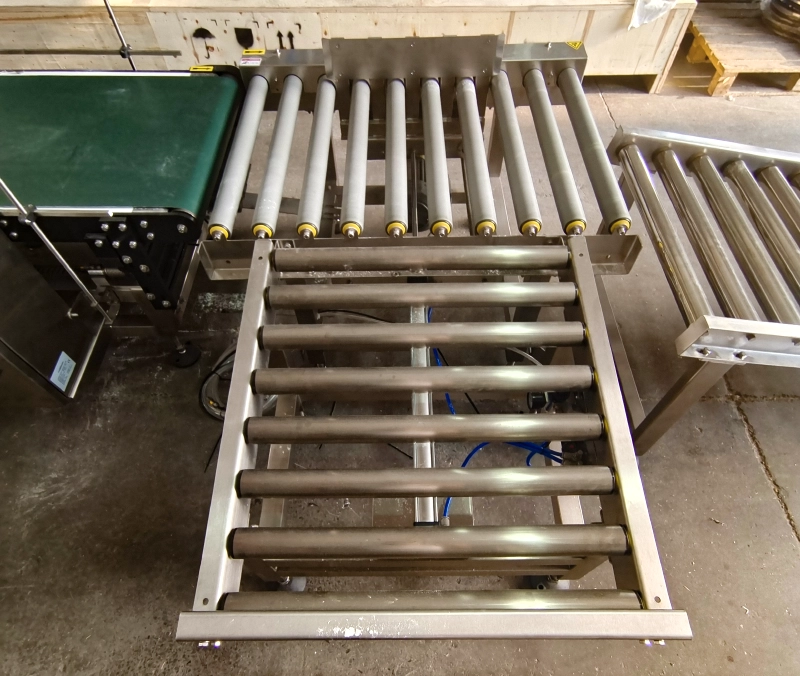
After filling and closure, roller sections support a more predictable handoff than an un-guided transfer. The Mipline image evidence shows stainless-steel rollers, supporting frames, and a connected transfer layout suited to bag movement and station integration. Adjustable guides and leveling details help the conveyor match the installed line, but final dimensions and speeds remain project-specific.
From filling to final-bag inspection
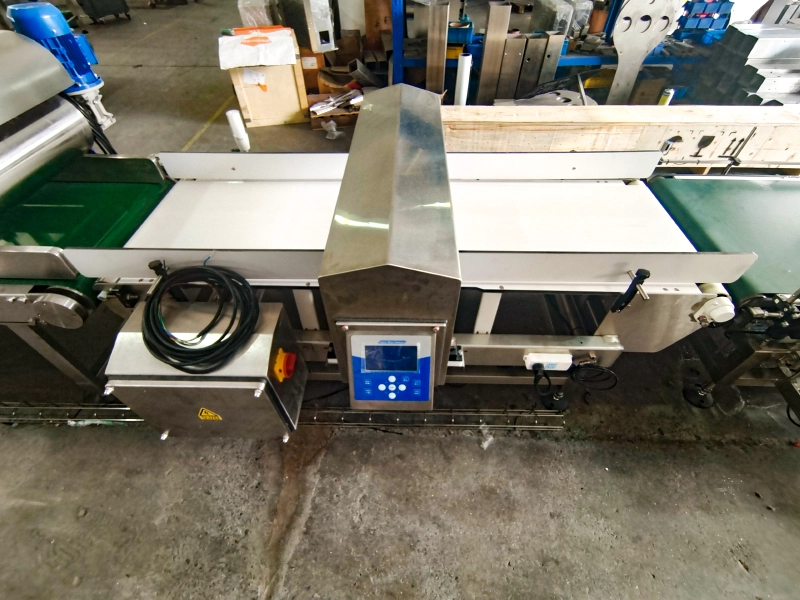
A complete powder filling and bag sewing line should not stop at the filler. Depending on the project, Mipline can combine dust removal, trimming, inner heat sealing, sewing, paper-tape wrapping, pressing, settling, shaping, metal detection, checkweighing, reject, and discharge. Inspection therefore takes place on the finished bag after forming and closure, not only during the filling event.
Checkweigher and metal-detector performance must be selected from the approved project datasheet because product effect, bag construction, range, and throughput influence the result. The same principle applies to stated capacity: reference configurations include 1–3 bags per minute or 1.5–2 bags per minute, but the applicable figure depends on material, bag, closure method, and line configuration.
What the plant gains
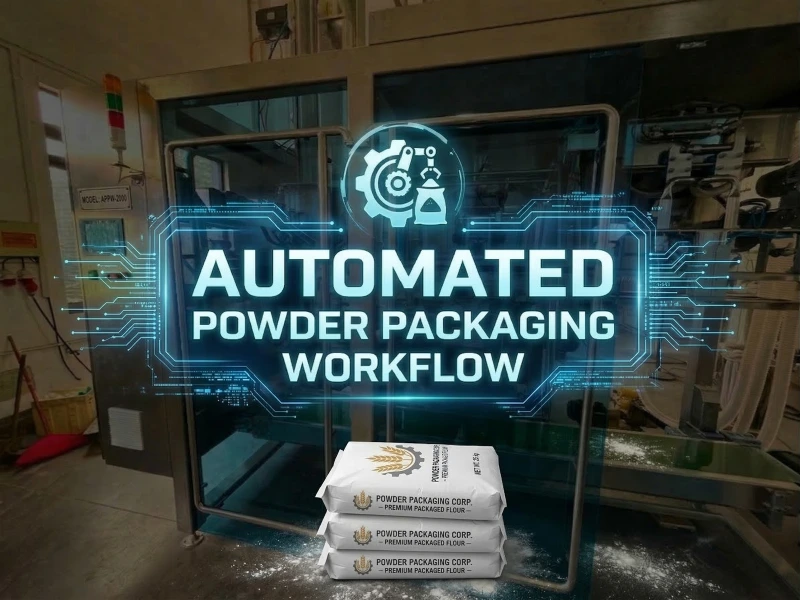
For a plant replacing manual bag correction, the result is a more controlled path from bag supply to dispatch: cleaner bag-mouth preparation, fewer manual straightening actions, more stable transfer before sewing, and a defined route for inspection and reject. Stainless-steel guarding, blue viewing windows, HMI control, green belts, roller conveyors, and access structures also make the line easier to understand during operation and maintenance.
The correct Mipline configuration should be confirmed against powder bulk density, flowability, moisture, aeration, bag dimensions, target weight, closure method, available utilities, dust extraction, and palletizing layout. When those inputs are fixed, the powder packaging line can be engineered as a coordinated process rather than a series of disconnected machines.
 English
 Русский