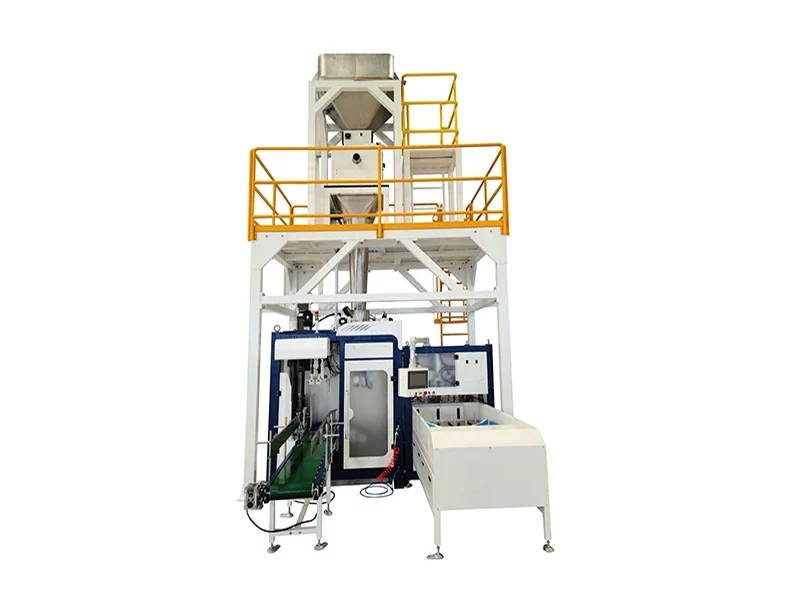
Automatic Bagging Machine & Palletizing Systems Manufacturer

Category: Статьи

  • 25 kg Flour Bagging Line for Cleaner Bag Handoff Before Sewing

    25 kg Flour Bagging Line for Cleaner Bag Handoff Before Sewing

    bpmpack mipline | Flour packaging line

    25 kg Flour Bagging Line for Cleaner Bag Handoff Before Sewing

    For flour plants that need a more stable powder packaging line, Mipline focuses on the last transfer before sewing: keep 25 kg bags square, reduce manual bag straightening, and move bags into the sewing area with cleaner alignment.
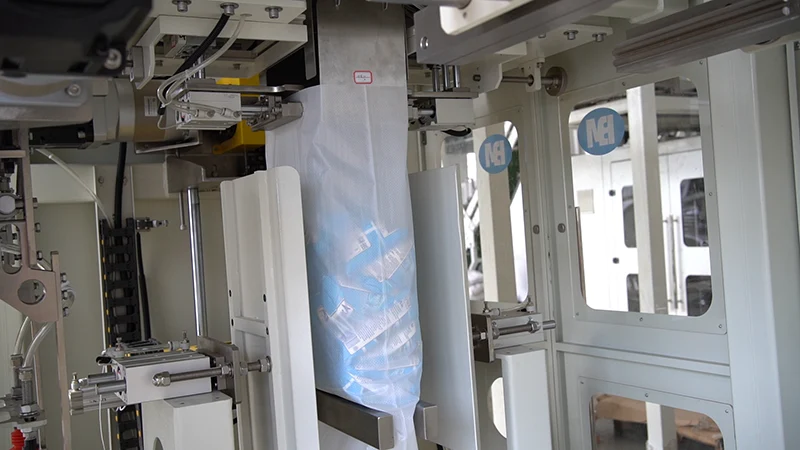
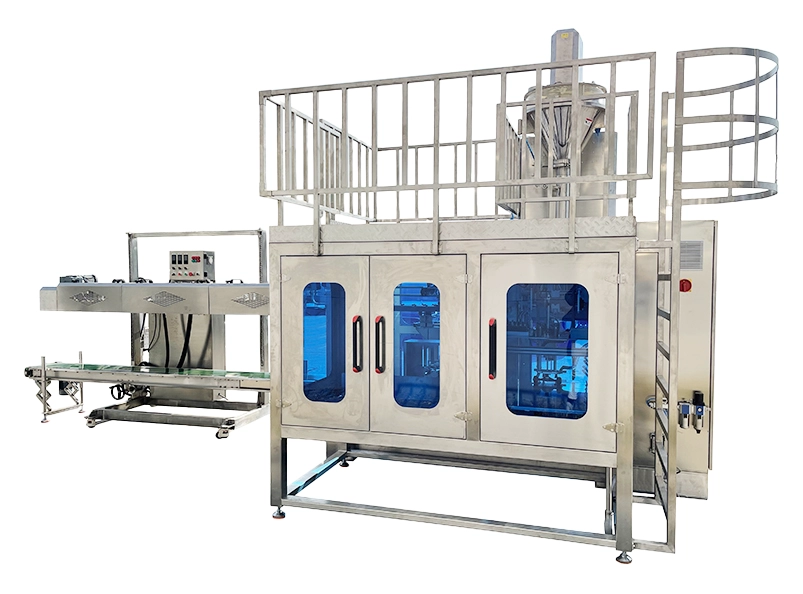
    Stainless steel automatic bagging machine with blue inspection windows and bag magazine conveyor

    Customer scenario: flour bags arrive, but the last meter is the problem

    In a flour packaging plant, the filling step is only part of the job. The real trouble often starts after the bag leaves the filling point. A 25 kg kraft paper bag can twist, collapse, or drift off-center before it reaches sewing, especially when the conveyor handoff is too abrupt or the bag mouth is not controlled well enough.

    That is why buyers searching for a flour bagging line are usually not only comparing output speed. They are trying to solve one practical issue: how to make the bag arrive straight, stable, and ready for sewing without sending operators in to straighten every bag by hand.
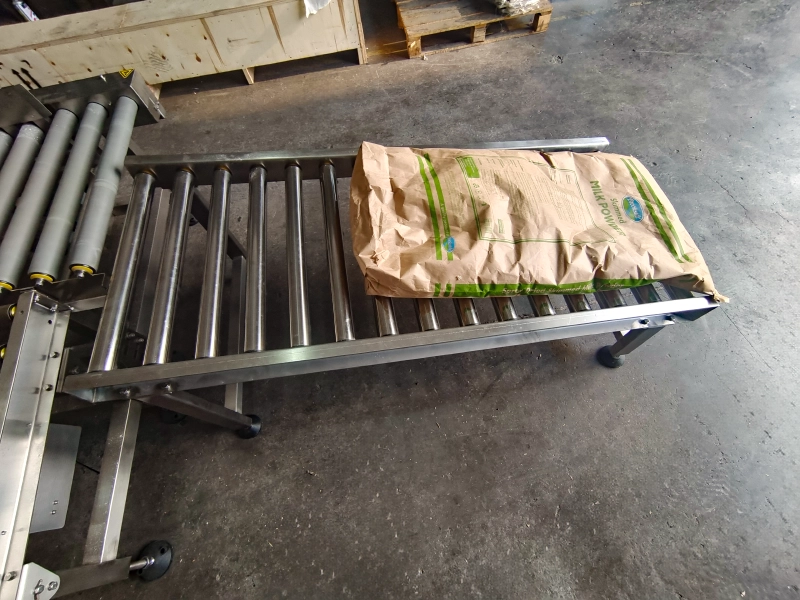
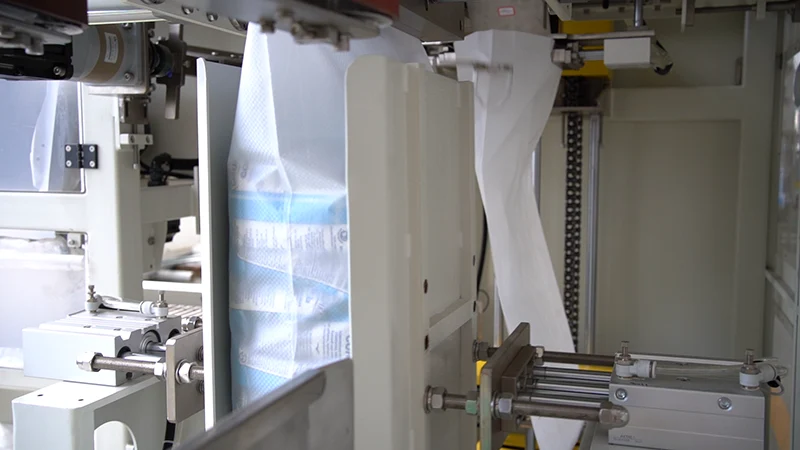
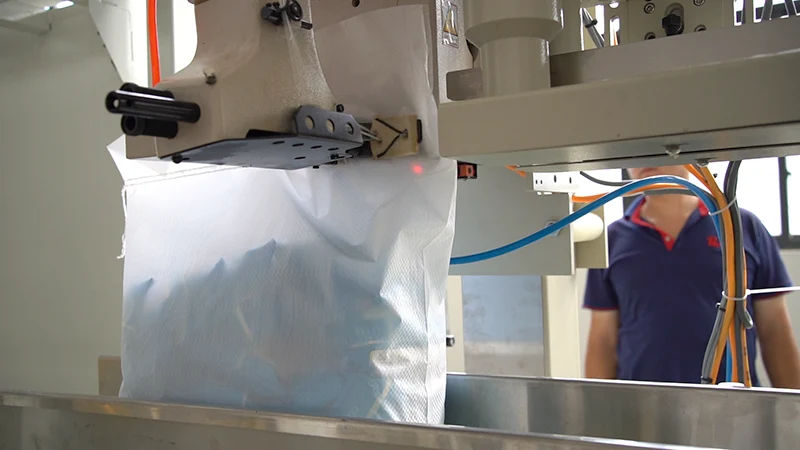
    Stainless steel roller conveyor with kraft paper bag, used for bag transfer in packaging line
    Common pain point

    If the filled bag arrives skewed, the sewing head becomes unstable, operators waste time correcting position, and the whole powder packaging line slows down at the final transfer point.

    Why Mipline fits this powder packaging line task

    Mipline is built as an automatic powder packaging and bagging line for dry powders packed into industrial bags, especially 25 kg kraft paper or woven bags. Its structure is designed around controlled bag handoff before sewing: an enclosed stainless steel bagging station, a bag magazine conveyor, visible inspection windows, transfer conveyors, and roller sections that help guide the bag smoothly to the next step.

    For flour, this matters because the bag must stay square and supported while moving across the line. The twin-belt and roller conveyor style transfer reduces sudden movement, while the clamping and guided handoff help the bag mouth stay ready for sewing or sealing.

    Engineering focus: stable bag transfer before sewing is often more valuable than raw conveyor speed, because the final alignment decides whether the sewing station runs smoothly or needs constant manual correction.

    Structure and evidence from the machine photos

    The visual evidence in the product images shows a stainless steel automatic bagging machine with blue inspection windows, a bag magazine conveyor, and transfer sections designed for industrial bag handling. The conveyor path is not exposed as a loose open line; it is organized as a guarded packaging workflow with controlled access and a clearer maintenance layout.

    Another image shows a kraft paper bag on a roller conveyor transfer section. That detail is important for flour customers: the conveyor is not just moving product, it is keeping the bag aligned before it reaches the sewing area. This is the difference between a line that simply transports bags and a flour bagging line that actually supports better final packaging quality.

    Old setupMipline result
    Bag twists before sewingCleaner bag handoff before sewing
    Operators straighten bags manuallyReduced manual bag straightening
    Unstable sewing head entryStable bag transfer before sewing
    Open, hard-to-maintain transfer zoneStainless steel enclosed bagging station with inspection windows

    Need a flour packaging line that keeps 25 kg bags straight?

    If your plant needs dry powder packaging equipment for flour, starch, or other food powders, Mipline is designed to improve the last transfer before sewing and make the line easier to run with fewer manual corrections.

    Request a flour line solution
  • Mipline Powder Packaging Line for Cleaner Bag Handoff Before Sewing

    Mipline Powder Packaging Line for Cleaner Bag Handoff Before Sewing

    Automatic powder packaging line

    Mipline Powder Packaging Line for Cleaner Bag Handoff Before Sewing

    For 25 kg milk powder, flour, starch, and other dry powders, the key challenge is not only filling the bag. The real issue is keeping every filled bag square, aligned, and stable before sewing. Mipline is built for that handoff.

    Stainless steel automatic bagging machine with blue inspection windows and bag magazine conveyor

    The customer problem: good filling, bad bag handoff

    In dry powder plants, the bag often looks fine at the filling point and then fails at the next step. The filled kraft paper bag twists, collapses, or arrives skewed at the sewing head. Operators then spend time straightening every bag by hand at the last meter of the line.

    That creates three common problems: unstable sewing, slower output, and inconsistent appearance on finished bags. For a milk powder packaging machine or a flour bagging line, the weak point is often the transfer between filling, conveying, clamping, and sewing.

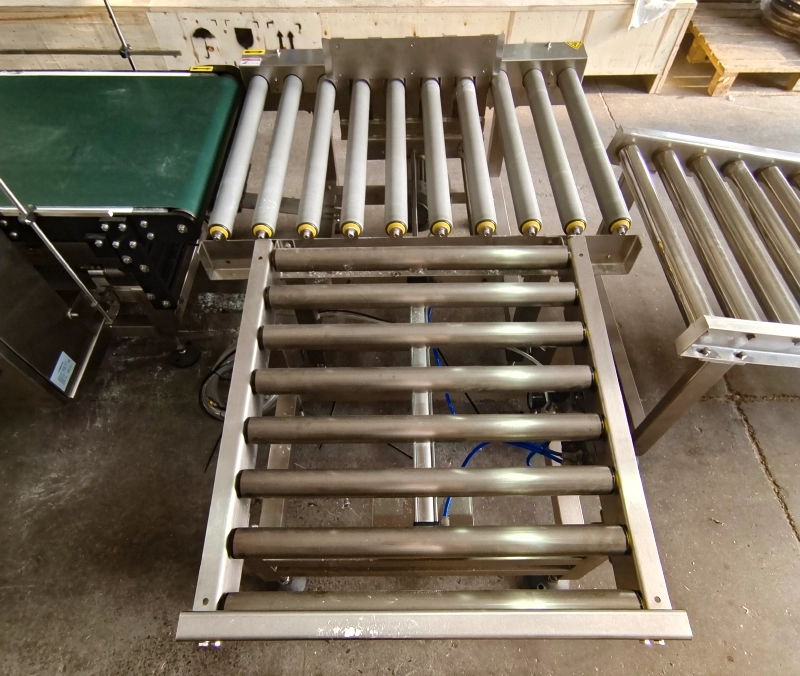
    Roller conveyor transfer section for keeping powder bags aligned before sewing
    Why this matters

    If the bag mouth reaches the sewing station out of square, the sewing head works harder, the operator gets more involved, and the line loses repeatability. The goal is stable bag transfer before sewing, not manual correction after the fact.

    Why Mipline fits dry powder bagging work

    Mipline is an automatic powder packaging and bagging line designed for industrial bags, especially 25 kg kraft paper or woven bags. The visible equipment structure matches the problem: an enclosed stainless steel bagging station, bag magazine conveyor, blue inspection windows, green transfer conveyors, roller conveyor sections, bag clamping, and a clear handoff path before sewing or sealing.

    That structure helps the line keep bags straight, reduce manual bag straightening, and improve the handoff from filling to closure. In practice, this is the difference between a line that merely fills bags and a line that produces stable finished bags at production speed.

    Engineering point: The transfer section is not decoration. It is the part that protects the bag shape, guides the bag mouth, and gives the sewing station a more consistent presentation.

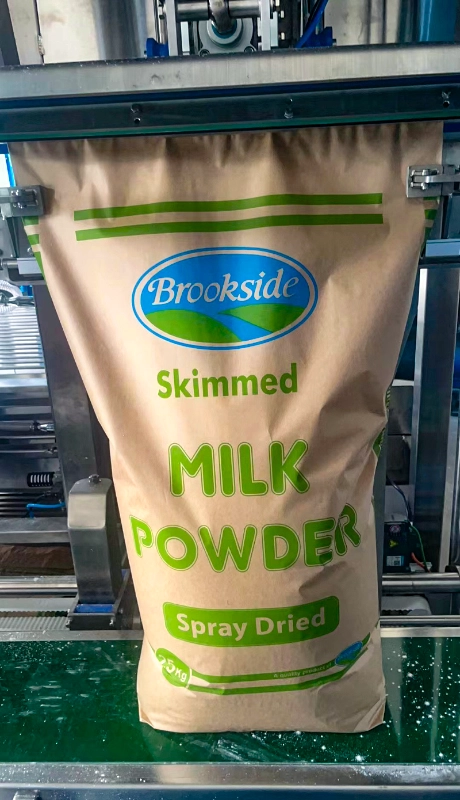
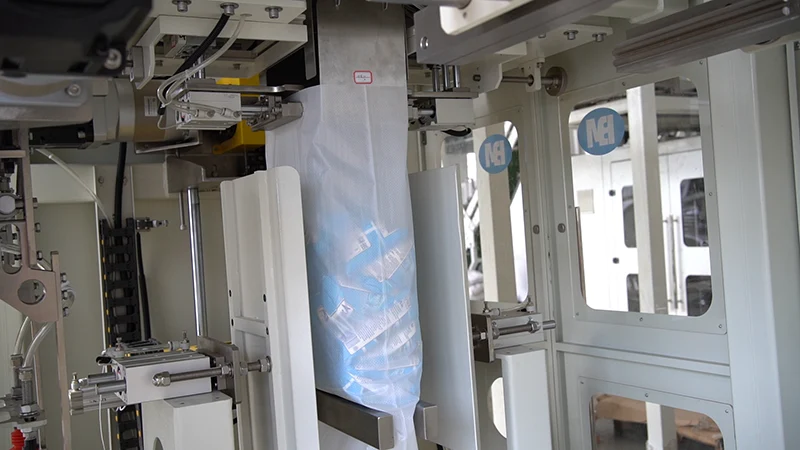
    Real industrial photo of a Brookside skimmed milk powder kraft bag held at automatic bagging clamp station

    What the structure and images show

    The photos show a real production layout, not a concept sketch. You can see the enclosed stainless steel bagging station, the conveyor interfaces, the clamp point, and the guided transfer path. The machine is built to keep bags square before sewing and to maintain a cleaner flow between stations.

    For buyers in dairy powder, flour, starch, and other food powder plants, this matters because the line must stay clean, stable, and easy to maintain. The guarding and inspection windows also support safer operation and quicker access during service.

    Visible evidenceWhat it doesBuyer result
    Stainless steel automatic bagging station with inspection windowsProvides an enclosed, serviceable bagging coreCleaner layout and easier maintenance access
    Roller conveyor transfer sectionKeeps powder bags aligned during transferMore stable sewing and less manual straightening
    Bag clamp station with kraft paper milk powder bagHolds the bag mouth in a controlled positionBetter bag shape before closure
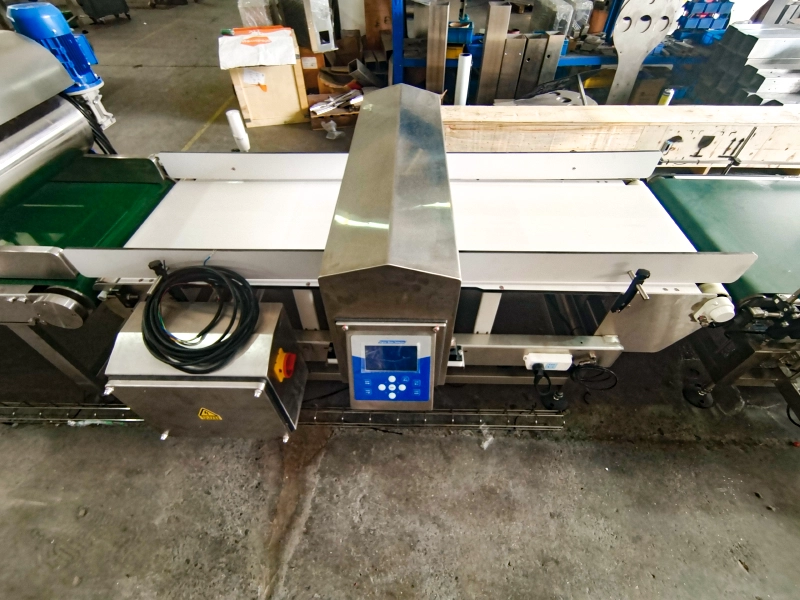
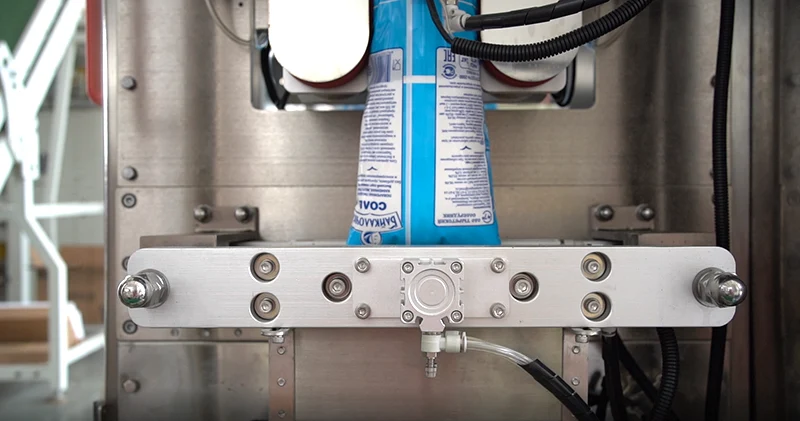
    Twin-belt transfer conveyor with side guidesSupports guided bag handoff between stationsCleaner flow from filling to sewing or sealing
    Stainless-steel twin-belt transfer conveyor with central control housing and adjustable side guides

    Result: straighter bags, steadier sewing, cleaner output

    When the transfer section does its job, the line stops fighting the bag. The result is a more stable powder packaging line, less manual correction, and a better finished bag before sewing or sealing. That is the real value of Mipline in milk powder, flour, starch, and other dry powder applications.

    Request a powder bagging line review
  • How a vertical packaging machine and secondary bagging line solve salt and powder handling at scale

    How a vertical packaging machine and secondary bagging line solve salt and powder handling at scale

    Secondary packaging line for bulk products

    How a vertical packaging machine and secondary bagging line solve salt and powder handling at scale

    For bulk products such as salt, powders, and other free-flowing materials, the packaging problem is rarely the film alone. The real pressure sits in dosing accuracy, stable transfer, hygienic design, and the ability to move primary packs into a stronger secondary bag without crushing, leakage, or slow changeovers.

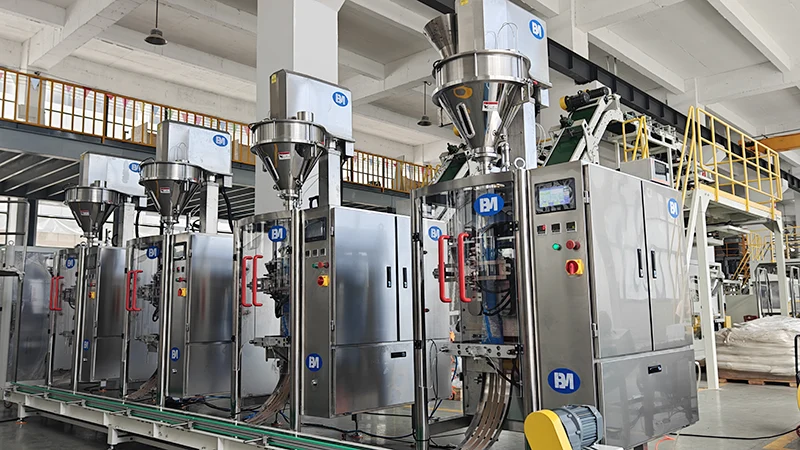
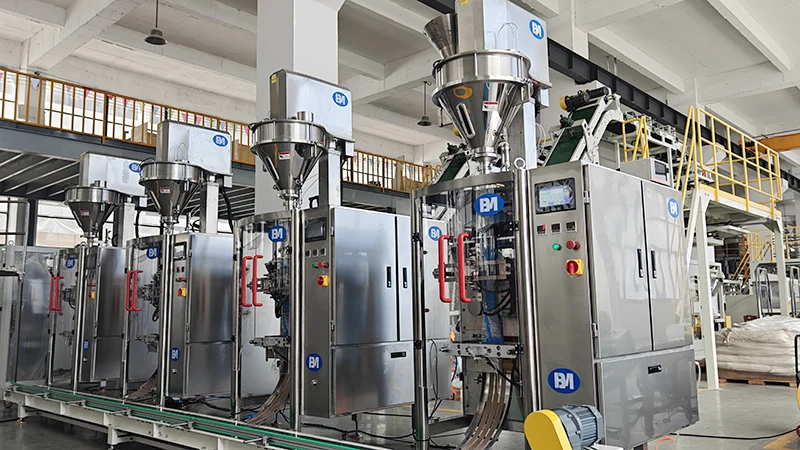
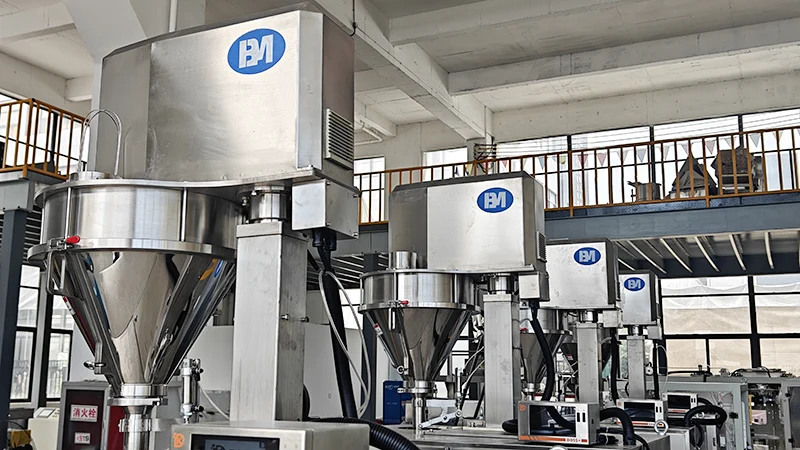
    Row of four vertical packaging machines with stainless hoppers for bulk products

    Scenario: one line, two packaging stages

    A typical customer need starts with a stable primary pack: a vertical packaging machine for bulk products, an auger dosing hopper, and a control system that can keep fill weight under control. After that, the plant often still needs automated secondary packaging to group smaller packs into woven PP sacks or film overpacks for shipping and warehouse handling.

    When the old setup depends on manual bag handling, the line becomes sensitive to operator skill, inconsistent output, and product loss. That is why the machine package must cover both the primary filling point and the downstream transfer logic, not just the sealing jaw.

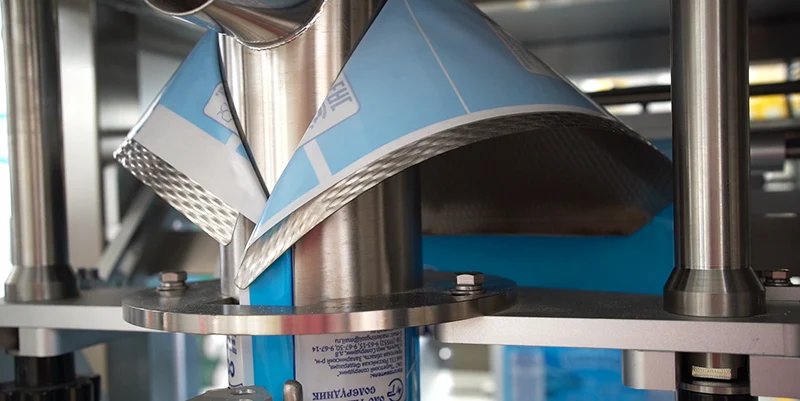
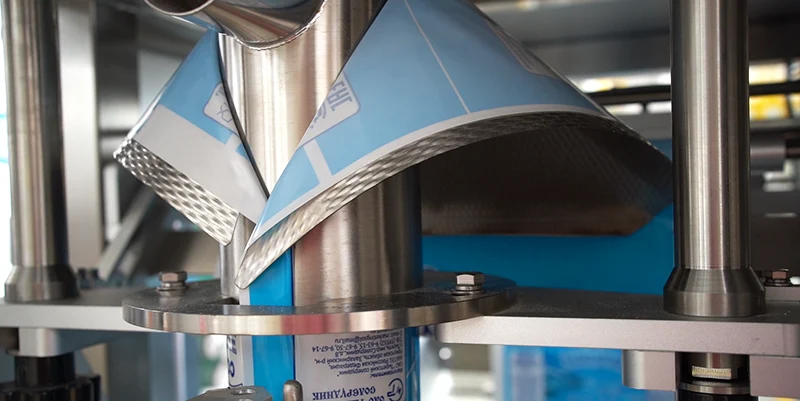
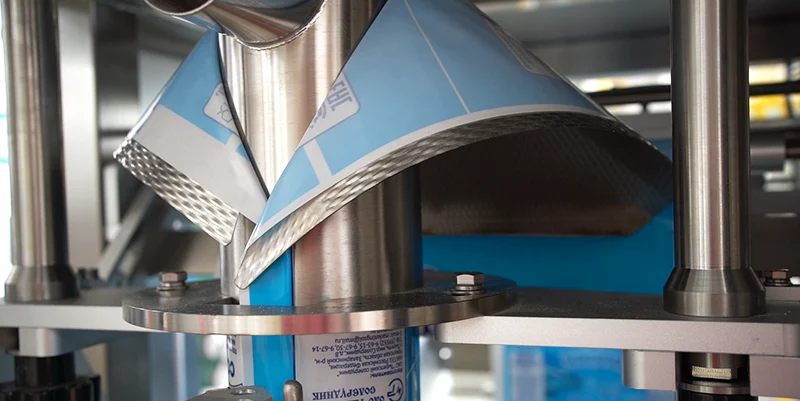
    Dimpled stainless steel forming shoulder on a vertical packaging machine for bulk powders
    Pain point

    Manual transfer between filling, checking, and secondary packing creates unstable throughput, more rework, and avoidable contamination risk.

    Why this bibpu configuration fits the job

    The bibpu configuration addresses the problem from the feed zone onward. The vertical packaging machine section handles bulk-product dosing, film control, and sealing stability. The secondary packaging section then groups finished packs into a larger container or sack, which is a practical path for salt, powders, and other granular materials that must move safely through warehouse and logistics steps.

    The product logic is simple: use the vertical wrapper for accurate primary packs, then use automated secondary packaging to protect those packs during palletizing, transport, and storage. The result is less manual contact and a cleaner route from machine output to shipping-ready units.

    Expert note: For bulk products, the most important part of the line is not a single machine rating. It is whether the dosing head, guide surfaces, sealing zone, and downstream bagging station work as one controlled flow.

    Structure evidence from the machine and line images

    The image set shows the key evidence clearly: a row of vertical form fill seal machines with stainless hoppers for continuous filling, a dimpled forming shoulder to reduce film sticking, and a secondary bagging station that loads refined salt packets into a woven PP sack. Together, these images support the same process story: stable primary packs first, then controlled secondary packaging.

    For customers comparing packaging machine options, this is where the details matter. Hygienic design, dosing stability, film tracking, and safe transfer geometry are what keep the line running. The system is suitable for bulk-product packaging machine projects where consistency is more important than a one-off demo speed number.

    StageVisible evidenceBusiness effect
    Primary fillingFour VFFS machines with stainless hoppersContinuous filling for bulk products
    Film controlDimpled forming shoulderLess sticking and smoother bag formation
    Secondary packagingPackets loaded into woven PP sackBetter transport protection and handling

    Result: cleaner handling, steadier output, easier logistics

    With the right packaging line for bulk products, the plant gets a more predictable route from dosing to final dispatch. That means better accuracy, less manual work, and a secondary packaging flow that matches warehouse reality instead of fighting it.

    Request a packaging line proposal
  • Secondary Packaging Machine for Granular Products and Salt Bagging Lines

    Secondary Packaging Machine for Granular Products and Salt Bagging Lines

    Secondary packaging for granular products

    Secondary Packaging Machine for Granular Products and Salt Bagging Lines

    For salt, powder, and other free-flowing materials, the packaging challenge is rarely only filling. The real issue is stable transfer, clean bag handling, compacting, sealing, and consistent output in a secondary packaging line.

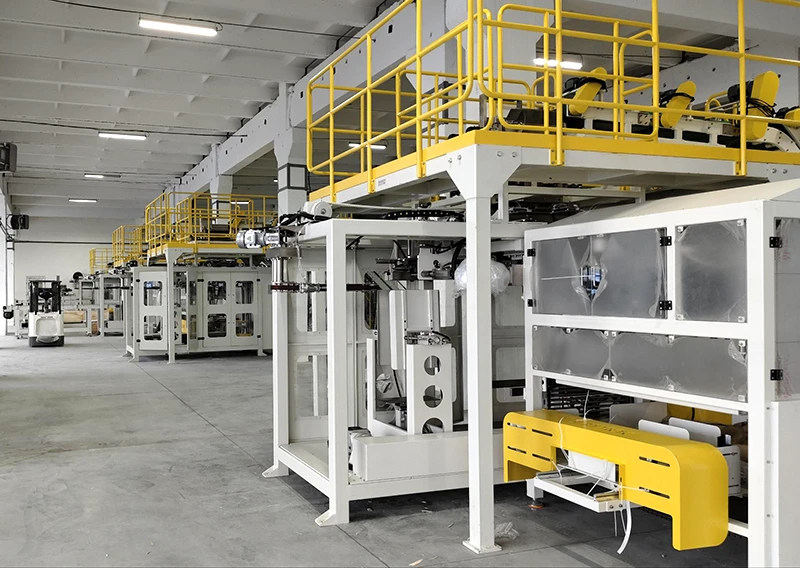
    Secondary packaging line with white machine frames and yellow elevated service platforms

    When manual packing slows the line, the whole workshop feels it

    Many factories start with manual loading, irregular bag stacking, or a simple bagging step that looks acceptable on paper but becomes unstable in daily use. Bags shift, corners catch, dust control gets worse, and the downstream sewing or palletizing stage loses rhythm.

    This is where a secondary packaging machine matters. The goal is not only to move product into a sack, but to keep the transfer controlled from the first bag clamp to the final sewn closure. The line needs a clear flow: feeding, holding, compacting, sealing, and discharge.

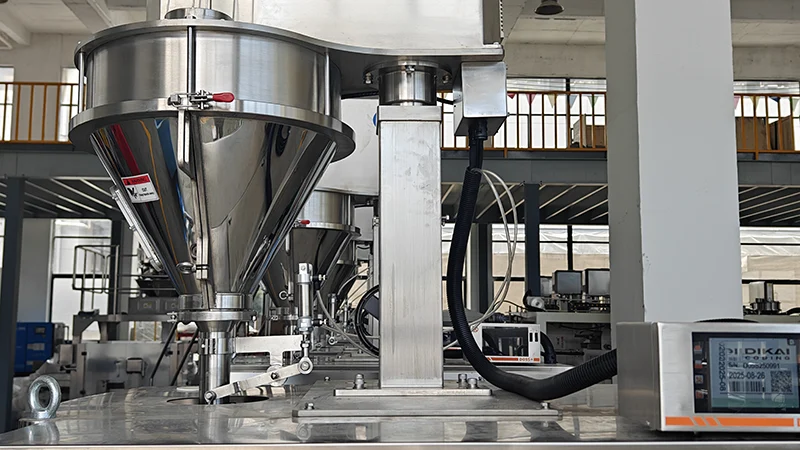
    Close-up of UNS S31603 stainless steel dosing hopper with pneumatic butterfly valve
    Pain point

    Loose flow, poor bag alignment, and unstable closing are the most common reasons a secondary packaging line loses speed. For salt packaging and other granular products, the problem is usually not the material alone — it is the machine sequence around it.

    Why bibpu fits this job

    bibpu is built around the exact kind of visible structure this application needs: stainless dosing hardware, controlled bag gripping, side compression before closing, and a sewing station that finishes the job without breaking the line rhythm. The product traffic profile also points to the same use case: granule packaging machines, secondary packaging automation, dosing accuracy testing, and a secondary packaging line for granular products.

    For customers running salt or other free-flowing materials, that combination matters. The workflow supports a cleaner transfer from product feed to woven PP bag handling, then to compression and stitch closing. In practice, that means fewer jams, better bag shape control, and a more stable final stack.

    What the line is trying to solve: keep granular products moving through a controlled secondary packaging process, not a series of disconnected manual steps.

    Visual evidence from the machine structure

    The images show the main functional chain clearly. A stainless steel dosing hopper manages feed at the top. The bag handling area holds the woven PP sack in position. Side clamping plates compress the load before closing. The sewing head finishes the mouth of the bag. Together, these details explain why the line is suitable for salt bagging and other granular packaging jobs.

    The forming shoulder and HMI console complete the picture. The forming shoulder helps the film path stay stable, while the control console shows that the operator can manage the machine from a central interface rather than scattered local controls. That is the kind of layout factories expect from modern packaging and filling equipment.

    Observed elementWhat it indicates
    Stainless dosing hopperStable feed handling for granular products
    Pneumatic bag clampsControlled bag positioning during transfer
    Side compression sectionBag shaping before final closing
    Industrial sewing headReliable closure for woven secondary bags
    HMI control consoleOperator-friendly line control and monitoring
    Refined salt packets falling into secondary woven PP bag held by pneumatic clamps
    Loaded secondary woven PP sack compressed by pneumatic side clamping plates
    Industrial Newlong sewing machine head stitching the opening of filled woven sack
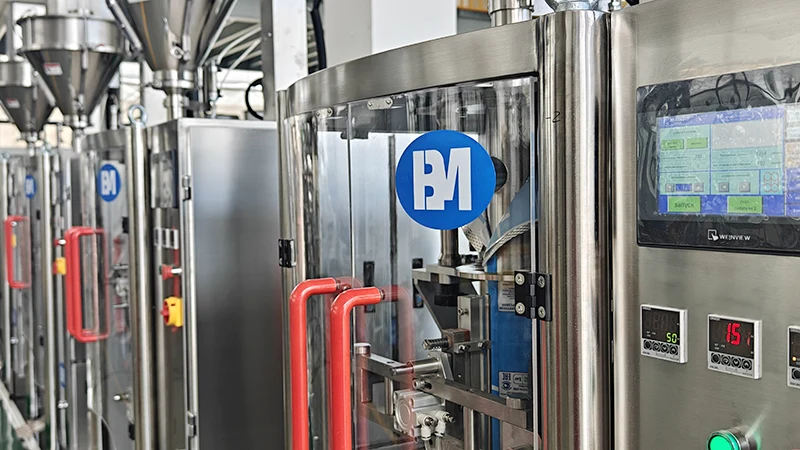
    Close-up of VFFS control console with Weinview HMI and digital temperature controllers
    Dimpled stainless steel forming shoulder of VFFS machine to reduce film sticking

    Need a secondary packaging line for salt or other granular products?

    bibpu is designed for controlled bag handling, stable compression, and dependable closure in secondary packaging workflows. If you are planning a new line or upgrading an existing one, this is the right direction to discuss.

    Request a packaging solution
  • How to buy 25 kg salt with a stable packing line for bulk operations

    How to buy 25 kg salt with a stable packing line for bulk operations

    BPM Blog | Salt packaging line

    How to buy 25 kg salt with a stable packing line for bulk operations

    When a buyer searches for buy 25 kg salt, the real issue is rarely the product itself. The real issue is how to pack, move, and close heavy salt bags without dust leakage, film sticking, unstable stacking, or stop-start production. This article shows why a vertical packaging machine and secondary packaging automation fit this scenario.

    Row of four BPM vertical form fill seal machines with stainless steel hoppers for salt packaging

    The buying scenario: 25 kg salt needs more than a price quote

    For a salt plant, distributor, or wholesale buyer, the decision is not only about the material cost. A 25 kg salt order must also consider bag integrity, filling accuracy, line speed, sanitation, and whether the pack can survive handling from filling to palletizing. If the process is manual or loosely controlled, the result is usually inconsistent weight, powder spill, and expensive rework.

    That is why BPM treats 25 kg salt as a packaging system question. The machine must match the product flow, the filling behavior, and the final handling method. The goal is simple: stable output, clean bags, and fewer interruptions during production.

    Upper auger dosing systems and structural columns of four VFFS machines for bulk salt filling
    Common pain points

    Manual weighing drifts, salt dust contaminates the sealing area, and ordinary film tracks poorly on wet or hygroscopic products. When the pack is heavy, a weak forming shoulder, unstable dosing head, or poor sealing jaw design quickly turns into leak risk and line downtime.

    Why bibpu fits salt packaging and secondary packing

    The bibpu line is built for bulk products and second-stage packaging tasks. For salt, the key advantages are visible in the machine structure: stainless steel hoppers, auger dosing, a dimpled forming shoulder to reduce film sticking, and a heated sealing section that supports consistent pouch closure.

    For larger distribution formats, the same product family also supports secondary packaging automation. That matters when 25 kg salt is shipped as a finished sack or grouped into a master bag. In those workflows, the machine has to protect the product and keep the bag geometry stable during transfer.

    Expert note: For salt, the best machine is not the one with the biggest claim. It is the one with the right material contact surface, the right dosing control, and a sealing path that stays stable under dust and humidity.

    Structure and evidence from the machine build

    The product visuals show the parts that matter most for salt. The auger dosing section controls the fill, the forming shoulder guides the film, and the horizontal sealing jaw closes the pouch. These are not decorative elements; they are the core reason the line stays consistent when running hygroscopic or dusty product.

    For downstream handling, the secondary bagging and sewing stations demonstrate how BPM keeps the final sack neat and ready for transport. Pneumatic clamping, anti-slip support, and industrial bag closing help prevent spills during movement and storage.

    StageWhat the line doesWhy it matters for 25 kg salt
    DosingAuger feeding into stainless hopperHelps keep filling accurate and steady
    FormingDimpled stainless forming shoulderReduces film sticking in humid salt conditions
    SealingHeat sealing jaw with controlled closureSupports cleaner, stronger bag closure
    Secondary packingPneumatic holding and sack loadingKeeps heavy packs stable during transfer
    Final closingIndustrial sewing head for woven sackImproves transport readiness and warehouse handling
    Dimpled stainless steel forming shoulder of VFFS machine to reduce film sticking in salt packaging
    Horizontal sealing jaw of VFFS machine sealing blue printed salt pillow pouch

    Final result for the buyer

    For buyers searching for buy 25 kg salt, the expected result is not only a lower purchase price. The real result is a packaging line that delivers accurate weight, cleaner bags, safer handling, and more predictable warehouse output. That is where BPM bibpu adds value: it turns salt packaging from a manual bottleneck into a controlled production process.

    If the target is stable fill accuracy, reliable sealing, and better downstream handling, the machine structure matters more than the claim on the brochure. Bibpu is designed to give that structure.

    Refined salt packets falling into secondary woven PP bag held by pneumatic clamps
    Industrial Newlong sewing machine head stitching the opening of filled woven sack

    Need a 25 kg salt packaging solution?

    Talk to BPM about a line for salt, powders, and other bulk products. We can match the filling method, sealing structure, and secondary packaging format to your actual production target.

    Request a packaging line review
  • Polypropylene Granules Bagging Line for Stable 25 kg Packaging

    Polypropylene Granules Bagging Line for Stable 25 kg Packaging

    Bulk granules packaging case

    Polypropylene Granules Bagging Line for Stable 25 kg Packaging

    When a plant needs fast, accurate bulk product packaging for polypropylene granules, the main challenge is not only speed. The line must keep dosing stable, protect the bag mouth during filling, and maintain a clean transfer to storage or palletizing.

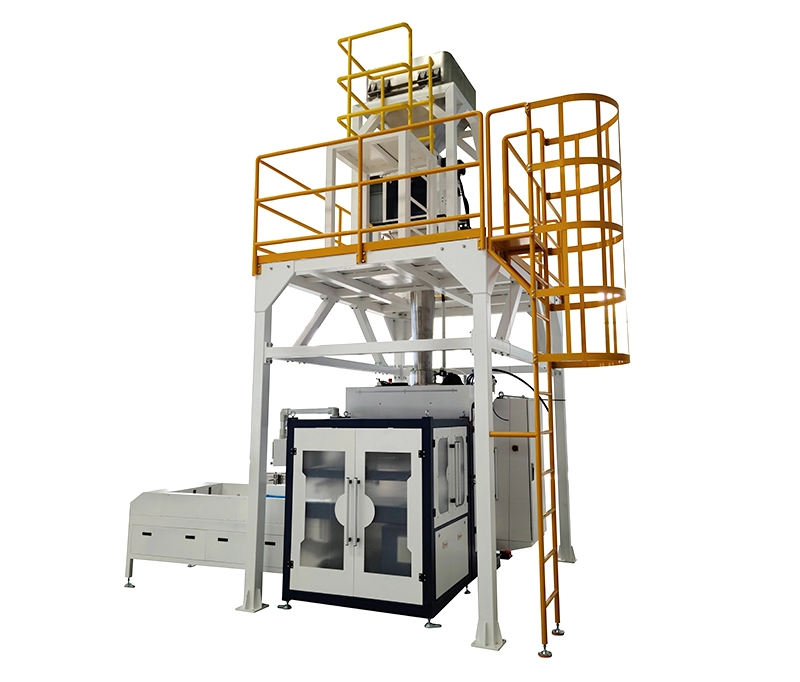
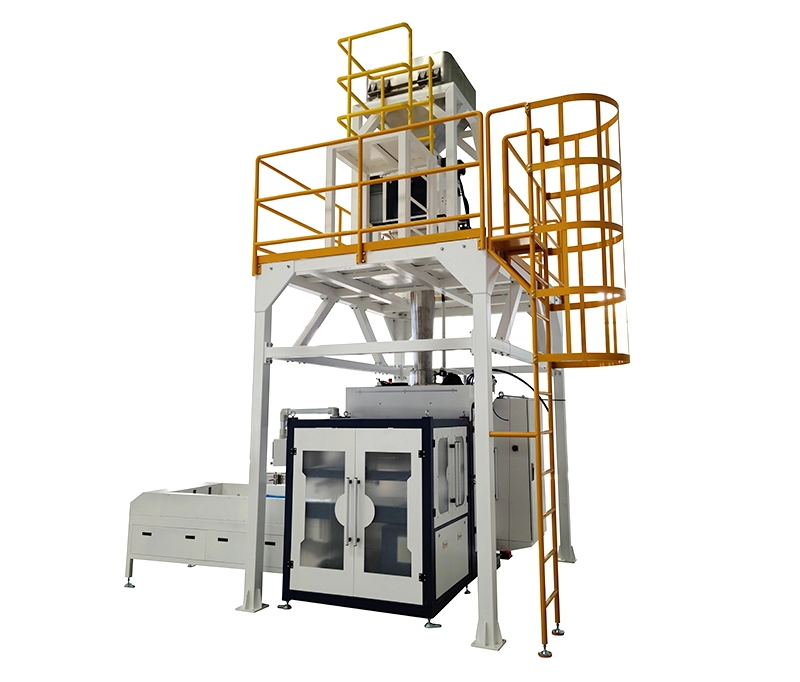
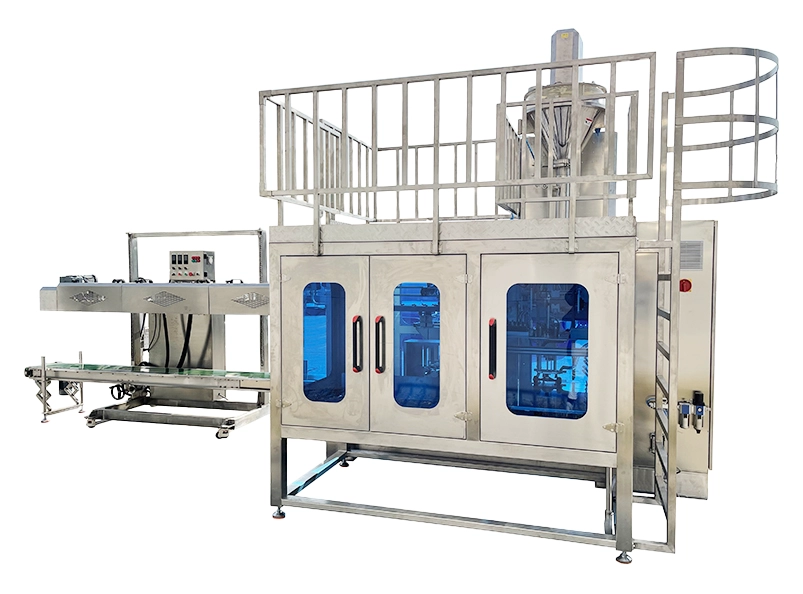
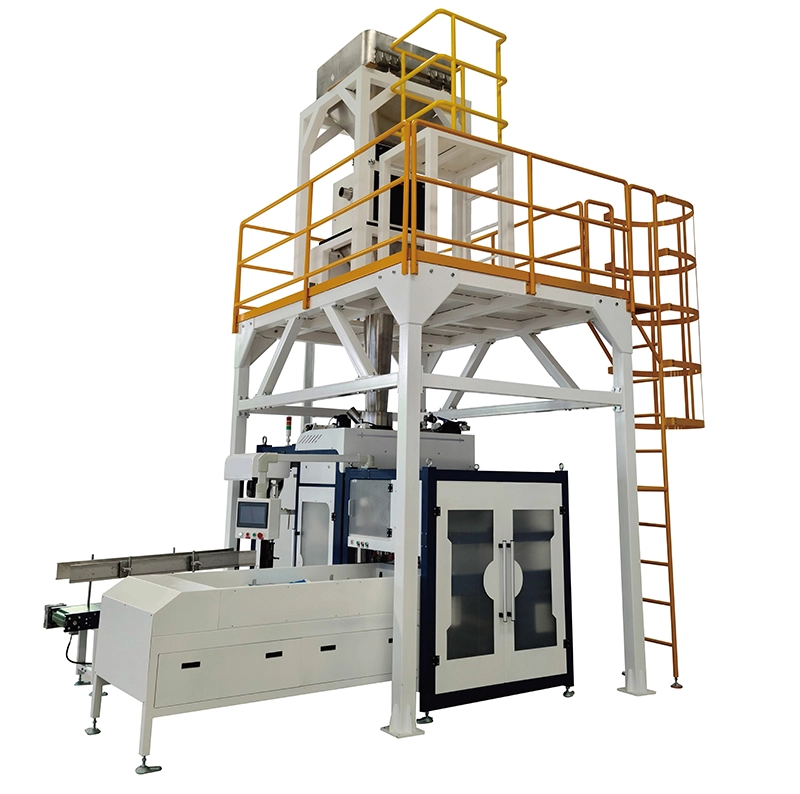
    Front view product photo of QZK-1200 automatic bagging machine with elevated steel framework, safety cage ladder, and enclosed cabinet for polypropylene granules packaging.

    Customer scenario: polypropylene granules in woven bags

    Polypropylene granules are usually packed in bulk bags or woven bags, often around 25 kg per bag. In this type of production, the packaging machine has to work with a stable feed stream, a reliable weighing and dosing system, and a filling zone that stays aligned even during long shifts.

    For this application, the right setup is a bagging line that combines hopper feeding, weighing control, bag clamping, and an outfeed conveyor. That is the core logic behind an automatic packaging machine for bulk products such as granules, powders, and other free-flowing materials.

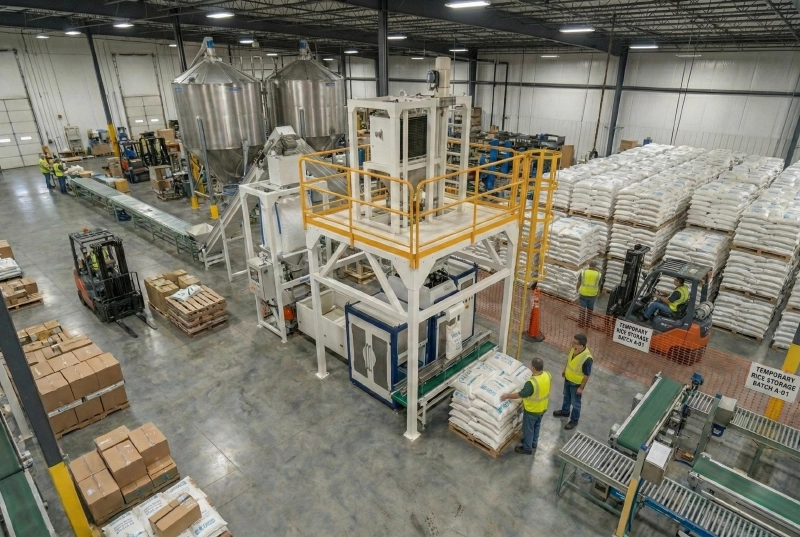
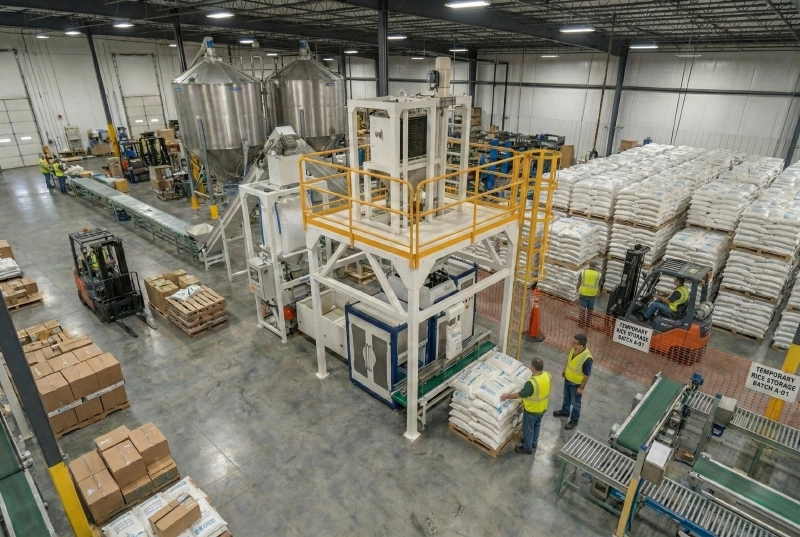
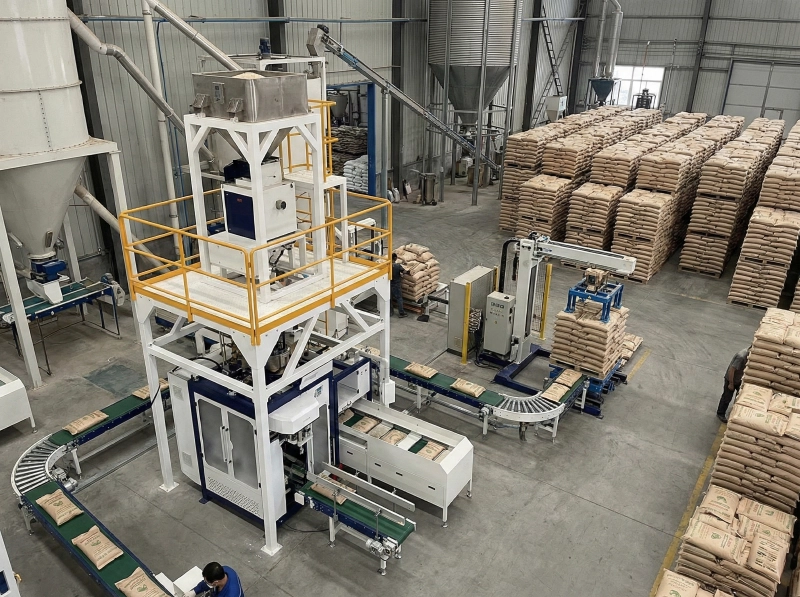
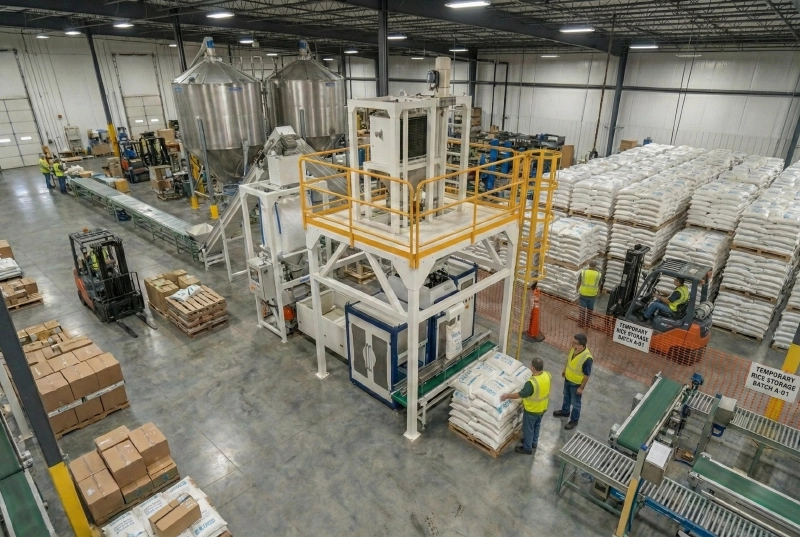
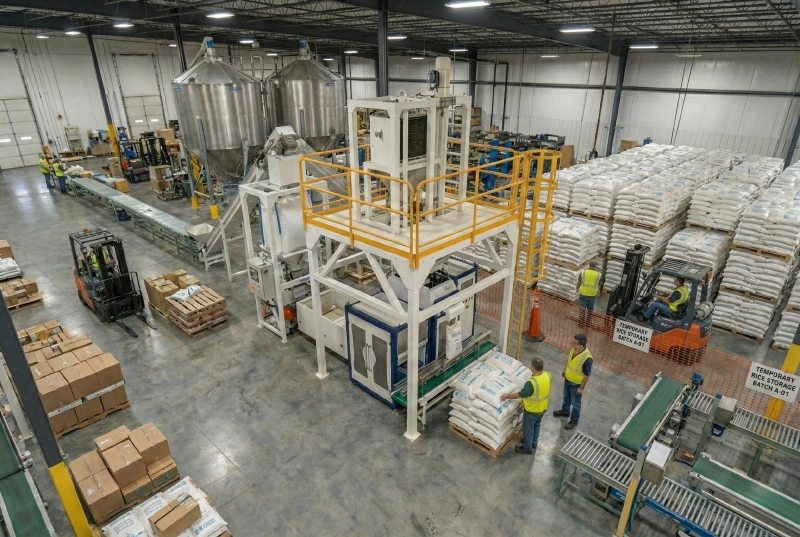
    High-angle operational photo of QZK-1200 bagging plant featuring twin stainless steel storage silos, conveyors, and active forklifts for polypropylene granules bags.
    Typical problem

    Without a matched bagging line, plants usually face unstable filling speed, bag misalignment, dust spill, and inconsistent weight control. Those issues raise rework, slow palletizing, and make the line harder to run in a repeatable way.

    Why this line fits the job

    The QZK-1200 configuration shown here is built for continuous granule packaging. The elevated steel framework supports the filling section, the enclosed cabinet protects the process area, and the safety cage ladder gives maintenance access without disturbing the main line layout.

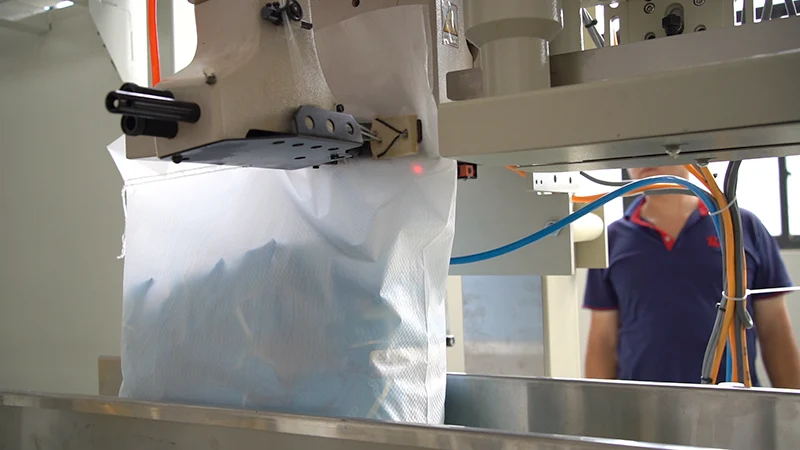
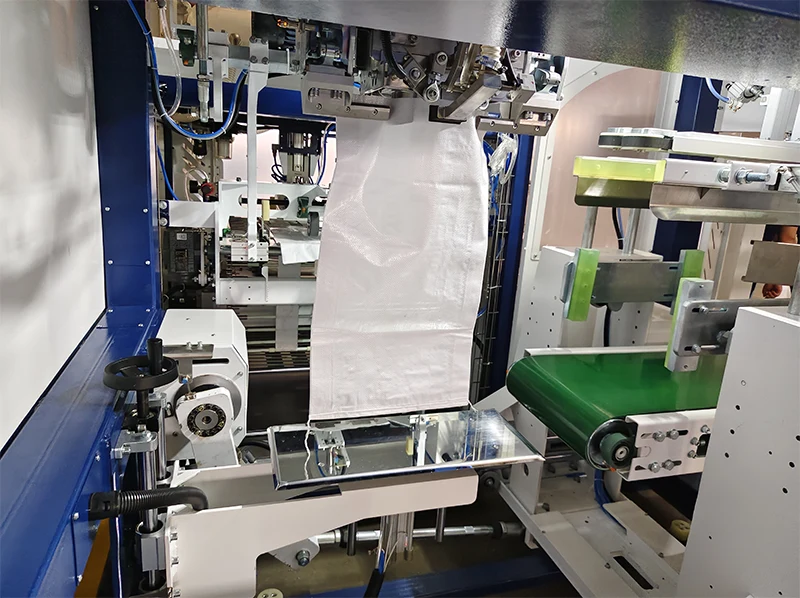
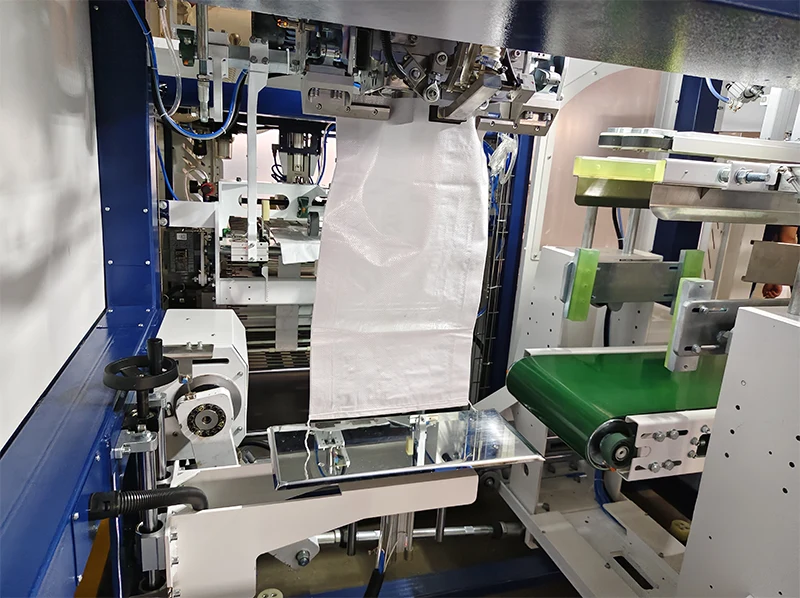
    The internal bagging unit uses vacuum suction cups and a robotic placing arm to position the bag mouth accurately. That helps keep the bag opening steady while the product moves from the weighing section into the woven polypropylene bag.

    Expert note: For bulk granules, the real value is not only the nominal speed. Stable feed, repeatable bag clamping, and clean discharge usually matter more for daily output than a headline speed number.

    Structure, operating logic, and visual evidence

    The photo set shows the main structure from three angles: the front machine frame, the internal bagging mechanism, and the connected conveyor and silo area. Together they explain how the system handles feeding, bag opening, filling, and discharge in one controlled sequence.

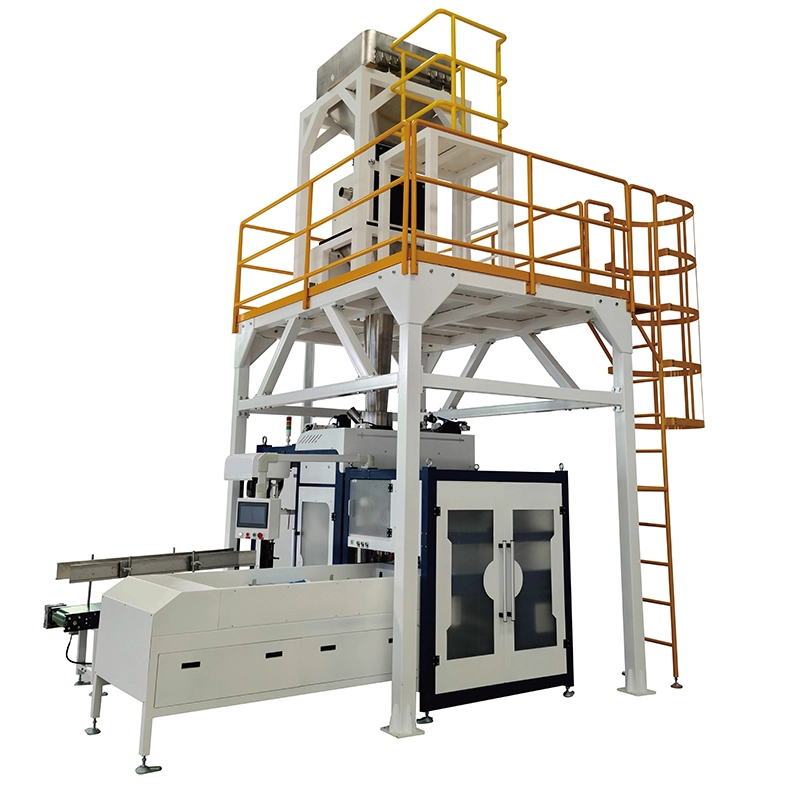
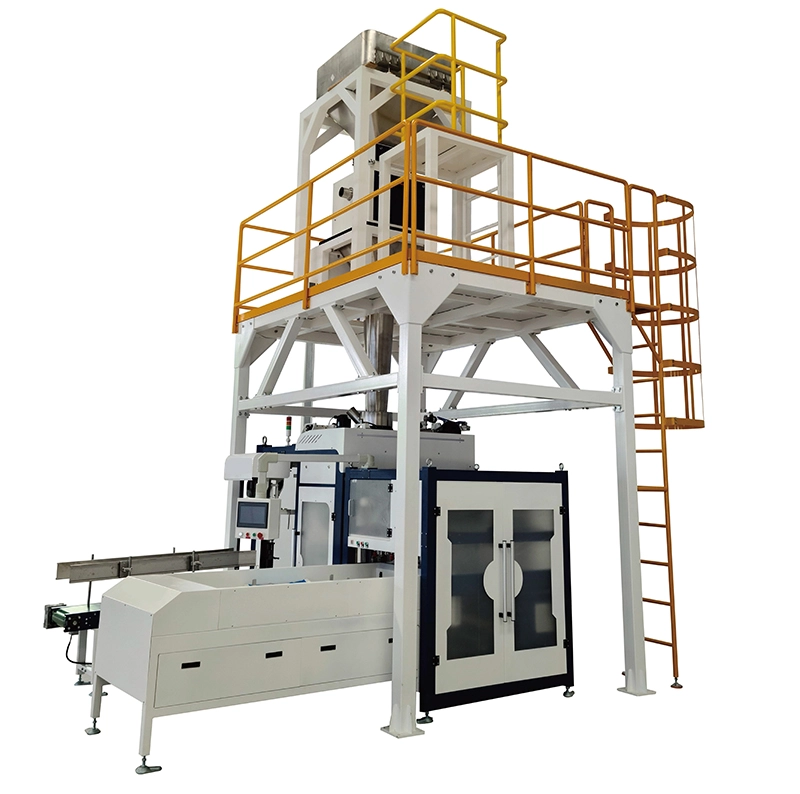
    The side view also highlights the swing-arm HMI touchscreen panel and outfeed belt conveyor. This is useful for operators because it keeps controls within reach and keeps the finished bag moving away from the filling point without manual lifting.

    ItemObserved structurePackaging benefit
    Main frameElevated steel tower with enclosed cabinetStable support and cleaner process layout
    Bag handlingVacuum suction cups and bag placing armBetter bag-mouth alignment during filling
    Material flowHopper, conveyors, and silo-fed supplyMore consistent feeding for bulk granules
    Operator interfaceSwing-arm HMI touchscreen panelEasier control, faster adjustment, less downtime
    Isometric product photo of QZK-1200 bagging machine showing swing-arm HMI touchscreen panel, outfeed belt conveyor, and platform for polypropylene granules filling.

    Need a bagging line for polypropylene granules?

    If your production target is stable 25 kg packaging with cleaner feeding and better weight control, we can help match the bagging line structure to your material, bag type, and site layout.

    Request a line proposal
  • Pellet Packaging Line for Woven Sacks: Cleaner Handoff and Steadier Pallet Flow

    Pellet Packaging Line for Woven Sacks: Cleaner Handoff and Steadier Pallet Flow

    BPMpack blog

    A pellet packaging line only looks simple from a distance. In a real workshop, the difference between steady dispatch and daily bottlenecks usually comes down to how the hopper feeds, how the bag is guided, how the scale is set, and how cleanly the product reaches the pallet.

    For a pellet producer shipping 25 kg woven sacks, the old setup is usually the same story: manual bagging slows the shift down, bag mouths get misaligned, the scale needs constant correction, and the outfeed area becomes a congestion point. That is where a dedicated pellet packaging line changes the workflow from reactive handling to controlled flow.

    The point is not just to package more bags. The point is to keep the full path stable: feed, weigh, bag, discharge, and palletize. When each step is physically supported by the machine structure, the line becomes easier to run, easier to clean, and easier to keep accurate over long shifts.

    What usually goes wrong in a pellet bagging workshop

    Operators usually feel the problem first, but the root cause is mechanical. A loose bag handoff creates spillage. An unstable frame creates drift at the weighing point. Poor access around the cabinet makes maintenance slower. A weak discharge layout forces sacks to pile up in the wrong place.

    That is why a proper bulk product packing line must be treated as a flow system, not just a filling machine. If the workshop wants steadier dispatch, the machine must support the operator instead of asking the operator to fix the machine every hour.

    QZK-1200 automatic pellet bagging line with elevated steel framework, safety cage ladder, and enclosed cabinet
    Machine structure first: the elevated frame, enclosed cabinet, and safety cage ladder show how the line is built for controlled access and stable operation.

    Why this pellet packaging line fits the job

    The selected machine layout fits pellet work because it combines a rigid steel structure with a clear operator interface and an organized outfeed path. The HMI sits on a swing arm, so the setting point is visible and close to the working zone. The outfeed conveyor keeps the filled sack moving instead of leaving it in the filling area. That helps reduce re-handling and keeps the floor around the bagging point cleaner.

    For buyers comparing bulk material bagging equipment or a bagging machine for loose products, the practical question is not the catalog name. The real question is whether the line keeps the bag mouth, the weighing sequence, and the discharge path under control during real production. This line is built around that question.

    Isometric view of the QZK-1200 pellet packaging machine with swing-arm HMI touchscreen, outfeed belt conveyor, and platform
    The swing-arm HMI and outfeed conveyor make the operating logic easy to see: set, fill, discharge, and clear the lane.

    What the images prove about the line

    Stable frame and access

    The white-background product photo shows a tower-style steel frame, protective ladder, and enclosed cabinet. This matters because pellet lines need structure stability more than decorative covers.

    Clean plant flow

    The high-angle plant shot shows twin silos, conveyors, and stacked pallets. That proves the line is not isolated equipment; it is part of a continuous dispatch route from feed point to outbound storage.

    Bag handoff detail

    The close-up image shows vacuum suction cups, a bag placer, and a woven polypropylene sack. This is the detail that decides whether the bag mouth lands neatly or needs manual correction.

    High-angle operational photo of a pellet bagging plant with twin stainless steel silos, screw conveyor, belt conveyor, and stacked pallets
    The plant view connects the machine to the rest of the workshop: feed equipment, packing tower, and pallet flow all appear in one frame.
    Close-up internal bagging unit with vacuum suction cups, robotic bag placer, green conveyor, and woven polypropylene bag
    The internal bag-handling detail shows why the line can keep the sack aligned instead of fighting the opening by hand.

    Result: steadier dispatch, cleaner handoff, less manual correction

    For a pellet workshop, the best result is not a flashy machine video. It is a line that keeps moving, keeps the sack path predictable, and keeps the pallet area clear. That is the real value of a well-built bulk product packing machine and the reason buyers look for a bagging and packaging solution that can survive daily production, not just a demo.
    If the target is steadier output, fewer bag-handling errors, and a more orderly warehouse exit, the right pellet packaging line should be judged by structure, control, and discharge flow together.

    Request a pellet packaging solution review
  • Automatic Packaging Line for Bulk Products: Cleaner Handoff and Steadier Dispatch

    Automatic Packaging Line for Bulk Products: Cleaner Handoff and Steadier Dispatch

    bpmpack ppline | automatic packaging line

    Automatic Packaging Line for Bulk Products: Cleaner Handoff and Steadier Dispatch

    For a workshop that needs an automatic line for bulk product bagging, the real job is not only filling bags. It is keeping the handoff clean, the weighing stable, the closure unit aligned, and the outfeed moving without repeated manual correction.

    Industrial bagging line with elevated steel platform, hopper, inclined conveyor, and safety railings

    Where this line fits in a bulk-products workshop

    Most customers come to this kind of project after the old setup starts creating the same complaints every day: operators are chasing bag alignment, the discharge point is too low or too cramped, and pallet flow slows down as soon as the team has to recover from one bad fill. In that situation, the line must do more than package material. It must organize the work area.

    That is why the elevated steel platform, hopper, inclined conveyor, and safety railings matter. The platform gives the machine a clean working height, the hopper creates a steady feed point, and the inclined conveyor reduces the amount of material handling between upstream storage and the bagging station. For bulk product workshops, that layout is often the difference between a line that looks busy and a line that actually stays steady.

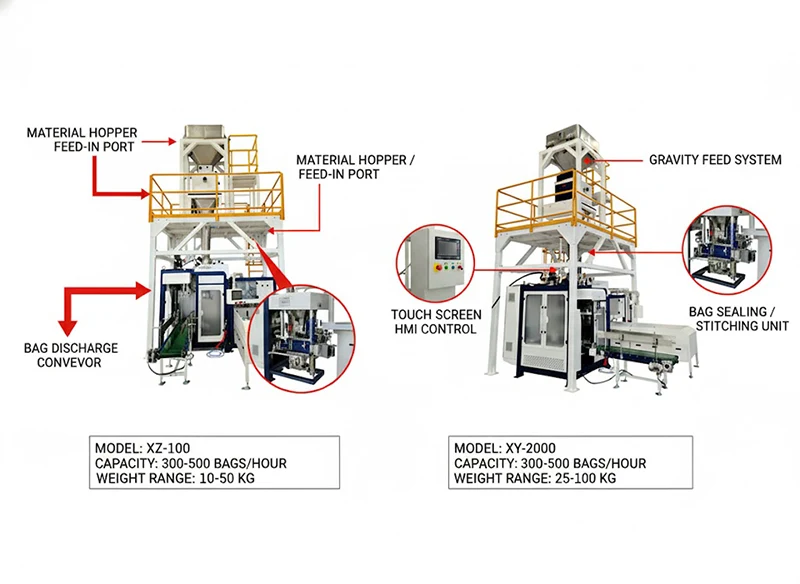
    Automatic bulk bagging machine with hopper feed, gravity dosing, HMI touchscreen, and bag sealing and stitching unit
    Old-line pain point

    When the filling point, bag clamp, and discharge conveyor are not coordinated, the operator ends up doing the machine’s job by hand. That creates dust, slower output, and more rejected sacks at the end of the shift.

    Why this automatic packaging line matches the job

    The machine structure shown here is built to reduce that handwork. Hopper feed and gravity dosing keep the material moving in a controlled way. The HMI touchscreen gives the operator one place to manage the job instead of walking around the machine. The bag sealing and stitching unit, together with the outfeed conveyor, helps the finished sack leave the station in a cleaner direction instead of twisting or dropping awkwardly.
    For bulk product packaging, that matters because the result is not only a full bag. The result is a bag that can be transferred, stacked, and dispatched with less rework. In other words, the packaging line is solving the workshop problem, not just the weighing problem.

    What the structure proves: the swing-arm HMI, enclosed platform, and guided outfeed path show that the line is designed for repeatable operator control and steadier sack transfer, not for single-point filling alone.

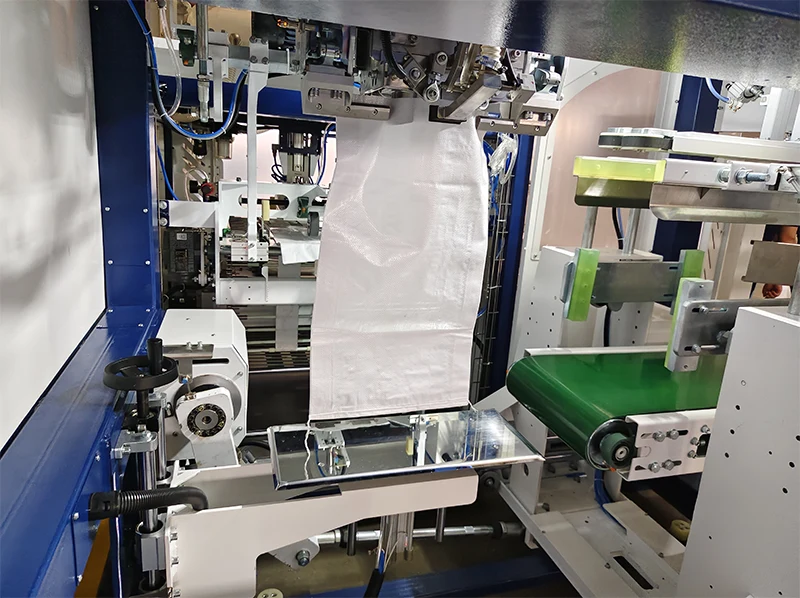
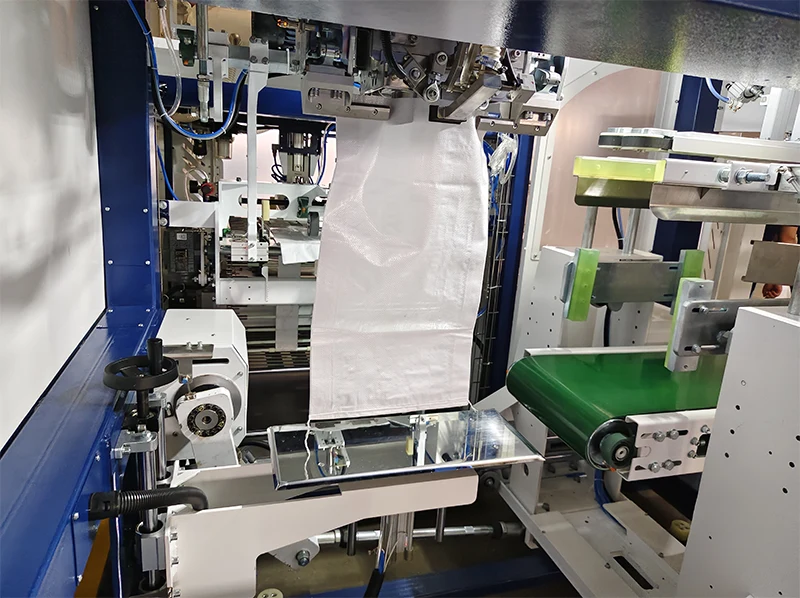
    Close-up internal photo of bagging unit with vacuum suction cups, robotic bag placer, green conveyor, and white woven bag
    Structure, parameters, and image evidence

    One reason buyers ask for technical images is simple: a bagging line can sound similar on paper while behaving very differently on the floor. The isometric machine view shows the panel position, the platform layout, and the outfeed conveyor relationship. The internal close-up shows how the vacuum suction cups, bag placer, and green belt cooperate at the critical moment when the bag is being picked, held, and moved into position.

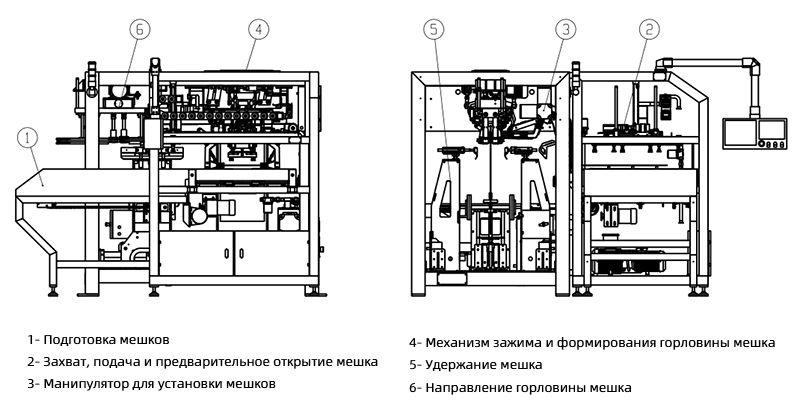
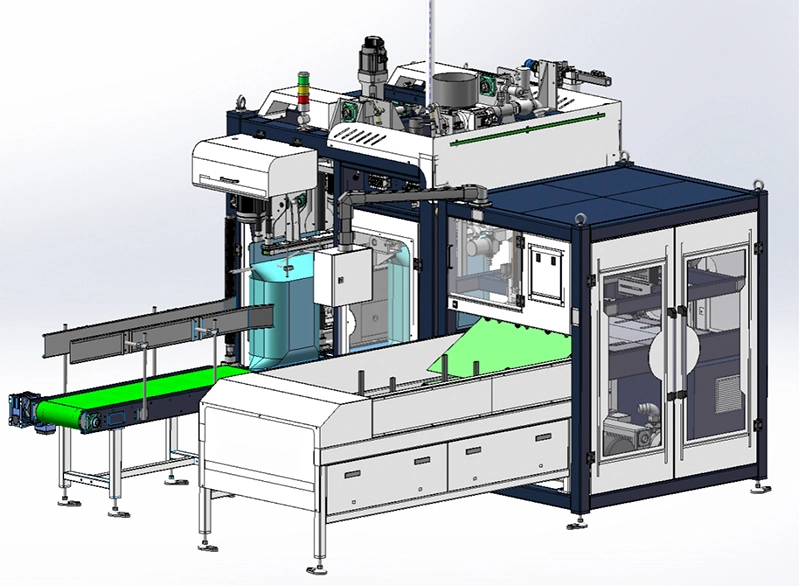
    The CAD blueprint adds another layer of proof. It shows the bag magazine, robot arm, and component arrangement in a way that helps the team judge service access, motion path, and installation logic. Together, these images support the same conclusion: the line is designed for stable bag handoff, practical maintenance access, and cleaner dispatch flow.

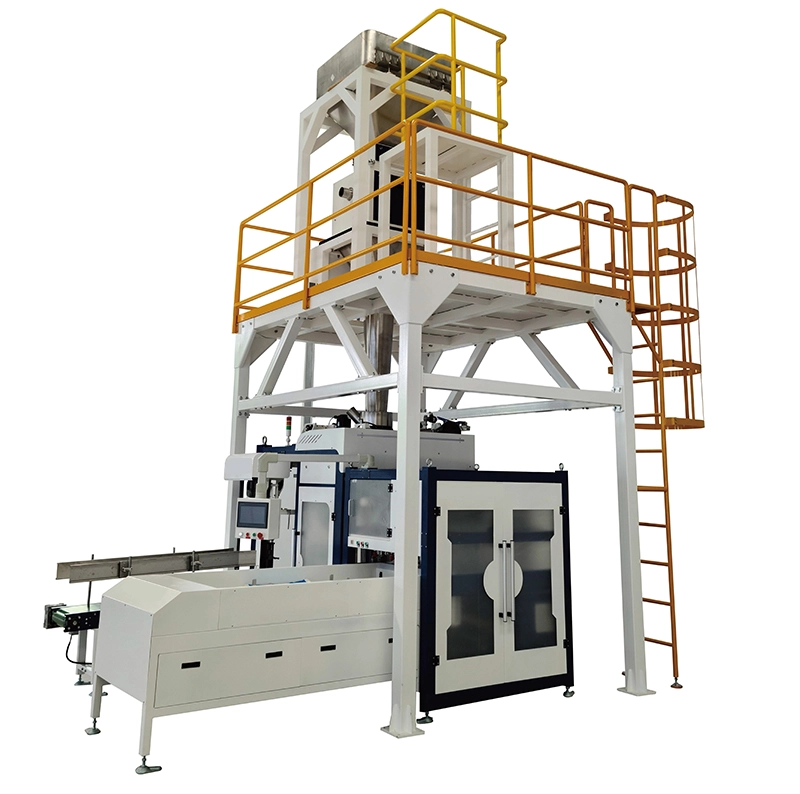
    Isometric product photo of QZK-1200 bagging machine showing swing-arm HMI touchscreen panel, outfeed belt conveyor, and platform
    Dual-view technical CAD blueprint of automatic bagging machine showing bag magazine, robot arm, and Russian component annotations
    Image evidenceWhat it supportsOperational result
    Elevated platform + hopper + inclined conveyorCleaner feed routing and better workspace organizationLess manual handling before packaging starts
    HMI touchscreen + gravity dosing + stitching unitSingle-point control over filling and closureMore stable bagging with fewer alignment errors
    Vacuum suction cups + bag placer + CAD layoutEvidence of controlled motion and service accessSteadier dispatch and easier maintenance planning

    When a workshop wants an automatic packaging line that can handle bulk products day after day, the target is usually the same: fewer interruptions, cleaner bag transfer, and a more predictable pallet flow. This ppline setup is aimed at exactly that result.

    Need a bulk-product packaging line that stays steadier on the floor?

    If you are comparing an automatic packaging line, a granule bagging line, or a bulk-product filling line for woven sacks, start with the real workshop problem: feed stability, bag handoff, closure quality, and outfeed speed. That is the level where this design is meant to help.

    Talk to BPM about the right line layout
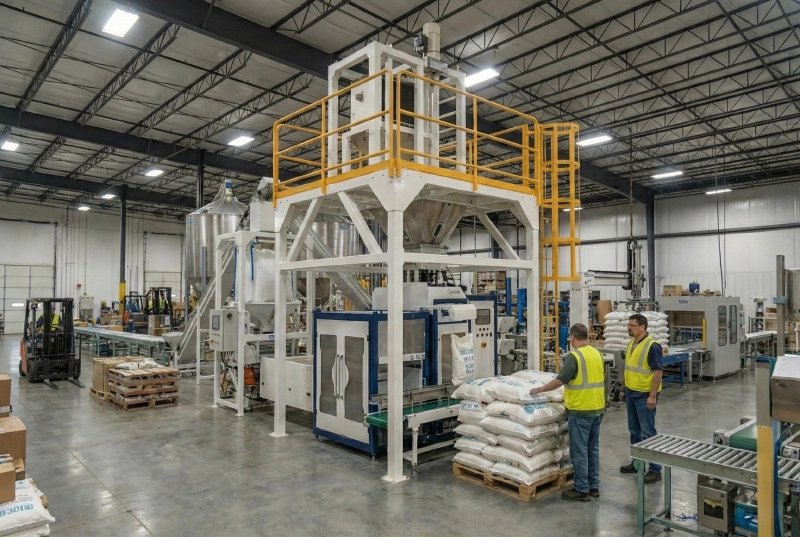
  • Bulk Product Bagging Line for 25 kg Woven Sacks: Cleaner Handoff and Steadier Dispatch

    Bulk Product Bagging Line for 25 kg Woven Sacks: Cleaner Handoff and Steadier Dispatch

    Granule bagging line for bulk products

    From hopper to pallet, this QZK-1200 setup shows how a granule bagging line can keep 25 kg woven-sack dispatch steadier in a busy warehouse. The point is simple: fewer handoffs, clearer flow, and a packaging layout that stays readable for operators on the floor.

    • Hopper-fed bulk product handling
    • Weighing, bagging, and outfeed in one visible flow
    • Platform access and pallet-side logistics in the same line
    High-angle operational photo of QZK-1200 bagging plant featuring twin stainless steel storage silos, conveyors, and active forklifts.
    High-angle plant view: storage, conveying, bagging, and pallet movement in one frame.

    What usually goes wrong before the line is upgraded

    In many bulk product workshops, the old setup looks busy but works against the crew. Bags move through too many touchpoints, the bag mouth is harder to keep aligned, and forklifts end up compensating for a packaging flow that is not visually organized. The result is familiar: slower dispatch, more rework, and more chances for a woven sack to be bumped, tilted, or re-staged.

    Loose bag transfer between weighing and outfeed
    Poor visibility at the bagging station
    Pallet flow disrupted by manual handling

    Why this QZK-1200 layout fits the problem

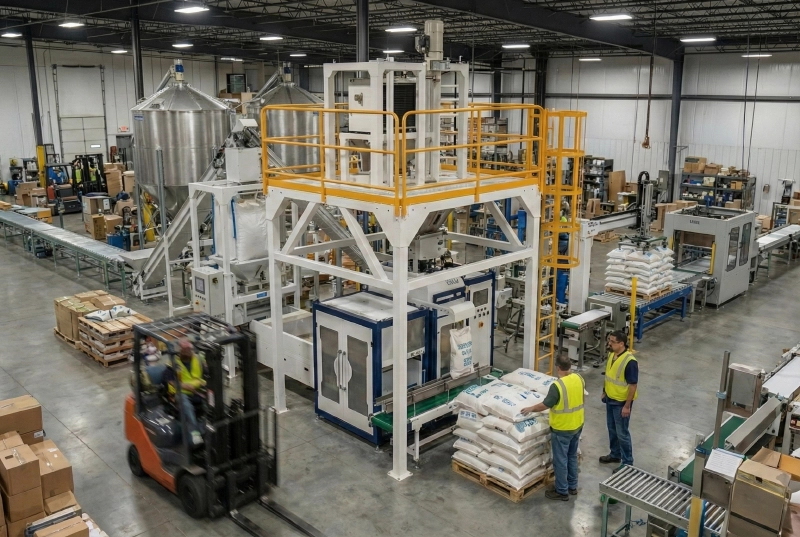
    Eye-level photo of operating QZK-1200 bagging station with steel safety cage ladder, conveyor, and operators stacking sacks.
    Eye-level evidence: the station is built for access, visibility, and practical supervision.

    The photo shows the real advantage of the line: a high steel platform, safety cage ladder, enclosed machine body, and a clean outfeed path. That combination matters because bulk product packaging is not just about filling a bag. It is about keeping the bagging point stable, keeping the operator close enough to supervise, and keeping the downstream pallet area clear enough to move product without confusion.

    • Elevated structure keeps the bagging process compact and legible.
    • Enclosed machine sections help the line look and feel controlled.
    • Operators can manage sacks without fighting the conveyor path.

    Evidence from the internal bagging unit

    Close-up internal photo of bagging unit with vacuum suction cups, robotic placing arm, green conveyor, and white woven bag.
    The internal close-up shows the bag-holding and transfer mechanics that keep the flow steady.
    Observed partWhat the image provesOperational result
    Vacuum suction cupsThe bag is picked and held at the transfer point instead of drifting by hand.Cleaner bag handoff and fewer crooked starts.
    Robotic placing armThe line has a mechanical positioning element built into the bagging process.More repeatable bag placement before discharge.
    Green conveyorOutfeed is continuous and visually separated from the filling zone.Less crowding at the station and smoother dispatch.

    How the pallet side closes the loop

    That is the strongest outcome of the ppline approach: the line is not only filling bags. It is creating a warehouse rhythm where bagging, pallet handling, and dispatch stay aligned. For bulk product teams, that usually means less re-handling, better visibility, and a more dependable route from filling point to warehouse exit.

    Need a steadier bulk-product packaging flow?

    If your workshop is still relying on a loose bagging point and a separate pallet routine, the QZK-1200 style granule bagging line is the kind of layout that makes the next upgrade easier to explain, easier to operate, and easier to scale.

    Request a packaging line discussion
  • Granule Bagging Line for Bulk Products: QZK-1200 Setup for Cleaner Bag Handoff and Pallet Flow

    Granule Bagging Line for Bulk Products: QZK-1200 Setup for Cleaner Bag Handoff and Pallet Flow

    Granule bagging line | bulk products | woven sack dispatch

    Granule Bagging Line for Bulk Products: QZK-1200 Setup for Cleaner Bag Handoff and Pallet Flow

    For granules, bulk products, and woven sacks, this layout keeps feeding, bag handoff, discharge, and pallet movement steadier. It is the kind of bagging line buyers ask for when they want fewer floor corrections and a cleaner dispatch rhythm.

    High-angle operational photo of QZK-1200 bagging plant featuring twin stainless steel storage silos, conveyors, and active forklifts

    When granules move faster than the old packing rhythm

    In a busy bulk-products workshop, the pain is rarely the bag itself. The problem starts upstream: feed is uneven, the weighing point gets interrupted, and the sack leaves the station with a twist that slows the next operator. That is why a granule bagging line has to solve the full route, not only the dosing step. If the line cannot keep the bag mouth stable, the warehouse will keep paying for manual correction, short pauses, and messy pallet build-up.

    This is where the QZK-1200-style arrangement makes sense. The elevated structure, conveyor routing, and controlled bagging station are built for continuous bag transfer in a woven sack warehouse. In practical terms, it supports better bulk product packing: the bag arrives, opens, fills, exits, and reaches the pallet path without the operator having to fight the machine at every cycle.

    Isometric product photo of QZK-1200 bagging machine showing swing-arm HMI touchscreen panel, outfeed belt conveyor, and platform
    Typical pain point

    Operators want a line that keeps granule feeding steady, protects the bag mouth during transfer, and avoids outfeed congestion when pallets start stacking up. Without that, the workshop gets more handwork, more bag rechecks, and a slower dispatch rhythm.

    Why the line architecture fits the job

    The machine evidence is visible in the hardware: a swing-arm HMI for controlled operation, a platform that keeps the work zone accessible, and an outfeed conveyor that reduces bag-to-pallet friction. The close-up of the bagging unit shows vacuum suction cups, a robotic placing arm, and a green conveyor working together. That combination matters because granule products are unforgiving: if the bag is not held correctly, the sack edge shifts, the fill point misaligns, and the next process slows down.

    Compared with a loose, manual flow, this structure gives the workshop a more predictable result. It is easier to keep the bag mouth aligned, easier to supervise the transfer point, and easier to maintain a stable sequence from hopper to discharge. For searchers comparing a bagging line for bulk products or a secondary bagging layout in woven sacks, the value is not only speed. It is a steadier line that stays readable for the operator.

    Operational note: when the line is built around controlled bag picking, guided outfeed, and clear access around the frame, the warehouse gets fewer stoppages and less product handling drift. That is the real reason the result feels calmer at the pallet end.

    Close-up internal photo of bagging unit with vacuum suction cups, robotic placing arm, green conveyor, and white woven bag

    What the evidence says on the floor

    The strongest proof is in how the line ties feeding, bag handling, and discharge together. The high-angle plant photo shows twin stainless steel storage silos, conveyors, and active forklifts, which means the packaging line is not isolated from warehouse logistics. The secondary bagging layout image adds another layer: accumulation belt, large bag gripper, and discharge conveyor. Together they explain why the line fits a bulk-products site that needs flow continuity instead of stop-start packing.

    In other words, this is not just equipment for sale. It is a working layout for a granule bagging line in a woven sack warehouse where the goal is steadier dispatch, fewer manual fixes, and a cleaner path from packing to pallet movement. If the buyer is trying to compare equipment for granule packing, the practical question is simple: can the line keep the bag stable while the rest of the operation keeps moving? This setup is designed to answer yes.

    3D CAD rendering of modular secondary bagging line QZK-1200 with accumulation belt, large bag gripper, and discharge conveyor
    Floor problemWhat the line changesEvidence in the images
    Uneven feed and slow recovery after each cycleControlled hopper-to-bag sequence keeps the packing rhythm steadierHigh-angle plant view with silos, conveyors, and active forklift flow
    Bag mouth twist and unstable handoffVacuum suction cups and placing arm help guide the sack more cleanlyInternal close-up with suction cups, robotic placing arm, and green conveyor
    Outfeed congestion near pallet build-upDischarge conveyor separates the bagging point from pallet handlingSecondary bagging line render with accumulation belt and discharge conveyor
    Operator fatigue during inspection and correctionHMI control and platform access make supervision simplerIsometric machine view with swing-arm HMI touchscreen and platform

    Need a steadier granule packing layout?

    If your line has to handle bulk products in woven sacks without constant hand correction, the QZK-1200-style bagging layout is a practical starting point. It combines controlled bag transfer, readable operator access, and a clearer discharge path so the warehouse can keep moving.

    Talk to BPM about the right bagging line