Automatic Bagging Machine & Palletizing Systems Manufacturer

Category: Статьи

  • How a Bulk Product Bagging Line Keeps Dosing, Repacking, and Woven Sack Dispatch Steadier

    How a Bulk Product Bagging Line Keeps Dosing, Repacking, and Woven Sack Dispatch Steadier

    Bulk bagging and secondary packing

    How a Bulk Product Bagging Line Keeps Dosing, Repacking, and Woven Sack Dispatch Steadier

    For salt, resin pellets, grains, powders, and other bulk materials, the real challenge is not only filling the bag. The hard part is keeping feed stable, film tracking under control, the secondary sack shape flatter, and the final sewing step consistent enough for daily dispatch.
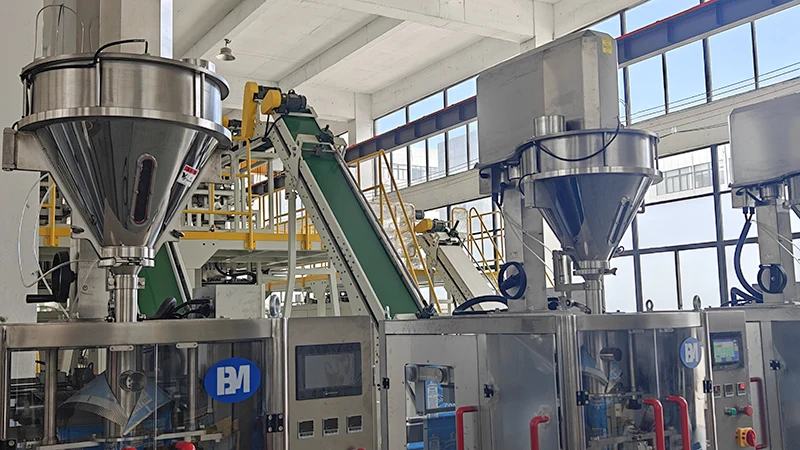
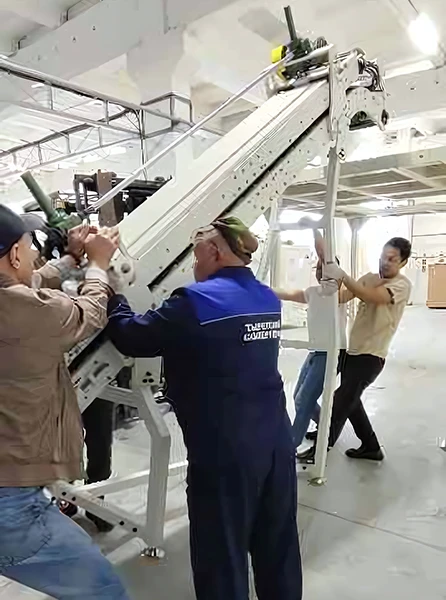
    Dosing hoppers of packaging line with automated bucket elevator conveyor in background

    Why bulk lines start to slip when feed and transfer are not matched

    In a typical bulk-product workshop, the first problem appears upstream. The feeding hopper may run steady for a while, then bridge, surge, or lose rhythm when the material changes. That is why the line needs a dosing zone that is easy to keep full and a transfer path that keeps the material moving without unnecessary interruption.

    The image evidence matters here. The hopper-and-elevator layout shows a compact feeding structure that is designed to keep the line supplied. For bulk products, this is not a cosmetic detail. Stable feed is what protects the rest of the process from empty cycles, repeated restarts, and avoidable operator intervention.
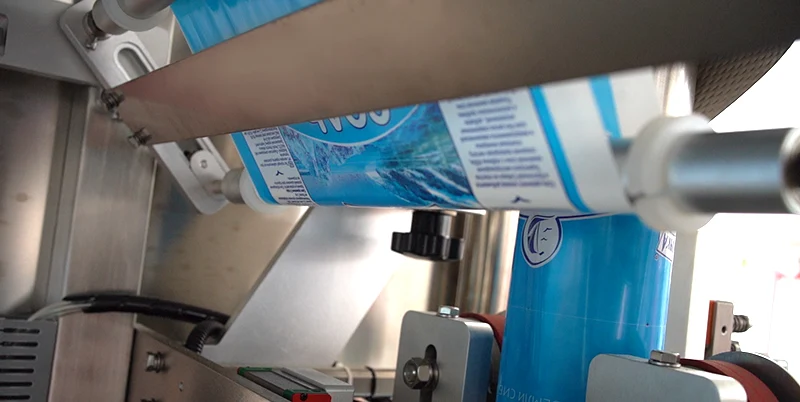
    Aluminum film guide rollers and manual alignment collar on VFFS machine
    Old issue:

    When film tracking drifts, the bag shape changes. When the transfer alignment is loose, the sack mouth is harder to control. When the discharge timing is inconsistent, the next station inherits the problem. Bulk-product packing usually fails as a chain, not as a single point.

    Why this BIBPU setup fits the job better

    The guide roller and manual alignment collar show a practical answer: the film path is not left to chance. It can be aligned and kept in position, which helps protect sealing consistency and reduces scrap caused by wandering film. For bulk-product lines, that stability is often more valuable than raw speed.

    At the same time, the line uses UNS S31603 / 316L contact surfaces on the product-facing side, which is important for corrosive or chloride-heavy materials. That material choice supports durability in salt and similar environments, while the mechanical layout keeps the line easier to maintain during long shifts.

    What the structure is doing: the machine is not just filling and closing bags. It is controlling feed, guiding film, compressing the finished sack, and handing the product off into a more stable discharge sequence.

    From swelling sacks to cleaner handoff

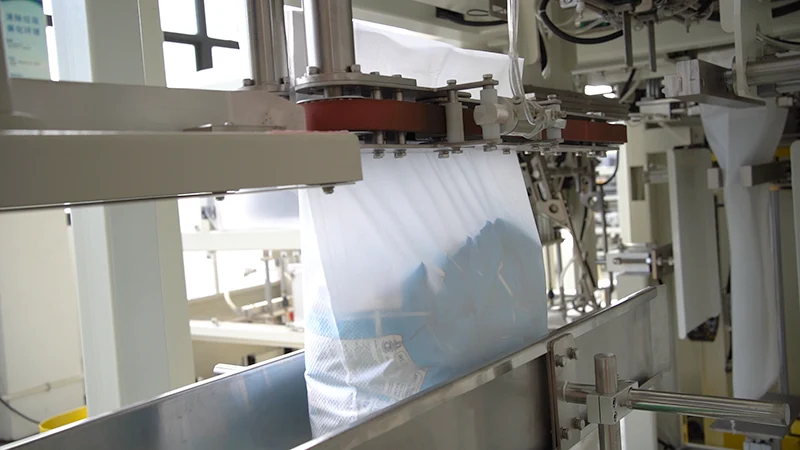
    After filling, the next risk is volume control. A loaded woven sack may bulge, shift, or arrive at the sewing station with too much trapped air. That is where the side compression stage becomes useful. It reshapes the sack before closure, so the bag is easier to feed and easier to close.

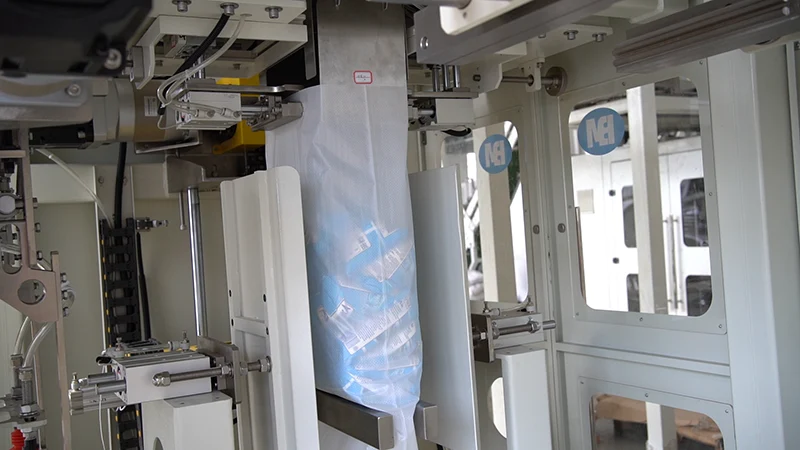
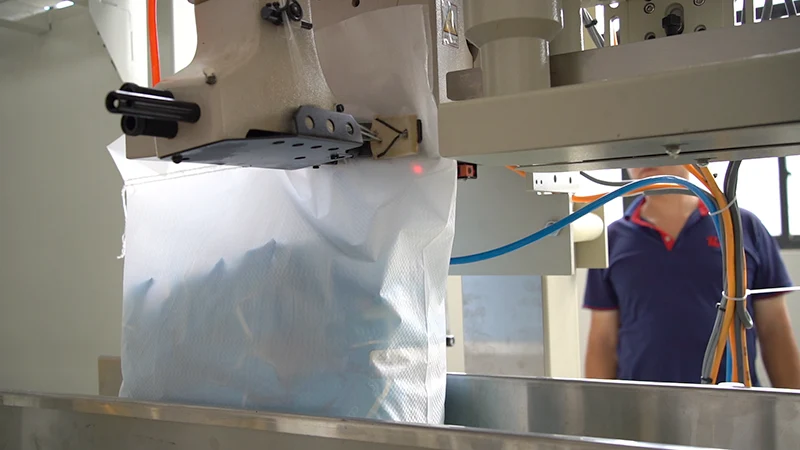
    The compressed-sack image shows exactly that step: pneumatic side clamping plates are used to flatten the load before sewing. This is one of the clearest ways to improve output quality without asking operators to correct every bag by hand. It keeps the sack profile more uniform and gives the sewing head a better starting point.
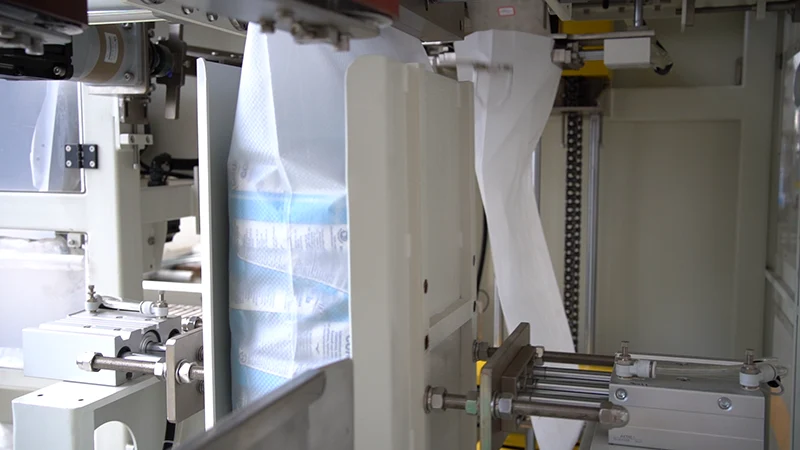
    Loaded secondary woven PP sack compressed by pneumatic side clamping plates

    What the final handoff changes at the sewing station

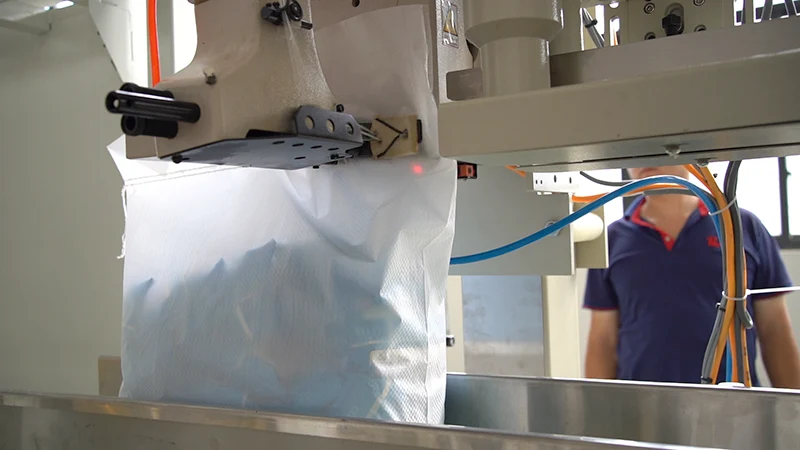
    The last station decides whether the line feels organized or messy. If the bag mouth is not aligned, sewing slows down. If the feed to the closer is unstable, the output becomes inconsistent. The dual-belt handoff shown in the next image solves that by holding and guiding the filled woven bag in a more controlled way before it reaches the sewing head.

    Then the Newlong sewing head finishes the job with a proper industrial closure. That is the result customers want: fewer manual corrections, fewer deformed sacks, and a dispatch flow that is easier to count, stack, and ship. The whole line makes more sense when the feeder, film path, compression step, and sewing station are treated as one chain.

    ProblemStructural answerImage evidenceResult
    Unstable feedingCompact dosing and transfer layoutHopper and elevator sceneSteadier upstream flow
    Film driftManual alignment collar and guide rollersFilm path detailCleaner tracking and fewer rejects
    Bulging secondary sackPneumatic side compressionLoaded sack compressionFlatter bag profile before closure
    Slow sewing handoffDual-belt mouth guidance plus industrial closerBag feed and sewing headMore consistent dispatch-ready output
    Top opening of filled woven bag clamped by dual belt feeders to sewing head
    Industrial Newlong sewing machine head stitching the opening of filled woven sack

    Need a steadier bulk-product bagging and repacking line?

    If your current setup is losing time to feed instability, film tracking drift, bag swelling, or inconsistent sack closing, the BIBPU line is built to tighten that chain with a more controlled transfer, compression, and sewing sequence.

    Talk to BPM about your packing flow
  • How a Powder Packaging Line Keeps Feeding, Sealing, and Secondary Bagging Steadier

    How a Powder Packaging Line Keeps Feeding, Sealing, and Secondary Bagging Steadier

    Powder packaging

    How a Powder Packaging Line Keeps Feeding, Sealing, and Secondary Bagging Steadier

    For bulk powder operations, the real risk is not only output speed. Bridging in the hopper, dust at the seal, film sticking at the collar, and loose secondary bags all create rework downstream. A stable powder packaging line has to solve those failure points as a system, not as isolated machine features.

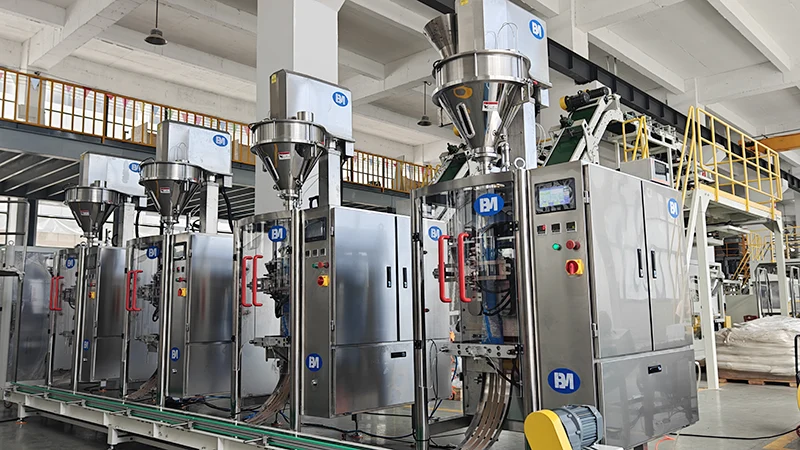
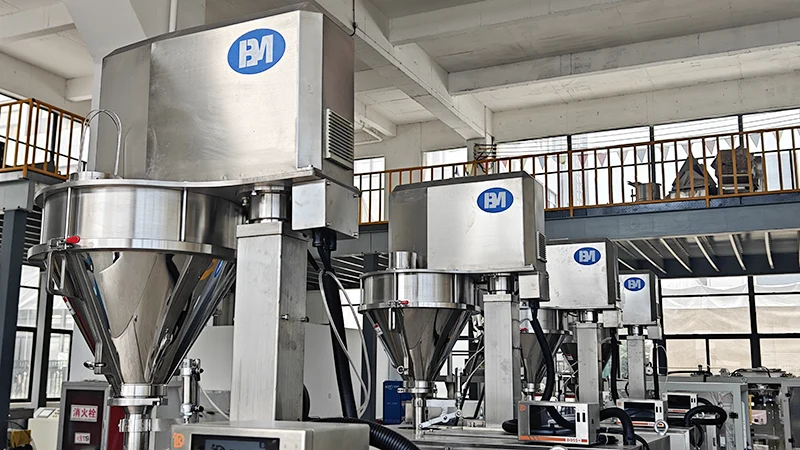
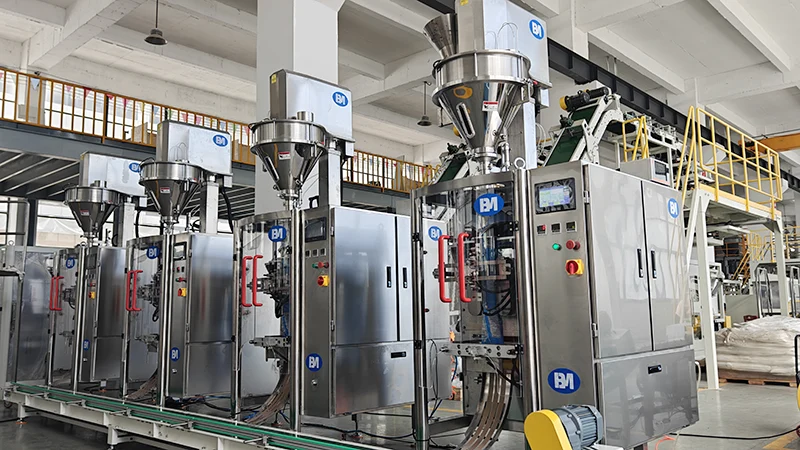
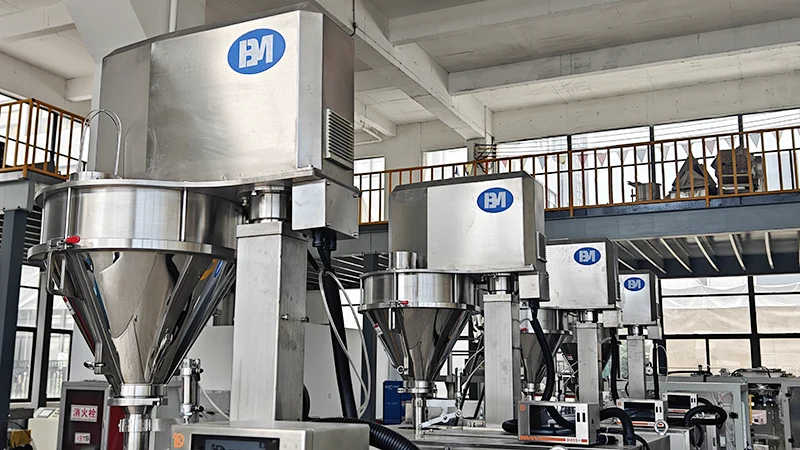
    Row of four BPM vertical form fill seal machines with stainless steel hoppers

    Where the old powder line usually breaks down

    Many powder plants start with a line that can fill a bag, but not keep the bag quality steady. The first weak point is feed stability: when the hopper, dosing head, or transfer path lets material hang up, the whole cycle becomes uneven. The second weak point is sealing. Fine powder escapes into the jaw area, heat transfer becomes inconsistent, and the seam loses integrity. The third weak point is bag handling after fill. If the package is still soft or full of trapped air, stacking, sewing, and palletizing become harder than the actual filling step.

    That is why powder packaging has to be judged by the full flow: feeding, metering, sealing, discharge, and outer bag handling. If one step is weak, the line looks productive but creates unstable bags and more manual correction later.

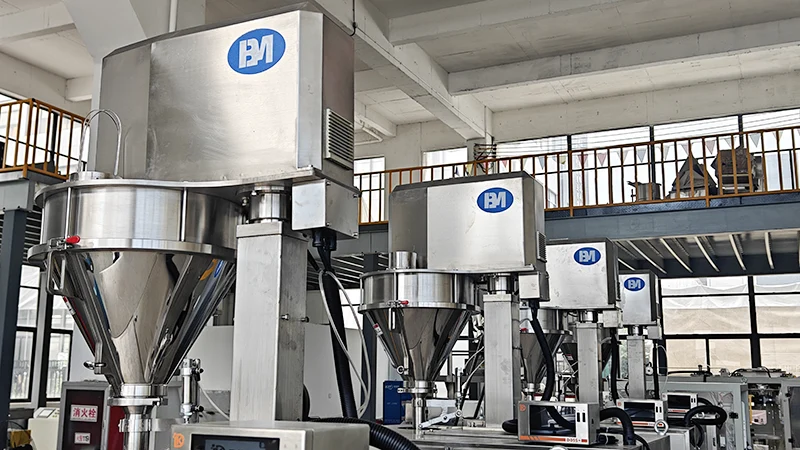
    Upper auger dosing systems and structural columns of four VFFS machines
    Typical pain point

    Powder lines fail when the machine can fill fast but cannot keep the bag clean, sealed, and square enough for downstream packing. The result is dust, unstable seams, and weak stacking quality.

    Why BIBPU fits powder work better than a generic bagging setup

    BIBPU is built as a packaging system for bulk products, so its value is in the interfaces between modules. The dosing section is designed to keep the product feed controlled, while the vertical form fill seal section keeps the bag forming and closing stable. The sealing jaw area uses controlled heat and a rigid mechanical layout, which matters when powder contamination is always trying to interfere with the seam. The forming shoulder is equally important: when film drag drops, the film tracks more predictably and the bag shape stays consistent.

    For powder applications, the downstream handling matters as much as filling. Cleanly formed bags are easier to group, transfer, and prepare for secondary packaging. That is why the line should be read as one chain: hopper stability protects the dosing step, dosing stability protects the seal, and the seal quality protects the final palletizing and dispatch stage.

    System insight: In powder packaging, the best machine is not the one with the most promises. It is the one that keeps the same bag shape, the same seal quality, and the same transfer behavior through the full shift, including the messy hours when powder flow is less cooperative.

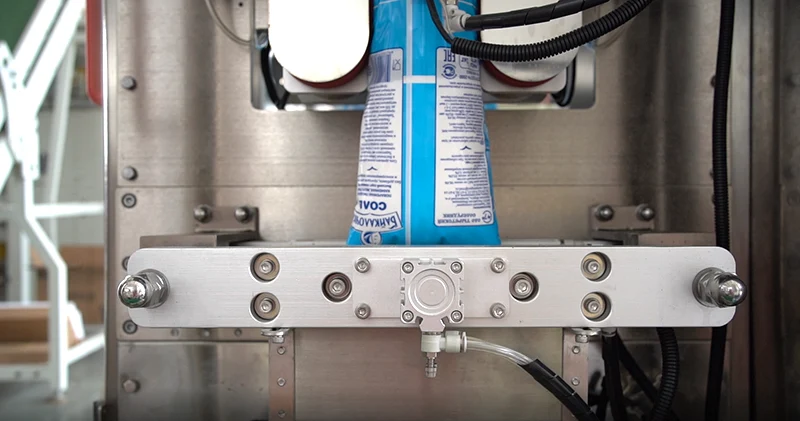
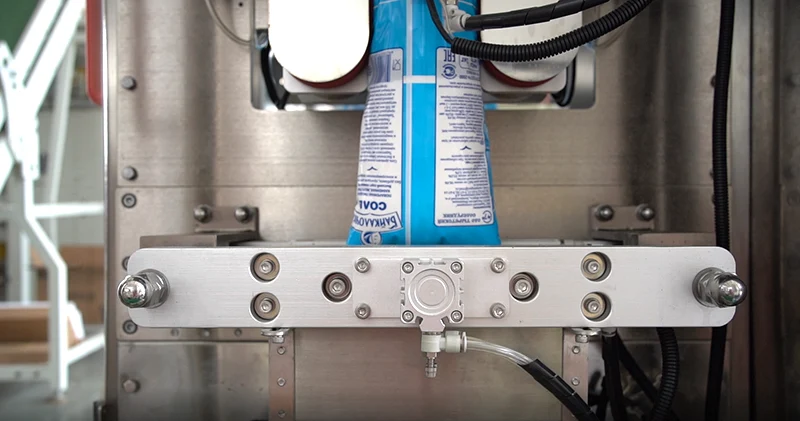
    Horizontal sealing jaw of VFFS machine sealing blue printed salt pillow pouch

    What the structure and process evidence show

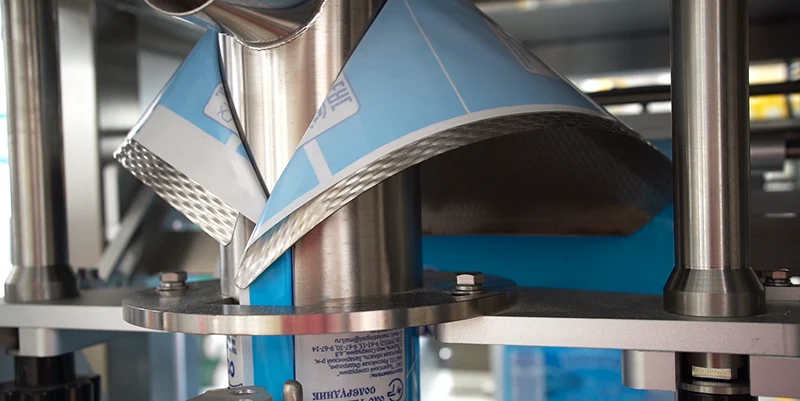
    The pictures tell a practical story. The dosing module shows that the line is not relying on loose gravity flow alone. The sealing jaw image shows a controlled closure point, which is what powder packing needs when dust must be kept out of the seam. The dimpled forming shoulder image shows a detail that helps film release more smoothly, reducing drag and helping the bag form consistently. The secondary bagging image proves the line is not stopping at the primary pouch; it also supports transfer into woven sacks for cleaner shipping and easier warehouse handling.

    That structure matters because powder customers rarely buy only a single machine. They need a repeatable result: less dust around the seal, fewer bag rejects, more regular bag geometry, and a cleaner path to dispatch. A line that can hold those four outcomes is far more valuable than a line that only claims speed.

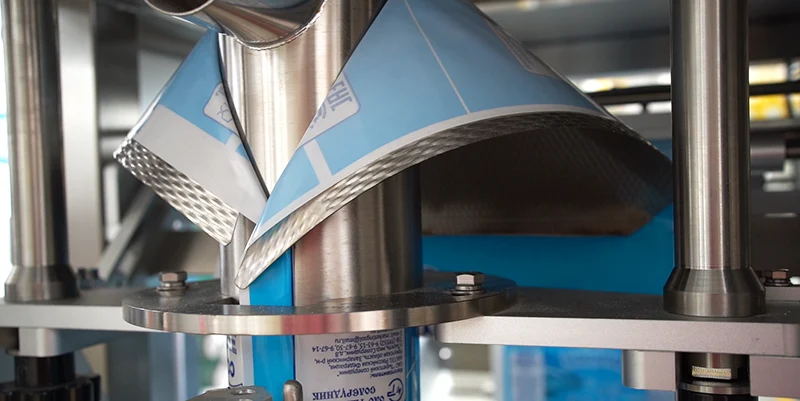
    Dimpled stainless steel forming shoulder of VFFS machine to reduce film sticking
    Powder line issueMachine-side responseExpected result
    Bridge risk at feedingStable auger dosing and controlled structural supportMore even fill cycles
    Dust contamination at sealingRigid horizontal sealing jaw and controlled closure pointCleaner seam quality
    Film sticking and shape driftDimpled forming shoulder with smoother film releaseMore regular bag geometry
    Soft bags in dispatchSecondary woven PP bag handling with pneumatic clampingCleaner transfer and stacking
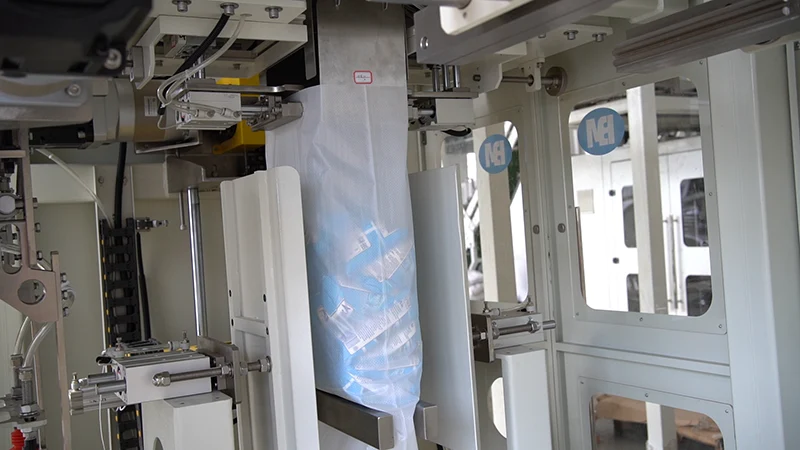
    Refined salt packets falling into secondary woven PP bag held by pneumatic clamps

    Need a steadier powder packaging result?

    If your current line struggles with feeding stability, seal cleanliness, or downstream bag handling, BIBPU gives you a more complete packaging chain. It is built to turn powder packaging from a sequence of weak handoffs into one controlled flow from dosing to dispatch.

    Talk to BPM about your powder line
  • Why a Vertical Packaging Machine for Bulk Products Fits Salt, Grain, and Powder Lines Better

    Why a Vertical Packaging Machine for Bulk Products Fits Salt, Grain, and Powder Lines Better

    Bulk bagging and secondary packing for salt, grain, and granules

    Why a Vertical Packaging Machine for Bulk Products Fits Salt, Grain, and Powder Lines Better

    When a plant needs cleaner dosing, steadier sealing, and fewer bagging interruptions, the weak point is usually not the recipe. It is the handoff between hopper, forming shoulder, sealing jaw, and downstream handling. A vertical packaging machine for bulk products is built to keep that chain stable so the line can run with less spill, less film sticking, and less manual correction.

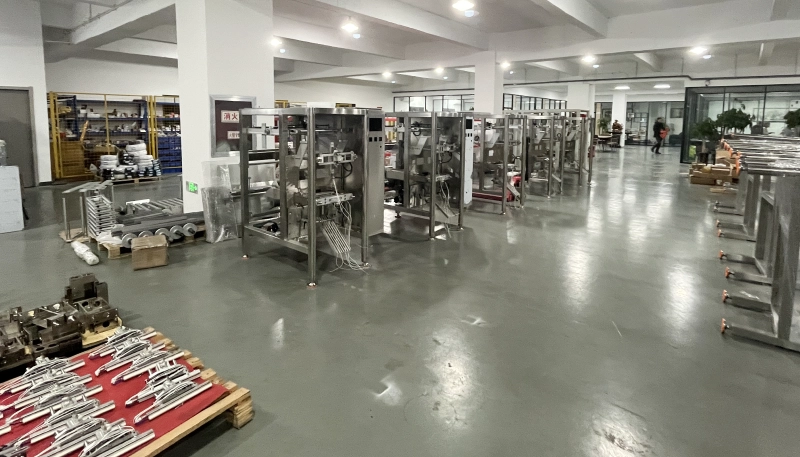
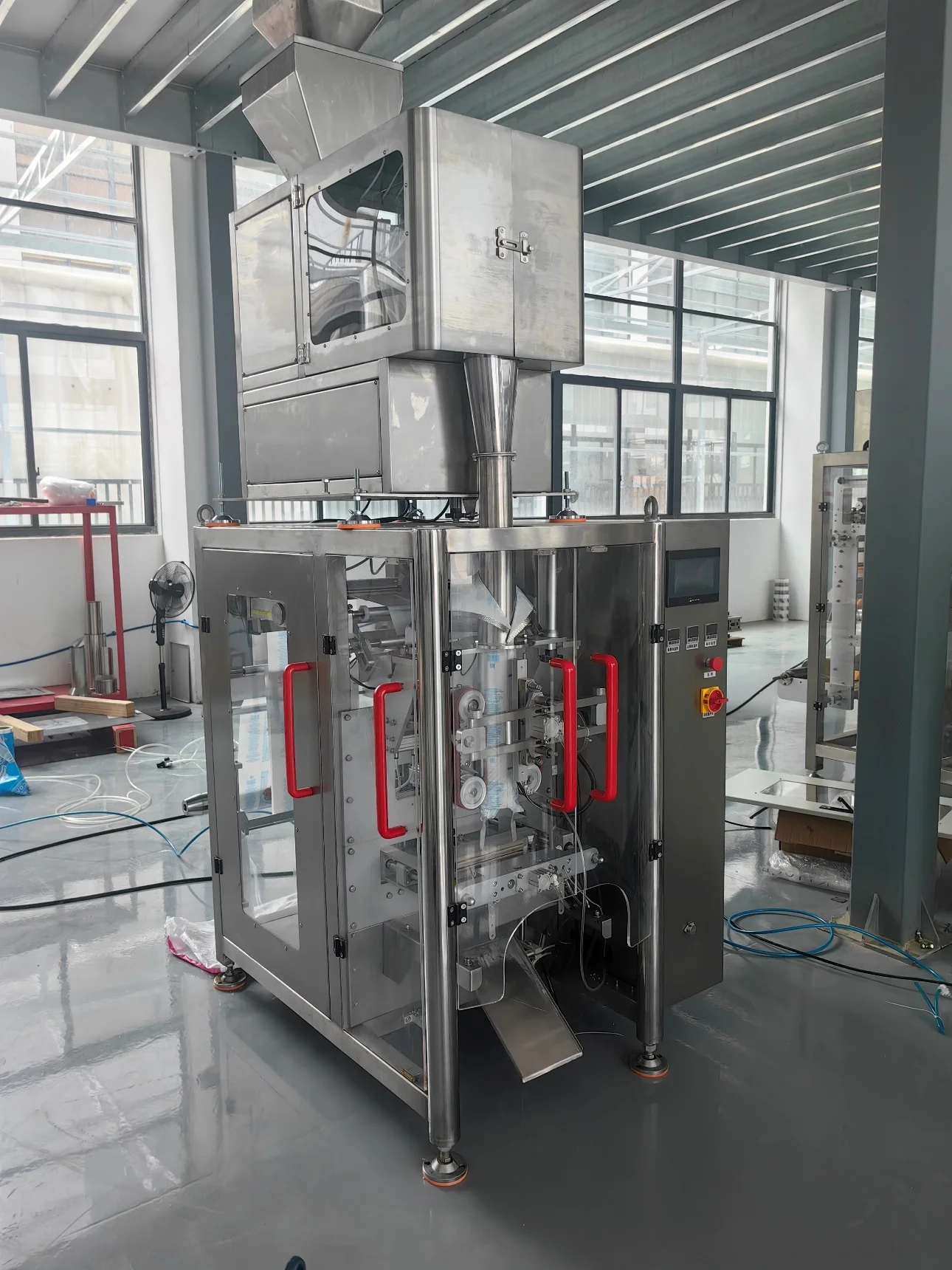
    Assembly line of vertical form fill seal machines with stainless steel frames in workshop

    Where the old bagging flow usually starts to fail

    Many bulk-product plants still rely on a mixed setup: a hopper that feeds unevenly, a bagging head that needs constant correction, and a sealing section that has to compensate for trapped air or drifting film. That works for short runs, but it becomes expensive when the product is fine, dusty, hygroscopic, or hard to keep level in the feed zone. Salt, rice, resin pellets, and powdered blends all expose the same problem: once the material stops moving consistently, the package stops looking consistent too.

    The practical issue is not only appearance. An unstable fill creates unbalanced bags, weak seals, and slow downstream handling. Operators then spend time clearing bridges, re-aligning film, and rechecking heat seal quality. For a plant that wants steady output, the answer is a packaging line that controls the material path instead of reacting to it.

    Row of four BPM vertical form fill seal machines with stainless steel hoppers
    Pain point

    Uneven feed, film sticking, and weak sealing usually come from mismatched machine sections rather than the product itself.

    Why this machine layout is a better match for bulk-product packaging

    The advantage of this vertical packaging machine is visible in the structure. The stainless hopper row keeps feed organized, the auger dosing zone stabilizes delivery, and the machine frame gives each station a fixed mechanical reference. That matters when the product is heavy, free-flowing, or sensitive to dust control. In the image set, the upper dosing systems and machine columns show that the line is designed as a controlled packaging path, not as a loose collection of accessories.

    The forming shoulder also matters more than many buyers expect. A dimpled stainless forming shoulder helps reduce film sticking when humidity rises or when the film needs to move smoothly through a long production run. That is the kind of detail that protects throughput. If the film drags, the line slows. If the film tracks poorly, the seal drifts. If the seal drifts, the bag looks acceptable at first but becomes a reject risk later.

    Operational note: Steadier output usually comes from smaller mechanical corrections at each stage, not from one large adjustment at the end of the line.

    Upper auger dosing systems and structural columns of four VFFS machines
    Dimpled stainless steel forming shoulder of VFFS machine to reduce film sticking

    What the sealing and discharge evidence tells you

    The sealing jaw image gives the clearest proof of why the line performs better on granular and bulk-product bags. Heat sealing is not only about temperature. It is about pressure balance, jaw alignment, and how well the bag is prepared before the seal closes. If the bag still carries too much air, the seal has to fight the package shape. If the jaw is not aligned, the seam quality changes from one cycle to the next. This is why the machine uses a controlled horizontal sealing section rather than a simple clamp-and-release motion.

    For bulk-product plants, the final result is straightforward: fewer manual corrections, cleaner bag edges, and more stable output from run to run. That helps not only the primary package but also the downstream handling stage. The line can feed secondary bagging, palletizing, or warehouse dispatch with less rework because the package shape is already under control.

    Line issueMachine responseResult on the floor
    Uneven hopper feedStainless hopper row and auger dosing sectionMore stable fill cycle
    Film drag in humid conditionsDimpled forming shoulderSmoother film travel
    Seal drift and weak seam qualityControlled horizontal sealing jawCleaner, more repeatable seal
    Manual rework after packingConsistent machine frame and station alignmentLess correction before dispatch
    Horizontal sealing jaw of VFFS machine sealing blue printed salt pillow pouch

    What the final result looks like

    For buyers packaging salt, grain, resin, or powder, the point of a vertical packaging machine is simple: keep the feed steady, keep the film moving cleanly, and keep the seal repeatable. When those three points are locked in, the whole line becomes easier to plan, easier to supervise, and easier to scale. That is the difference between a line that works in short bursts and a line that supports continuous production.

    For plants that need cleaner bagging and steadier output, the machine structure shown here gives a practical path forward: organized dosing, controlled film forming, reliable sealing, and a finish that is ready for dispatch.

    Talk to BPM about your bulk-product packaging line
  • How a Packaging Machine for Products Keeps Bulk Bagging and Woven-Sack Dispatch Steadier

    How a Packaging Machine for Products Keeps Bulk Bagging and Woven-Sack Dispatch Steadier

    BIBPU secondary packaging line

    How a Packaging Machine for Products Keeps Bulk Bagging and Woven-Sack Dispatch Steadier

    When a plant needs to move salt, resin pellets, grains, or powder from upstream bagging into a cleaner secondary sack flow, the weak point is usually not the filling head alone. It is the handoff: a bag that bulges, a mouth that shifts, dust that escapes, or a sewn sack that looks different from batch to batch. The BIBPU series is built to keep that whole chain steadier.

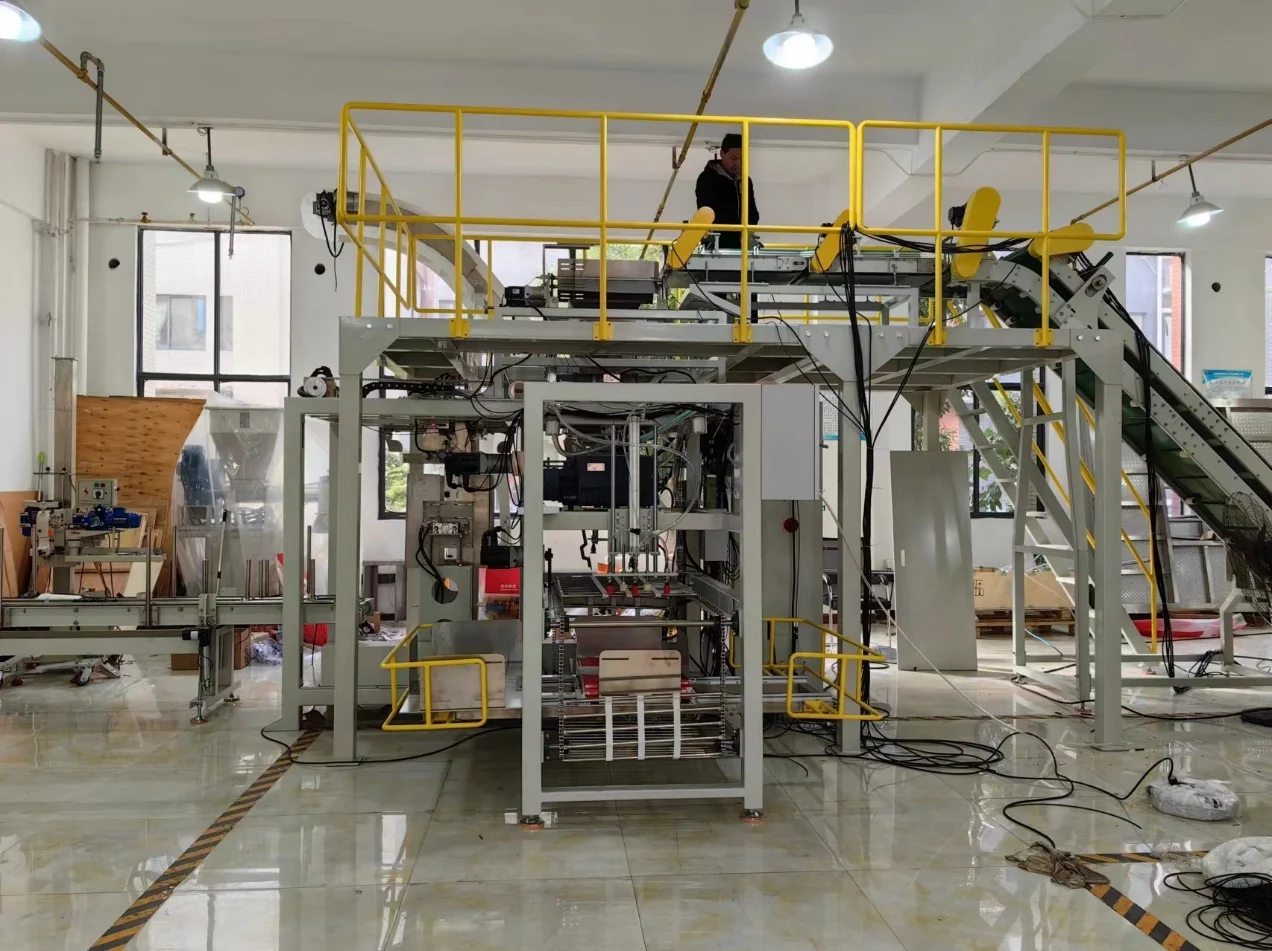
    Automated packaging workshop with inclined belt conveyors, steel platform, and multi-station control cabinets

    Why the old repacking flow starts to slip
    In many bulk-product plants, the first packaging step is not the last problem. After the primary pouch or inner pack is made, the line still has to collect, align, buffer, and load those packs into a woven sack or other outer container. If that step depends on loose manual handling, the output becomes uneven very quickly. Bags sit crooked, the mouth opens too wide, the stack gets soft, and the final sack looks underfilled or irregular.

    That is exactly where a purpose-built packaging machine for products has to do more than simply move material. It needs to guide the flow, hold the bag in place, and keep the transfer path consistent. The image set for BIBPU shows that the line is designed as a full secondary packaging unit, not as a single isolated machine. You can see conveyors, control cabinets, bagging sections, and a compact workshop layout built for continuous handling rather than stop-and-go repacking.

    Stainless steel auger dosing hopper with pneumatic butterfly valve and DIKAI coder controller
    Typical pain point

    Loose transfer, bulging bags, and inconsistent woven-sack loading usually create the same three costs: more labor, more rework, and more risk of damaged product during dispatch.

    Why BIBPU fits this application better

    BIBPU is aimed at the part of the process where products have already been packed once and now need a cleaner outer flow, better protection, and a steadier exit to storage or shipping. The line uses a controlled bagging path, pneumatic clamping, and a guided feeding sequence so the pack does not depend on operator timing alone. In the image index, the secondary PP sack filling station is shown holding the bag open with rubber-coated clamps while the inner packs fall in. That is the kind of control that reduces spillage and improves sack shape.

    The product series also emphasizes corrosion resistance and control stability. The contact parts are described as UNS S31603 (316L) stainless steel in the product library notes, which matters for salty or humid plants. The workshop and machine images also show industrial control cabinets, protective enclosures, and a layout intended for long-run operation. For operators, that means the line is not only about throughput. It is about keeping the work cleaner, safer, and more repeatable shift after shift.

    Field note: The line details matter. Dimpled anti-stick forming parts, tension-controlled film handling, IP65-style electrical protection, and a heavy-duty sewing head all point to one result: the outer sack reaches sealing and dispatch in a more stable shape.

    What the structure and photos prove

    The workshop overview shows the line as a connected system: feeding, bag handling, control, and end-of-line movement are all visible in one installation. That matters because a packaging machine for products should not create new bottlenecks while solving the old ones. If the bagging section is fast but the loading point is unstable, the whole line still fails. BIBPU avoids that by linking the handling steps together.

    The second image proves the transfer logic. The sacks are held open while the inner product drops in, which keeps the loading zone neat and reduces wasted motion. The third image proves the closing logic. A Newlong heavy-duty sewing head closes the woven sack opening after the bag has been filled and aligned, which is exactly the kind of finish a shipping-ready outer pack needs. The final result is a cleaner handoff from filling to closure and a steadier dispatch flow at the end of the line.

    ProblemBIBPU responsePhoto evidence
    Uneven bag loadingPneumatic bag holding and guided transfer keep the sack open and stable.Secondary PP sack filling station
    Dusty or messy handoffControlled conveyor and compact line layout reduce loose handling.Workshop overview with conveyors and control cabinets
    Corrosion and wear in harsh plants316L contact parts support humid, salty, or chemically demanding environments.Product family material note and machine build
    Weak final closureIndustrial sewing head closes the woven sack for shipping-ready output.Newlong sewing station

    Need a steadier secondary packaging line?

    If your current route is losing time at the bagging, filling, or closing stage, BIBPU is the kind of packaging machine for products that helps bring the whole transfer path back under control. It is built for cleaner handling, steadier sack output, and a more predictable dispatch result.

    Contact BPM
  • How a BIBPU Secondary Bag-in-Bag Machine Keeps Repacking Cleaner and Woven Sack Output Steadier

    How a BIBPU Secondary Bag-in-Bag Machine Keeps Repacking Cleaner and Woven Sack Output Steadier

    BIBPU secondary packaging line

    How a BIBPU Secondary Bag-in-Bag Machine Keeps Repacking Cleaner and Woven Sack Output Steadier

    When bulk bags or small retail packs need to be collected, repacked, and closed again, the problem is rarely the final stitch only. The real issue is how to keep the bags aligned, the air out, the opening stable, and the discharge steady enough for daily shipping. This BIBPU line is built for that exact handoff.

    Automated packaging workshop with inclined belt conveyors, steel platform, and multi-station control cabinets

    What usually goes wrong in secondary packaging

    In a manual or semi-manual repacking room, operators normally have to move finished bags, open a larger woven sack, hold the mouth by hand, drop products in one by one, flatten the load, and then send it to sewing. That process is slow, noisy, and sensitive to operator skill. If the bag mouth drifts, the fill becomes uneven. If too much air remains inside, the stack becomes unstable. If the discharge point is not controlled, the next station waits, and throughput falls.

    The BIBPU concept is designed to remove that instability. The line shown here combines automatic bag handling, guided transfer, compression, and final closing in one flow. Instead of treating secondary packaging as a loose manual step, it turns it into a controlled machine sequence.

    Upper auger dosing systems and structural columns of four VFFS machines
    Old method, clear pain

    Loose hand-fed repacking creates three direct costs: more labor per ton, more rework from bad alignment or poor deaeration, and more damage risk when sacks bulge or the mouth is not held square before stitching.

    Why this machine fits the job

    BIBPU works because every key motion has a mechanical reason. The bag handling area uses stable clamps and guided transfer so the sack opening stays square. The filling and settling section keeps the load centered instead of letting bags fall into a random pile. The compressing section pushes out trapped air before the closing station, which helps the finished sack sit flatter on pallets and in transport.

    The product-side evidence is visible in the image set: the secondary woven PP bag is held by pneumatic clamps while the small bags drop in from above, then the loaded sack is compressed by side plates before sewing. At the closing end, the Newlong sewing head gives a dependable industrial stitch for a filled woven sack. This is not a generic packaging line; it is a sequence built around secondary bag-in-bag work.

    Practical takeaway: if the upstream bags are already packed, the secondary machine must protect their shape, control the mouth, and keep the final sack tight. That is exactly where a guided clamp-and-close design performs better than a free-hand repacking table.

    Refined salt packets falling into secondary woven PP bag held by pneumatic clamps

    Structure, parameters, and evidence from the machine photos

    The photo set shows the important hardware decisions behind the line. The contact-side components use corrosion-resistant stainless steel where needed, which helps in dusty or corrosive environments. The control cabinet uses an IP65-rated layout with an HMI and safety devices, so operators can monitor the sequence without opening the machine. The sealing and compression stations rely on fixed guides, pneumatic motion, and thermal control instead of improvised manual adjustment.

    For the closing station, the evidence is even more direct: the woven sack mouth is guided to the sewing head, then stitched with industrial consistency. In the compression stage, the 150 mm side-cylinder motion shown in the index is enough to flatten the filled sack before sewing. That matters because a flatter sack is easier to stack, easier to load, and less likely to deform during dispatch.

    Problem on the floorBIBPU responsePhoto evidence
    Manual repacking is slow and inconsistentAutomatic bag handling and guided transferWorkshop line overview and transfer sections
    Sacks bulge before closingPneumatic compression and deaeration before stitchLoaded woven sack compression and foam guide details
    Final stitch quality varies by operatorIndustrial sewing head with controlled feedNewlong DS-9C sewing station
    Industrial Newlong sewing machine head stitching the opening of filled woven sack

    Final result: steadier repacking, flatter sacks, easier dispatch

    For plants that need to collect, repack, and ship bagged products in a woven outer sack, BIBPU gives the line a cleaner flow. The mouth is controlled, the load is settled, the air is reduced, and the closing station is no longer dependent on hand skill alone. That is what makes the output steadier from shift to shift.

    Request a BIBPU line layout
  • How a Russian Polymer Warehouse Built a Cleaner Granule Bagging Flow with an FFS Line

    How a Russian Polymer Warehouse Built a Cleaner Granule Bagging Flow with an FFS Line

    FFS line for polymer granules

    How a Russian Polymer Warehouse Built a Cleaner Granule Bagging Flow with an FFS Line

    When a warehouse has to turn incoming granules into stable bagged dispatch, the problem is rarely just filling. The real pain is the chain around it: feed, transfer, access, palletizing, and the constant risk of a line that forces too much manual handling.

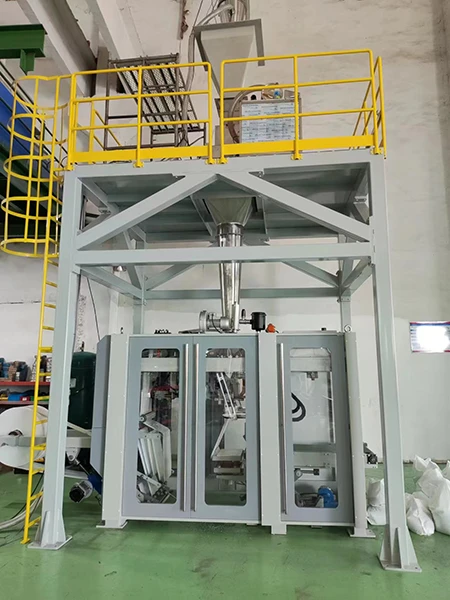
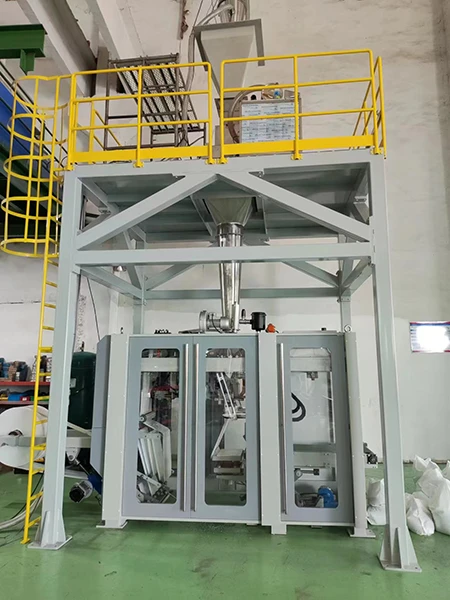
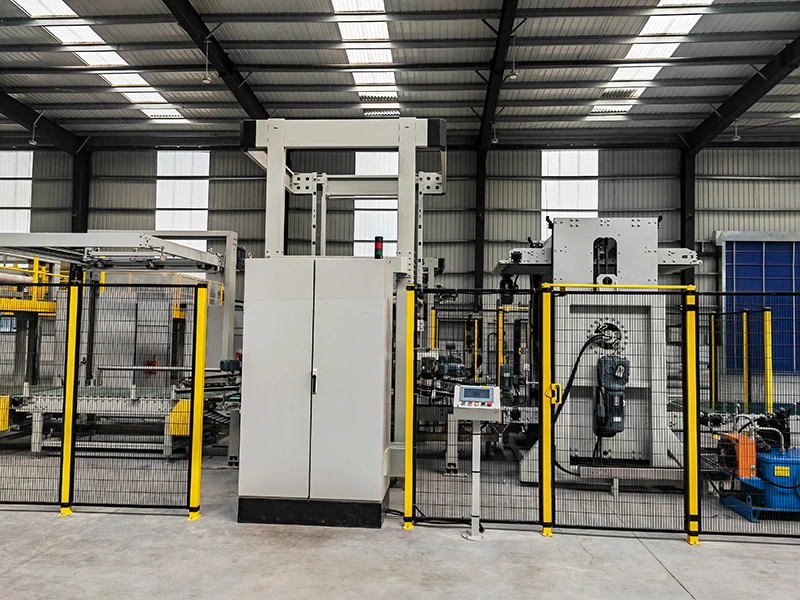
    Front view of FFS heavy-bag packaging machine with elevated platform, yellow safety rails, hopper, and enclosed cabinet

    Customer scenario: a busy polymer warehouse needs steadier bagging and dispatch

    A Russian polymer warehouse that handles granules usually works under a simple pressure: receive material, package it into bags, and move those bags out without creating a second bottleneck inside the building. If the old setup depends on scattered equipment, narrow access paths, or manual bag transfer, the line becomes hard to keep consistent.

    The challenge is not only output. It is also cleanliness around the filling point, safe access around moving equipment, and a layout that keeps forklifts, pallets, and operators from competing for the same space. That is why the FFS line has to work as a system, not as a single filler.

    FFS packaging line section with white machine frames, yellow guard rails, conveyors, and downstream handling units
    What usually goes wrong in the old scheme

    Manual bagging, exposed transfer points, and weak downstream coordination create uneven flow. The warehouse gets more touchpoints, more cleaning pressure, and more chances for bags to back up before palletizing.

    Why this FFS line fits the job

    The line in the photos is built around a clear idea: keep the bagging point organized, move material through an elevated and protected structure, and send finished bags into a downstream handling chain that does not rely on guesswork. The enclosed cabinet, the platform, and the guard rails help the operator zone stay controlled.

    The line section photo shows why the setup is practical for granules. White machine frames, conveyors, and downstream handling units make the path from filling to exit easier to follow. That matters in a warehouse environment because the operator does not need to improvise around each transfer. The process is more repeatable, and repeatability is what keeps dispatch steady.

    Why the structure matters: the elevated platform and safety rails are not cosmetic. They create service access, separate people from moving zones, and make the line easier to maintain in a real warehouse floor plan.

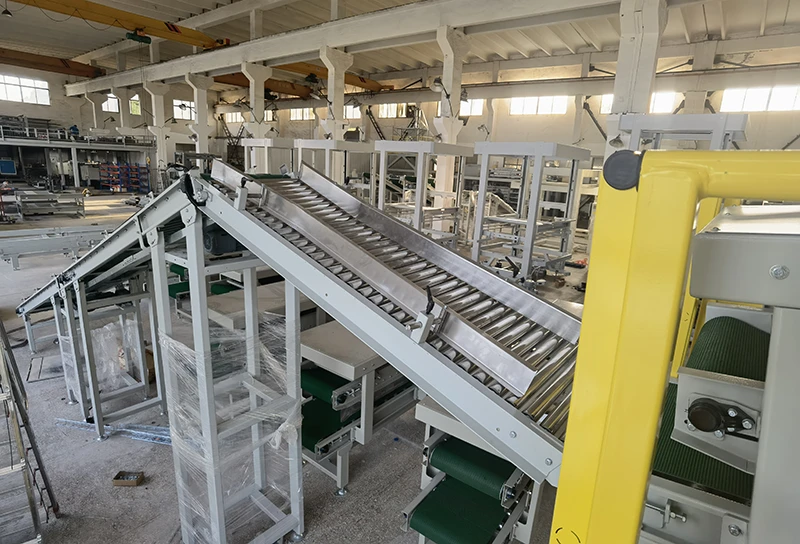
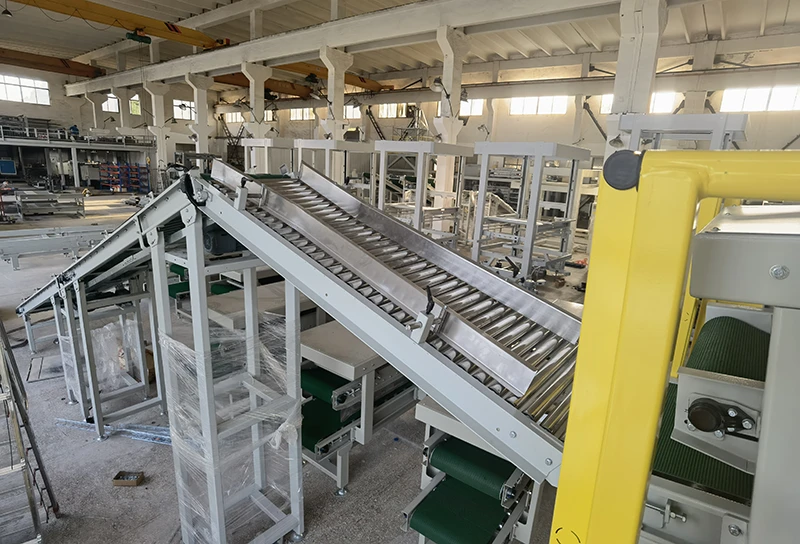
    Inclined conveyor and elevated platform section of an FFS packaging line in a production workshop

    Structure, flow, and evidence from the machine layout

    The inclined conveyor and elevated platform image adds a second proof point: the line is arranged for practical flow, not just for a showroom view. Granules move through a compact packaging chain, then into a transfer path that keeps finished bags moving toward the end of line.

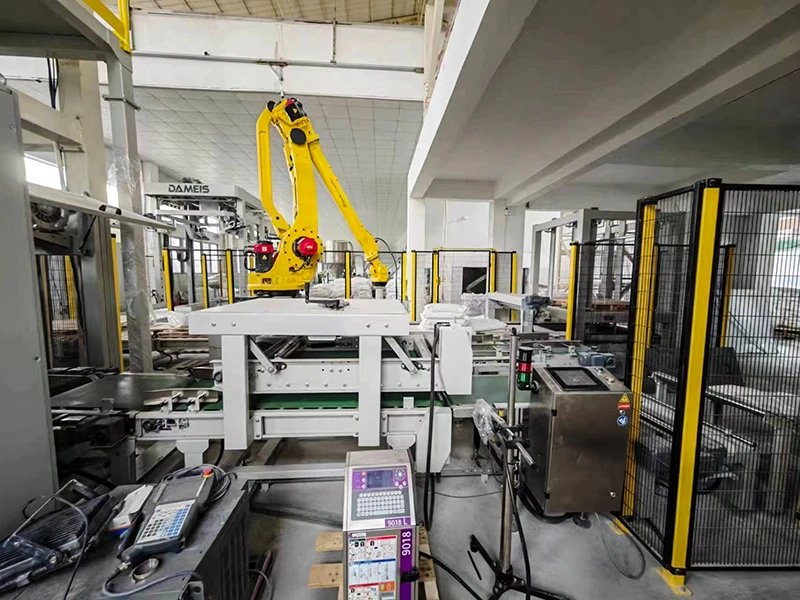
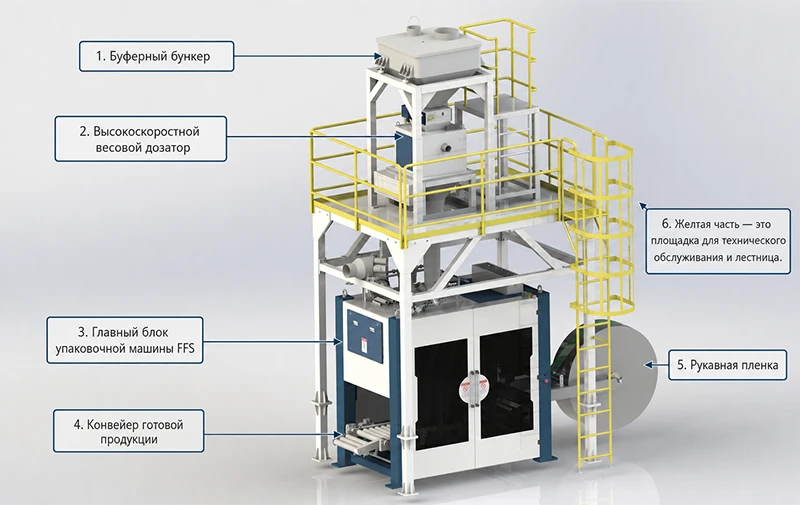
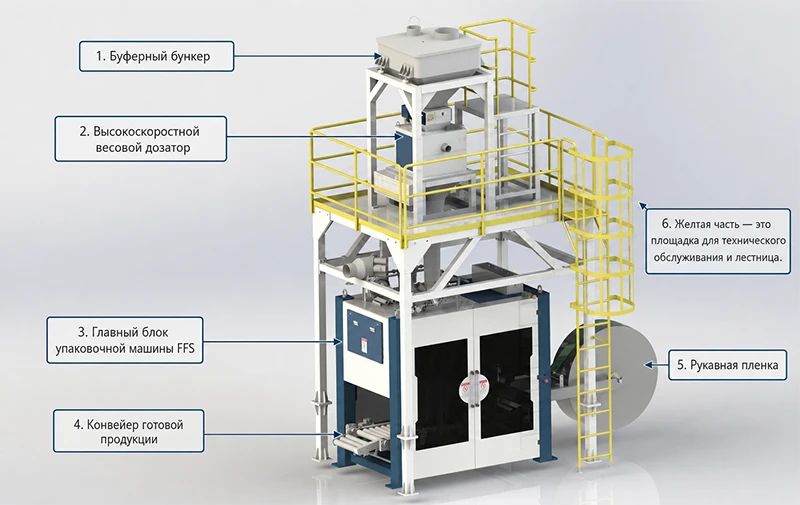
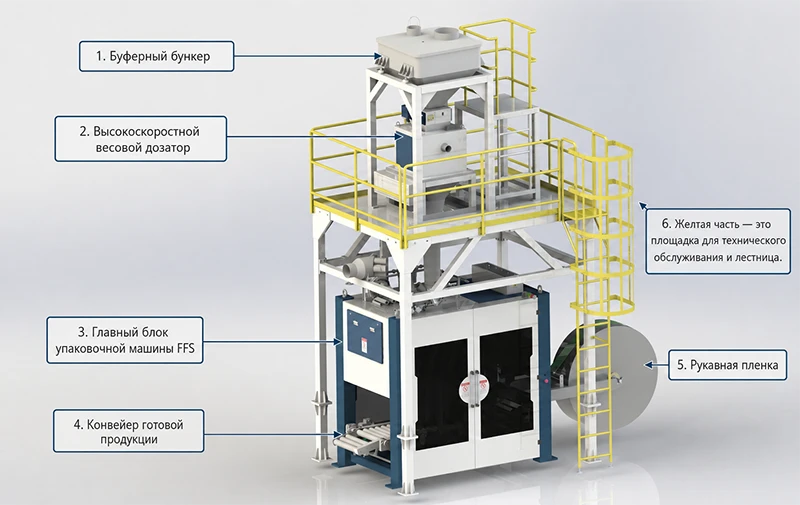
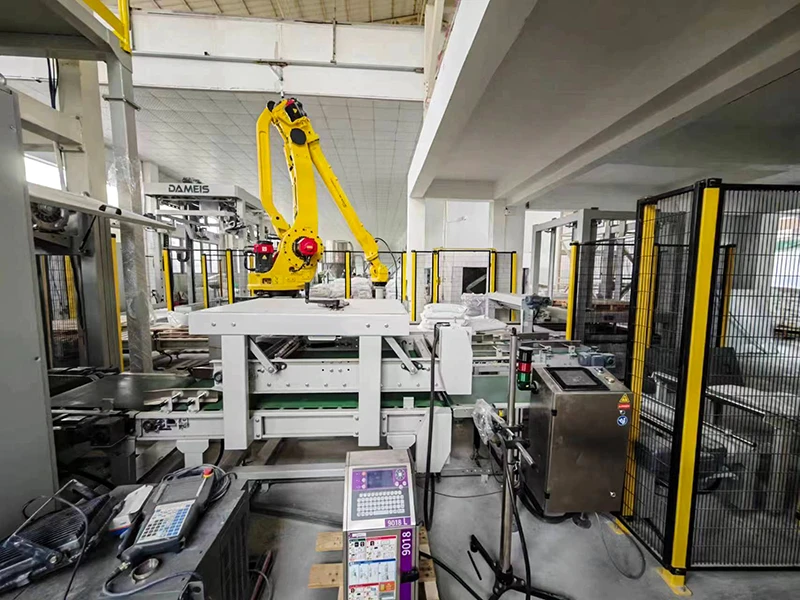
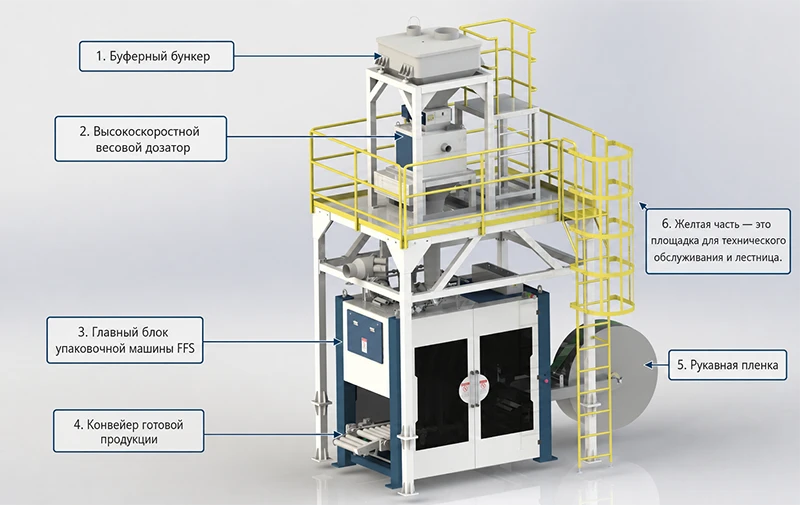
    At the back end, the robotic palletizing station shows how the line can reduce repeated manual lifting. Once bag output is stable, automated palletizing turns the warehouse from a handoff-heavy area into a coordinated dispatch zone. The annotated diagram then helps explain the machine modules: process section, frame, control area, film handling, and service points. Together, these photos show a line that is designed to be understood, serviced, and scaled.

    Image evidenceWhat it provesWhy it matters for a polymer warehouse
    Front machine viewEnclosed main body, hopper, platform, and guard railsCleaner operating zone and safer access around the bagging point
    Line section viewConveyors, frames, and downstream handlingMore consistent transfer from filling to dispatch
    Robot and annotated layoutAutomated palletizing and clear module identificationLess manual touch, easier maintenance, and better end-of-line control
    Robotic palletizing station connected to FFS packaging line with yellow robot arm, conveyors, and safety fencing
    Annotated FFS packaging machine diagram showing process modules, machine frame, control area, film handling, and service points

    When bagging must stay clean, safe, and steady, the line has to work as one system

    For a Russian polymer warehouse, the value of an FFS line is not just faster bagging. It is the ability to keep feed, transfer, palletizing, and service access aligned so the dispatch zone stays predictable under daily load.

    Talk to BPM about an FFS line
  • How a Russian Polymer Warehouse Stabilized Granule Bagging and Dispatch with an FFS Line

    How a Russian Polymer Warehouse Stabilized Granule Bagging and Dispatch with an FFS Line

    FFS line for granule bagging

    How a Russian Polymer Warehouse Stabilized Granule Bagging and Dispatch with an FFS Line

    For a polymer warehouse handling granules, the problem is rarely the bag itself. It is the handoff: hopper feed that surges, bag forming that drifts, access that slows operators down, and an end-of-line flow that creates more rework than dispatch. A correctly arranged FFS line turns those weak points into a controlled sequence.

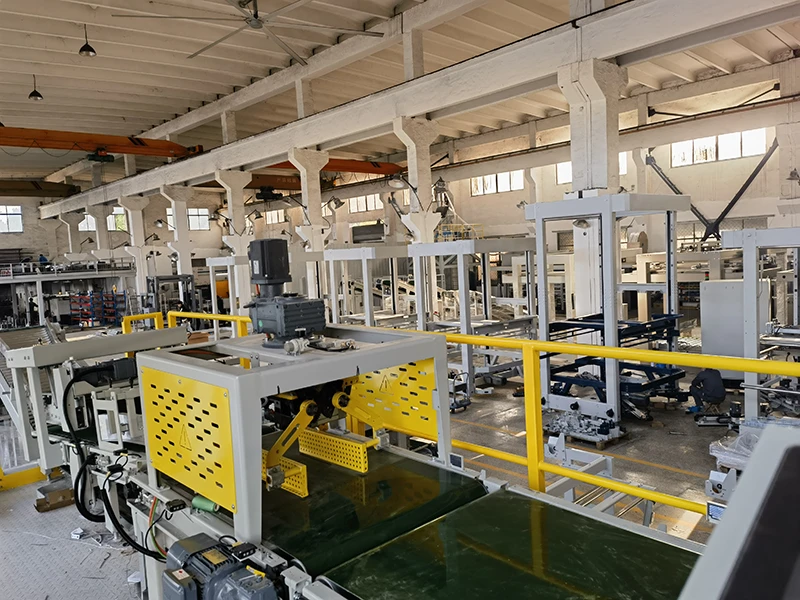
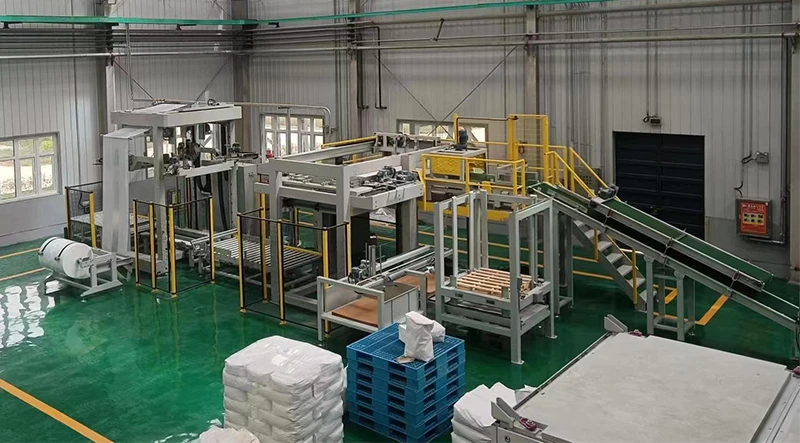
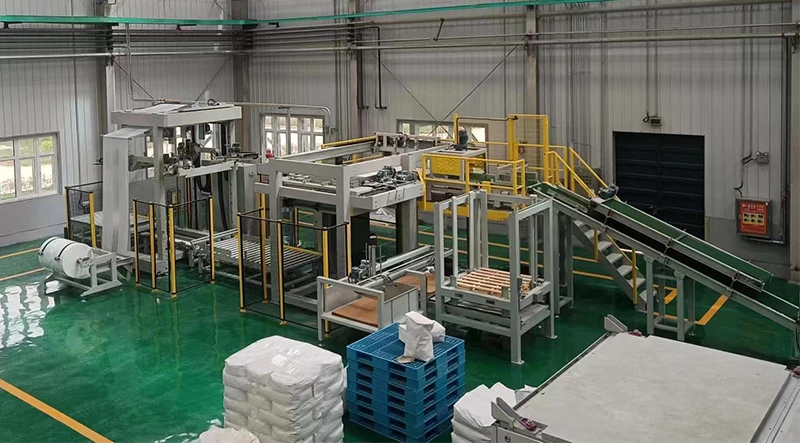
    Workshop panorama of FFS packaging system with white frames, yellow rails, green conveyors, pallets, and bag output area

    Why the old bagging setup struggled

    The customer side was typical for a granule warehouse: bags had to move quickly from filling to sealing to dispatch, but the old workflow depended on too many manual transfers and too much operator timing. When granules are dense and free-flowing, even a small mismatch between feed, film handling, and discharge creates spill risk, dust, and uneven bag quality. The result is slower loading, more cleanup, and a dispatch lane that keeps waiting for the next stable batch.

    The production photo from the line shows why the issue cannot be solved by a single machine change. The process needs a linked structure: a clear bag forming and filling zone, protected access, continuous outfeed, and a downstream palletizing point that does not choke the line.

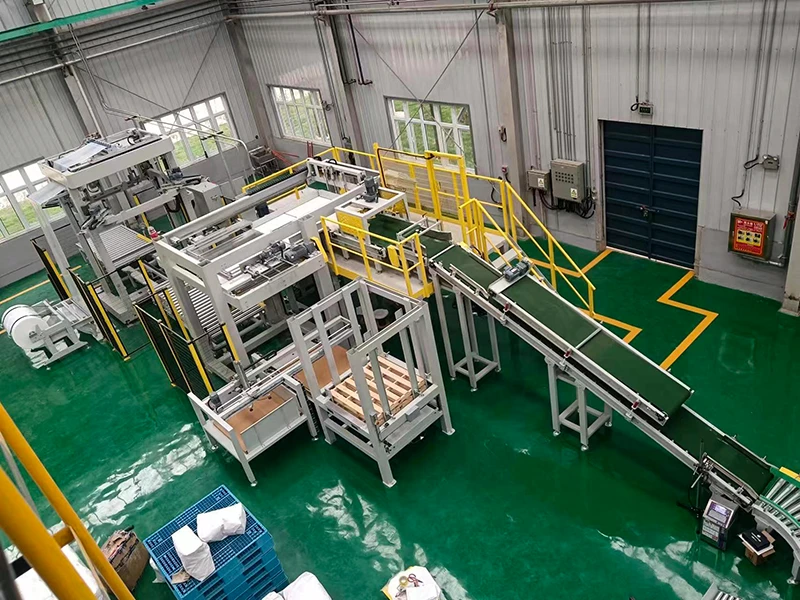
    High-angle view of FFS packaging line on green factory floor with conveyors, platforms, and bag handling area
    Core pain point

    Granule filling is only stable when the hopper, bag-forming section, transfer conveyor, and palletizing area are designed as one flow. If any part is undersized or too exposed, the warehouse pays for it in dust, downtime, and rework.

    Why this FFS line fits granule packaging

    The pictured FFS line answers those problems with a straightforward industrial layout. The elevated working platform keeps the operator interface accessible without crowding the machine. The enclosed frame and safety rails reduce accidental interference. The machine module structure makes the bag-forming and filling section easier to control, while the downstream conveyor and robotic palletizing station keep filled bags moving instead of stacking up at the exit.

    That is the main reason this setup is suitable for a polymer warehouse: granules need repeatable handling, not improvisation. The line supports a cleaner fill-to-dispatch path and gives maintenance staff enough access around the machine to keep the process stable during long shifts.

    What the structure proves: the line is not just a packaging frame; it is a controlled system with platform access, guard protection, film-handling modules, and an end-of-line palletizing station built into the workflow.

    Structure, parameters, and image evidence

    The annotated diagram makes the machine logic easy to read: process modules, frame, control area, film handling, and service points are separated into distinct zones. That separation matters in granule work because the operator must see where the package is formed, where the bag is filled, and where routine checks are performed. It also helps when the line needs to be discussed with maintenance, production, and dispatch teams at the same time.

    The robot palletizing image adds the final proof. Once the bags leave the filling section, they do not need to wait in a manual queue. Instead, they can be handed over to an automated downstream station. For a warehouse shipping polymer granules, this is where the line stops being just a bagging machine and becomes a dispatch system.

    Annotated FFS packaging machine diagram showing process modules, machine frame, control area, film handling, and service points

    What the warehouse gained in the end

    After the line was arranged around the granule flow instead of around manual convenience, the warehouse gained a steadier output rhythm, cleaner bag transfer, and a more predictable dispatch lane. The main change was not just speed; it was control. Bags moved through the line in a repeatable sequence, operators had safer access, and the downstream palletizing point reduced the chance of the exit area becoming a bottleneck.

    For buyers in the same situation, the lesson is simple: if the material is granule, the packaging line must be judged by the full path from hopper to pallet, not by the filling head alone. An FFS line with clear structure and linked downstream handling is the safer way to keep output steady and dispatch on time.

    AreaObserved issueFFS line response
    Hopper feedSurging material and unstable timingControlled feed path inside a full line layout
    Bag formingManual drift and uneven accessDefined film-handling and service zones
    OutfeedBag pile-up at the exitConveyor handoff to downstream handling
    DispatchWarehouse bottleneck before loadingRobotic palletizing station for steadier output

    Need a granule bagging line that holds the flow?

    If your warehouse is packaging polymer granules and the current process is still losing time at the handoff points, an FFS line with a clear structure, protected access, and downstream palletizing can make the whole shift easier to manage.

    Request a packaging line discussion
  • How a Russian Polymer Warehouse Stabilized Granule Bagging and Dispatch with an FFS Line

    How a Russian Polymer Warehouse Stabilized Granule Bagging and Dispatch with an FFS Line

    FFS line for granule packaging

    How a Russian Polymer Warehouse Stabilized Granule Bagging and Dispatch with an FFS Line

    For a Russian polymer warehouse handling granules, the real bottleneck was not only filling bags. The problem was the full handoff chain: hopper feed, bag forming, discharge, transfer to the conveyor, and final dispatch. An FFS line fits this scene because it keeps the workflow continuous, visible, and easier to control from the first fill to the last pallet move.

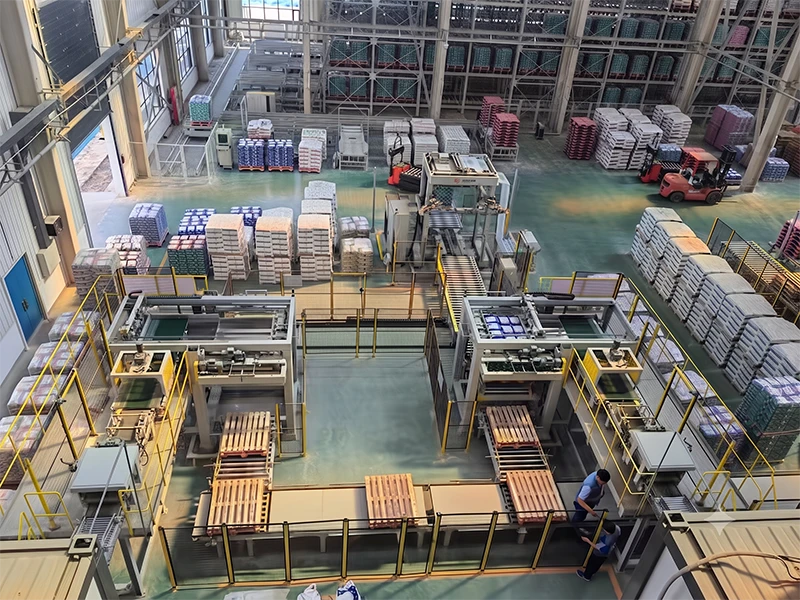
    Overhead view of an FFS granule packaging line with conveyors, platforms, palletized materials, and forklift lanes

    Why the old granule bagging setup kept creating friction

    In many polymer warehouses, the old solution is a patchwork of manual bagging, short conveyors, and ad hoc transfer points. That kind of setup can work at low volume, but it usually starts to fail when dispatch rhythm becomes strict. Bags arrive unevenly, operators need more touch points, and the line becomes harder to keep safe around loading lanes and pallet movement.

    The first image shows the opposite direction: a planned FFS layout with clear conveyor routes, elevated working space, and room for forklift lanes. That is exactly why this kind of line suits granule packaging. The workflow is not improvised around the machine; the machine is arranged around the workflow.

    Front view of FFS heavy-bag packaging machine with elevated platform, hopper, safety rails, and enclosed cabinet
    Main pain point

    When bagging, transfer, and dispatch are separated, the warehouse loses consistency. When operators must work around exposed equipment, safety and maintenance also become a daily concern.

    Why this FFS line matches granule packaging in a warehouse scene

    The front-view machine photo explains the core fit. A raised service platform improves access, the hopper keeps feed organized, the guard rails protect the operator zone, and the enclosed cabinet helps the line stay cleaner and easier to manage. For granules, that matters because the material flow needs to stay steady; otherwise, downstream packing and dispatch inherit the instability.

    The second line image adds another proof point: the machine section, guard rails, conveyors, and downstream handling units are visually linked in one chain. This is not a stand-alone filler. It is a packaging system built for transfer continuity. In practical terms, that means fewer awkward handovers, clearer operator access, and a better base for stable dispatch planning.

    What the pictures prove: the line is arranged as one controlled workflow, not a collection of isolated devices. That is the real reason it suits a polymer warehouse with granule output.

    Structure, layout, and the result after integration

    The overhead layout image gives the clearest evidence of the final result. The conveyors, platforms, palletized materials, and forklift lanes are all visible in one frame, which means the packaging line was planned together with the warehouse traffic. That reduces confusion at the packing station and makes dispatch easier to coordinate.

    For granule producers, that is the practical value of an FFS line: stable feeding, controlled bag formation, clear transfer routes, and more predictable end-of-line movement. The result is not just faster packing. It is a cleaner operating rhythm, safer access, and fewer interruptions when the warehouse needs to keep orders moving.

    Image evidenceWhat it supports
    Overhead layout with conveyors and forklift lanesShows the line was designed for warehouse traffic and dispatch flow.
    Front view with hopper, platform, and safety railsShows organized feed, easier access, and protected operator space.
    Section view with conveyors and downstream handlingShows the packaging chain stays connected from filling to transfer.

    Need a steadier granule packaging line for your warehouse?

    If your current setup still depends on too many handoffs, an FFS line can help convert granule bagging into one cleaner, safer, and more predictable flow from hopper to dispatch.

    Request a layout discussion
  • How an FFS Line Helped a Russian Polymer Warehouse Keep Polypropylene Granule Bagging and Dispatch Steadier

    How an FFS Line Helped a Russian Polymer Warehouse Keep Polypropylene Granule Bagging and Dispatch Steadier

    FFS line for polypropylene granules

    How an FFS Line Helped a Russian Polymer Warehouse Keep Polypropylene Granule Bagging and Dispatch Steadier

    For a warehouse handling polypropylene granules, the main issue was not only filling bags. The real pain was unstable hopper feed, dust and spillage at transfer points, slow manual bag handling, and a dispatch lane that kept getting interrupted by handoffs. An FFS line with a guarded filling section, elevated access platform, integrated conveyor flow, and clearer maintenance access gives the site a more controlled packaging rhythm from feed to palletizing.

    Close factory view of FFS bag forming and filling section with guard rails, machine frame, and side conveyor for polypropylene granules

    Old bagging routines were too exposed for a polymer warehouse

    The customer scenario was simple on paper: receive polypropylene granules, package them into bags, move them out, and keep the line stable through the shift. In practice, the old setup depended too much on manual positioning and repeated handling. Bags were moved by hand at too many points, the feed rhythm changed whenever operators paused to adjust, and the site kept losing time at the transition between filling, transfer, and dispatch.

    That kind of workflow is acceptable when volumes are small. Once the warehouse needs steadier output, the weak points become obvious. Open transfer areas create more mess around the filling zone, the operator has to stand too close to moving parts, and the packing area becomes difficult to keep clean during a long run. For polypropylene granules, those issues matter because the site wants a predictable bagging rhythm, not a line that slows down every time the handling gets awkward.

    Inclined conveyor and elevated platform section of an FFS packaging line in a production workshop for polypropylene granule dispatch
    What usually breaks first

    Unstable feed, exposed transfer points, slow bag movement, and poor access around the machine frame are the first reasons a bagging area starts to feel inefficient.

    Why the FFS line fits this polypropylene granule workflow

    The reason the FFS line fits this job is visible in the structure. The filling area is enclosed, the machine body is organized around a clear process path, and the elevated platform gives operators a safer way to access the working zone without crowding the discharge side. That makes the packaging line easier to manage in a warehouse environment where traffic, storage, and dispatch all overlap.

    The line also helps the site keep the process moving in one direction. Instead of stopping at each manual handoff, the bagging section, conveyor section, and downstream handling area work as one continuous sequence. That is important for polypropylene granules because the customer does not need a showcase machine; they need steady throughput, cleaner movement, and fewer interruptions between fill and exit.

    Practical point: the visible platform, guard rails, and side conveyor are not decoration. They are the structure that lets the warehouse keep the operator away from the most exposed points while still maintaining access for changeover and routine checks.

    Structure evidence and the final result

    The image set supports the same conclusion from different angles. The close filling view shows the guarded bag-forming area and side conveyor. The elevated platform image shows how the line handles access and transfer. The wide workshop view confirms that the machine footprint, service space, and auxiliary equipment are organized for a real plant, not a lab demo. The annotated structure image makes the layout even clearer: process modules, control area, film handling, and service points are all separated logically.

    For the Russian polymer warehouse, that matters because the output requirement is not just filled bags. The site wants cleaner bagging, safer access, steadier dispatch, and less time wasted correcting the same handling issues shift after shift. Once the FFS line replaces the older manual routine, the packaging area becomes easier to supervise and the delivery side gets a more predictable flow.

    Warehouse issueFFS line responseResult
    Too many manual handoffs around bagging and transferContinuous filling and conveyor-linked flowSteadier output and fewer interruptions
    Exposed operator position near the working zoneGuard rails, enclosed machine body, and elevated accessSafer access and cleaner working discipline
    Unstable dispatch rhythm after fillingIntegrated downstream handling and clearer line layoutMore predictable bag movement to the next step
    Annotated FFS packaging machine diagram showing process modules, machine frame, control area, film handling, and service points for polypropylene granule bagging

    Need steadier bagging for polypropylene granules?

    If your warehouse is still losing time at the filling, transfer, or dispatch stage, the next step is to map the feed path, operator access, and downstream handling together. An FFS line is most useful when it replaces repeated manual movement with a controlled and readable flow.

    Discuss your packaging line
  • How a Russian Polymer Warehouse Standardized Bagging and Dispatch with an FFS Line

    How a Russian Polymer Warehouse Standardized Bagging and Dispatch with an FFS Line

    FFS line for a polymer warehouse operation

    How a Russian Polymer Warehouse Standardized Bagging and Dispatch with an FFS Line

    When a warehouse must move polymer bags from filling to transfer and dispatch without creating bottlenecks, the line layout matters as much as the machine itself. This project shows how an FFS line can connect bag forming, filling, safe access, and end-of-line palletizing into one orderly flow.

    Workshop panorama of FFS packaging system with white frames, yellow rails, green conveyors, pallets, and bag output area

    What the site needed before the upgrade

    The customer’s situation was typical for a busy polymer storage and shipping site: bags had to be formed, filled, moved, and prepared for dispatch with less manual handling and fewer interruptions. The old arrangement created the usual friction points. Bag transfers were too dependent on operators. Access around the machine was cramped. The end of the line lacked a clean visual structure, so the warehouse team had to work around the flow instead of with it.

    An FFS line is a better fit when the goal is not only to package material, but to keep the entire handling chain readable and controlled. The line must support stable filling, clear movement paths, safe maintenance access, and a visible discharge area that can connect to downstream palletizing or temporary staging.

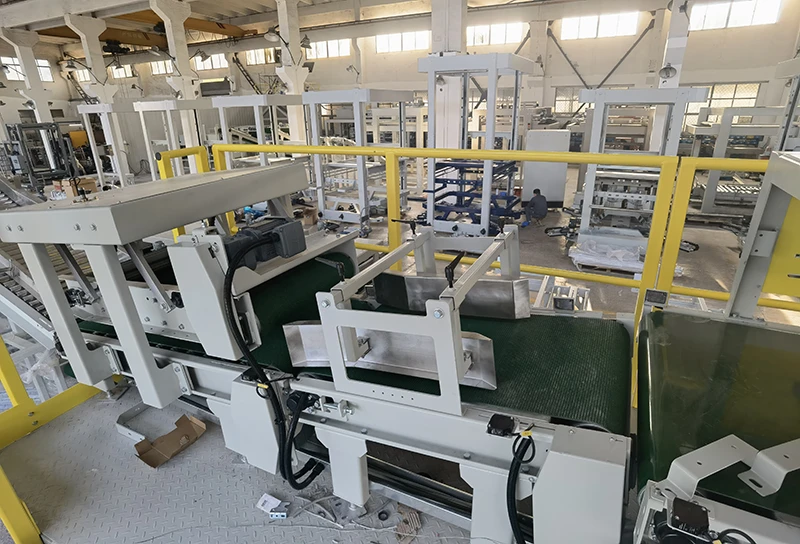
    Wide workshop view of FFS main machine, service platform, safety posts, and auxiliary packaging equipment
    Old-scheme pain points

    Manual handoffs slow dispatch. Exposed movement zones make access awkward. A mixed machine layout makes it hard for operators to understand where filling ends and downstream handling begins. In a polymer warehouse, those issues quickly turn into uneven output and avoidable labor pressure.

    Why the FFS layout fits this polymer warehouse use case

    The photo set makes the match easy to see. The main frame is built as a defined machine body, the service platform lifts operators out of the active zone, and the safety rails keep access organized. That matters because bagging lines fail in the margins: poor access, unclear walkways, and uncontrolled transfer points create more trouble than the filling process itself.

    The same logic continues at the end of the line. The conveyor path and robot palletizing station create a cleaner handoff from packaged bag to dispatch preparation. Instead of relying on ad hoc movement, the warehouse gets a visible sequence: fill, release, transport, stack. That is the practical reason an FFS line performs well in polymer handling environments.

    Field note: In bagging projects like this, the value is not only throughput. It is the combination of controlled material flow, safer operator access, and a line structure that makes dispatch easier to manage every shift.

    Annotated FFS packaging machine diagram showing process modules, machine frame, control area, film handling, and service points

    Structure, access, and discharge: the evidence in the images

    The annotated diagram shows the parts that matter most for a warehouse team: process modules, the machine frame, the control area, film handling, and service points. The workshop images then confirm how those modules behave in real space. You can see the elevated platform, the yellow protection rails, and the compact arrangement of the line inside a production floor.

    The palletizing image adds the final proof point. It shows that the line does not stop at filling. It continues into downstream handling, where the finished bags can move into a more predictable dispatch rhythm. That is exactly what a polymer warehouse needs when labor consistency and output regularity are both important.

    Robotic palletizing station connected to FFS packaging line with yellow robot arm, conveyors, and safety fencing

    What changed after the line was organized this way

    Once the FFS line was arranged around controlled bagging, clearer transfer points, and a visible end-of-line stack area, the warehouse could treat packaging as a continuous process instead of a series of disconnected tasks. That typically means steadier bag output, fewer awkward manual moves, and better operator confidence around the machine.

    For polymer storage and dispatch, that is the real result. The warehouse does not just get a machine. It gets a working layout that supports the daily rhythm of filling, transport, and shipping preparation. The line becomes easier to understand, easier to supervise, and easier to keep steady over time.

    Observed needImage evidencePractical result
    Cleaner bagging flowFFS main machine and workshop layoutMore orderly filling and transfer
    Safer accessService platform and safety railsBetter maintenance and operator movement
    Clear process logicAnnotated module diagramEasier understanding of each function
    Steadier dispatchRobot palletizing stationMore predictable end-of-line handling

    Planning a polymer bagging line with safer access and steadier dispatch?

    If you need an FFS line for polymer bags, we can help you match the machine layout to your warehouse flow, access requirements, and downstream handling needs.

    Discuss your line layout