
How a 10 kg Bagging Line Keeps Woven Sack Dispatch Steadier in a Bulk Products Workshop
For bulk powders and granules packed into 10 kg woven sacks, the real problem is rarely the bag itself. The real problem is unstable feed, inconsistent bag handoff, and a discharge area that slows down every shift. This line layout shows how a compact bagging system can turn that weak point into a stable workflow.
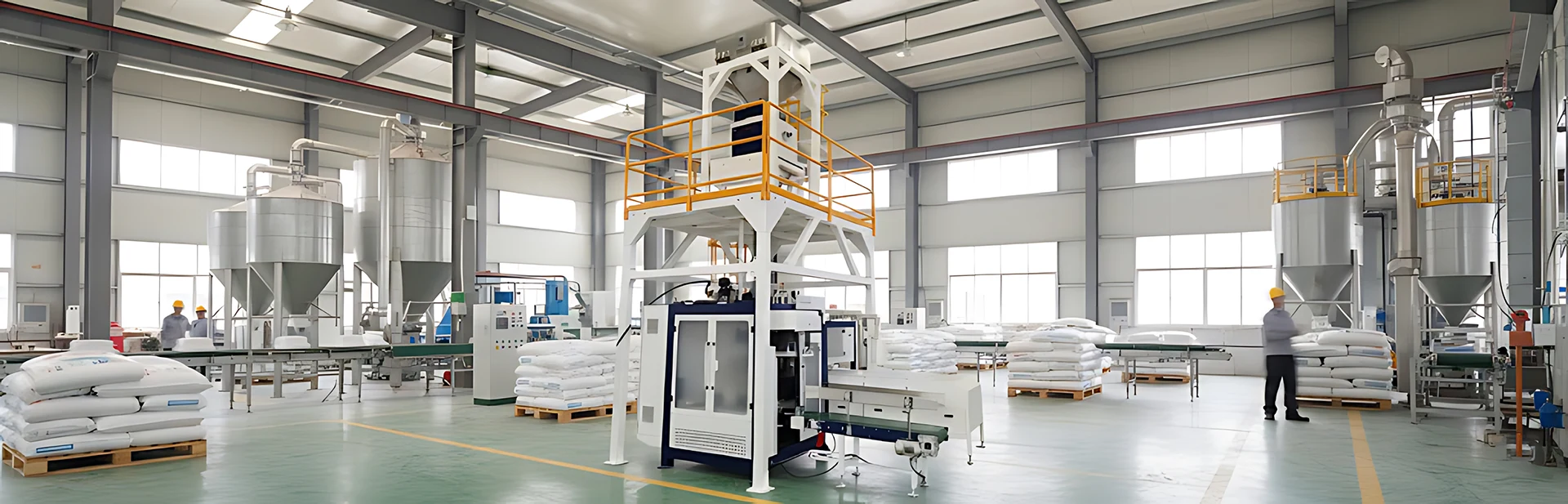
When 10 kg bags start to drift, the whole dispatch area pays for it
In many workshops, the old scheme is simple: a worker feeds material, another worker catches the bag, and a third one moves finished sacks away. That may work for a short run, but it usually breaks down at the same points: uneven dosing, bag mouth misalignment, dust around the fill zone, and stop-start pallet flow.
The better fit is an automatic packaging line built around controlled feeding, a firm bag-clamping point, and a clean outfeed path. For 10 kg woven sacks, that means the machine does not need to be oversized; it needs to be stable, easy to align, and fast enough to keep the team from waiting on the next sack.
Manual bag handling makes the process sensitive to operator skill. Once the sack size changes, the fill point shifts, the bag twist gets worse, and the outfeed area becomes the bottleneck. That is why a 10 kg line should be judged by handoff quality first, not only by speed.
Why this ppline layout fits 10 kg dispatch better
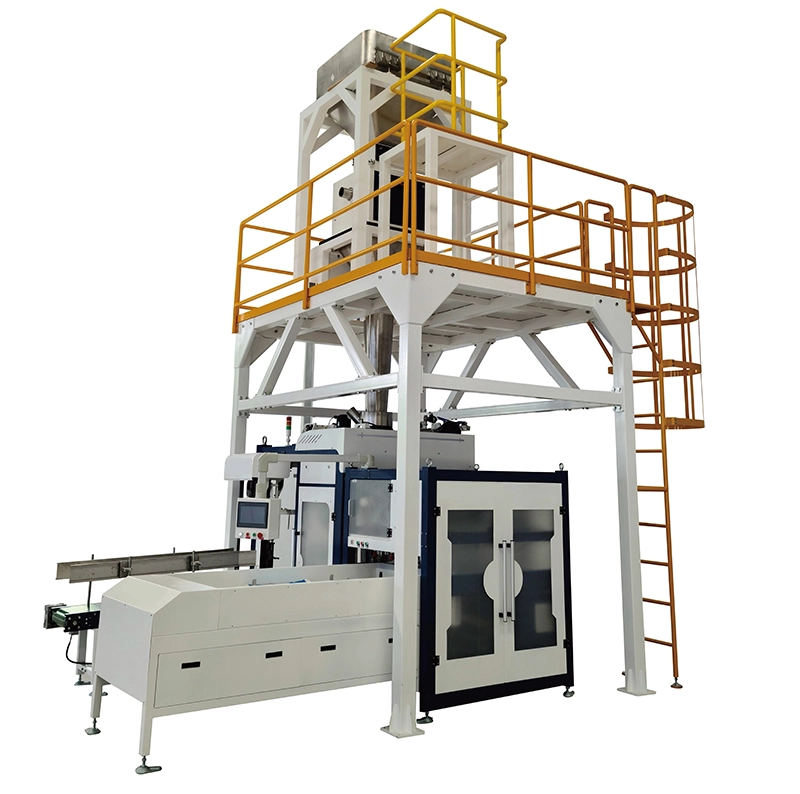
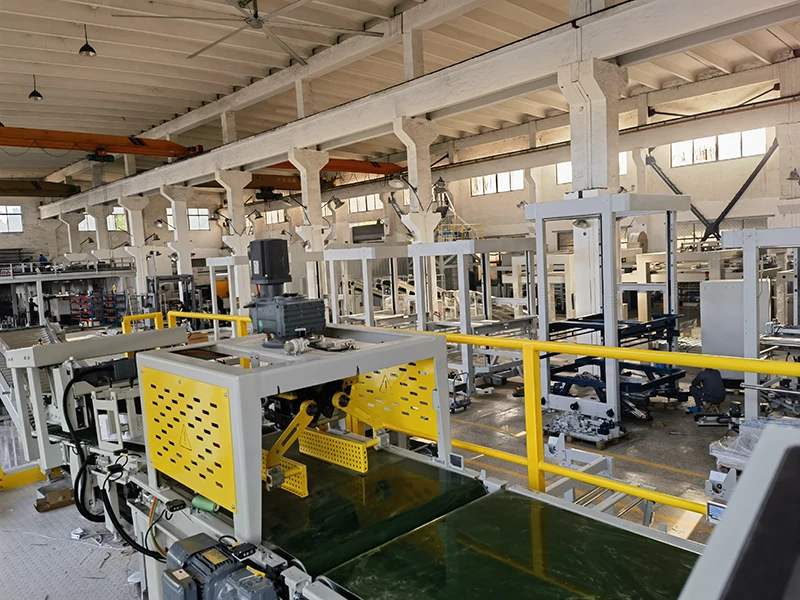
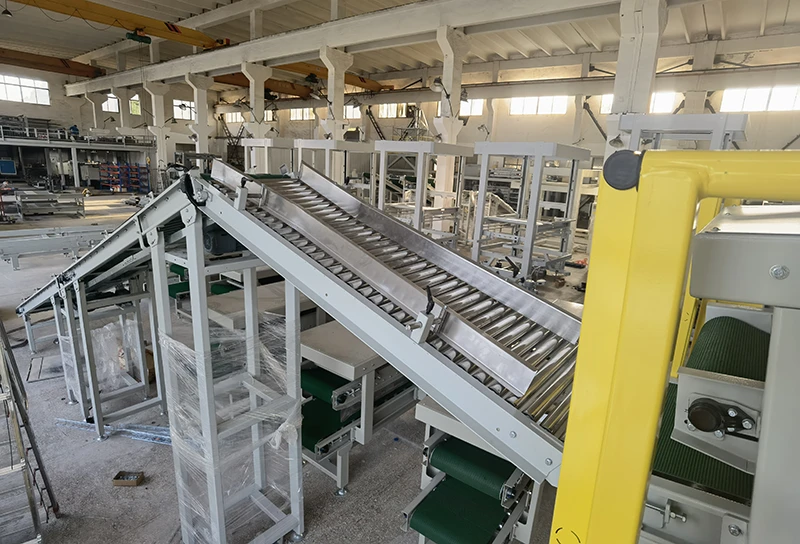
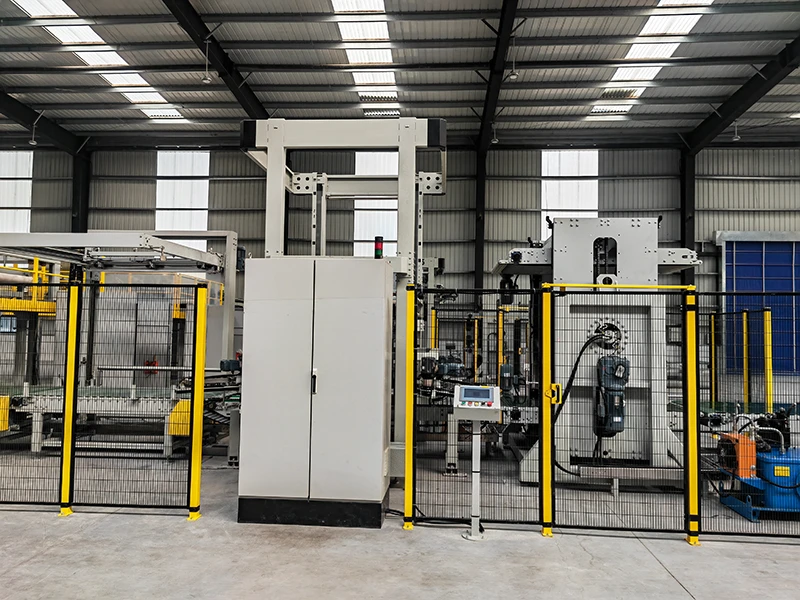
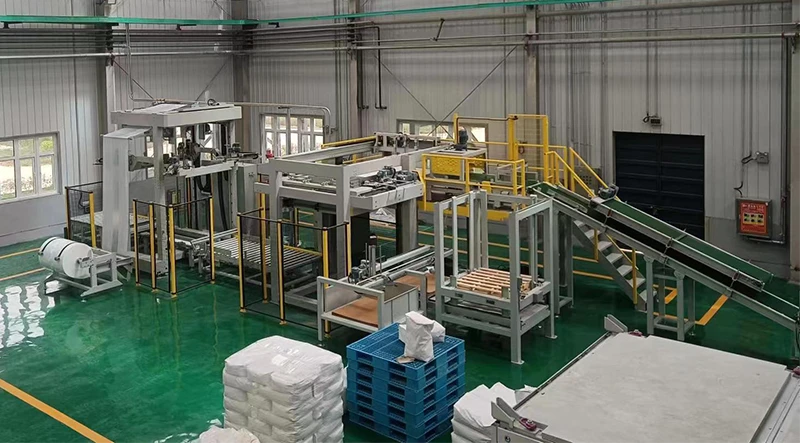
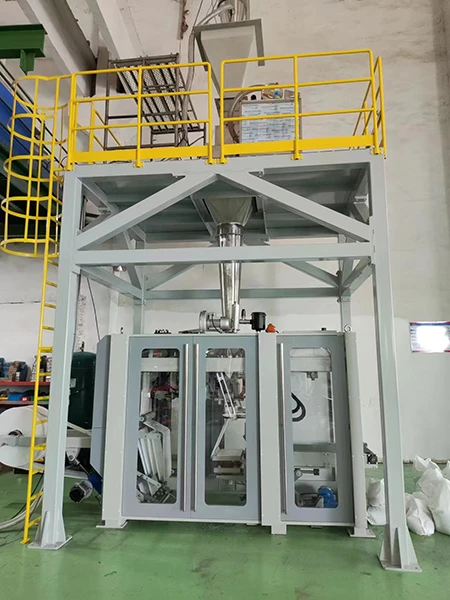
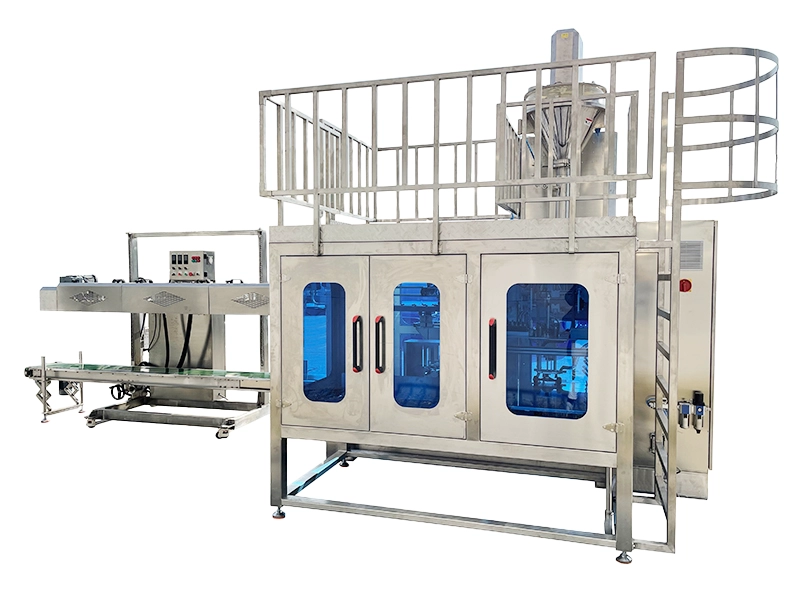
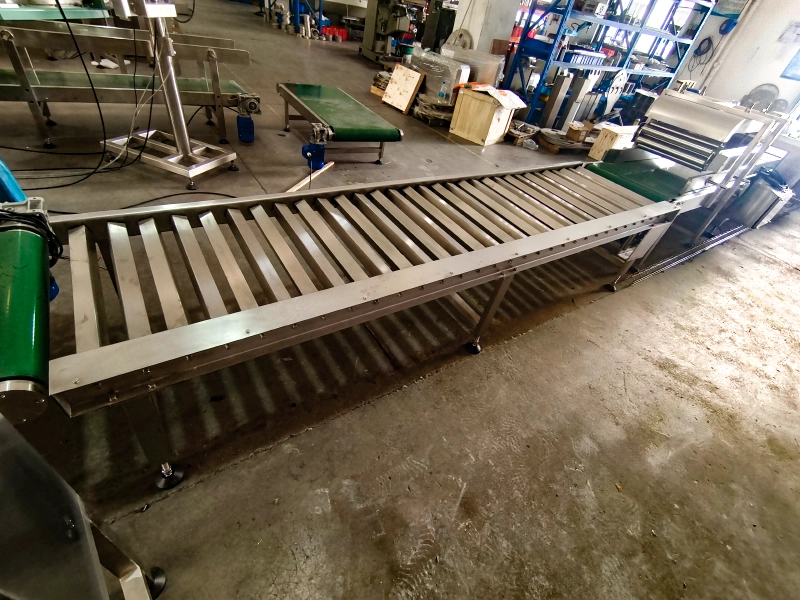
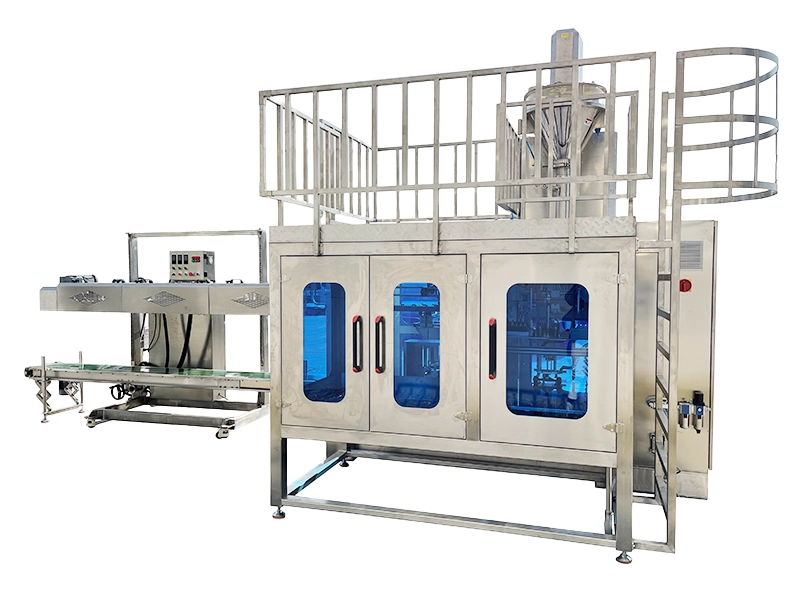
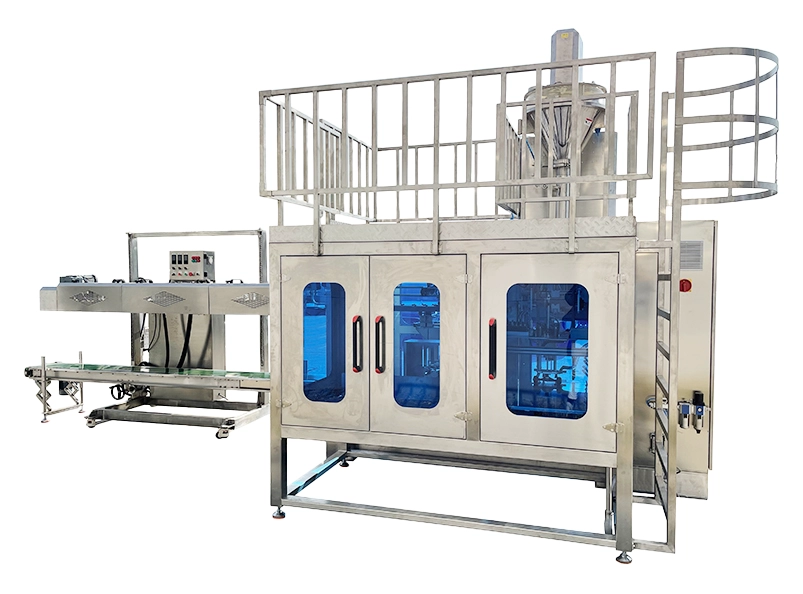
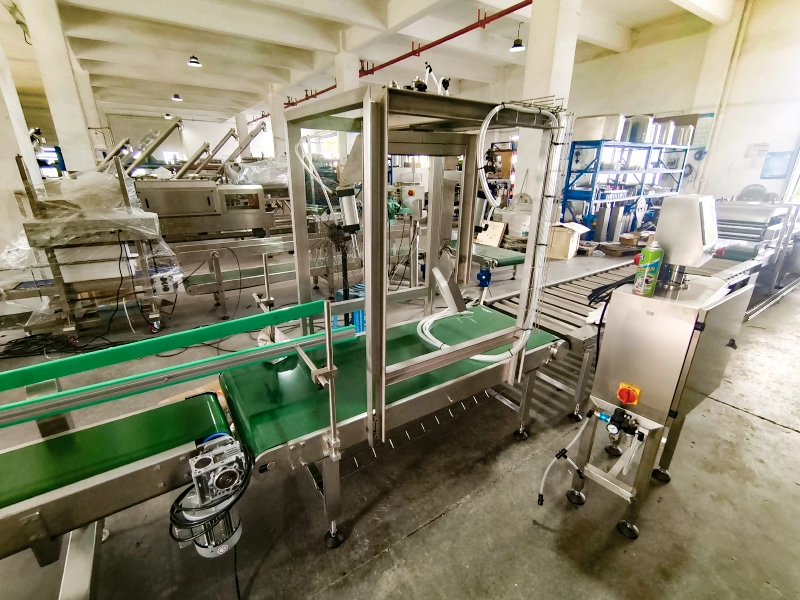
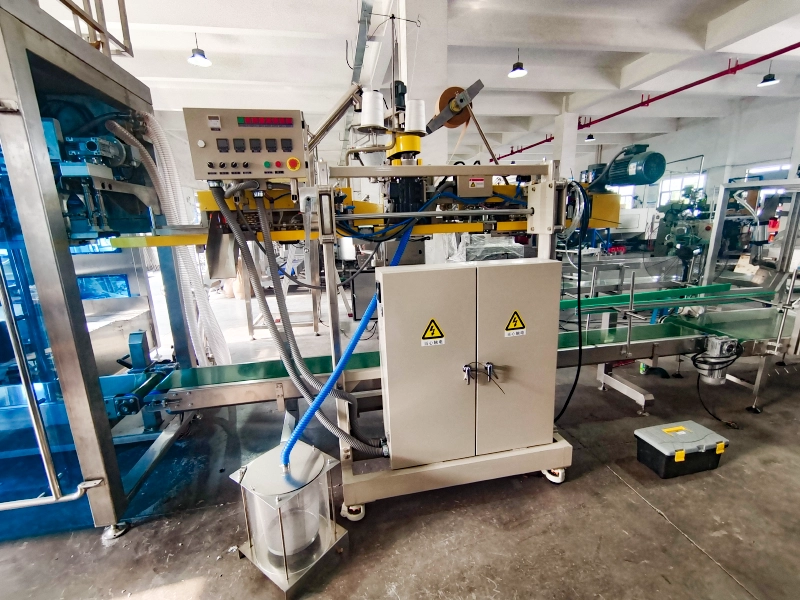
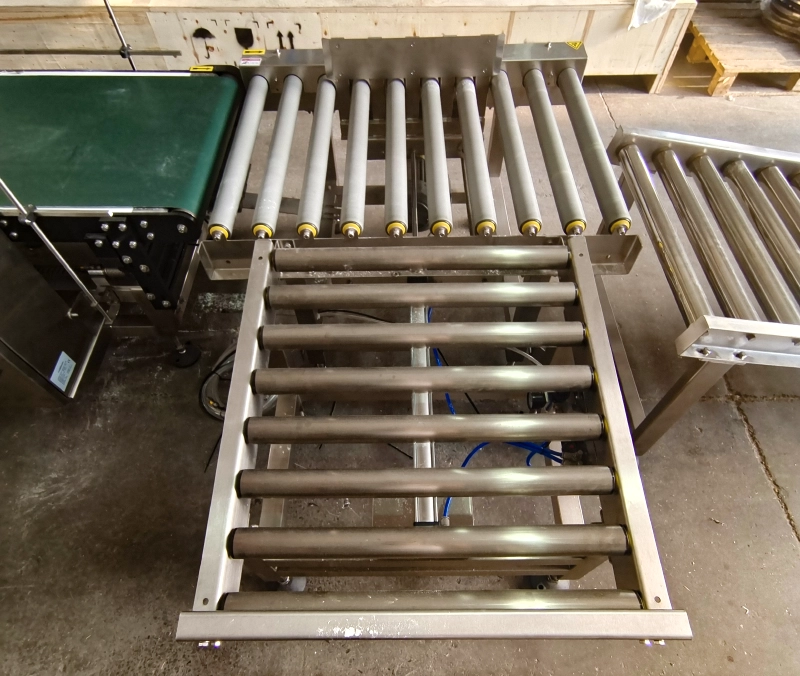
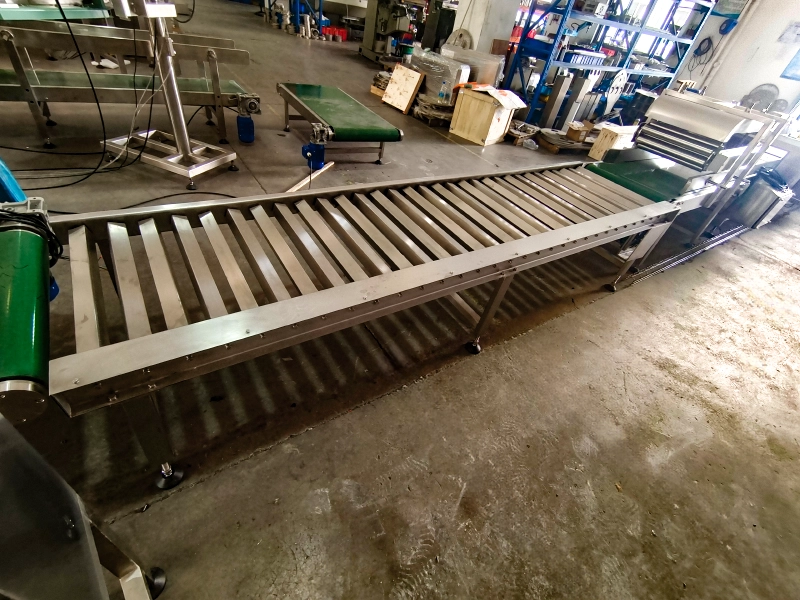
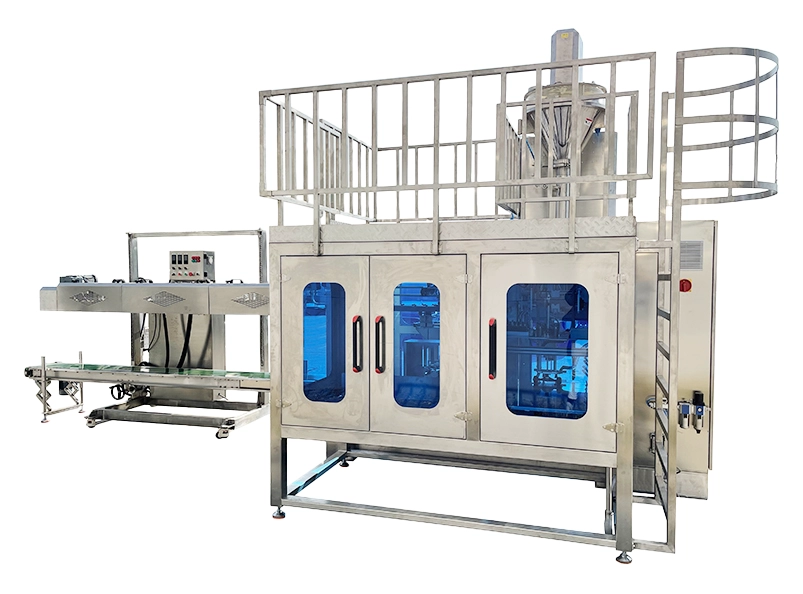
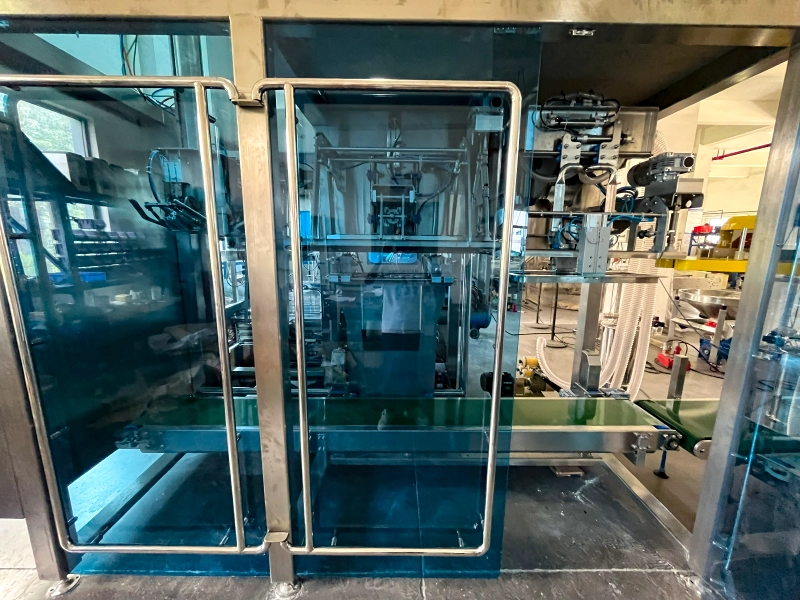
The ppline configuration shown here uses an elevated steel frame, hopper-fed product transfer, a swing-arm HMI, and a controlled discharge conveyor. That combination matters because it keeps the filling zone separated from the bag-moving zone. The operator sees the HMI clearly, the bagging point stays accessible, and the outfeed path stays straight.
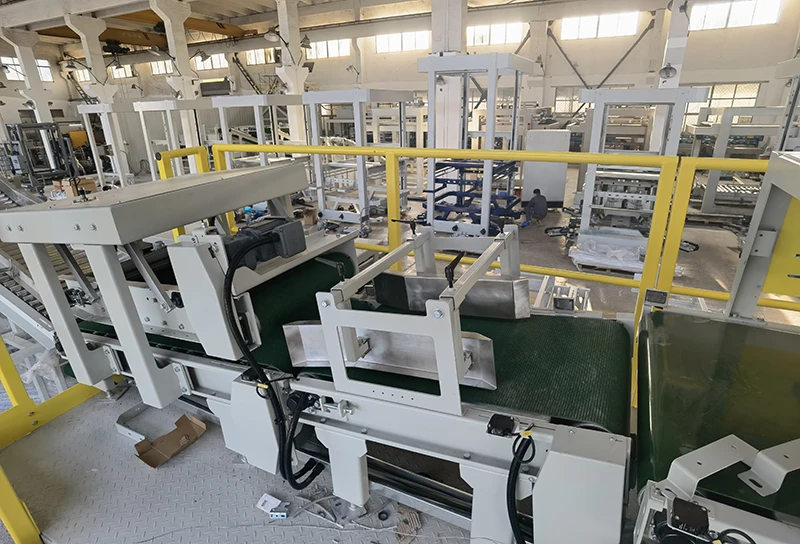
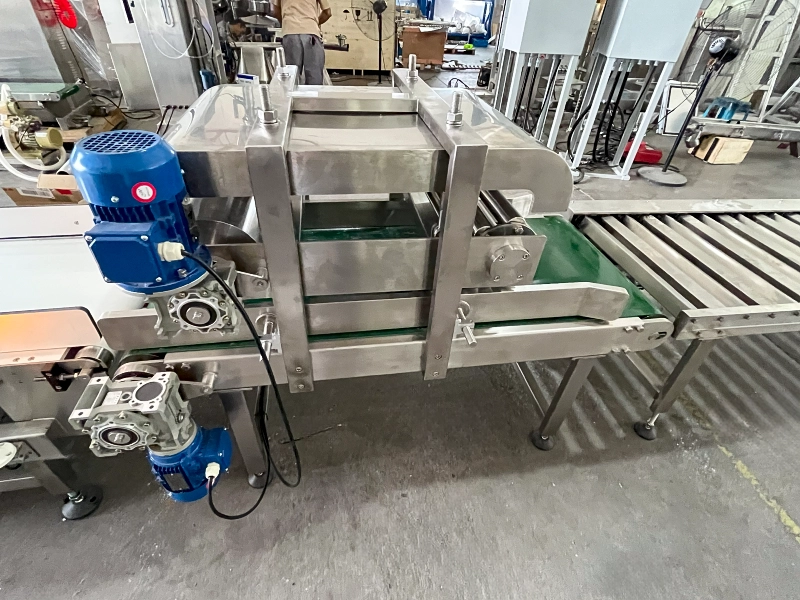
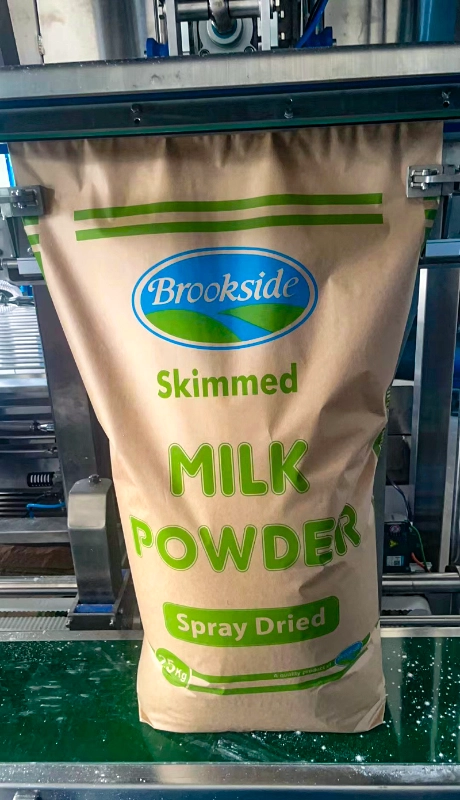
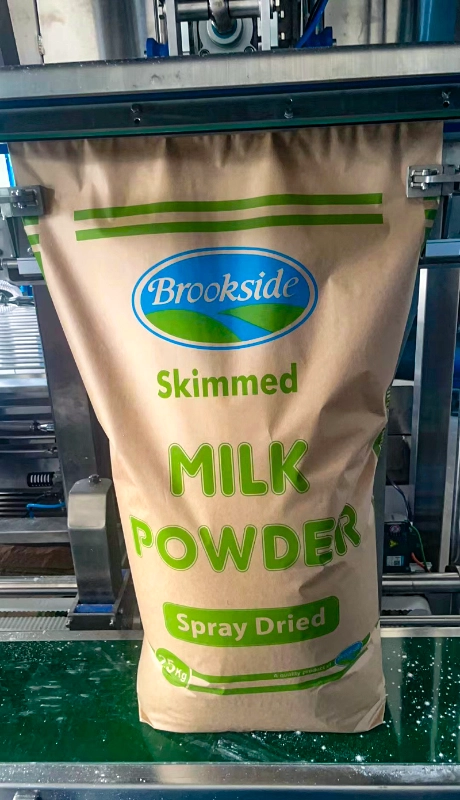
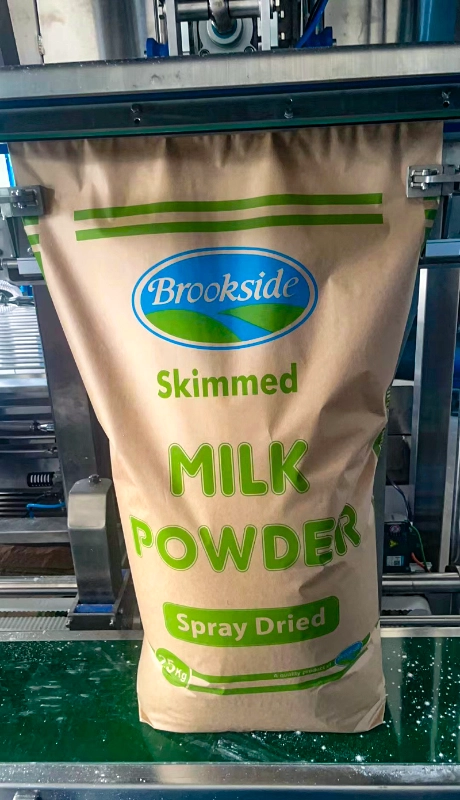
The internal bagging unit photo also shows the part that usually decides success: vacuum suction cups, guided bag placement, and a green conveyor that supports the sack during transfer. In other words, the machine is not only filling a bag; it is protecting the bag shape while it moves through the line.
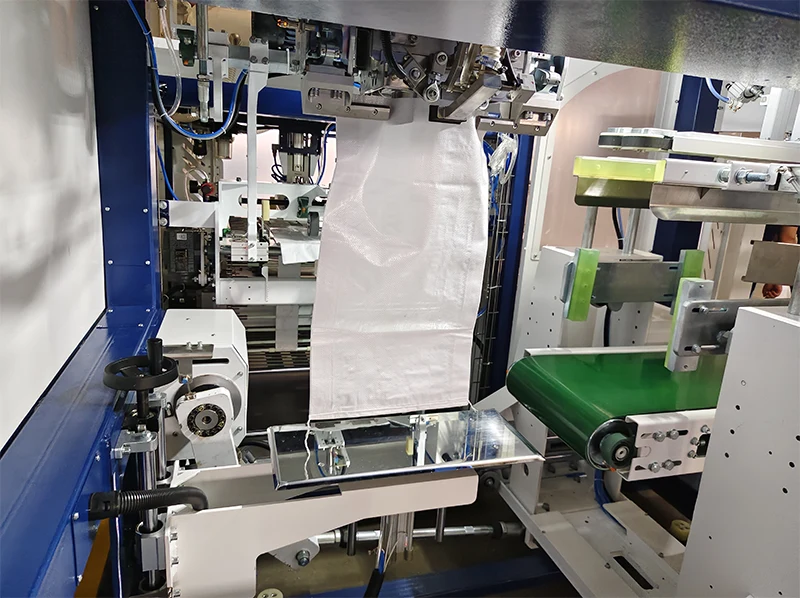
Field insight: For 10 kg woven sacks, the best upgrade is usually not a faster bagger alone. It is a line that keeps the bag mouth aligned, supports the sack during transfer, and sends finished bags out without a second manual correction.
What the structure and images prove about the line
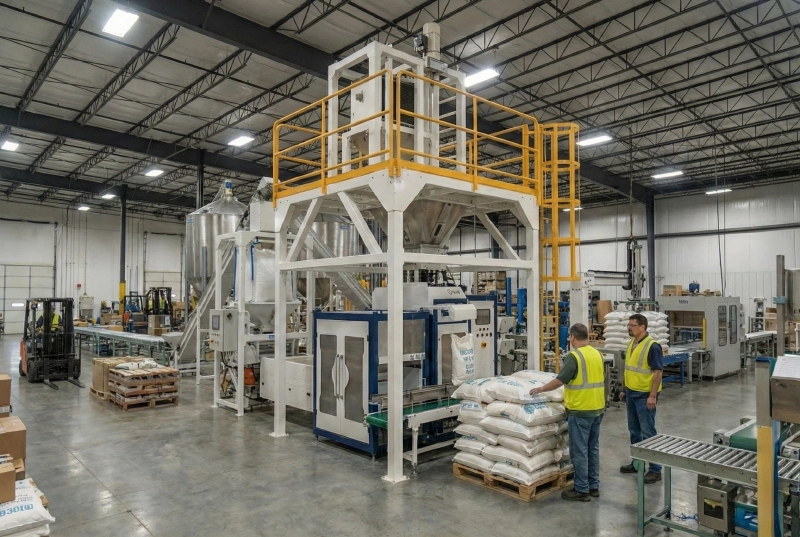
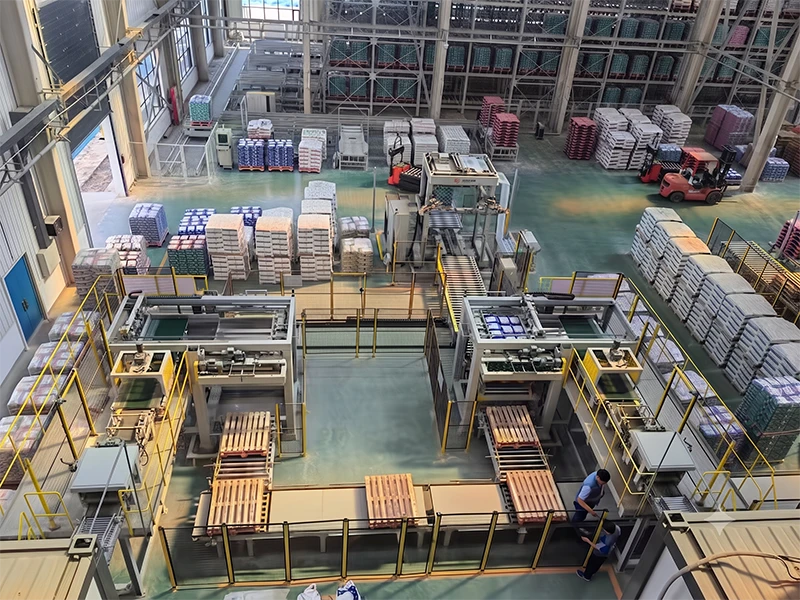
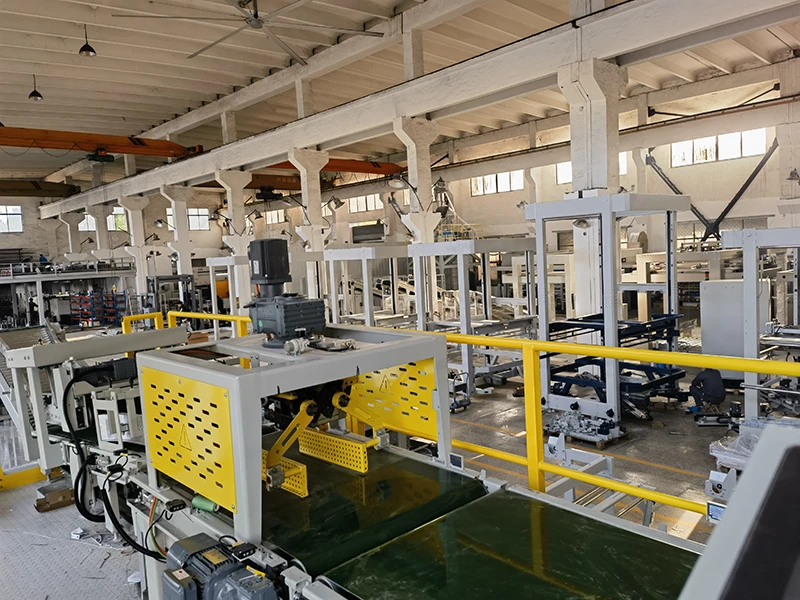
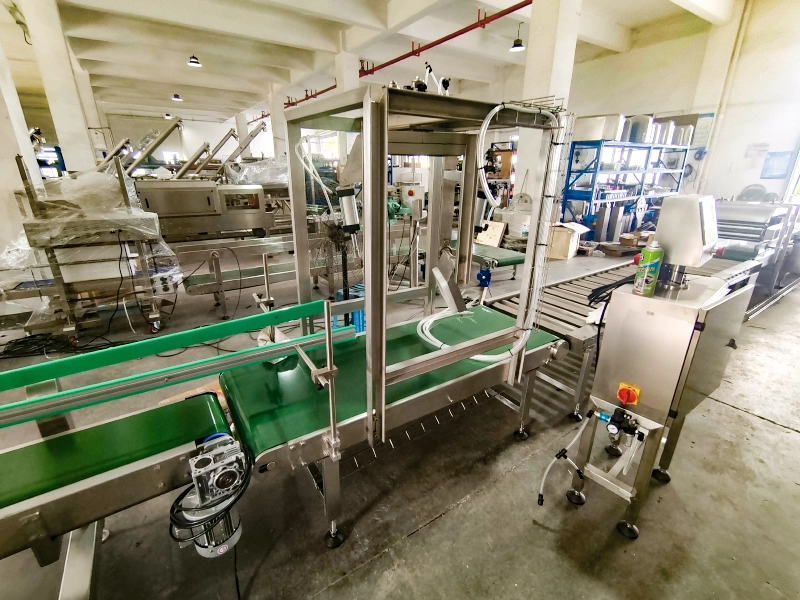
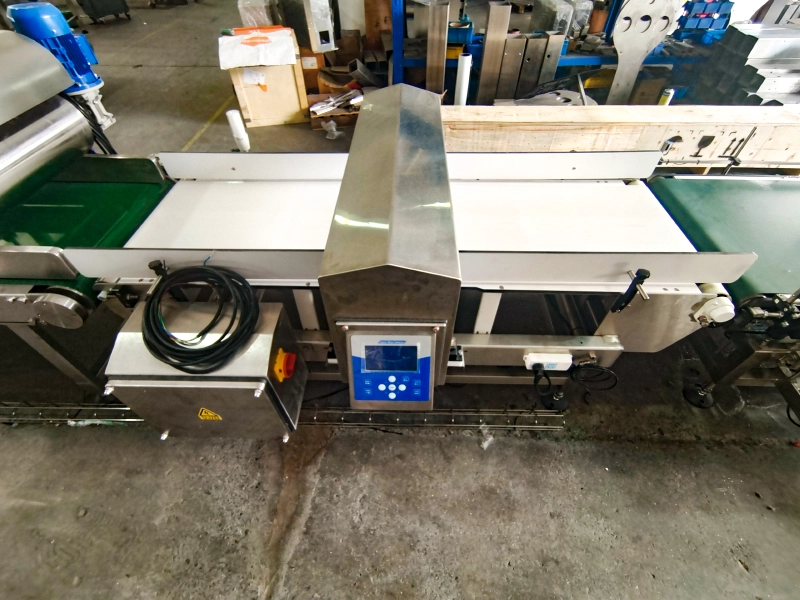
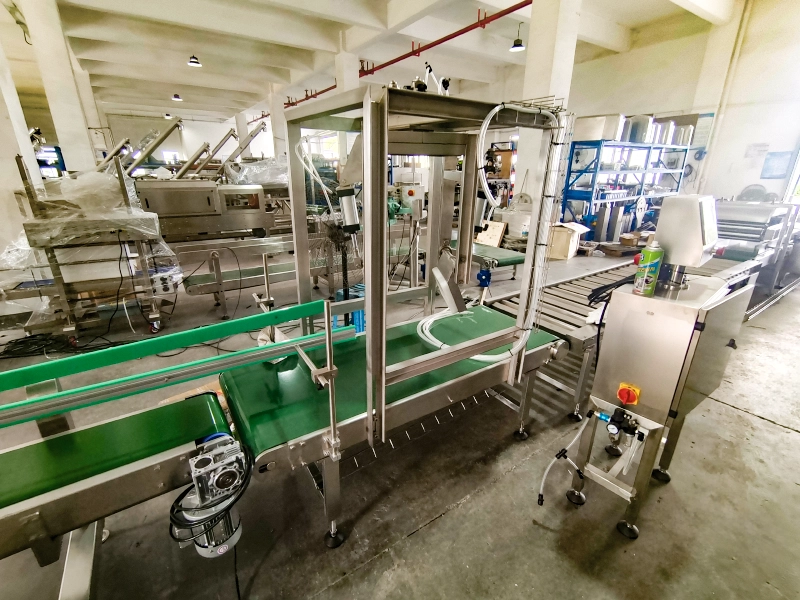
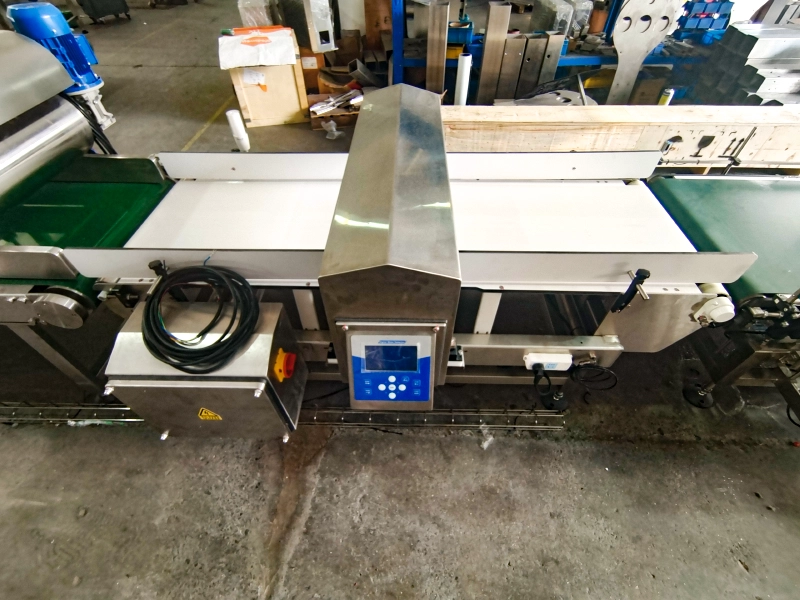
The operational photo shows the system in a real workshop setting, with the machine, conveyor, and operators working together. That is the key evidence for bulk-product buyers: the line is designed for actual dispatch work, not just for a showroom render. It is especially suitable when the plant needs a stable bagging setup for regular 10 kg woven sack output.
Below is the simple comparison most buyers care about. The goal is not only to pack the sack, but to keep the workflow moving after the sack is sealed.
| Item | Old manual setup | ppline 10 kg bagging line |
|---|---|---|
| Feed stability | Operator dependent | Controlled hopper-fed transfer |
| Bag handoff | Bag twist and mouth drift | Vacuum-assisted positioning and guided transfer |
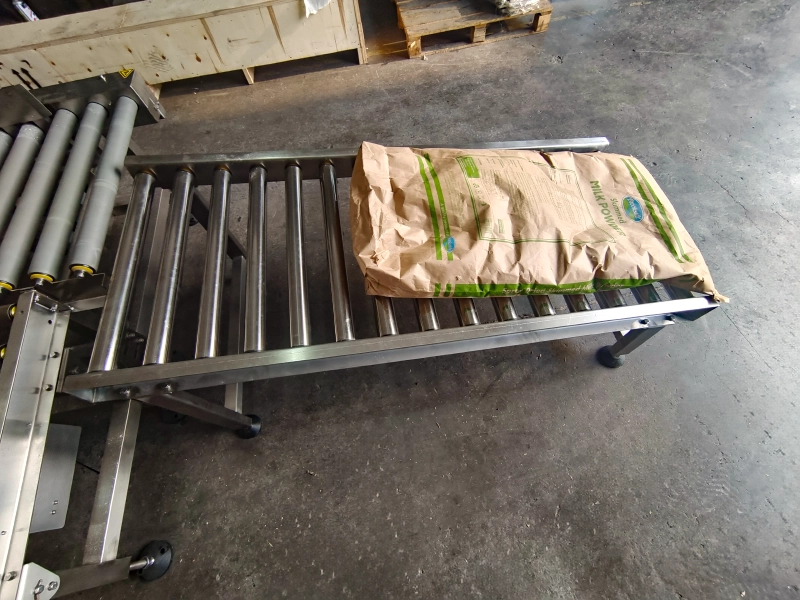
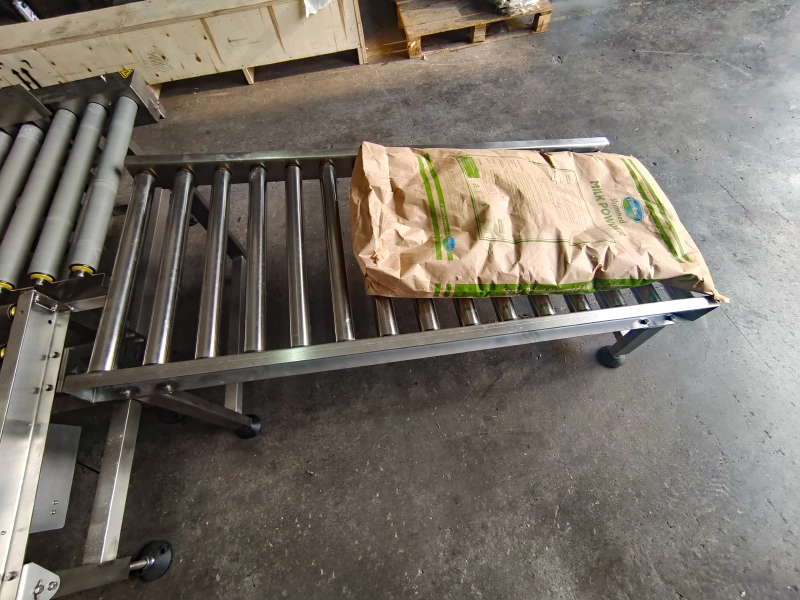
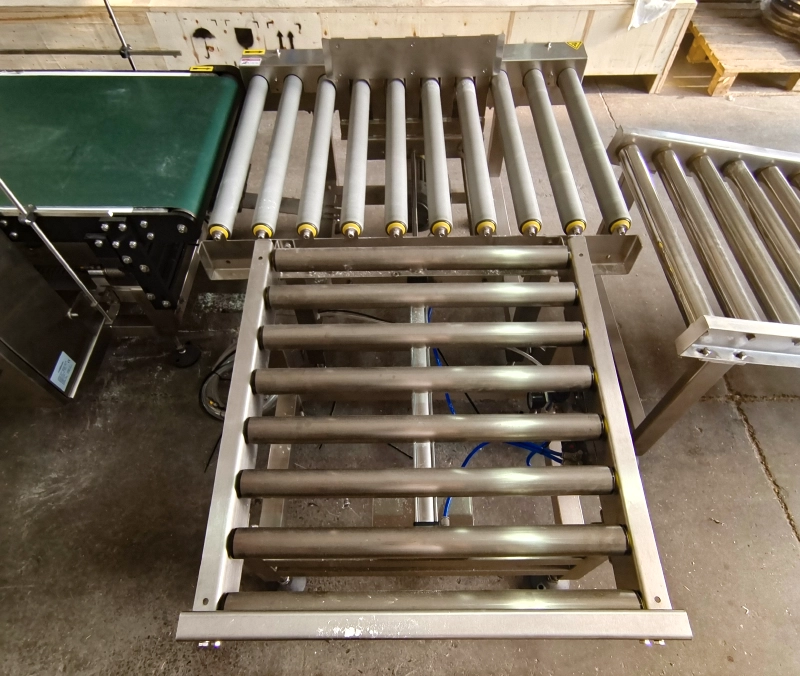
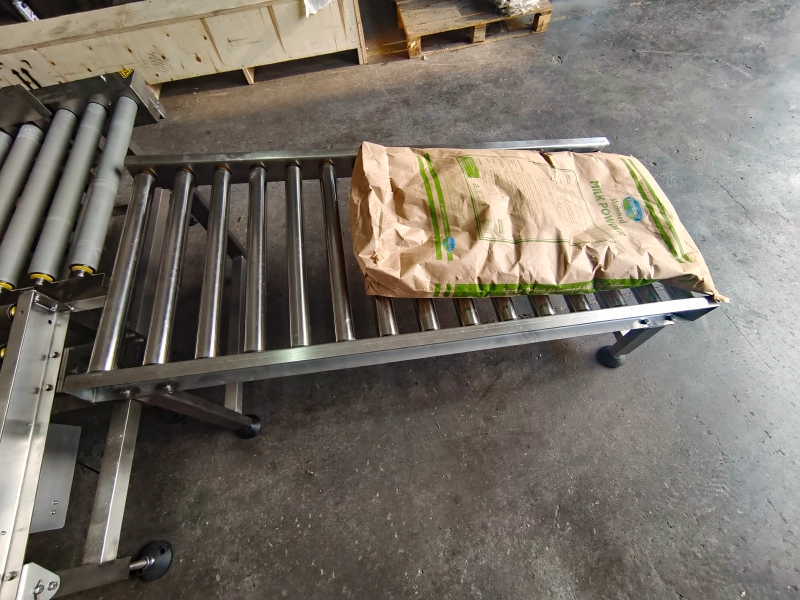
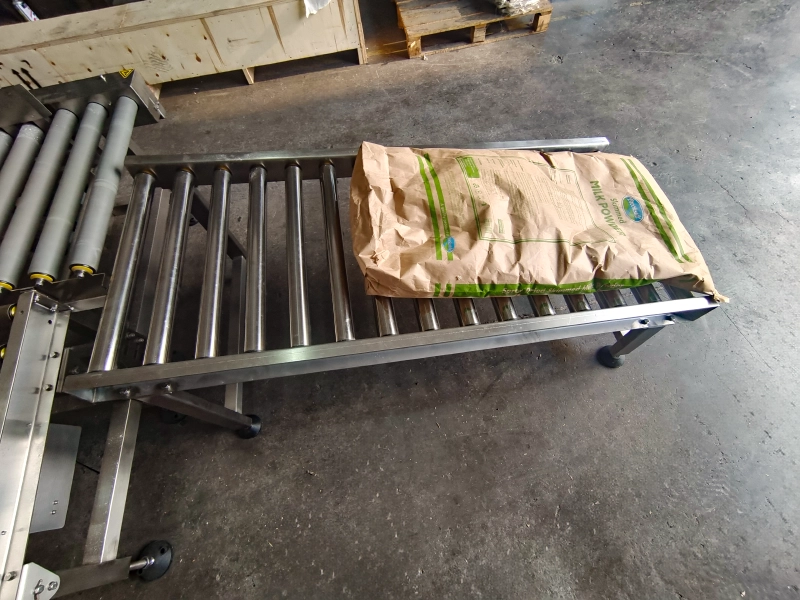
| Dispatch flow | Stop-start pallet movement | Straight outfeed conveyor to staging area |
| Workshop fit | Too much manual correction | Cleaner operator access and clearer process control |
Need a 10 kg packaging line that stays steady through long shifts?
If your workshop is moving powders or granules into 10 kg woven sacks, this kind of packaging machine for products gives you a cleaner handoff, better bag alignment, and a more predictable dispatch zone. The right line should reduce correction work, not add to it.
Talk to BPM about a 10 kg bagging line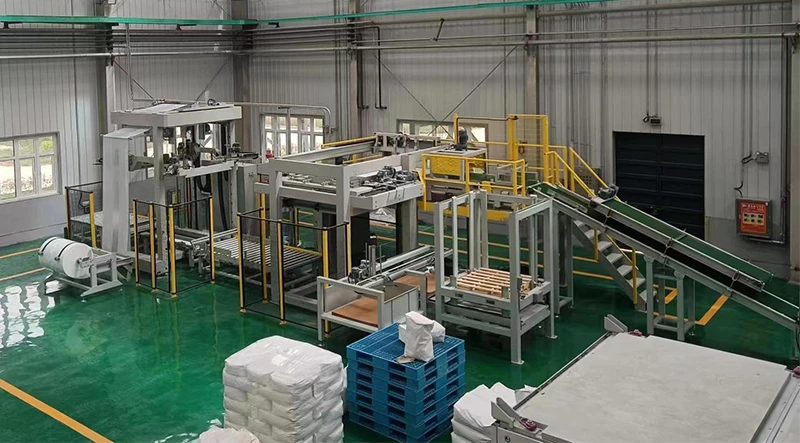
 English
 Русский