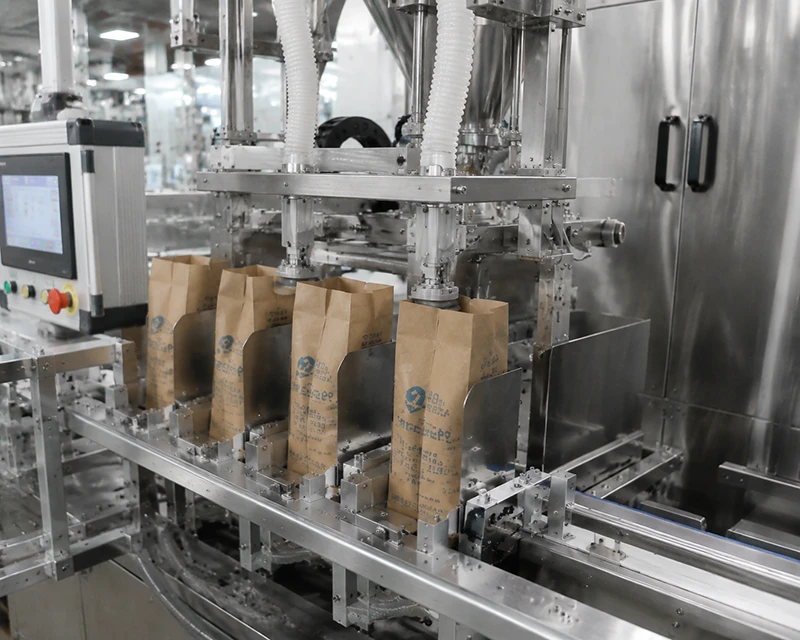
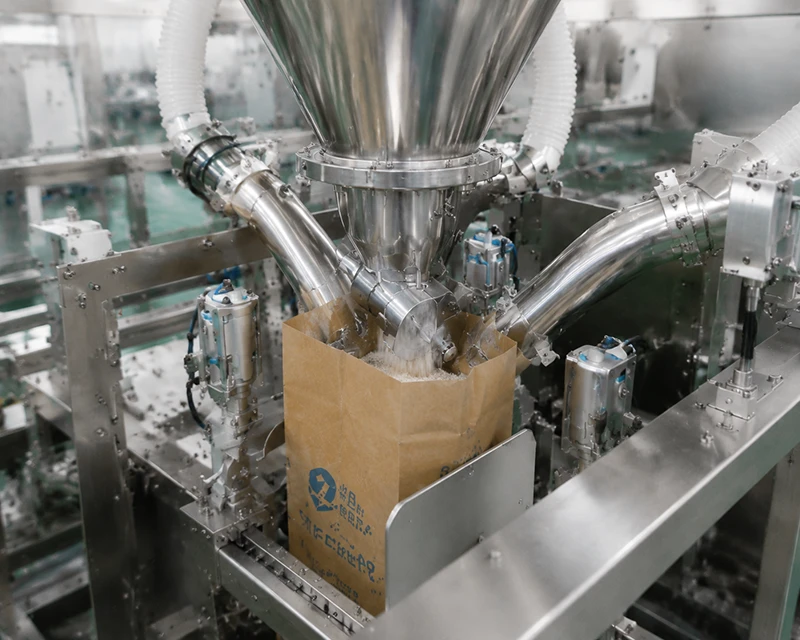
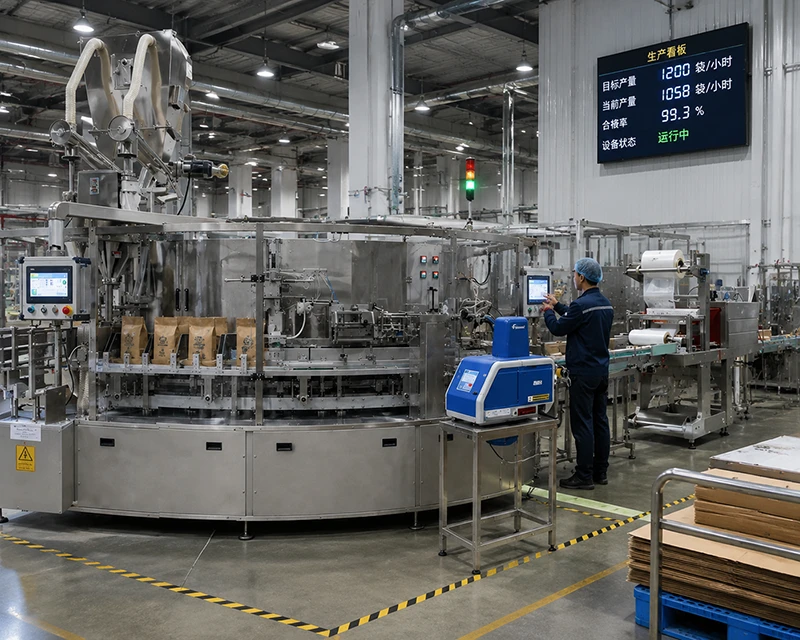
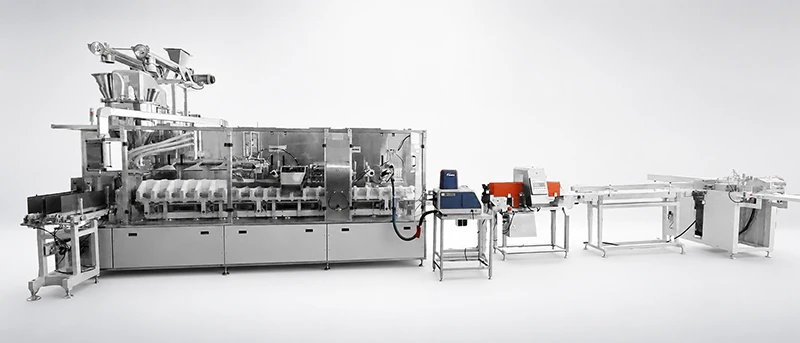
Automatic Bagging Machine & Palletizing Systems Manufacturer

Category: English

  • Cement Packing Equipment for Valve Bags: From Dust Control to Stable Palletized Dispatch

    Cement Packing Equipment for Valve Bags: From Dust Control to Stable Palletized Dispatch

    Cement packing equipment | VPLINE valve-bag line

    Cement Packing Equipment for Valve Bags: From Dust Control to Stable Palletized Dispatch

    For cement and dry-mix plants moving from manual or semi-automatic filling to automatic valve-bag packaging, VPLINE links bag loading, air-assisted filling, ultrasonic sealing, inspection, negative-pressure shaping, robotic palletizing and stretch-hood protection into one continuous line. The typical reference point is a 25 kg valve bag, subject to material and bag testing.

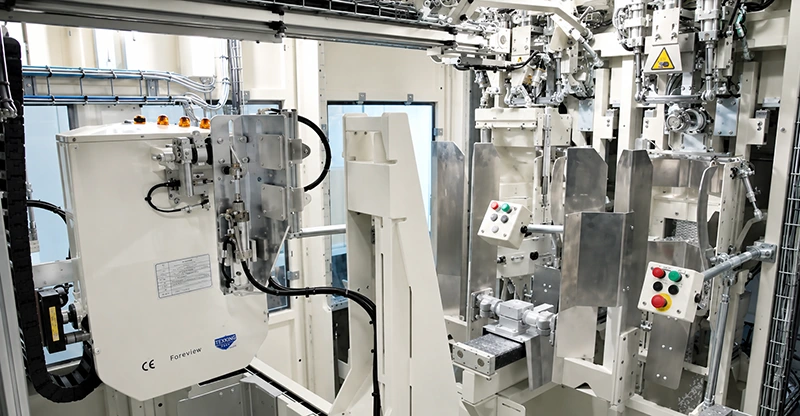
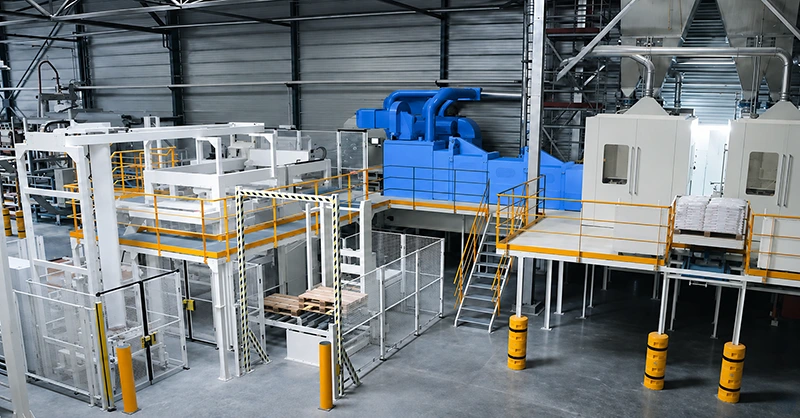
    Real factory-installed automatic valve bag cement packaging line with enclosed platforms, dust extraction ducts, and integrated conveyors

    When a cement plant needs more than a standalone filling machine

    A cement, dry-mix mortar, mineral additive or other tested fine-particle plant usually has a clear production scene: material arrives from an upstream silo or process line, is packed into valve bags, checked, palletized and transferred to the finished-goods warehouse or dispatch area. At this point, a search for cement packing equipment is not only a search for a dosing head. The plant needs the packaging, conveying and pallet logistics to work as one automatic line.

    The older route—manual bag placement or open-bag filling followed by thread sewing—creates several handoff points. Operators repeatedly handle empty bags, dust can escape while the bag mouth is being closed, and inconsistent residual air can leave bags swollen. A separate checkweigher or palletizer may then be added without solving the gap between stations. The result is more manual coordination, unstable bag presentation and a pallet that is difficult to protect during long-distance transport.
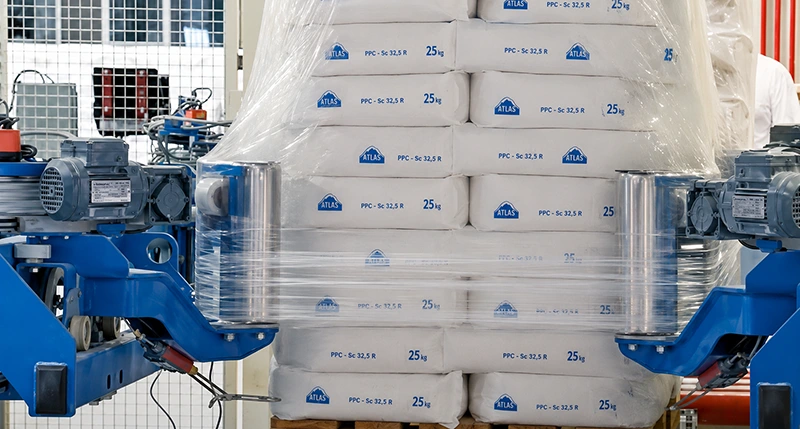
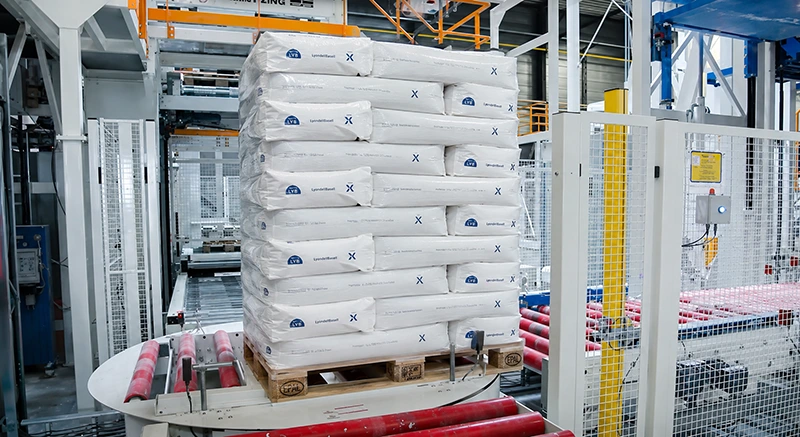
    Industrial valve bag palletizing scene with shrink-wrapped 25kg sacks and dual robotic handling units
    What the old solution leaves unresolved

    Manual or semi-automatic valve-bag packing may appear flexible, but it leaves dust control, bag-mouth consistency, weight verification, de-aeration and pallet stability dependent on operator timing. These are process risks, not isolated machine defects: a good filling step can still be followed by an underweight bag, an undetected contaminant, a bulging sack or a loose pallet.

    Why VPLINE fits automatic cement and dry-mix bagging

    VPLINE is designed around a pre-made valve bag rather than roll film. A bag magazine and automatic bagging manipulator pick, open and place the bag onto an expanding valve nozzle. The filling interface uses a main product passage and a return-air passage, allowing air-assisted filling while the bag mouth is held at the nozzle. For a suitable material, bag construction and stable air supply, this enclosed interface supports a lower-dust filling process than an exposed open-bag operation.

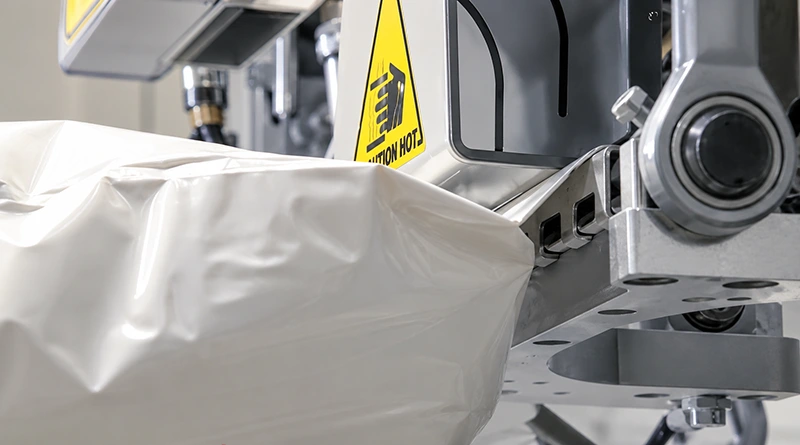
    After filling, the line can combine ultrasonic valve-bag sealing, checkweighing and metal detection before palletizing. The ultrasonic unit operates through vibration in the sealing interface; its practical sealing result still depends on the bag’s compatible sealing layer, valve tolerance and powder condition. Negative-pressure shaping removes residual air and improves the bag profile before the robot places bags in an interlocked pallet pattern. The final stretch hood or stretch-film protection creates a more stable handling unit for the finished-goods warehouse and dispatch.

    Engineering note: This is a project-configured pneumatic valve-bag packing line, not an instant universal machine. Material flowability, dust behavior, bag permeability, valve dimensions, air quality, ceiling height and required changeover conditions should be confirmed through testing and layout review.

    Structure and parameters to verify before specifying the line

    The equipment evidence follows the process: bag magazine and gripper at the front, valve nozzle and filling interface at the core, conveyor and inspection hardware after filling, then pallet magazine, palletizing and film protection at the end. The factory image shows enclosed platforms, dust-extraction ducting and integrated conveyors rather than a disconnected filling machine. The palletizing image shows the intended outcome: compact, wrapped 25 kg sacks prepared for storage or transport.

    For a new automatic valve bag packaging line, the figures below are source values or planning references, not unconditional production guarantees. Actual performance depends on the product, bag and site. A line review should also confirm compressed-air stability, exhaust routing, pallet dimensions, robot load, pallet pattern, floor space and available headroom.

    ItemReference for VPLINE planningWhy it matters
    Bag formatPre-made valve bags; 25 kg shown as a typical referenceDetermines nozzle, gripper, sealing and pallet pattern compatibility
    Filling range10–50 kg source range; confirm the project operating pointMaterial density and bag dimensions affect dosing and cycle time
    Speed5–12 bags/min, depending on material and process conditionsUsed to size conveyors, inspection and palletizing capacity
    Compressed air0.5–0.7 MPa referenceStable pressure supports pneumatic bag handling and air-assisted filling
    Electrical supplyAC 380 V, 50 Hz, 15 kW for the packaging machine groupMust be checked against the plant utility and line configuration
    Product-contact material304 stainless steel; other structural parts are carbon steelSupports the specified contact-zone construction and maintenance plan

    Plan the right cement packing equipment around your material

    Share the cement or dry-mix material data, target bag weight, valve-bag drawing, desired bags per minute, dust-control requirements, pallet format and plant layout. BPM can then review the filling test, sealing interface, inspection points and palletizing route before preparing a VPLINE line proposal.

    Discuss your valve-bag packaging line
  • Cement M400 50 kg Valve-Bag Packing Line: Cleaner Filling and More Stable Pallet Dispatch

    Cement M400 50 kg Valve-Bag Packing Line: Cleaner Filling and More Stable Pallet Dispatch

    CEMENT M400 • 50 KG VALVE-BAG PACKING

    Cement M400 50 kg Valve-Bag Packing Line: Cleaner Filling and More Stable Pallet Dispatch

    For a cement plant searching for a Cement M400 50 kg packing machine, the practical question is not simply which bagging machine to buy. The line must match the cement’s flow behaviour, the valve-bag construction, the available air supply and the palletizing layout. VPLINE is an automatic valve bag packing line for dry powders and suitable fine particles, linking bag loading, enclosed filling, ultrasonic valve sealing, inspection, bag shaping, robotic palletizing and stretch-hood protection.

    Automatic cement M400 50 kg valve bag packing line with integrated conveyors and dust extraction

    Why an open-bag cement packing process becomes a production constraint

    A plant filling Cement M400 into 50 kg bags often starts with manual or semi-automatic bag filling: an operator positions an open sack, a dosing point fills it, and a sewing machine closes the top. This arrangement can work at low volume, but it leaves several interfaces dependent on people. Bag presentation varies, powder can escape while the sack is being held open, and the sewing step adds a separate handling movement.

    The same weakness appears after filling. A bag with trapped air is difficult to place into a compact interlocked pallet pattern. Manual movement and stacking make the result sensitive to operator fatigue, while a missing weight check or metal inspection point allows an abnormal bag to continue toward the finished-goods warehouse or dispatch area. Replacing one machine without connecting these stages does not create a complete automatic cement packing line.

    Cement M400 50 kg valve bag filling nozzle with ultrasonic sealing head for enclosed packing
    The key fit is the bag, material and air path—not the bag weight alone.

    A 50 kg target must be confirmed against bulk density, flowability, valve dimensions, bag venting and the available receiving height. The project data lists 10–50 kg as a possible range, while 25 kg is the typical video demonstration. Final speed and accuracy require a material and bag test before a production commitment.

    How VPLINE adapts the filling and sealing interface

    VPLINE uses a pre-made valve bag. The automatic bag loading system takes a sack from the bag magazine, grips and opens it, then positions the valve over an expansion-type filling nozzle. The nozzle creates a controlled filling interface with a larger product passage and a smaller air-return path. When the powder and bag are correctly matched, this enclosed arrangement supports low-dust dry-mix packing by limiting the open exposure seen in a conventional open-bag station.

    After filling, the valve area is sealed by ultrasonic equipment. The documented operating principle is vibration in the 20–40 kHz range, generating interfacial friction heat. This is not a universal promise for every bag: the laminate or coated layer, valve tolerance and residual powder must be tested to confirm the ultrasonic sealing window. That boundary is important when specifying cement bag packing equipment.

    Engineering point: the correct selection is a pneumatic valve-bag packing line, not a VFFS, Doypack or Flow Pack machine. Those systems form or fill different package types. VPLINE is built around automatic valve-bag filling and can be integrated with upstream silos or feeders and downstream warehouse logistics.

    Inspection, negative-pressure shaping and pallet protection in one flow

    The line continues beyond the filling nozzle. A conveyor transfers the filled sack through online checkweighing and metal detection before the palletizing stage. A checkweigher with reject handling provides a defined quality gate for weight deviations; the metal detector provides a separate foreign-metal control point. These stations do not replace calibration or the plant’s quality plan, but they prevent inspection from depending only on a final manual check.

    Before robotic palletizing, negative-pressure shaping removes excess air and helps make the bag profile more uniform. The robot can then build an interlocked pallet pattern—shown in the process description as three bags per layer, with orientation adjusted by rotation. Layer count and pallet dimensions remain project values. An automatic pallet magazine, roller conveyors, divider-sheet handling where required, and final stretch-hood or shrink protection connect the finished stack to the packing warehouse and dispatch route.

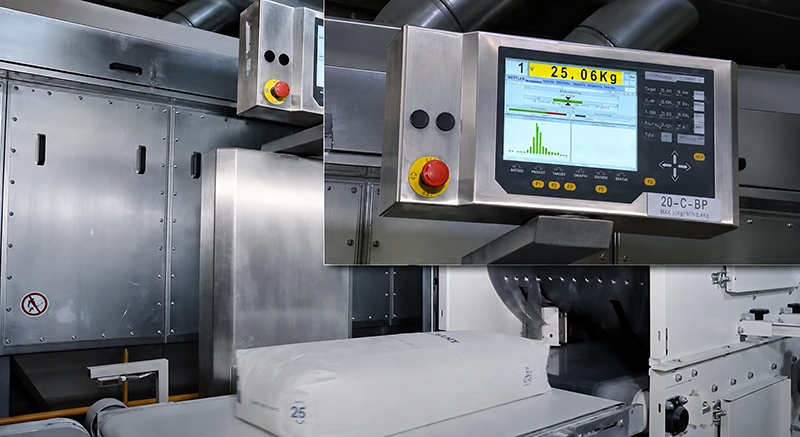
    Online checkweigher conveyor with HMI and emergency stop for cement valve bag packing
    Project itemDocumented VPLINE referenceWhat must be confirmed for Cement M400
    Bag formatValve bags; 10–50 kg listed, 25 kg typical demonstration50 kg bag dimensions, valve tolerance, venting and seal layer
    Filling methodExpansion nozzle with product and air-return pathsPowder flowability, bulk density and dust behaviour
    Operating references5–12 bags/min; ±1–2‰ listed without test conditionsAcceptance test method, target speed and accuracy
    Utilities0.5–0.7 MPa air; AC 380 V, 50 Hz, 15 kW packing unitStable dynamic pressure, air consumption and site connection
    End of lineCheckweigher, metal detector, negative shaping, robot palletizer and stretch hoodPallet size, layer plan, clear height and warehouse interface

    Specify the 50 kg cement line from the real plant conditions

    Send the Cement M400 bulk density and flow data, 50 kg valve-bag drawings, required bags per minute, air and power conditions, pallet pattern, available clear height and dust-extraction interface. BPM can then assess the automatic line for cement packing, define the filling and ultrasonic sealing tests, and configure the inspection, palletizing and stretch-hood sections around the actual warehouse route.

    Discuss your valve-bag packing line
  • Cement M400 Packaging in Valve Bags: A Cleaner Route to Stable 25 kg Pallets

    Cement M400 Packaging in Valve Bags: A Cleaner Route to Stable 25 kg Pallets

    Cement M400 packaging | Valve-bag packing line

    Cement M400 Packaging in Valve Bags: A Cleaner Route to Stable 25 kg Pallets

    For cement and dry-mix plants evaluating automatic cement bagging, VPLINE connects valve-bag filling, dust control, weight inspection, metal detection, bag shaping and robotic palletizing in one engineered line. The typical reference is a 25 kg valve bag; final bag weight, material behavior and throughput require project confirmation.

    Automated valve bag packaging line for Cement M400 packaging with enclosed dust extraction and integrated conveyors

    Why cement plants move beyond open-bag filling

    A cement or dry-mix producer shipping 25 kg bags needs more than a dosing machine. The line must accept empty valve bags, fill them with a powder that can generate dust, close the valve area, verify the finished weight and deliver a pallet that can survive storage and transport. Manual or semi-automatic filling in open bags usually leaves operators to hold, sew, move and stack each bag. That creates variable handling time, more opportunities for dust release and a less repeatable pallet pattern.

    VPLINE is designed for this production-line context: automatic valve-bag packing, pneumatic material conveying and an integrated downstream route. It is not a VFFS, Doypack or Flow Pack machine, and it is not a universal promise for every cement grade. Flowability, aeration behavior, valve dimensions, bag permeability and available exhaust routing should be tested before the final configuration is approved.

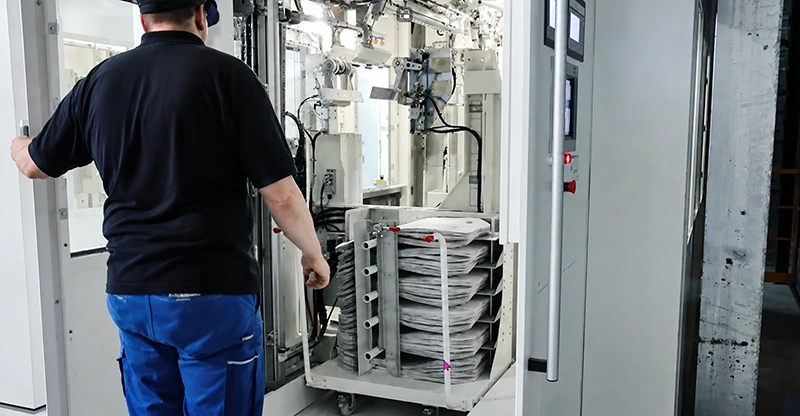
    Operator pushing a wheeled valve bag magazine into an automatic bag loading station for 25 kg cement bags
    The old-line problem: dust, unstable bags and too many handoffs

    When an operator manually positions a bag, feeds cement, closes the mouth and carries it to a pallet, the process depends on individual timing. Residual air can leave a bag swollen before stacking. An uneven bag can then weaken an interlocked pallet, while a missed weight check or foreign-metal inspection allows an abnormal package to move into dispatch.

    How the VPLINE configuration fits Cement M400 packaging

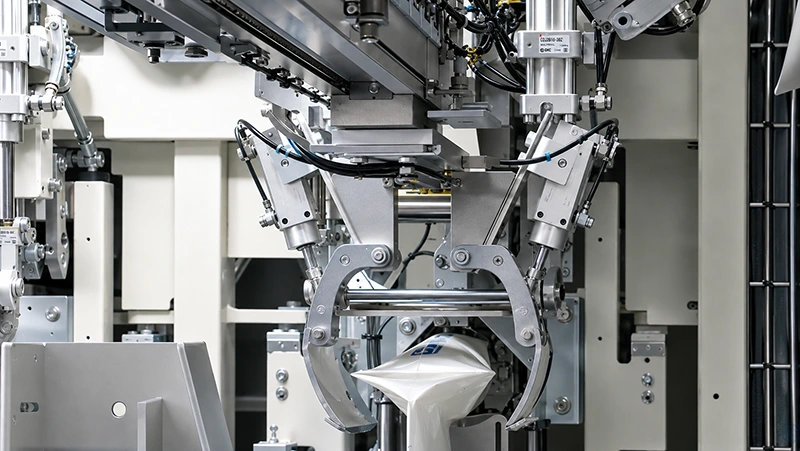
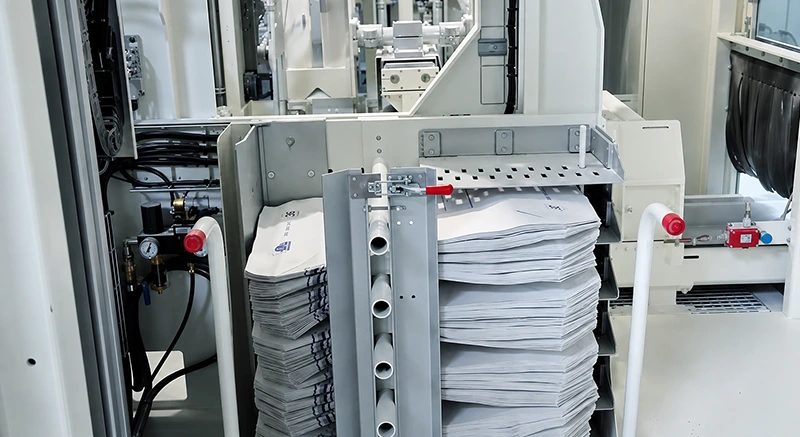
    The front end uses a movable bag magazine and an automatic bagging mechanism to pick, open, guide and place the valve bag onto the filling nozzle. The expansion-type valve nozzle creates the filling interface; a main material passage and return-air path support enclosed filling when the product and bag are correctly matched. This is the practical difference between a valve-bag packing line and a simple open-bag filling station.

    After filling, ultrasonic sealing closes the valve area. The source specification identifies a 20–40 kHz working range, while the actual bag construction, sealing layer and cement dust condition still require a sealing trial. The line then moves each bag through checkweighing and metal detection before negative-pressure shaping removes excess air and prepares the package for a compact pallet pattern.

    Engineering note: The published reference data lists 5–12 bags per minute and a nominal dosing accuracy of plus or minus 1–2 per mille, but test method, bulk density and operating conditions are not defined. Treat these figures as selection references rather than unconditional production guarantees.

    Stainless steel automated valve bagging head with dual pneumatic grippers and bag opening arms for cement powder

    What the integrated line changes at the plant

    The result is a connected route from empty-bag supply to finished-pallet protection instead of several isolated machines. Material-contact parts are specified as 304 stainless steel, with carbon steel used elsewhere. The packaging machine reference is AC 380 V, 50 Hz and 15 kW, and the compressed-air reference is 0.5–0.7 MPa; site utilities and dynamic pressure stability must be checked during engineering.

    At the end of the line, negative-pressure shaping supports a flatter bag before robotic palletizing. The video reference shows three bags per interlocked layer, with rotation and alignment used to adjust orientation; pallet height and layer count remain project-dependent. Automatic pallet supply, roller conveying and stretch-hood or stretch-film protection can then support the finished-goods warehouse and long-distance dispatch route.

    Selection pointVPLINE referenceWhat must be confirmed
    Product and bagCement or suitable fine, flowable material in a valve bagBulk density, moisture, flowability, valve tolerance and bag venting
    Pack size25 kg demonstration; 10–50 kg source rangeFinal target weight and changeover requirements
    Filling and closurePneumatic filling with expansion nozzle and ultrasonic valve sealingDust extraction, sealing layer and trial results
    Quality gateCheckweigher, reject function and metal detectorDetection limits, reject layout and product-specific validation
    Plant integrationConveying, negative-pressure shaping, palletizing and stretch protectionApprox. 15–20 m line length, 4–6 m width and 4.5 m+ clear height as planning references
    Stainless steel checkweigher conveyor with touchscreen HMI and emergency stop on an automatic valve bag packing line

    Confirm the right cement packaging line before you specify it

    Send the cement grade, target bag weight, valve-bag drawing, bulk density, required bags per minute, available compressed air, dust-extraction conditions and workshop layout. BPM can use those inputs to confirm whether VPLINE is suitable for automatic cement packaging, define the filling and sealing tests, and build the palletizing and stretch-protection scope around the real dispatch requirement.

    Discuss your valve-bag packing line
  • Agrobalt Peat: Automatic Valve Bag Packing for Large 1-Ton Batches

    Agrobalt Peat: Automatic Valve Bag Packing for Large 1-Ton Batches

    VPLINE | PEAT AND DRY BULK PACKING

    Agrobalt Peat: Automatic Valve Bag Packing for Large 1-Ton Batches

    For peat producers planning large one-ton batches, VPLINE connects automatic bag loading, air-assisted filling, valve sealing, weight checking and palletizing into one engineered line for cleaner, more controlled peat packing.

    Automatic valve bag packing line with movable bag magazine for dust-controlled peat packing in large 1-ton batches

    Large-batch peat packing starts with the real production scene

    A peat producer handling large orders needs more than a standalone packing machine. The practical requirement is usually a repeatable route from the bag magazine to the finished pallet: operators load empty valve bags, the line opens and positions each bag, the filler meters the material, and the downstream equipment prepares the product for storage or dispatch. This is the production context behind a request for automatic peat packing in large batches.

    VPLINE is configured for powder and tested fine-particle materials that can be conveyed by air. A typical demonstration uses 25 kg valve bags, while the documented filling range is 10–50 kg and must be confirmed against peat bulk density, flowability, bag construction and the required valve dimensions. A one-ton order is therefore treated as a batch or dispatch quantity—not as a promise that one bag weighs one tonne.

    Stainless steel valve bag packaging line with dual filling stations for automatic dry bulk and peat bagging
    Why manual or open-bag packing becomes a bottleneck

    Manual filling and stitched open bags expose the operation to dust at the filling interface, variable bag placement and heavy handling work. Air remaining in a filled bag can also make the pack unstable, so a pallet may lean, shift or suffer transport damage. Adding an isolated bagging machine does not solve the inspection, shaping and pallet-handling gaps that follow it.

    Why VPLINE fits dust-controlled peat and dry-bulk packaging

    The line uses an expanding valve nozzle with separate product and return-air paths. When the peat and valve bag are correctly tested, the nozzle creates a more enclosed filling interface than an open bag, while the air-assisted process supports continuous filling of suitable fine particles. The contact parts are documented as 304 stainless steel; the remaining frame is carbon steel. Required plant conditions include stable compressed air at 0.5–0.7 MPa and an AC 380 V, 50 Hz, 15 kW packaging machine supply.

    At the bag mouth, a 20–40 kHz ultrasonic sealing module is available for the valve area. The actual seal depends on the bag’s paper, woven, laminated or composite construction, its sealing layer and the amount of dust at the interface, so a material test remains part of the project. This distinction matters when selecting equipment for powder packing in valve bags rather than assuming that every peat sack is interchangeable.

    Engineering note. VPLINE is not a VFFS, Doypack or Flow Pack machine. It handles pre-made valve bags; the correct design depends on peat properties, bag permeability, valve tolerance, air supply, available exhaust routing and the required changeover frequency.

    From bag loading to a transport-ready pallet

    The visible modules show how the system closes the gaps left by a manual line. A movable bag magazine supplies stacked empty bags to the automatic loader. The gripper and pneumatic opening arms position the valve bag on the filling nozzle. After filling and ultrasonic sealing, the product can pass through a checkweigher and metal detector before negative-pressure shaping, palletizing and stretch-hood or shrink-film protection. The final palletized bags can then move through the finished-goods warehouse with less manual intervention.

    The documented reference speed is 5–12 bags per minute, influenced by bulk density and other operating conditions. Accuracy is listed as ±1–2‰, but the test method and material conditions must be fixed before it becomes a project commitment. Pallet layers are configured by project; the video shows three bags per layer with rotation and shaping. Layout planning typically allows about 15–20 m of straight line, 4–6 m width and at least about 4.5 m clear height, subject to the final equipment arrangement.

    Valve bag filling nozzle and ultrasonic sealing head for clean powder and fine-particle packing
    Checkweigher conveyor with touchscreen HMI for weight control on an automatic valve bag packing line
    Project pointVPLINE reference or design checkWhy it matters for peat
    Bag and batchTypical demonstration 25 kg; documented range 10–50 kgOne tonne is planned as a batch quantity and must be matched to bag count and dispatch workflow.
    Filling interfaceExpanding valve nozzle with product and return-air pathsSupports a more enclosed, dust-controlled interface when material and bag tests pass.
    Quality gateCheckweigher, rejection logic and metal detection can be integratedHelps prevent overweight, underweight or contaminated bags from reaching the pallet.
    Final handlingNegative-pressure shaping, robot palletizer and film protectionProduces a more compact, stable pallet for warehouse storage and transport.
    Site conditions0.5–0.7 MPa air; AC 380 V, 50 Hz, 15 kW packaging machineUtilities and exhaust routing must be confirmed during site engineering.
    Palletized valve bags on roller conveyor with safety fencing for stable transport and warehouse handling

    Specify the peat before you buy the packing line

    Send the material bulk density and flowability data, target bag weight, valve-bag samples, required one-ton batch workflow, air and power conditions, available height and desired pallet pattern. BPM can then confirm whether VPLINE is suitable for automatic valve bag packing, define the test plan and configure the inspection, shaping and palletizing modules around the actual site.

    Discuss a peat packing line
  • Starch Packaging Line: zpacker Automatic Paper Bag Packing Machine for Dust Control

    Starch Packaging Line: zpacker Automatic Paper Bag Packing Machine for Dust Control

    Starch packaging in food manufacturing

    zpacker combines automatic paper bag feeding, screw dosing, and conveyor handoff to move starch from open bag to finished pack with less dust, less manual handling, and steadier output.

    Wide bright workshop view of zpacker full packaging line for starch powder, with horizontal bagging machine, upper feeding system, conveyor, and bag handling area
    The full line view shows how starch packaging is handled as one continuous motion, not as a series of manual handoffs.

    For a starch producer, the real bottleneck is usually not the raw material itself. The bottleneck is the way powder behaves around open bags, operators, and downstream transport. If the bag does not open cleanly, the fill is not stable, and the discharge path is not organized, dust escapes and labor costs rise fast.

    Where manual starch packing breaks down

    Manual packing and semi-automatic backup stations usually create the same four problems: uneven dosing, open-bag dust, operator fatigue, and slow handoff to the next process. That is why starch packaging is rarely only a weighing problem. It is a line-control problem.

    Large workshop view of zpacker packaging machine with operator, control screen, automatic packing line, and material handling area for starch bags
    The workshop view shows how the line is already designed for operator supervision, not operator dependence.

    In starch work, the operator should supervise the process, not carry the process. When the line still depends on manual bag holding, loose filling, or repeated correction, the hidden cost is dust loss and rework.

    Why zpacker fits starch in kraft paper bags

    zpacker is built for pre-made paper bags and kraft bags, including side-gusset formats. The line starts with automatic bag feeding and opening, so the bag is placed, clamped, and stabilized before the powder moves. That matters because starch is light, airborne, and easy to scatter if the opening step is weak.

    Close view of zpacker automatic paper bag feeding and opening station for starch powder packaging, with kraft bags, bag clamps, stainless frame, and touchscreen
    Automatic paper bag feeding and opening is the first step that keeps the starch packaging sequence under control.

    After bag positioning, the screw dosing station meters the powder into the open kraft bag. The image shows a conical hopper, an inclined auger outlet, and the open bag in one working area, which is exactly what a starch line needs: a short, direct material path and fewer chances for dust to drift away.

    Powder screw dosing and filling station on zpacker for starch packaging, with conical hopper, inclined auger outlet, and open kraft paper bag
    The screw dosing station supports stable fill control for starch and other fine powders.

    The touchscreen interface and stainless frame visible in the line also point to a practical operating style: the machine is meant to be set once, watched clearly, and kept in a repeatable rhythm. In a food plant, that rhythm is what helps reduce labor pressure and keep the line moving.

    What the image evidence says about the line

    Image evidenceVisible structureOperational effect for starch packaging
    Full workshop lineHorizontal bagging machine, upper feeding system, conveyor, bag handling areaShows a continuous starch packaging flow from feed to discharge
    Bag opening stationBag clamps, stainless frame, touchscreen, kraft bagsStabilizes the bag before filling and reduces dust escape at the opening step
    Screw dosing stationConical hopper, inclined auger outlet, open paper bagSupports controlled powder delivery into the bag
    Factory floor installationBlue touchscreen, hopper, upper piping, surrounding production lineShows the machine can sit inside a real food-production workflow
    Factory floor view of zpacker horizontal bagging machine for starch powder, with blue touchscreen, upper piping, hopper, and surrounding production line
    The factory floor image confirms that the line is built for real production conditions, not only for a showroom layout.

    That matters for starch because a packing line must handle the whole path: bag supply, filling, discharge, and handoff to the next unit. When those steps are integrated, the result is a cleaner plant area, lower labor demand, and a more predictable bagging rhythm.

    Need a starch packaging line layout?

    Share your bag type, target fill weight, and expected output. We can map the feeding, dosing, and discharge path around your flour plant or food production line and show where zpacker fits best.

    Request a line review
  • Flour Mill Paper Bag Filling Line: zpacker Cuts Labor and Dust

    Flour Mill Paper Bag Filling Line: zpacker Cuts Labor and Dust

    Flour mill packaging line

    Flour Mill Paper Bag Filling Line: zpacker Cuts Labor and Dust

    When a flour plant still relies on manual paper bag handling, dust escape, unstable fill weights, and slow changeovers usually show up first. zpacker is built for pre-made kraft paper bags, screw dosing, PLC control, and downstream transfer in one compact line.

    Wide view of zpacker full paper bag packaging line for flour mill production with horizontal bagging machine, upper feeding system, conveyor, and bag handling area

    Why manual paper bag filling becomes the bottleneck

    In a flour mill, the old pattern is easy to recognize: one operator opens the bag, another guides the material, a third checks the weight, and dust still drifts around the filling point. That is fine for a small run, but it becomes expensive the moment the order mix grows or the shift needs steadier output. Manual filling also makes it harder to keep a clean line between the silos, the bagging station, and the final palletizing area.

    zpacker solves that bottleneck by moving the paper bag handling into a fixed automatic station. The machine is designed for kraft paper bags and side-gusset paper bags, so the line can focus on predictable bag feeding, opening, clamping, dosing, and discharge instead of repeated hand work. For flour and other powders, that shift is the difference between a labor-heavy process and a line that can stay in sync with the rest of the plant.

    Close view of zpacker automatic paper bag feeding and opening station with kraft bags, bag clamps, stainless frame, and touchscreen
    What the old scheme usually misses

    Manual bagging and semi-automatic machines often lose time at the bag opening point, let dust escape at the fill point, and create extra work for operators who must keep checking the target weight.

    Why zpacker fits paper bag packaging for flour and powder

    The core reason is simple: zpacker is not trying to be a generic bagger. It is set up around the process flour and powder users actually need. The screw dosing unit meters the material with a steady feed, the touchscreen gives operators a direct control point, and the line can be paired with dust removal, a checkweigher, a metal detector, and a date coder when the plant needs stronger quality control.

    That matters in food production because paper bag packaging is not only about filling speed. It is also about the final bag appearance, the weight accuracy, the dust around the station, and the way the bag leaves the machine for conveyor transfer. The photos show that relationship clearly: the opening station locks the bag in place, the dosing station handles the powder stream, and the wider line view shows how the machine sits inside a complete packaging flow.

    Powder screw dosing and filling station on zpacker with conical hopper, inclined auger outlet, and open kraft paper bag

    Operational note: for flour plants and bread factories, the most visible gain is not just automation. It is the combination of steadier bag weight, less airborne powder, and a cleaner transfer into downstream handling.

    Structure, evidence, and the result the line delivers

    The full-line images show the machine as a system, not a single station. You can see the bagging unit, the upper feeding structure, the conveyor, and the surrounding handling area working together. In practice, this is what gives the line its value: the operator has fewer manual steps, the plant can keep the filler aligned with the rest of the process, and the end bag is easier to move into storage or palletizing.

    For customers who are comparing zpacker with a semi-automatic machine or a general vertical packaging machine, the question is not just form factor. It is whether the equipment matches pre-made paper bags, flour, and powder work without forcing the plant to redesign its whole flow. zpacker is built for that paper bag workflow, and the evidence is visible in the line layout, the bag clamping structure, and the controlled filling point.

    Large workshop view of zpacker packaging machine with operator, control screen, automatic packing line, and material handling area
    Common issueWhat zpacker changesResult for the plant
    Manual bag opening and bag holdingAutomatic paper bag feeding and opening stationLess labor at the filling point
    Dust around flour fillingControlled screw dosing and optional dust removalCleaner station and less product loss
    Weight drift between operatorsPLC control, touchscreen operation, and checkweigher-ready layoutMore stable bag weight and easier supervision
    Disconnected downstream handlingConveyor transfer and line-friendly layoutSmoother connection to palletizing or warehouse logistics

    In short, the result is not a prettier machine room. It is a packaging line that makes flour and powder bagging easier to run every day, with less manual effort, better dust control, and a cleaner fit with the rest of the production flow.

    Need a paper bag packaging line for flour or powder?

    If you are moving away from manual filling or a semi-automatic station, zpacker can be matched to your bag type, target weight, and downstream handling needs. Send us your bag size and output target, and we will help define the right line layout.

    Contact us
  • Food Production Workshop: Automatic Powder Packaging Machine for Soda Cuts Labor Costs

    Food Production Workshop: Automatic Powder Packaging Machine for Soda Cuts Labor Costs

    Soda packaging line | automatic powder packing

    Food Production Workshop: Automatic Powder Packaging Machine for Soda Cuts Labor Costs

    When a food plant or flour-related workshop moves soda from manual filling to a paper-bag packaging line, the biggest gains are not just speed. The change is cleaner bag handling, more stable dosing, less dust spill, and a layout that can support inspection and downstream conveying.

    Wide bright workshop view of zpacker full packaging line with horizontal bagging machine, upper feeding system, conveyor, and bag handling area

    From manual soda filling to an automated paper bag line

    Many workshops still rely on manual powder filling or a semi-automatic machine when handling soda in paper bags. That approach usually creates the same three problems: inconsistent bag weight, visible dust around the filling point, and too much labor spent on bag positioning, feeding, and sealing. In a real production environment, those issues slow the line down long before the machine itself reaches its nominal capacity.

    zpacker is built for exactly this transition. It combines automatic bag feeding, a screw dosing unit, and a continuous paper-bag packaging workflow so the operator is no longer forced to keep each bag aligned by hand. For soda packaging, that matters because the material is fine, flowing, and easy to spill if the bag mouth and dosing outlet are not matched tightly.

    Powder screw dosing and filling station on zpacker with conical hopper, inclined auger outlet, and open kraft paper bag
    What usually goes wrong on older soda packaging lines

    Manual bag holding increases dust escape, semi-automatic filling leaves too much operator dependence, and weak bag transfer logic often causes jams, misalignment, or poor sealing. That is where labor cost rises and product loss starts to show up in the numbers.

    Why zpacker fits soda packaging in paper bags

    The machine structure matches paper bags, kraft bags, and side-gusset bags, which are common in powder packaging. The automatic paper bag feeding and opening station keeps the bag mouth stable before filling, while the auger dosing unit provides the controlled material feed needed for 1 kg, 2 kg, or 5 kg packs. This is not a generic VFFS setup. It is a paper-bag workflow designed for pre-made bags and stable powder handling.

    The stainless steel frame and touchscreen control interface also help the line stay practical in food production. Operators can monitor the bag cycle, while the packaging zone remains easier to clean and manage. When soda packaging is tied to a downstream conveyor or inspection point, the line becomes much easier to integrate with a checkweigher, metal detector, or date printer.

    Key point: for soda, the value of automation is not only speed. It is the combination of dosing, dust removal control, and stable bag handling that lets the plant keep output steady without adding more manual work.

    Structure evidence from the machine layout

    The close bag-feeding image shows the bag magazine, clamping area, and touchscreen in one frame. That tells you the machine is set up for controlled bag presentation rather than loose manual placement. The dosing image shows the conical hopper and inclined auger outlet sitting directly over the open kraft paper bag, which is the clearest structural proof that zpacker is ready for powder and fine-granular materials like soda.

    The full-line view then adds the outfeed conveyor and downstream equipment. In practice, this means a production manager can build a line that does more than fill bags. It can also move products cleanly into secondary packaging, palletizing, or warehouse logistics without rebuilding the whole system later.

    Full zpacker paper bag packaging line with main bagging machine, upper dosing structure, conveyor platform, and right-side downstream unit

    What result a factory can expect

    For soda packaging, the practical result is a cleaner filling area, less dependence on manual bag handling, and a better chance of holding target weight consistently. That also makes it easier to add checkweigher control later, because the line is already organized around automated flow instead of scattered manual steps.

    In short, zpacker turns a fragmented filling task into an automatic packaging machine workflow: bag feeding, opening, dosing, filling, and transfer. If the plant wants to reduce labor cost while keeping a neat paper-bag presentation, this is the kind of structure that makes the decision simple.

    Large workshop view of zpacker packaging machine with operator, control screen, automatic packing line, and material handling area

    Quick comparison: old method vs zpacker line

    ItemManual / semi-autozpacker line
    Bag handlingOperator holds and aligns bags by handAutomatic paper bag feeding and opening
    DosingMore variation from person to personAuger dosing for stable powder feed
    Dust controlMore spill risk at the filling mouthCleaner filling zone with better material control
    LaborHigher dependency on continuous manual workLower labor cost and smoother flow
    IntegrationHarder to connect to downstream equipmentEasy to pair with conveyor, checkweigher, or printer

    For buyers searching for soda packaging equipment, the real check is simple: if the line must work with paper bags, keep dust under control, and reduce hands-on labor, zpacker has the structure to do it without forcing the plant into a different bag format.

    Need a soda packaging line for paper bags?

    If your workshop is still using manual filling or a semi-automatic setup, zpacker can upgrade the process into a continuous powder packaging line with more stable dosing, cleaner operation, and easier downstream integration.

    Request a packaging recommendation
  • 25 kg Flour Bagging Line for Cleaner Bag Handoff Before Sewing

    25 kg Flour Bagging Line for Cleaner Bag Handoff Before Sewing

    bpmpack mipline | Flour packaging line

    25 kg Flour Bagging Line for Cleaner Bag Handoff Before Sewing

    For flour plants that need a more stable powder packaging line, Mipline focuses on the last transfer before sewing: keep 25 kg bags square, reduce manual bag straightening, and move bags into the sewing area with cleaner alignment.

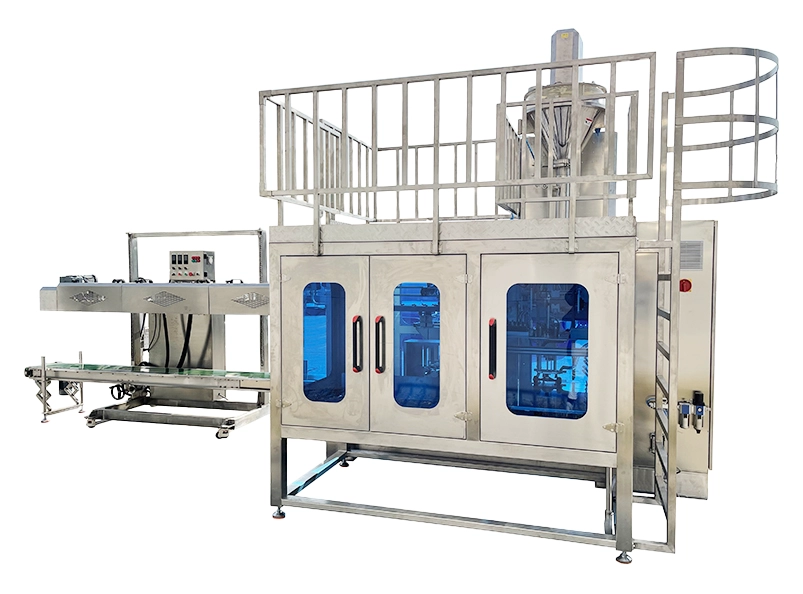
    Stainless steel automatic bagging machine with blue inspection windows and bag magazine conveyor

    Customer scenario: flour bags arrive, but the last meter is the problem

    In a flour packaging plant, the filling step is only part of the job. The real trouble often starts after the bag leaves the filling point. A 25 kg kraft paper bag can twist, collapse, or drift off-center before it reaches sewing, especially when the conveyor handoff is too abrupt or the bag mouth is not controlled well enough.

    That is why buyers searching for a flour bagging line are usually not only comparing output speed. They are trying to solve one practical issue: how to make the bag arrive straight, stable, and ready for sewing without sending operators in to straighten every bag by hand.

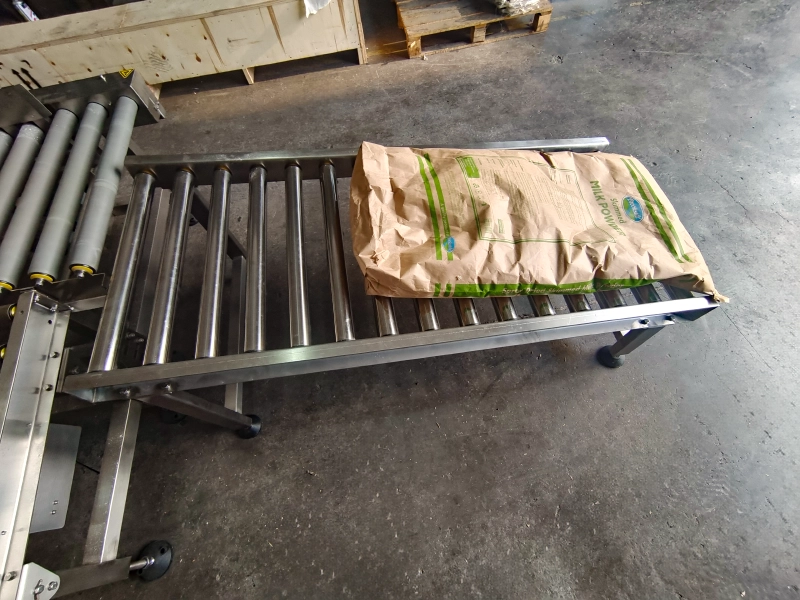
    Stainless steel roller conveyor with kraft paper bag, used for bag transfer in packaging line
    Common pain point

    If the filled bag arrives skewed, the sewing head becomes unstable, operators waste time correcting position, and the whole powder packaging line slows down at the final transfer point.

    Why Mipline fits this powder packaging line task

    Mipline is built as an automatic powder packaging and bagging line for dry powders packed into industrial bags, especially 25 kg kraft paper or woven bags. Its structure is designed around controlled bag handoff before sewing: an enclosed stainless steel bagging station, a bag magazine conveyor, visible inspection windows, transfer conveyors, and roller sections that help guide the bag smoothly to the next step.

    For flour, this matters because the bag must stay square and supported while moving across the line. The twin-belt and roller conveyor style transfer reduces sudden movement, while the clamping and guided handoff help the bag mouth stay ready for sewing or sealing.

    Engineering focus: stable bag transfer before sewing is often more valuable than raw conveyor speed, because the final alignment decides whether the sewing station runs smoothly or needs constant manual correction.

    Structure and evidence from the machine photos

    The visual evidence in the product images shows a stainless steel automatic bagging machine with blue inspection windows, a bag magazine conveyor, and transfer sections designed for industrial bag handling. The conveyor path is not exposed as a loose open line; it is organized as a guarded packaging workflow with controlled access and a clearer maintenance layout.

    Another image shows a kraft paper bag on a roller conveyor transfer section. That detail is important for flour customers: the conveyor is not just moving product, it is keeping the bag aligned before it reaches the sewing area. This is the difference between a line that simply transports bags and a flour bagging line that actually supports better final packaging quality.

    Old setupMipline result
    Bag twists before sewingCleaner bag handoff before sewing
    Operators straighten bags manuallyReduced manual bag straightening
    Unstable sewing head entryStable bag transfer before sewing
    Open, hard-to-maintain transfer zoneStainless steel enclosed bagging station with inspection windows

    Need a flour packaging line that keeps 25 kg bags straight?

    If your plant needs dry powder packaging equipment for flour, starch, or other food powders, Mipline is designed to improve the last transfer before sewing and make the line easier to run with fewer manual corrections.

    Request a flour line solution
  • Mipline Powder Packaging Line for Cleaner Bag Handoff Before Sewing

    Mipline Powder Packaging Line for Cleaner Bag Handoff Before Sewing

    Automatic powder packaging line

    Mipline Powder Packaging Line for Cleaner Bag Handoff Before Sewing

    For 25 kg milk powder, flour, starch, and other dry powders, the key challenge is not only filling the bag. The real issue is keeping every filled bag square, aligned, and stable before sewing. Mipline is built for that handoff.

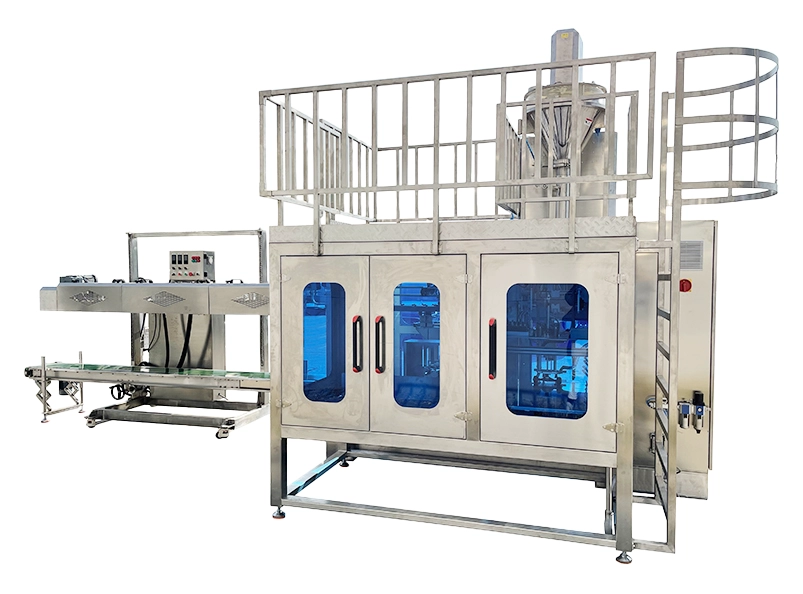
    Stainless steel automatic bagging machine with blue inspection windows and bag magazine conveyor

    The customer problem: good filling, bad bag handoff

    In dry powder plants, the bag often looks fine at the filling point and then fails at the next step. The filled kraft paper bag twists, collapses, or arrives skewed at the sewing head. Operators then spend time straightening every bag by hand at the last meter of the line.

    That creates three common problems: unstable sewing, slower output, and inconsistent appearance on finished bags. For a milk powder packaging machine or a flour bagging line, the weak point is often the transfer between filling, conveying, clamping, and sewing.

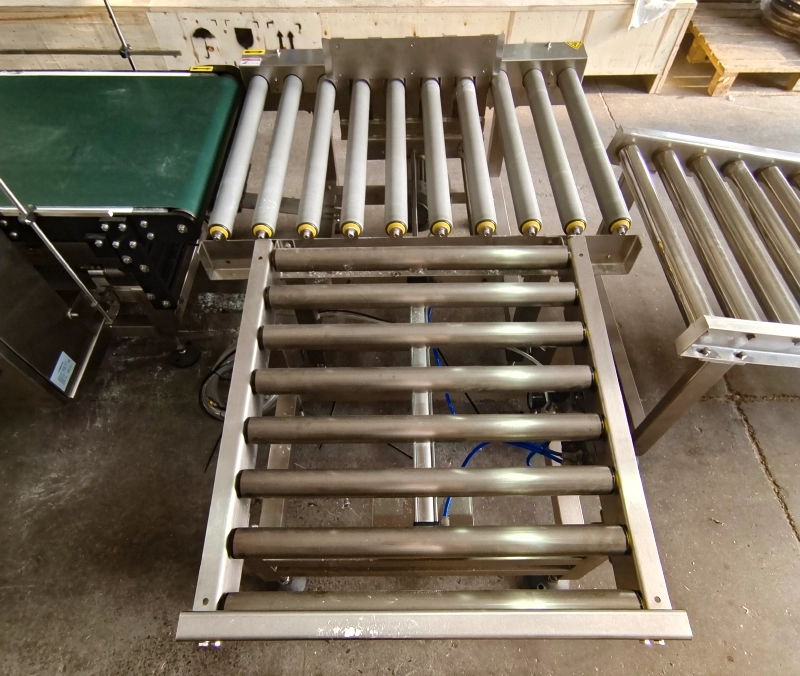
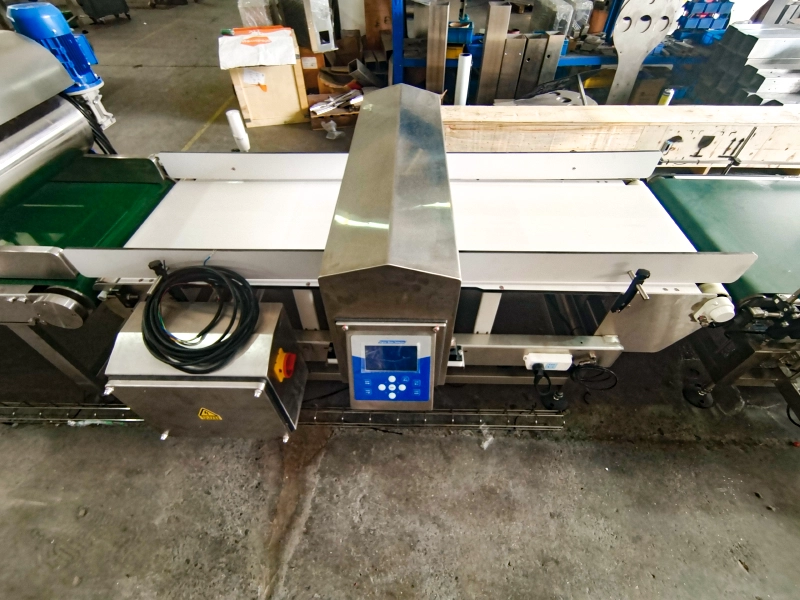
    Roller conveyor transfer section for keeping powder bags aligned before sewing
    Why this matters

    If the bag mouth reaches the sewing station out of square, the sewing head works harder, the operator gets more involved, and the line loses repeatability. The goal is stable bag transfer before sewing, not manual correction after the fact.

    Why Mipline fits dry powder bagging work

    Mipline is an automatic powder packaging and bagging line designed for industrial bags, especially 25 kg kraft paper or woven bags. The visible equipment structure matches the problem: an enclosed stainless steel bagging station, bag magazine conveyor, blue inspection windows, green transfer conveyors, roller conveyor sections, bag clamping, and a clear handoff path before sewing or sealing.

    That structure helps the line keep bags straight, reduce manual bag straightening, and improve the handoff from filling to closure. In practice, this is the difference between a line that merely fills bags and a line that produces stable finished bags at production speed.

    Engineering point: The transfer section is not decoration. It is the part that protects the bag shape, guides the bag mouth, and gives the sewing station a more consistent presentation.

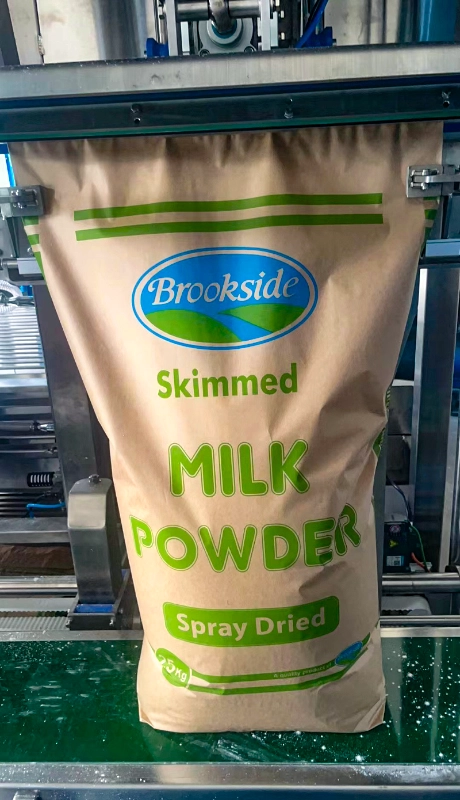
    Real industrial photo of a Brookside skimmed milk powder kraft bag held at automatic bagging clamp station

    What the structure and images show

    The photos show a real production layout, not a concept sketch. You can see the enclosed stainless steel bagging station, the conveyor interfaces, the clamp point, and the guided transfer path. The machine is built to keep bags square before sewing and to maintain a cleaner flow between stations.

    For buyers in dairy powder, flour, starch, and other food powder plants, this matters because the line must stay clean, stable, and easy to maintain. The guarding and inspection windows also support safer operation and quicker access during service.

    Visible evidenceWhat it doesBuyer result
    Stainless steel automatic bagging station with inspection windowsProvides an enclosed, serviceable bagging coreCleaner layout and easier maintenance access
    Roller conveyor transfer sectionKeeps powder bags aligned during transferMore stable sewing and less manual straightening
    Bag clamp station with kraft paper milk powder bagHolds the bag mouth in a controlled positionBetter bag shape before closure
    Twin-belt transfer conveyor with side guidesSupports guided bag handoff between stationsCleaner flow from filling to sewing or sealing
    Stainless-steel twin-belt transfer conveyor with central control housing and adjustable side guides

    Result: straighter bags, steadier sewing, cleaner output

    When the transfer section does its job, the line stops fighting the bag. The result is a more stable powder packaging line, less manual correction, and a better finished bag before sewing or sealing. That is the real value of Mipline in milk powder, flour, starch, and other dry powder applications.

    Request a powder bagging line review
  • How a vertical packaging machine and secondary bagging line solve salt and powder handling at scale

    How a vertical packaging machine and secondary bagging line solve salt and powder handling at scale

    Secondary packaging line for bulk products

    How a vertical packaging machine and secondary bagging line solve salt and powder handling at scale

    For bulk products such as salt, powders, and other free-flowing materials, the packaging problem is rarely the film alone. The real pressure sits in dosing accuracy, stable transfer, hygienic design, and the ability to move primary packs into a stronger secondary bag without crushing, leakage, or slow changeovers.

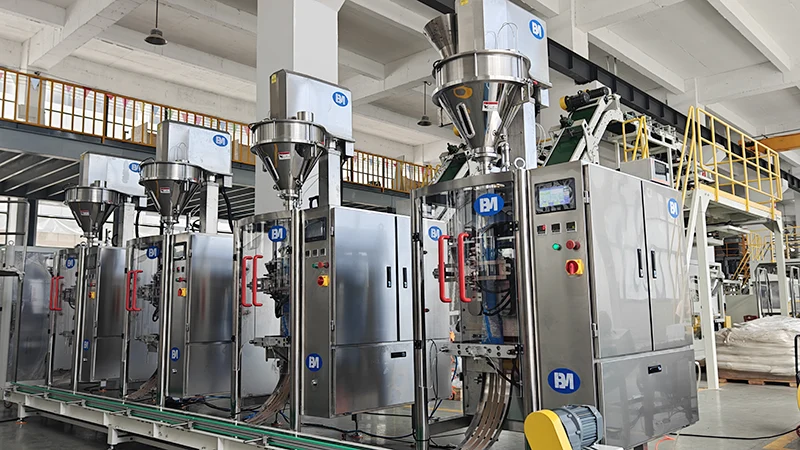
    Row of four vertical packaging machines with stainless hoppers for bulk products

    Scenario: one line, two packaging stages

    A typical customer need starts with a stable primary pack: a vertical packaging machine for bulk products, an auger dosing hopper, and a control system that can keep fill weight under control. After that, the plant often still needs automated secondary packaging to group smaller packs into woven PP sacks or film overpacks for shipping and warehouse handling.

    When the old setup depends on manual bag handling, the line becomes sensitive to operator skill, inconsistent output, and product loss. That is why the machine package must cover both the primary filling point and the downstream transfer logic, not just the sealing jaw.

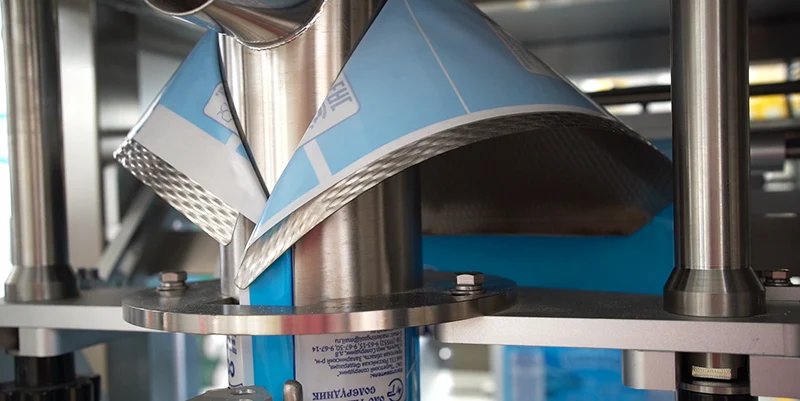
    Dimpled stainless steel forming shoulder on a vertical packaging machine for bulk powders
    Pain point

    Manual transfer between filling, checking, and secondary packing creates unstable throughput, more rework, and avoidable contamination risk.

    Why this bibpu configuration fits the job

    The bibpu configuration addresses the problem from the feed zone onward. The vertical packaging machine section handles bulk-product dosing, film control, and sealing stability. The secondary packaging section then groups finished packs into a larger container or sack, which is a practical path for salt, powders, and other granular materials that must move safely through warehouse and logistics steps.

    The product logic is simple: use the vertical wrapper for accurate primary packs, then use automated secondary packaging to protect those packs during palletizing, transport, and storage. The result is less manual contact and a cleaner route from machine output to shipping-ready units.

    Expert note: For bulk products, the most important part of the line is not a single machine rating. It is whether the dosing head, guide surfaces, sealing zone, and downstream bagging station work as one controlled flow.

    Structure evidence from the machine and line images

    The image set shows the key evidence clearly: a row of vertical form fill seal machines with stainless hoppers for continuous filling, a dimpled forming shoulder to reduce film sticking, and a secondary bagging station that loads refined salt packets into a woven PP sack. Together, these images support the same process story: stable primary packs first, then controlled secondary packaging.

    For customers comparing packaging machine options, this is where the details matter. Hygienic design, dosing stability, film tracking, and safe transfer geometry are what keep the line running. The system is suitable for bulk-product packaging machine projects where consistency is more important than a one-off demo speed number.

    StageVisible evidenceBusiness effect
    Primary fillingFour VFFS machines with stainless hoppersContinuous filling for bulk products
    Film controlDimpled forming shoulderLess sticking and smoother bag formation
    Secondary packagingPackets loaded into woven PP sackBetter transport protection and handling

    Result: cleaner handling, steadier output, easier logistics

    With the right packaging line for bulk products, the plant gets a more predictable route from dosing to final dispatch. That means better accuracy, less manual work, and a secondary packaging flow that matches warehouse reality instead of fighting it.

    Request a packaging line proposal