Automatic Bagging Machine & Palletizing Systems Manufacturer

Category: English

  • Sugar Stick Packet Filling: Is a Premade-Bag Zpacker the Right Machine?

    Sugar Stick Packet Filling: Is a Premade-Bag Zpacker the Right Machine?

    PACKAGING EQUIPMENT GUIDE

    Sugar Stick Packet Filling: Is a Premade-Bag Zpacker the Right Machine?

    Sugar producers comparing stick sachets with premade paper bags need to start with the package, not the machine name. Zpacker is an automatic paper bag packing machine for powder-focused applications, including flour packaging lines and selected premade bag formats. Its fit for a narrow sugar stick packet must be confirmed from the actual bag sample, material behavior, and target output.
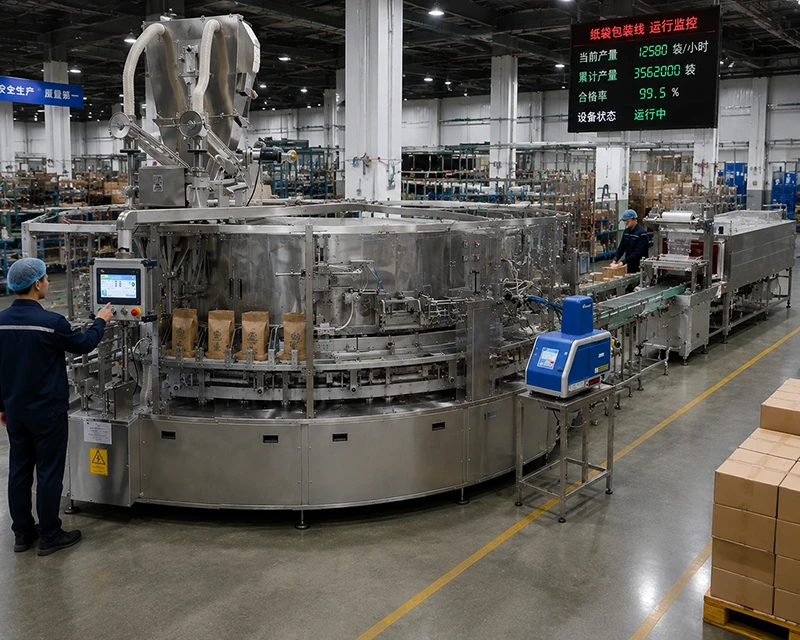
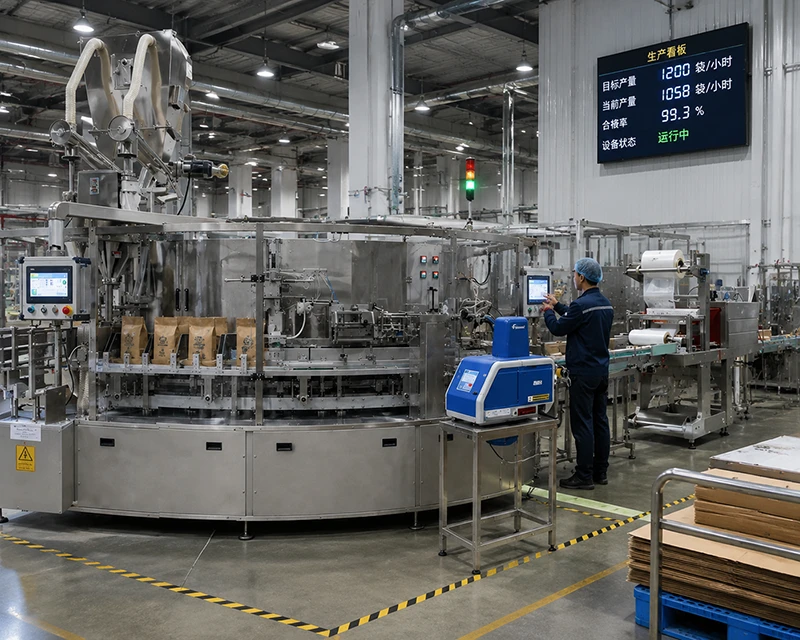
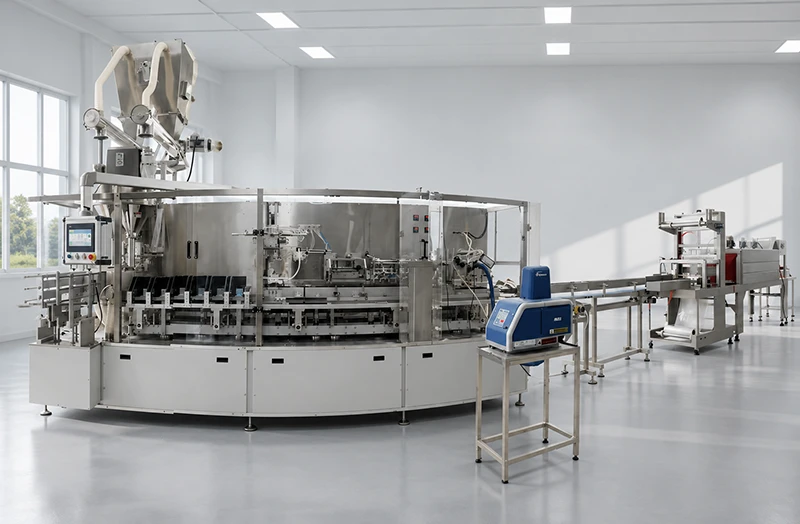
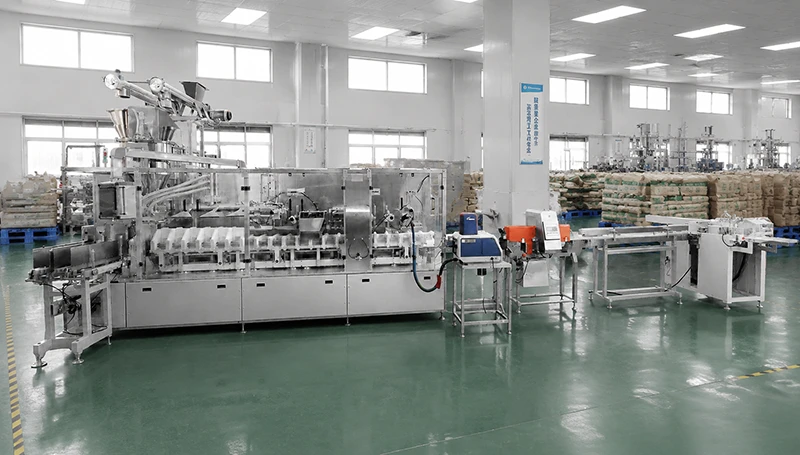
    Large workshop view of zpacker automatic packing line with operator control screen and material handling area

    Start with the customer’s sugar package format

    A sugar plant may describe its requirement as a stick packet for sugar packing, but that phrase can cover two different production concepts. A conventional stick-pack line forms narrow sachets from roll film. Zpacker, by contrast, is designed to take premade paper or paper-plastic bags, open them, fill them, reshape the top and close them with hot-melt glue. The package format therefore determines whether the machine is relevant.

    For a producer using premade M-fold, square-bottom bags, Zpacker can cover the connected sequence from bag feeding and opening to dosing, settling, dust removal, edge folding, glue application and top pressing. For a narrow roll-film stick sachet, the project should not be treated as a standard Zpacker order. The bag sample, dimensions, sugar flow characteristics and sealing method must be reviewed first.
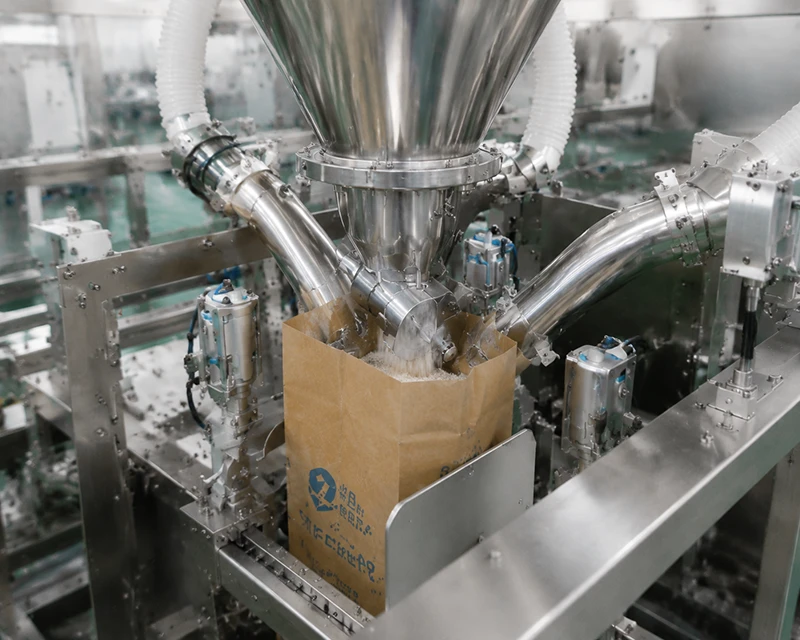
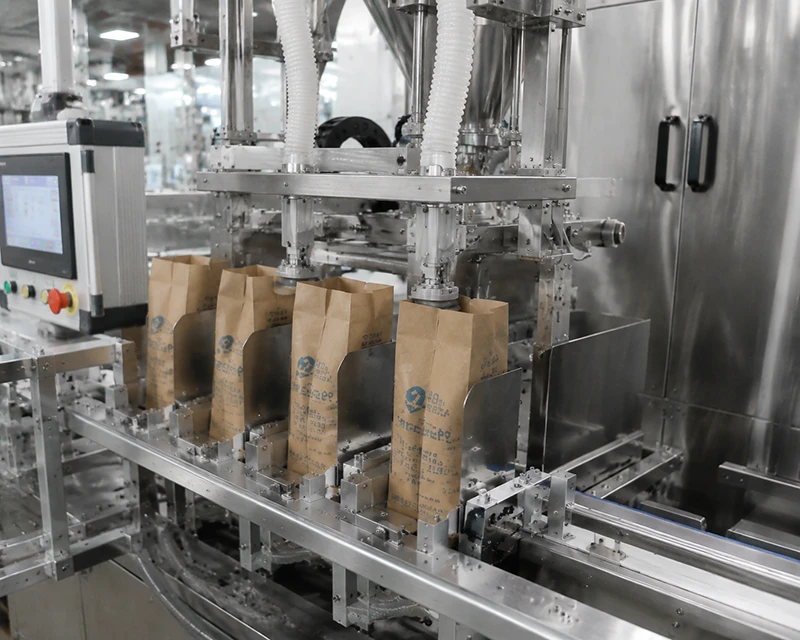
    Powder screw dosing station on zpacker automatic paper bag packing machine with conical hopper and open kraft bag
    Why a generic sugar filling machine may leave gaps

    Manual filling creates repeated weighing, bag positioning and closing work. A semi-automatic machine can improve dosing but still leave operators to open bags, remove settled air, fold the M-edge and prepare packs for inspection or secondary packaging. A conventional powder filler also cannot automatically handle a premade M-fold bag’s full transition from flat pack to sealed finished bag.

    Where Zpacker fits the process

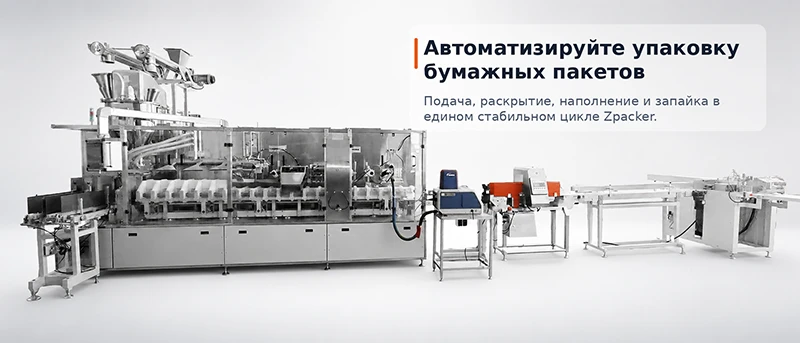
    Zpacker is built around a dual-station, in-line premade-bag process. A belt-fed bag system takes the prepared bag from the magazine; the bag is opened and held at the filling position; a screw dosing unit delivers the product; and downstream stations support vibration, settling and dust removal before the top is formed and glued. The indexed machine images show the bag clamps, conical hopper, dosing outlet and touchscreen at the relevant workstations.

    For sugar, this is a qualification question rather than a guaranteed application claim. The team should test whether the sugar is free-flowing or dusty, whether the bag is paper or paper-plastic, and whether the requested “stick packet” is actually a premade M-fold bag. Paper-plastic bags also require confirmation of layer adhesion and glue compatibility. If the format is accepted, the same line can be arranged with checkweigher, metal detector, date printer, pack arrangement and secondary wrapping or manual bagging.

    Engineering checkpoint: Do not compare only the advertised filling speed. Compare the complete package path: bag presentation, dosing, air release, closure, inspection and downstream handling. This is the difference between a machine that fills product and an automatic packaging line that produces a shippable pack.

    Evidence and reference parameters for a project review

    The product brief records Zpacker as a powder-focused, fully automatic dual-station paper bag packing machine. Reference configurations cover approximately 1–2 kg and 2.5–5 kg bag ranges, with packaging speed depending on product, feeding and site conditions. These ranges are relevant to retail flour and powder bags, but they do not automatically describe a narrow sugar stick sachet. Final acceptance must follow the approved bag sample and test plan.

    The line can use a 10.4-inch touchscreen, PLC-based control, 304 stainless steel on product-contact parts, approximately 15.5 kW connected power, and about 0.5–0.8 MPa compressed air depending on the final configuration. The reference air consumption is about 0.76 m³/min. These are planning values, not a substitute for the final BOM. Safety logic includes no-bag protection, pressure alarms and glue-temperature alarms.

    Project questionWhat the Zpacker review should confirm
    Is it a true stick sachet?Confirm whether the pack is roll-film formed or a premade M-fold paper bag.
    What retail weights are required?Check the 1–2 kg or 2.5–5 kg reference range against the actual sugar pack.
    How will the bag close?Confirm top folding, hot-melt dot or line spraying, and glue compatibility.
    What quality controls are needed?Define checkweighing, metal detection, coding and the secondary-pack route.
    What must be supplied for testing?Provide sugar, filled bag samples, bag orientation, dimensions and target rate.

    Confirm the sugar bag before selecting the machine

    Send the actual empty bag, target weight, sugar specification and required output. BPM can then determine whether the application belongs to a Zpacker premade paper bag packaging line or requires a different stick-pack process, and define the appropriate dosing, dust removal, inspection and closing configuration.

    Discuss your sugar packaging format
  • Flour Packaging Line: How Zpacker Handles 1–5 kg Premade Paper Bags with Less Dust and Manual Work

    Flour Packaging Line: How Zpacker Handles 1–5 kg Premade Paper Bags with Less Dust and Manual Work

    FLOUR PACKAGING LINE | ZPACKER

    Flour Packaging Line: How Zpacker Handles 1–5 kg Premade Paper Bags with Less Dust and Manual Work

    For flour mills, milling complexes and food production plants, Zpacker is an automatic paper bag packing machine for powder dosing, bag forming, dust removal and sealed 1–5 kg retail packs. The process is built around premade kraft or paper-plastic bags rather than roll film.

    Zpacker automatic paper bag packing machine for flour packaging line in a clean workshop with screw dosing, touchscreen control and outfeed conveyor

    Why manual flour packing becomes difficult at retail scale

    In a flour mill or bakery supply operation, manual filling usually means separate actions for taking a bag, opening it, holding it under the outlet, settling the powder and closing the top. A semi-automatic machine may remove one action, but operators still have to coordinate the premade bag and the final seal. The result is an uneven rhythm when the line must run through 1 kg, 2 kg and 5 kg formats.

    Powder also creates a process problem. If the bag is not settled before sealing, flour can remain around the mouth, escape into the work area or interfere with closure. A vertical packaging machine for roll film addresses a different package format; it is not a direct replacement when the customer already uses M-fold square-bottom paper bags or kraft bags supplied as finished bags.

    Zpacker powder screw dosing station for flour packaging in an open kraft paper bag with conical hopper and dust removal process
    The key selection issue

    The package is not only a container. Its width, length, M-fold side gusset, orientation and paper or paper-plastic construction determine whether a machine can open, fill, reform and seal it consistently.

    Why Zpacker fits premade paper bags for flour and powder

    Zpacker is a fully automatic, twin-station linear powder paper bag packing machine for powder products. A belt-fed bag system takes a premade bag from the magazine, opens it into a stable three-dimensional shape and positions it at the dosing station. The bag then passes through screw dosing, vibration and dust-removal stages before the M edge is folded back, trimmed, rolled and closed with hot-melt glue by spot or line application.

    This sequence matters for a package that is already manufactured. Zpacker does not make a film pouch first; it completes the handling sequence required by a paper bag, kraft bag or compatible paper-plastic bag. Its dual-station design supports continuous operation logic: a station can stop and alarm when a bag is missing while the available station continues, subject to the final configuration and acceptance conditions.

    Engineering note: Confirm the actual bag sample before quotation. Reference dimensions are W 80–140 mm, L 240–320 mm and an M edge of about 60–80 mm. The final bag direction, material-layer adhesion and glue compatibility must be tested against the customer’s sample.

    From screw dosing to inspection and secondary packaging

    The machine structure is easier to evaluate as a process chain rather than as a single filler. A silo or buffer hopper can feed a horizontal screw conveyor and twin screw dosing system. After filling, several vibration and dust-removal positions help the flour settle and reduce powder around the sealing zone. The finished packs can then connect to a conveyor, checkweigher, metal detector, date printer, pack arranger and secondary packaging equipment.

    For a food production project serving Russian retail requirements, the useful reference points are the common 1 kg, 2 kg and 5 kg flour formats. The following figures are planning references, not a universal production guarantee. Material flow, feeding capacity, bag quality and the final line layout affect the accepted speed.

    ItemReference for project planningWhat must be confirmed
    Pack formats1–2 kg on one format range; 2.5–5 kg on anotherTarget SKU, bag sample and changeover method
    Reference speedAbout 30–35 bags/min for 1–2 kg; about 15–20 bags/min for 2.5–5 kgFlour characteristics, supply and acceptance test
    Dosing accuracyAbout ±0.5% referenceMaterial test and final weighing criteria
    Utilities15.5 kW; 380 V ±10%, 50 Hz; air consumption about 0.76 m³/minFinal BOM, air pressure and plant connection
    Quality checksCheckweigher, metal detector and date printer can be connected downstreamRequired rejection logic and line interface
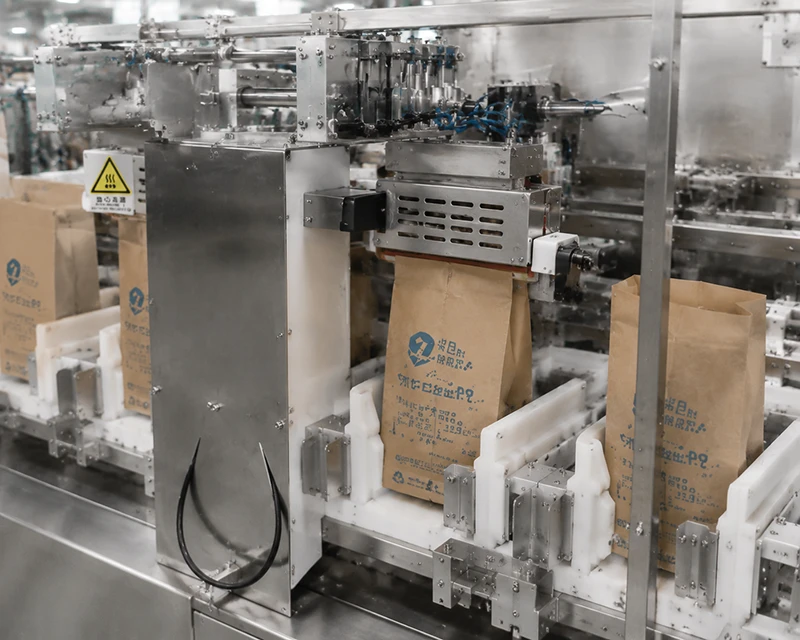
    Zpacker automatic kraft paper bag feeding and opening station with bag clamps, stainless frame and touchscreen for premade paper bag packaging
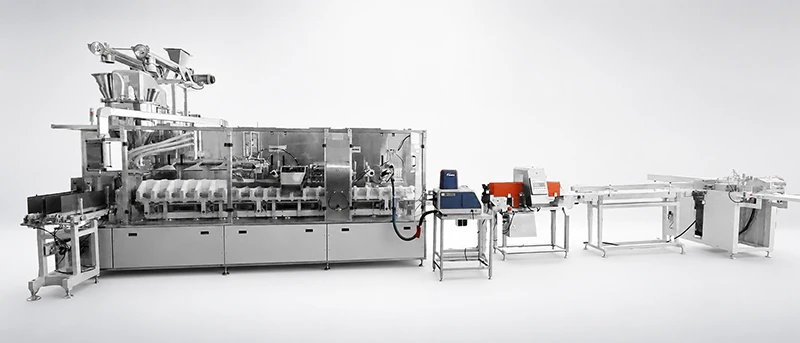
    Zpacker full automatic paper bag packaging line with dosing unit, conveyor and downstream equipment for 1 kg to 5 kg flour packing

    Specify the bag before specifying the machine

    Send the flour or powder sample, target 1 kg, 2 kg or 5 kg format, premade bag dimensions, M-fold details, desired speed, supply conditions and available space. BPM can then define the automatic packaging line, dust-removal stages and downstream checkweigher or metal-detector interface around the actual bag.

    Discuss your flour packaging line
    Zpacker packaging machine in a large workshop with operator, control screen and automatic flour packing line for continuous production
  • Flour Milling Complex: How a Zpacker Flour Packaging Line Controls Dust and Labor

    Flour Milling Complex: How a Zpacker Flour Packaging Line Controls Dust and Labor

    FLOUR PACKAGING LINE | ZPACKER

    Flour Milling Complex: How a Zpacker Flour Packaging Line Controls Dust and Labor

    For flour mills and food production plants, an automatic flour packaging machine must do more than fill a bag. Zpacker is an automatic paper bag packing machine for 1–5 kg flour and powder formats, linking screw dosing, dust removal, sealing and downstream inspection in one automatic packaging line.

    Wide zpacker full packaging line for flour paper bags with automatic packaging machine, feeding system, conveyor, and bag handling area

    Why manual flour bagging becomes a production constraint

    In a flour mill, the route from a silo or buffer hopper to the retail bag looks simple on a flow chart. In practice, operators may still take a flat paper bag, open it, position it under the filler, wait for the dose, settle the powder, clean the mouth and close the top. Manual powder filling in a continuous process creates variation in timing, bag position and housekeeping.

    Powder makes the weakness more visible. If the bag is not opened correctly, flour can escape around the mouth. If the product is not settled before sealing, the bag may be unstable and the sealing area may carry dust. A semi-automatic machine can reduce part of the work, but it does not automatically solve the complete M-fold bag sequence or the connection to checkweighing, metal detection and secondary packaging.

    Powder screw dosing and flour filling station on zpacker with conical hopper and open kraft paper bag
    Close view of zpacker automatic paper bag feeding and opening station with kraft bags, bag clamps, stainless frame, and touchscreen
    The key selection question is not only speed

    For flour, the correct equipment must match the powder, bag construction, retail weight, available feeding system and required downstream controls at the same time. A machine designed for roll film, liquid filling or valve sacks is not automatically suitable for a premade kraft package with side folds.

    Why Zpacker fits premade paper bags and powder dosing

    Zpacker is built as a fully automatic, two-station linear system for premade paper or paper-plastic bags. The belt-fed bag handling section takes a flat M-fold square-bottom bag, opens it into a three-dimensional package and holds it in position for filling. After dosing, the line returns to the bag geometry: settling and dust-removal operations are followed by M-edge folding, trimming, edge rolling, glue spraying and top pressing. The sealing method is hot-melt point or line spraying with pressing, rather than heat sealing.

    The product range is organized around common flour retail formats. One configuration covers approximately 1–2 kg and another approximately 2.5–5 kg. Reference speed is about 30–35 bags per minute for 1–2 kg and about 15–20 bags per minute for 2.5–5 kg, while material, feeding stability and site conditions determine the final acceptance value. The reference dosing accuracy is approximately ±0.5% (5‰). Bag samples remain essential because the reference envelope—about 80–140 mm wide, 240–320 mm long and 60–80 mm side fold—must be checked against the actual bag.

    Engineering note: Common retail planning points include 1 kg, 2 kg and 5 kg flour bags. The practical specification must still confirm bag direction, M-fold size, powder flow, dust behavior, air supply and the required line layout before quotation.

    Clean full-line view of zpacker paper bag packaging system with dosing unit, outfeed conveyor, and downstream equipment

    From screw dosing to inspection and group packing

    A practical automatic packaging line can start with a flour storage silo or buffer hopper, then use a screw conveyor or elevator to feed a twin-screw dosing section. Zpacker handles the premade bag sequence, while the outfeed can be connected to a checkweigher, metal detector, date printer, bag arranger and a secondary packing step. Depending on the logistics requirement, finished small bags may enter a heat-shrink group pack or be manually placed into a larger sack or case before palletizing.

    This modular flow addresses the original labor problem without claiming that every project has the same output. Operators can focus on material supply, inspection and exception handling instead of repeating every bagging action. Safety logic is also part of the process: when no bag is detected, the machine does not open, fill or seal; pressure, guard, motor, variable-frequency drive and glue-temperature abnormalities can trigger an alarm or stop. Product-contact and exposed relevant parts are specified as 304 stainless steel, with the final bill of materials confirmed for each project.

    Large workshop view of zpacker automatic packing line with operator, control screen, and material handling area
    Project itemZpacker referenceWhat must be confirmed
    Product and packFlour or compatible powder in premade paper or paper-plastic M-fold bagFlowability, dust behavior, bag layers and bag direction
    Retail formatsApproximately 1–2 kg or 2.5–5 kg; common points include 1 kg, 2 kg and 5 kgTarget weight range and changeover requirements
    Dosing and outputReference accuracy about ±0.5%; speed depends on format and conditionsFeeding capacity, test results and acceptance speed
    Utilities15.5 kW; 380 V ±10%, 50 Hz; air demand about 0.76 m³/minFinal air pressure, electrical supply and installation space
    Downstream controlCheckweigher, metal detector, marking, arranging and group packing can be connectedRequired inspection sensitivity and packing route

    Build the flour packaging line around the real bag sample

    Send the flour type, target weights, bag drawings or samples, expected output and available utilities. BPM can then confirm the screw dosing, dust-removal, sealing and downstream configuration for a Zpacker project instead of forcing a premade paper bag into a generic vertical packaging machine.

    Discuss your flour packaging line
  • Flour Mill Packaging: How Zpacker’s Automatic Paper Bag Packing Machine Controls Dust and Labor

    Flour Mill Packaging: How Zpacker’s Automatic Paper Bag Packing Machine Controls Dust and Labor

    Flour packaging line | Zpacker
    Flour Mill Packaging: How Zpacker’s Automatic Paper Bag Packing Machine Controls Dust and Labor

    For a flour mill or food production plant handling 1–5 kg retail packs, Zpacker combines premade paper bag handling, screw dosing, dust removal and downstream inspection in one automatic packaging line. The result is a more controlled route from flour silo to sealed bag, without relying on separate manual operations at every station.

    Large workshop view of zpacker packaging machine with operator, control screen, automatic packing line, and material handling area

    Why manual flour bagging becomes a production bottleneck

    In a flour mill, the difficult part is not only putting powder into a bag. Operators may need to pick a flat kraft bag, open it, hold it under the filling point, settle the powder, clean the mouth and close the bag. With manual handling or a semi-automatic machine, each handoff creates variation in timing, fill level and sealing cleanliness. Dust can also escape when the bag is not supported or when the product has not settled before closing.

    Zpacker is intended for this specific process: automatic packaging of flour and compatible powders in premade paper or paper-plastic M-fold, square-bottom bags. It is not a vertical film-forming machine and not a liquid filler. That distinction matters when a plant already has a supply chain for finished paper bags and needs the bag opening, filling and closure stages to work as one sequence.

    Close view of zpacker automatic paper bag feeding and opening station with kraft bags, bag clamps, stainless frame, and touchscreen
    The selection issue is the bag and the powder, not only the target speed

    Before specifying an automatic packaging machine, confirm the flour’s flow and dust characteristics, the bag direction, M-fold dimensions, paper or paper-plastic construction, required pack weights and available utilities. These details determine whether the machine can open the bag cleanly, dose consistently and apply adhesive to a suitable sealing surface.

    How the Zpacker process matches a premade M-fold bag

    The line uses a belt-fed bag path. A bag magazine and pickup mechanism take a flat bag, open it into its three-dimensional form and position it at the filling station. The screw dosing unit then delivers flour from the hopper into the supported bag. The filling area includes dust-control measures, while subsequent vibration and dedusting stations help the powder settle and reduce air before closure.

    After filling, the sequence handles the operations that a conventional powder filler may leave to operators: folding the M sides, trimming and rolling the mouth, applying hot-melt adhesive by dot or line spray, and pressing the top into shape. The machine can then connect with a conveyor, checkweigher, metal detector, date printer, bag arranger and secondary packaging route such as shrink bundling or manual over-bagging.

    Side detail of zpacker paper bag packaging machine with bag magazine, opening area, vertical mechanism, air lines, and standing paper bags

    Engineering note: The dual-station straight-line arrangement is designed so a station without a bag can stop and alarm while the available station continues, subject to the final configuration and acceptance logic. This should be verified with the approved technical proposal rather than treated as an unconditional output guarantee.

    Reference configuration for 1–5 kg flour packaging

    Retail flour formats commonly include 1 kg, 2 kg and 5 kg paper bags. Zpacker separates the reference weight ranges so the dosing and bag-handling setup can be matched to the requested format. The figures below are planning references; final performance depends on the material, bag sample, feeding system and site test.

    For a flour packaging line, the practical design question is therefore how the packaging machine connects to the upstream silo or buffer hopper and downstream quality-control equipment. A screw conveyor or elevator can feed the dosing hopper, while inspection and conveying equipment keep manual intervention focused on checks and exceptions rather than repetitive bag handling.

    Reference itemZpacker planning informationWhy it matters
    Pack formatsAbout 1–2 kg and 2.5–5 kg by configurationMatches common 1 kg, 2 kg and 5 kg flour retail bags
    Reference speedAbout 30–35 bags/min for 1–2 kg; 15–20 bags/min for 2.5–5 kgUse the final proposal and acceptance test for the confirmed rate
    Filling accuracyApproximately ±0.5% (5‰)Provides a starting point for weight-control discussions
    Bag envelopeW 80–140 mm; L 240–320 mm; M-side about 60–80 mmSample-bag confirmation is required before final engineering
    Utilities380 V ±10%, 50 Hz; about 15.5 kW; air consumption about 0.76 m³/minAllows the plant to check electrical and compressed-air capacity
    Full zpacker paper bag packaging line with main bagging machine, upper dosing structure, conveyor platform, and right-side downstream unit
    Powder screw dosing and filling station on zpacker with conical hopper, inclined auger outlet, and open kraft paper bag

    The machine is built around a 304 stainless steel product-contact area, a 10.4-inch touchscreen and automatic alarms for missing bags, abnormal air pressure, safety opening, drive faults and adhesive temperature. Component brands and the exact air-pressure range should be confirmed in the final BOM. A reference layout of roughly 17 m by 3.6 m has been discussed for a complete line, but it is not a fixed machine footprint.

    Wide bright workshop view of zpacker flour packaging line with horizontal paper bag packing machine, upper feeding system, conveyor, and bag handling area

    Specify the bag before selecting the line

    Send the flour specification, target weights, sample M-fold bags, expected output, bag direction, available air and electrical supply, and floor-plan constraints. BPM can then define the suitable screw dosing, paper bag handling, dust-removal and inspection configuration for your automatic flour packaging line.

    Discuss your flour packaging project
  • Small Powder Filling Equipment for Flour: How Zpacker Connects Bagging and Dust Control

    Small Powder Filling Equipment for Flour: How Zpacker Connects Bagging and Dust Control

    Small powder filling equipment
    Small Powder Filling Equipment for Flour: How Zpacker Connects Bagging and Dust Control

    For a flour mill, bakery, or food-production plant packing 1 kg, 2 kg, and 5 kg paper bags, zpacker combines premade bag handling, screw dosing, dust removal, and sealing in one automatic packaging line.

    Factory floor view of zpacker automatic paper bag packaging machine for small flour filling, with blue touchscreen, hopper, and surrounding production line

    Why manual powder filling becomes the production bottleneck

    In small-bag flour packaging, an operator may need to pick up a paper bag, open it, hold it under the feeder, watch the fill, and close the top. Repeating those actions throughout a shift makes output dependent on manual handling. A semi-automatic machine removes only part of the work and often leaves bag feeding, positioning, and transfer between stations to the operator.

    Dust is a second problem. If powder settles unevenly, the bag can remain unstable; if flour reaches the sealing area, the closure process becomes harder to control. An effective powder filling machine must therefore match the product with the bag construction and include a process for settling and dust removal, rather than treating dosing as an isolated operation.

    Large workshop view of zpacker automatic packaging line for flour and powder bags, with operator, control screen, and material handling area
    The key purchasing question

    The requirement is not simply to fill a premade bag. The line must take and open an M-fold square-bottom kraft bag, dose the powder, remove excess air and dust, restore the M-fold, apply adhesive, and press the top into a finished package.

    Why zpacker fits premade paper bag packaging

    zpacker is a fully automatic, dual-station linear paper bag packaging machine for premade paper or paper-plastic bags with side gussets and a square bottom. A belt-fed system transfers the bags through the line. Two bagging and dosing positions work in coordination; when a bag is missing, the relevant position can stop and signal an alarm instead of sending an empty or incorrectly positioned package to the next operation.

    The process continues after filling. Vibration and dust-removal stations help the flour settle and reduce powder around the bag mouth. The machine then handles the M-fold sequence, including folding, edge trimming, rolling, hot-melt adhesive application by dots or line, and top pressing. This is different from a vertical form-fill-seal machine, which makes a pouch from roll film, and from valve-bag filling equipment, which uses another bag format.

    Practical selection point. If a plant already buys finished paper bags and wants retail flour packs from 1 kg to 5 kg, the bag sample, feed direction, and flour properties should be confirmed first. Those inputs affect screw-dosing setup, adhesive sealing, and the downstream inspection arrangement.

    Full zpacker flour packaging line with paper bag packing machine, dosing structure, conveyor platform, and downstream inspection unit

    What to confirm before ordering an automatic packaging line

    For preliminary selection, one machine range covers approximately 1–2 kg and another covers approximately 2.5–5 kg. Reference speeds are about 30–35 bags per minute for 1–2 kg and 15–20 bags per minute for 2.5–5 kg. Actual speed depends on flour flow, feeding capacity, bag behavior, and test conditions. Dosing accuracy is approximately ±0.5%; final figures should be stated in the technical proposal and acceptance criteria.

    A complete flour packaging line can include a screw conveyor or elevator, buffer hopper, dual screw dosing, packaging machine, conveyor, checkweigher, metal detector, date printer, bag arranger, and secondary packaging. Finished small bags may be grouped in shrink film or placed into a larger outer bag. This leaves manual work for defined inspection or packing tasks instead of every bag-handling step.

    Customer inputzpacker reference for preliminary selection
    Target fill weightApproximately 1–2 kg or 2.5–5 kg; 1 kg, 2 kg, and 5 kg formats require confirmation by testing.
    Premade bagPaper or paper-plastic M-fold square-bottom bag; reference width 80–140 mm, length 240–320 mm, and side gusset about 60–80 mm.
    Powder behaviorScrew dosing with vibration and dust removal; flowability and dust formation must be checked with a product sample.
    Utilities and layoutReference values include 15.5 kW, 380 V ±10%, 50 Hz, and approximately 3,000 kg machine weight. Air pressure and layout depend on the final configuration.
    Inspection and safetyCheckweighing, metal detection, and date marking can be integrated; missing-bag, pressure, and other abnormal conditions can trigger stopping and alarms.
    Wide bright workshop view of zpacker full flour packaging line with upper feeding system, conveyor, and paper bag handling area

    Plan small powder filling equipment around your bag sample

    Send the premade bag sample, target weights, powder characteristics, and required output before requesting a quotation. BPM can help define the flour packaging line, review dust-removal and inspection needs, and separate confirmed specifications from project references.

    Request a configuration
  • Sugar Packaging Equipment for Stick-Pack Projects: Check the Bag Format Before Choosing Zpacker

    Sugar Packaging Equipment for Stick-Pack Projects: Check the Bag Format Before Choosing Zpacker

    Sugar packaging equipment selection guide

    Sugar Packaging Equipment for Stick-Pack Projects: Check the Bag Format Before Choosing Zpacker

    Buyers looking for sugar stick-pack packaging equipment need to verify one basic point first: is the project for film stick packs, or for premade paper bags? Zpacker is an automatic paper bag packing machine for powder products in M-fold square-bottom bags, with a complete route from bag feeding and screw dosing to dust removal, sealing and downstream inspection.

    Close view of zpacker automatic paper bag feeding and opening station with kraft bags, bag clamps, stainless frame, and touchscreen for premade paper bag packaging

    Start with the customer’s package, not the machine name

    A sugar producer may describe the requirement as stick-pack filling because the retail product is sold in small portions. That wording does not by itself define the packaging technology. A vertical packaging machine normally forms bags from roll film. Zpacker instead receives premade paper or paper-plastic bags, picks each bag from a magazine, opens it, holds it in position and carries it through the filling and closing sequence.

    This distinction matters for procurement. If the required package is a narrow, film-formed stick, the bag-making and sealing concept must be confirmed separately. If the customer already has M-fold paper bags or wants a paper-based 1 kg, 2 kg or 5 kg sugar pack, Zpacker becomes a relevant automatic packaging line to evaluate. Paper-plastic bags also require a sample check for layer bonding and hot-melt adhesive compatibility.

    Powder screw dosing and filling station on zpacker with conical hopper, inclined auger outlet, and open kraft paper bag for flour and sugar packaging evaluation
    Why a manual or semi-automatic route becomes unstable

    Manual bag feeding, opening, weighing and closing adds handoffs at exactly the points where sugar dust, inconsistent settling and sealing contamination can appear. A semi-automatic machine may fill the product, but still leave bag forming, M-edge preparation and downstream handling to operators. The result is harder-to-repeat dosing, more labour input and a packaging line that stops between processes.

    How Zpacker adapts the process to a premade powder bag

    The machine is built around a double-station linear process. A belt-fed bag handling system takes the premade bag from the magazine, opens it into its three-dimensional form and positions it below the dosing point. A screw doser then delivers the powder into the bag. For the recorded configuration, the reference ranges are about 30–35 bags per minute for 1–2 kg packs and about 15–20 bags per minute for 2.5–5 kg packs. Actual speed depends on sugar flowability, feeding capacity, bag samples and acceptance conditions.

    After filling, the route is not finished. Vibration and dust-removal stations help the product settle and reduce powder around the mouth. The M-fold side edges can then be folded, trimmed, rolled, hot-melt sprayed and pressed closed. This is the reason Zpacker should be assessed as equipment for a specific premade-bag process rather than as a generic sugar filler.

    Engineering checkpoint: confirm the bag direction, width, length and M-edge before quotation. Reference dimensions are W 80–140 mm, L 240–320 mm and an M-edge of about 60–80 mm; the final bag drawing and physical sample take priority.

    What the line can cover—and what must be confirmed

    The equipment concept connects the core packaging operation with the checks and handling required by a food production line. A project may include screw conveying, dual screw dosing, weighing inspection, metal detection, date printing, bag arranging and secondary packaging by shrink film or manual outer-bag loading. The correct combination depends on the sugar grade, target pack, retail requirements and factory layout.

    The images show the evidence that matters during technical review: the bag magazine and clamps, the conical hopper and screw outlet, the main machine, the touchscreen and the outfeed route. These are practical checkpoints for replacing manual powder filling with an automatic packaging line while keeping the product and bag format aligned.

    Project itemZpacker referenceBuyer confirmation
    Bag formatPremade paper or paper-plastic M-fold square-bottom bagConfirm it is not a roll-film stick pack
    Pack range1–2 kg or 2.5–5 kg reference configurationsProvide target sugar weights and bag samples
    Dosing and accuracyScrew dosing; approximately ±0.5% reference precisionTest material flowability and define acceptance limits
    Line follow-upCheckweigher, metal detector, printer and grouping can be connectedConfirm inspection, packing and palletizing requirements
    Clean full-line view of zpacker paper bag packaging system with dosing unit, outfeed conveyor, and downstream equipment for an automatic packaging line
    Factory floor view of zpacker horizontal bagging machine with blue touchscreen, upper piping, hopper, and surrounding production line

    Confirm the package before requesting a sugar line proposal

    Send the sugar sample, target weight, bag drawing, M-edge size, bag direction, desired speed, available air supply and layout limits. BPM can then determine whether Zpacker’s premade paper bag process fits the project, or whether a different stick-pack format should be evaluated. The wide line view below represents the connected process; final dimensions and equipment scope follow the confirmed layout.

    Wide bright workshop view of zpacker full packaging line with upper feeding system, conveyor, and bag handling area for powder packaging
    Discuss the bag format and line configuration
  • Sugar Packing Bags in Food Production: How Zpacker Automates 1–5 kg Premade Paper Bag Packaging

    Sugar Packing Bags in Food Production: How Zpacker Automates 1–5 kg Premade Paper Bag Packaging

    ZPACKER | SUGAR PACKING BAGS

    Sugar Packing Bags in Food Production: How Zpacker Automates 1–5 kg Premade Paper Bag Packaging

    For flour mills, bakeries, and food production plants using sugar or other compatible powders, Zpacker is an automatic paper bag packing machine for premade kraft and M-fold bags. Its screw dosing, dust removal, bag forming, and sealing sequence helps replace manual filling with a controlled automatic packaging line.

    Zpacker automatic paper bag packing machine in a food production workshop for sugar packing bags, with touchscreen, dosing structure, and outfeed conveyor

    Why premade sugar packing bags create a difficult automation step

    A sugar or flour pack may look simple at retail level, but a premade paper bag with side gussets and a square bottom requires several controlled movements. The bag must be picked from the magazine, opened into a stable shape, held below the filling point, and kept in the correct orientation. After dosing, the M-fold must be returned, the top edge trimmed and rolled, and the closure prepared with hot-melt adhesive.

    Manual filling or a semi-automatic machine leaves operators to coordinate these steps. The result can be inconsistent bag presentation, powder around the mouth, slower changeovers between 1 kg, 2 kg, and 5 kg packs, and extra labor before checkweighing or secondary packaging. A conventional vertical packaging machine is also not a direct substitute: it normally forms bags from roll film, while Zpacker is designed for finished paper or paper-plastic bags supplied by the customer.

    Zpacker powder screw dosing and paper bag filling station for premade sugar packing bags, showing the hopper, auger outlet, and dust-control filling point
    The key production risk is not only weighing the sugar

    Powder at the bag mouth can interfere with sealing, while insufficient settling can leave an unstable pack. The selected bag, material flow, target weight, and downstream speed must therefore be considered together—not treated as separate machine specifications.

    How Zpacker matches the bag, powder, and production sequence

    Zpacker uses a double-station, in-line premade bag process. A belt-fed bag handling system takes the M-fold square-bottom bag from the magazine and opens it into a three-dimensional bag. The filling section uses screw dosing for compatible powder products. The machine then combines settling and dust-removal operations with M-fold forming, edge trimming, rolling, adhesive spraying, and top pressing. This is the practical reason it can cover the complete path from a flat bag to a closed retail pack.

    The two filling stations are intended to support continuous operation. According to the project configuration, an empty-bag condition can stop and alarm one station while the other station continues; this operating logic must be confirmed during the final design and acceptance test. A 10.4-inch touchscreen and PLC-based control support recipe and sequence management, while no-bag, air-pressure, safety-door, motor, and glue-temperature alarms help prevent filling or sealing under abnormal conditions.

    Specification point: the standard reference range covers about 1–2 kg on one format and 2.5–5 kg on another. Reference speeds are approximately 30–35 bags/min for 1–2 kg and 15–20 bags/min for 2.5–5 kg, with actual performance depending on sugar or powder flow, feeding stability, bag quality, and site conditions.

    What to confirm before specifying a sugar bag packaging line

    The correct selection starts with the actual bag sample rather than a nominal weight alone. Confirm the bag width, length, M-fold or side-gusset dimension, square-bottom construction, paper or paper-plastic layers, and front/back orientation. Reference dimensions are about 80–140 mm wide, 240–320 mm long, and 60–80 mm for the side fold, but the final machine setting must follow the tested bag.

    Next, define the powder characteristics and the required control points. A screw conveyor or silo-fed supply can connect to the dosing section; a checkweigher, metal detector, date printer, conveyor, bag arranger, and heat-shrink or manual outer-bag station can be added downstream. This arrangement turns a single filling machine into an automatic packaging line while retaining a clear route for inspection and secondary packing.

    Project itemZpacker reference or design response
    Pack formatsApprox. 1 kg, 2 kg, 2.5 kg, and 5 kg formats; confirm the final range by bag sample.
    Bag materialPremade paper or paper-plastic M-fold square-bottom bags; verify layer adhesion and glue compatibility.
    Powder dosingScrew dosing with a reference accuracy of about ±0.5% (5‰), subject to material and acceptance testing.
    Dust and settlingFilling-point dust removal plus multiple settling and dust-control stations to support a cleaner, more stable pack.
    Line integrationConveying, checkweighing, metal detection, coding, bag arranging, and secondary packaging can be planned around the main unit.

    Build the right paper bag packing sequence for your product

    Send the sugar or powder sample, target weights, bag drawings, orientation details, and expected output. BPM can use these inputs to confirm the screw dosing arrangement, bag-handling settings, dust-control stages, utilities, and downstream inspection route for a Zpacker automatic packaging line.

    Discuss your bag and output requirements
  • Flour Packaging Equipment for 1–5 kg Paper Bags: How Zpacker Controls Dust and Labor

    Flour Packaging Equipment for 1–5 kg Paper Bags: How Zpacker Controls Dust and Labor

    FLOUR PACKAGING EQUIPMENT | ZPACKER

    Flour Packaging Equipment for 1–5 kg Paper Bags: How Zpacker Controls Dust and Labor

    For flour mills, food production plants and bakeries serving retail packs, Zpacker is an automatic paper bag packing machine for premade kraft and M-fold bags. It connects dosing, bag handling, dust removal and downstream inspection into one automatic packaging line.

    zpacker automatic packaging line for flour packaging equipment in a large workshop with operator, control screen and material handling area

    Why flour mills move beyond manual powder packing

    In a flour mill or food production plant, manual filling means repeating bag pickup, opening, positioning, dosing and sealing for every pack. A semi-automatic machine may remove one operation, but operators still need to manage premade bags and transfer filled products to inspection or secondary packaging. The result is an unstable rhythm, higher labor input and more opportunities for flour to escape at the bag mouth.

    Zpacker is designed for the common retail formats of flour packaging: approximately 1 kg, 2 kg and 5 kg. One machine configuration covers about 1–2 kg, while another covers about 2.5–5 kg. Actual speed depends on flour characteristics, feeding conditions and the final bag sample, but reference figures are about 30–35 bags/min for 1–2 kg and 15–20 bags/min for 2.5–5 kg. These figures should be confirmed in the technical proposal and acceptance test.

    zpacker screw dosing and powder filling station for flour packaging equipment with conical hopper and premade kraft paper bag
    The key issue is not only filling weight

    Flour must enter the bag cleanly, settle sufficiently and leave a sealing area that can be folded and glued. A conventional liquid filler, a vertical packaging machine using roll film, or equipment for valve sacks does not automatically cover the complete process for an M-fold premade paper bag.

    How Zpacker matches the premade bag and powder process

    The process starts with belt-fed premade bags. The bag magazine, pickup and opening station takes a flat M-fold square-bottom bag, opens it into a stable three-dimensional form and positions it with clamps. The bag direction and dimensions must be checked from customer samples; typical reference dimensions are W 80–140 mm, L 240–320 mm and side width/M-fold about 60–80 mm.

    At the filling position, a screw dosing system delivers flour or another confirmed powder into the open bag. Vibration and dust-removal stages help release air, settle the product and reduce powder overflow around the mouth. The machine then folds the M sides, trims and rolls the top edge, applies hot-melt adhesive by spot or line spraying, and presses the top closed. This is a paper-bag sealing process, not heat sealing.

    zpacker automatic premade kraft paper bag feeding and opening station with bag clamps, stainless frame and touchscreen

    Selection point: For an automatic packaging line, confirm the flour flowability, dust behavior, target weight, bag material, M-fold geometry, bag orientation and required output before fixing the configuration. Paper-plastic bags also require confirmation of layer bonding and adhesive compatibility.

    From dosing to inspection: build the line around the result

    Zpacker can be arranged with a screw elevator or hopper, horizontal screw feeding, dual screw dosing, the main bagging unit and an outfeed conveyor. The line can then connect to a checkweigher, metal detector, date printer, bag arranger and secondary packaging. Several small flour bags may be grouped in shrink film, placed into a larger bag, boxed or prepared for palletizing according to the project.

    The reference packaging accuracy is approximately ±0.5% (5‰). The machine uses a 10.4-inch touchscreen and PLC-based control, while no-bag, abnormal air pressure, safety access, motor/inverter and glue-temperature conditions can trigger protection or an alarm. Product-contact and exposed relevant parts are described as 304 stainless steel; the final bill of materials remains configuration-dependent.

    Project itemZpacker referenceWhat to confirm
    Pack format1–2 kg or 2.5–5 kgTarget weights and final bag sample
    Bag typeM-fold square-bottom premade paper or paper-plastic bagWidth, length, side fold, direction and layer bonding
    Powder processScrew dosing with vibration and dust removalFlowability, dust behavior and feeding capacity
    Reference utility15.5 kW; 380 V ±10%, 50 Hz; about 0.76 m³/min airFinal configuration, plant power and compressed-air supply
    Quality routeOptional checkweigher, metal detector and date printerRequired inspection and rejection logic
    Full zpacker flour packaging line with screw dosing structure, paper bag packing machine, conveyor and downstream inspection unit

    Specify the right flour packaging equipment from the bag sample

    Share the flour type, target 1 kg, 2 kg or 5 kg format, bag drawings or samples, required speed, utilities and downstream inspection needs. The Zpacker configuration can then be matched to the actual premade bag process instead of treating a paper-bag line like a roll-film or liquid filling application.

    Discuss your flour packaging line
  • Powder Food Production: How a Zpacker Automatic Paper Bag Packing Machine Controls Dust and Labor

    Powder Food Production: How a Zpacker Automatic Paper Bag Packing Machine Controls Dust and Labor

    POWDER PACKAGING / ZPACKER

    Powder Food Production: How a Zpacker Automatic Paper Bag Packing Machine Controls Dust and Labor

    For flour mills and food producers filling 1 kg, 2 kg, and 5 kg paper bags, Zpacker combines premade bag handling, screw dosing, dust removal, sealing, and downstream inspection in one automatic packaging line.

    Clean workshop view of zpacker horizontal paper bag packaging machine with rotary main unit, touchscreen, dosing structure, and outfeed conveyor

    Why flour and powder producers move beyond manual bag filling

    A flour mill, bakery supply plant, or other food production site may already have a reliable powder supply system, but manual bag feeding, opening, filling, settling, and closing creates a weak point at the end of the process. Operators must repeat several actions while keeping the bag upright and the target weight stable. This is difficult to maintain when the line must handle common 1 kg, 2 kg, and 5 kg retail flour formats.

    The problem is not only labor. Powder can escape around the open bag, remain near the sealing area, or leave the product insufficiently settled. A conventional liquid filler is unsuitable, while a vertical packaging machine usually forms bags from roll film rather than handling a customer’s premade paper or kraft bag. Zpacker is designed for the different sequence required by M-fold square-bottom paper bags and paper-plastic premade bags.

    Powder screw dosing and filling station on zpacker with conical hopper, inclined auger outlet, and open kraft paper bag
    The critical selection point: match the machine to the bag and powder

    Before comparing nominal speed, confirm powder flowability, dust behavior, bag orientation, bag width and length, M-fold side width, target weights, compressed-air supply, and the available installation area. These inputs determine whether an automatic paper bag packing machine can run the complete process rather than automate only the filling step.

    How Zpacker fits the premade paper bag process

    Zpacker uses a belt-fed, dual-station linear arrangement. The bag magazine supplies premade bags; the handling system picks and opens each bag, then positions it for filling. A conical hopper and screw dosing arrangement meter the powder into the open bag. The process is intended for approximately 1–2 kg on one specification range and 2.5–5 kg on another, with the final configuration confirmed by bag samples and material tests.

    After filling, the bag passes through settling and dust-removal operations before the M-fold is reshaped. The sequence can include edge cutting, edge rolling, hot-melt glue dot or line spraying, and top pressing. This is why the equipment is better described as powder filling equipment than as a generic bag filler: the machine addresses the bag transformation and closing operations as well as dosing.

    Engineering note: dust removal and settling should be evaluated together. Removing loose powder near the mouth helps protect the sealing zone, while vibration and settling help create a more stable filled package. The actual result depends on the flour or powder, bag construction, and agreed acceptance conditions.

    Close view of zpacker automatic paper bag feeding and opening station with kraft bags, bag clamps, stainless frame, and touchscreen

    Reference configuration for a 1–5 kg flour packaging line

    The following figures are practical reference points for early project selection, not a substitute for a final technical proposal. A complete automatic packaging line may connect a silo or buffer hopper, screw conveyor, dosing unit, Zpacker bagging machine, conveyor, checkweigher, metal detector, date printer, bag arranging unit, and secondary packaging equipment.

    Selection itemReference recorded for ZpackerWhy it matters
    Target packageApproximately 1–2 kg or 2.5–5 kgDetermines dosing range and line setup
    Indicative speedAbout 30–35 bags/min for 1–2 kg; 15–20 bags/min for 2.5–5 kgMust be confirmed against powder and supply conditions
    Bag referenceW 80–140 mm; L 240–320 mm; M-fold about 60–80 mmBag samples and orientation are required before approval
    Dosing and controlScrew dosing, touchscreen, PLC-based controlSupports repeatable powder filling and operator adjustment
    Quality and safety pathDust removal, settling, checkweigher and metal detector optionsExtends control beyond the filler into finished-pack inspection
    Clean full-line view of zpacker paper bag packaging system with horizontal bagging machine, dosing unit, outfeed conveyor, and downstream equipment

    For a food factory or mill, this modular layout provides a clear route from stored flour to grouped finished packs. Secondary packaging can use heat-shrink grouping or manual bagging, with later case packing or palletizing selected according to the logistics plan. The equipment footprint, air pressure, power, and final BOM must be checked for the specific project; published reference data includes about 15.5 kW, 380 V ±10%, 50 Hz, and approximately 0.76 m³/min air consumption.

    Large workshop view of zpacker packaging machine with operator, control screen, automatic packing line, and material handling area

    Confirm the right powder packaging configuration

    Send the product, target weight, bag drawings or samples, required output, and available utilities. BPM can then confirm the suitable Zpacker dosing range, bag-handling sequence, dust-removal arrangement, and downstream inspection options for your automatic packaging line.

    Discuss your packaging line
  • Cement Packing Line Price: What a 25 kg Valve-Bag System Includes

    Cement Packing Line Price: What a 25 kg Valve-Bag System Includes

    VALVE-BAG PACKING LINE | CEMENT AND DRY MIXES

    Cement Packing Line Price: What a 25 kg Valve-Bag System Includes

    When a cement or dry-mix plant searches for a cement packing line price, the useful comparison is not the price of one filling machine. It is the cost and scope of an automatic valve bag packaging line: bag loading, pneumatic filling, ultrasonic valve sealing, quality checks, bag shaping, robotic palletizing and stretch-hood protection in one connected flow.

    Real factory-installed automatic valve bag packaging line for cement packing price evaluation, with enclosed platforms, dust extraction ducts, and integrated conveyors

    Why the old cement bagging method becomes expensive

    A plant using manual or semi-automatic filling into open bags usually separates weighing, bag handling, sewing, conveying and palletizing. Operators must hold or position each bag, control the sewing step and correct unstable bags before stacking. For dusty cement and dry mixes, open filling also makes dust extraction more difficult. The result is variable cycle time, higher handling effort and more opportunities for an underweight, damaged or poorly closed bag to continue downstream.

    That is why a cement packing line price should be assessed against the complete process. VPLINE is designed for pre-made valve bags, typically demonstrated with 25 kg bags. It is not a VFFS, Doypack or Flow Pack machine, and it is not a stand-alone screw weigher. The line is an engineering system whose final scope depends on material flowability, bag construction, valve tolerance, air supply and workshop layout.

    Industrial valve bagging machine with suction cup pick-and-place head and stacked bag magazine for automatic cement bag filling
    The question behind the price

    Does the quotation replace only manual filling, or does it close the whole route from an empty valve bag to a protected pallet ready for the finished-goods warehouse? A lower equipment price can leave bag feeding, inspection, pallet supply and final wrapping as manual operations.

    Why VPLINE fits automatic cement packing in valve bags

    VPLINE starts with a mobile bag magazine and an automatic pick-and-place head. Suction and pneumatic gripping elements take, open and position the bag before it is fitted over the filling nozzle. The expansion-type valve nozzle creates a controlled filling interface: the main passage feeds material while the return-air path supports air removal. With a material and bag combination that passes testing, this arrangement helps limit dust escape compared with an exposed open-bag operation.

    The filling station can be followed by ultrasonic sealing of the valve area. The documented operating principle uses vibration in the 20–40 kHz range to create interface heat; the actual bag laminate, paper layer, valve tolerance and dust condition must be tested before a sealing specification is confirmed. After filling, VPLINE connects checkweighing and metal detection, negative-pressure bag shaping, orientation, interleaved palletizing and stretch-hood protection. One project configuration can allow one bag-loading robot to alternate between two packing machines, but this is a layout option rather than a universal throughput promise.

    Engineering point: the line price should be built from the material test, valve-bag specification, target bag weight, required 5–12 bags/min operating range, air quality and pressure stability, available height and the chosen pallet pattern—not from a generic machine label.

    Close-up of a stainless steel valve bag filling nozzle and clamping collar during automatic cement bag insertion

    What is included in the technical comparison

    For a dry-mix bagging line, each module answers a specific production question. The following reference points show what should be checked when comparing equipment for cement packing in valve bags and estimating the real project cost.

    Contact parts are specified as 304 stainless steel, with carbon steel used for other structural areas. The documented electrical reference for the packing machine group is AC 380 V, 50 Hz and 15 kW. Air supply is listed at 0.5–0.7 MPa; dynamic stability and consumption require site verification. The stated 10–50 kg capability and the typical 10–25 kg operating focus are not a single guaranteed range, so the 25 kg cement bag format should be confirmed in the project specification.

    Plant requirementVPLINE response to verifyEvidence or boundary
    Dust-controlled fillingExpansion valve nozzle with feed and return-air pathsRequires suitable flowability, bag permeability and extraction route
    Stable dispatch weightIn-line checkweigher before palletizingReference accuracy is ±1–2‰; test method and conditions must be agreed
    Foreign-material controlMetal detector with reject logicDetector performance depends on product and package conditions
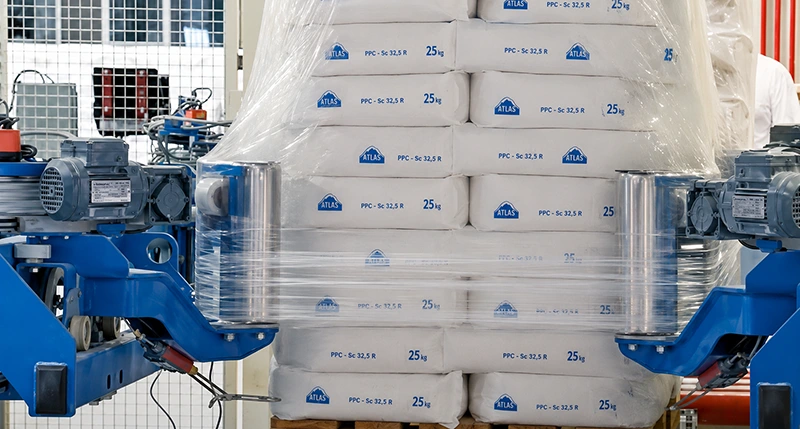
    Transport-ready palletsNegative-pressure shaping, robot palletizer and stretch hoodThree bags per layer is shown; layer count and pallet type are project-specific
    Workshop integrationConveyors, pallet magazine and links to silo, air, forklift or AGVPlanning reference is about 15–20 m long, 4–6 m wide and 4.5 m+ clear height
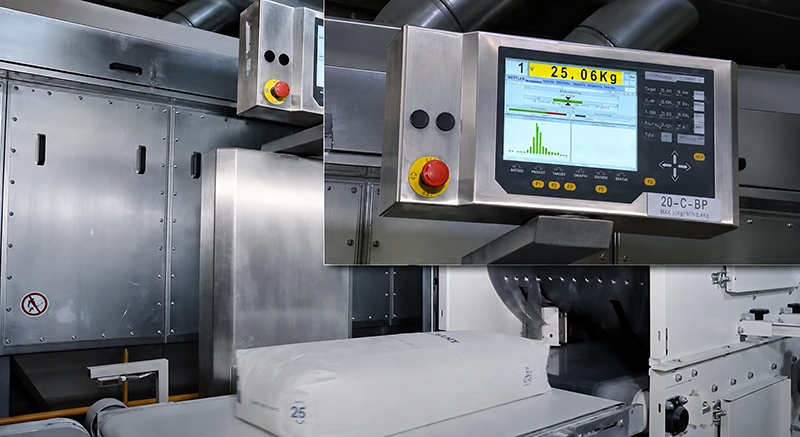
    Stainless steel checkweigher conveyor with touchscreen HMI and emergency stop on an automatic valve bag packaging line

    From filling to the finished-goods warehouse

    Once the filled bag passes the weight and metal-detection gates, negative-pressure shaping removes excess air and produces a flatter package for the palletizer. The robot can rotate and arrange bags into an interleaved pattern; the exact number of layers depends on bag behavior, pallet dimensions and stability requirements. Automatic pallet supply, roller conveying and stretch-hood wrapping then create a defined handover point for the finished-goods warehouse or long-distance dispatch.

    This sequence changes the meaning of a cement packing line price. The purchasing team is not only buying a dosing head; it is deciding how much manual bag handling, rework, inspection risk and pallet protection remain after installation. Before requesting a final quotation, send the cement or dry-mix sample, target bag weight, valve-bag drawings, required output, pallet pattern, air data and available building dimensions. BPM can then define the appropriate automatic valve bag packing equipment without presenting untested limits as guarantees.

    Industrial valve bag palletizing scene with shrink-wrapped 25kg sacks and dual robotic handling units

    Request a project-based cement packing line price

    Share your material, 25 kg valve-bag specification, target production, pallet pattern and site constraints. We will separate confirmed parameters from items requiring a filling, sealing and air-system test.

    Discuss your VPLINE project