Automatic Bagging Machine & Palletizing Systems Manufacturer

Category: English

  • Mipline 25 kg Powder Packaging Line for Stable Bag Transfer Before Sewing

    Mipline 25 kg Powder Packaging Line for Stable Bag Transfer Before Sewing

    25 KG POWDER BAGGING LINE

    Mipline 25 kg Powder Packaging Line for Stable Bag Transfer Before Sewing

    For milk powder, flour, starch, feed, and other dry-powder plants, Mipline combines automatic bag supply, bottom-up filling, closure, shaping, inspection, and guided transfer so a 25 kg bag reaches sewing or sealing cleaner, straighter, and with fewer manual corrections.
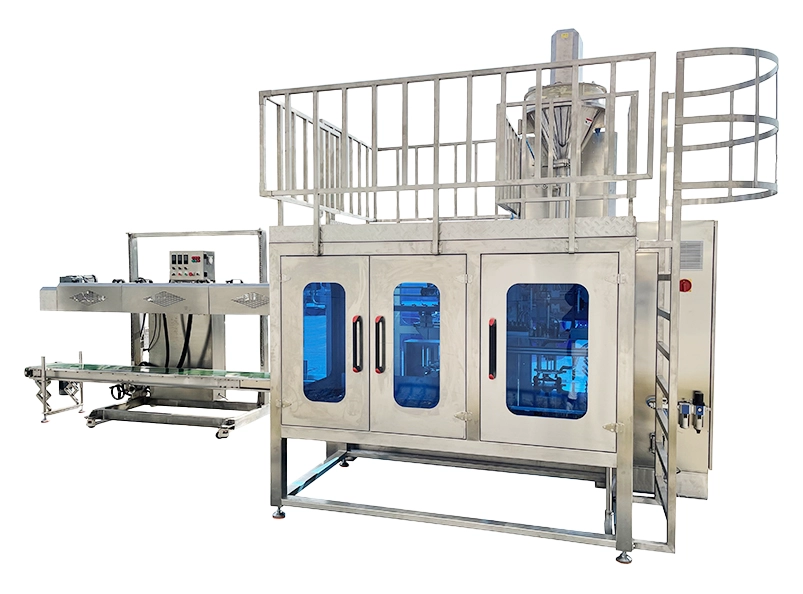
    Stainless steel automatic bagging machine with blue inspection windows, bag magazine conveyor, and top access platform

    Why the last meter matters in a 25 kg powder bagging line

    A flour mill or dairy powder plant may have a reliable filler and still lose time at the handoff before sewing. A filled bag can twist, sag, or arrive with its mouth skewed. When operators straighten heavy bags by hand, the sewing head receives inconsistent material, dust reaches the closure area, and the line becomes dependent on a manual workstation at its most sensitive point.

    This is the buying context behind a controlled powder packaging line. Mipline is not a standalone filler or a liquid packaging machine. It is an automatic bagging machine for powder that links bag magazine supply, opening, clamping, filling, closure, transfer, and final-bag handling. The objective is practical: keep 25 kg bags square and controlled as they move toward sewing, sealing, palletizing, or warehouse discharge.
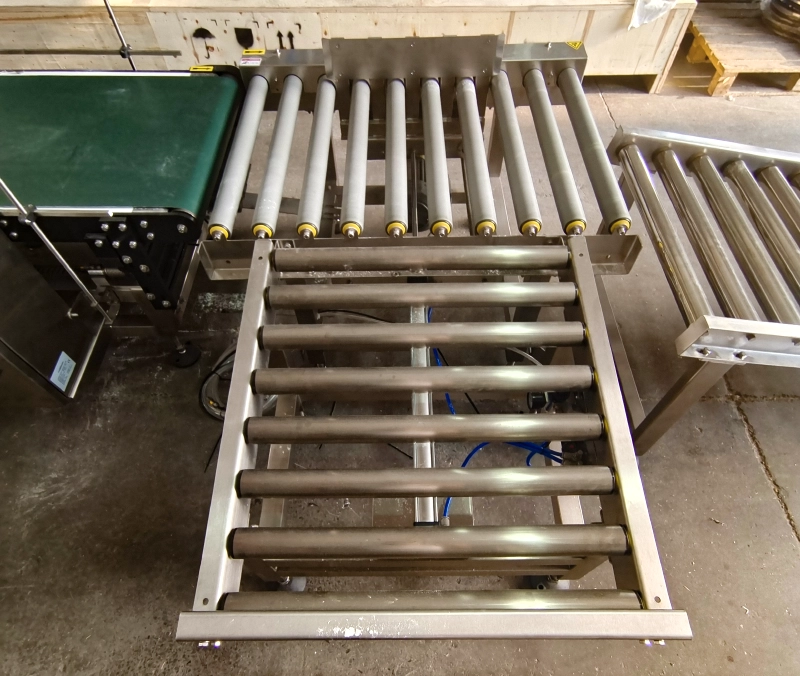
    Stainless steel roller conveyor transfer section with angled rollers for industrial bag handling and line integration
    The old solution: fill first, correct the bag by hand later

    Moving a bag is not the same as handing it off under control. A simple conveyor can carry a package while allowing the bag to rotate or collapse. That creates manual bag straightening, unstable sewing, and inconsistent presentation at downstream inspection. The line needs alignment at the clamp, a guided transfer path, and enough stabilization before closure—not another operator assigned to the last meter.

    How Mipline adapts the process to powder and bag behavior

    Mipline uses a bottom-up lifting fill concept with three-stage screw feeding: fast filling, medium filling, and slow final dosing. Keeping the fill point close to the material is intended to reduce the free-fall distance and support cleaner powder handling than an open free-fall arrangement. The bag magazine, vacuum pickup and opening functions prepare the industrial bag before the clamp holds it for filling.

    After filling, the configured line can add vacuum extraction or de-aeration, dust removal, trimming, inner-bag heat sealing, pressing, sewing, hot-melt paper-tape wrapping, and final pressing. Turning, settling, shaping, metal detection, checkweighing, reject, and roller discharge can then be arranged around the plant layout. This sequence matters for dairy powder, flour, and starch powder because closure quality depends on both bag-mouth cleanliness and the bag shape arriving at the sewing or sealing head.

    Engineering view: Stable bag handoff is a system result. Bag clamp alignment, guided conveyor transfer, roller support, and post-fill shaping must be specified together with powder properties, bag construction, closure method, and palletizing route.
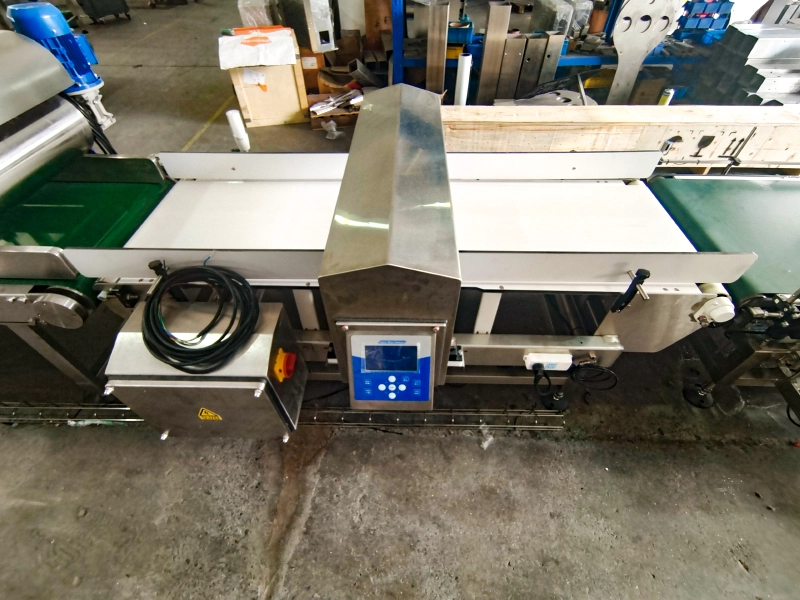
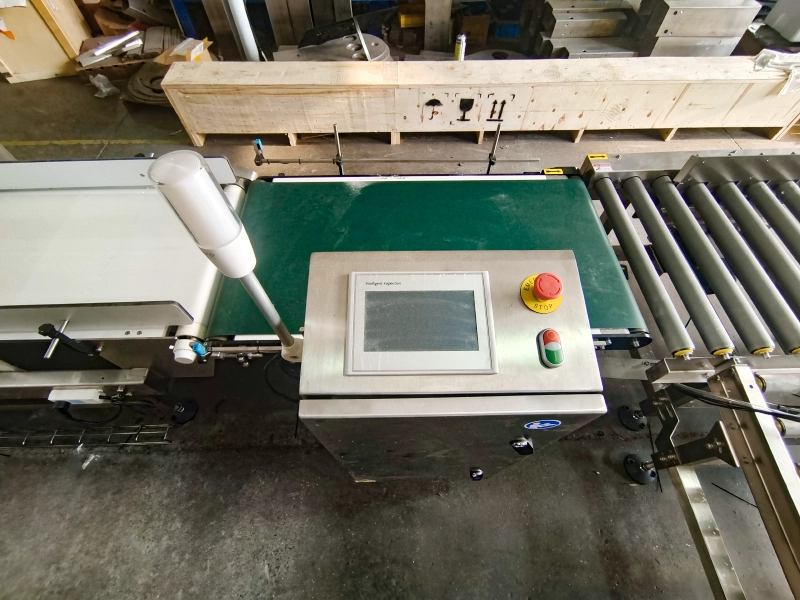
    Stainless-steel twin-belt transfer conveyor with central control housing and adjustable side guides

    Visible equipment evidence and reference configuration

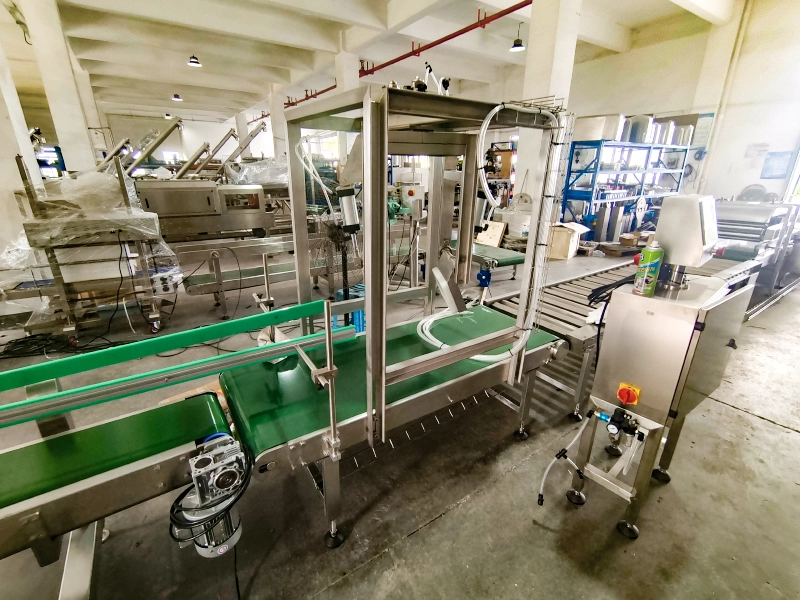
    The production images show the physical details a buyer should verify when comparing a powder filling and bag sewing line: enclosed stainless-steel stations, blue inspection windows, a bag magazine conveyor, green belts, roller transfer sections, adjustable guides, control panels, emergency-stop devices, and access platforms. These are not decorative features. They show how the line is organized for supervision, controlled transfer, and maintenance access.

    Reference data includes a nominal 25 kg application, SUS304 body options, PLC/HMI control, and variant-dependent capacities such as 1.5–2 bags per minute or 1–3 bags per minute. A 5–25 kg DS25K reference lists accuracy up to ±0.2%, while another 25 kg configuration states different values. Final capacity, accuracy, air, power, dust extraction, and closure performance must therefore be confirmed against the selected material and project configuration.

    Buyer requirementMipline response to verify
    25 kg kraft paper or woven bagsBag magazine, opening, clamp, lifting fill, and guided transfer configured for the approved bag construction
    Cleaner powder handlingBottom-up fill, staged screw feeding, and optional vacuum or de-aeration before closure
    Stable handoff before sewingBag clamp alignment, roller or twin-belt transfer, adjustable guides, settling, and shaping
    End-of-line quality controlConfigured metal detection, checkweighing, reject, and roller discharge after forming and closure
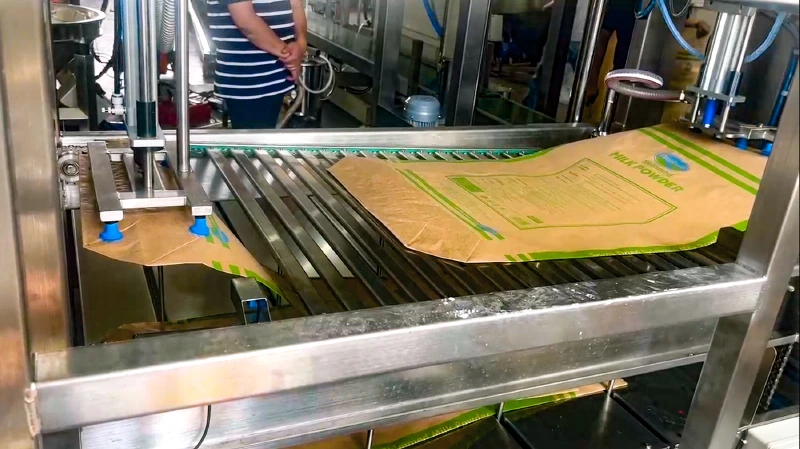
    Stainless steel roller conveyor with vacuum grippers handling kraft paper powder bags on a packaging line

    Specify the powder, bag, and closure route before you buy

    Send the powder type, bulk density, moisture and flowability, bag material and dimensions, target weight, desired speed, sewing or sealing method, utilities, and palletizing layout. BPM can then match the automatic powder packing machine configuration, transfer path, inspection package, and final discharge to the actual line conditions.

    Discuss your powder bagging line
  • Mipline Powder Packaging Line: Controlling the Bag Handoff Before Sewing

    Mipline Powder Packaging Line: Controlling the Bag Handoff Before Sewing

    25 KG POWDER BAGGING LINE

    Mipline Powder Packaging Line: Controlling the Bag Handoff Before Sewing

    For dairy powder, flour, starch, feed, and other dry powders packed in 25 kg industrial bags, the final transfer before sewing or sealing often determines whether the line runs cleanly. Mipline links bag supply, bottom-up filling, closure, shaping, inspection, and discharge so bags reach the next station square, supported, and easier to control.

    Stainless steel automatic bagging machine with blue inspection windows, bag magazine conveyor, and top access platform

    Why the last meter becomes a powder bagging problem

    A plant may already have a filler and a sewing head, yet still lose time between them. A filled bag can twist as it leaves the clamp, retain air, or arrive with a dusty and skewed mouth. Operators then stop the flow to open, straighten, or reposition the bag by hand. That correction is slow, difficult to standardize, and especially uncomfortable when the line handles heavy milk powder, flour, starch, or feed bags.

    The issue is not simply conveyor speed. A bag needs a controlled handoff: its base must settle, its sides must remain guided, and its mouth must present consistently to the closure station. A powder packaging line that treats filling and transfer as separate islands leaves the most sensitive part of the process to manual judgment.

    Stainless steel roller conveyor transfer section with angled rollers for industrial bag handling and line integration
    The old solution: manual bag straightening at the sewing head

    Manual correction can hide the real failure point. It does not remove excess air, control powder at the bag mouth, or create a repeatable transfer reference. When bag shape changes from one cycle to the next, sewing and sealing quality becomes dependent on operator reaction.

    How Mipline adapts the process to the bag, powder, and closure

    Mipline is configured as an automatic bagging machine for powder rather than as a standalone filler. A bag magazine and pickup system supply the empty bag; opening, clamping, and controlled placement hold it at the filling head. The bottom-up lifting fill keeps the filling point close to the rising powder level, a design intended to reduce dust escape compared with open free-fall filling. Where the project requires it, vacuum extraction or de-aeration can be included before closure.

    After filling, the line can combine dust removal, trimming, inner heat sealing, sewing, paper-tape wrapping, pressing, settling, shaping, metal detection, checkweighing, reject, and roller discharge. This sequence gives the filled bag a defined path instead of asking an operator to create alignment between independent machines. The final configuration must still be matched to bulk density, flowability, moisture, aeration, bag construction, target speed, and site layout.

    Engineering view: stable bag transfer before sewing is created by the relationship between clamp alignment, guided conveyors, roller support, and closure timing—not by a single belt alone.

    Stainless steel bagging conveyor line with green belts, vertical guide frame, and emergency-stop control box

    Structures and reference parameters to verify

    The production images show the physical evidence behind the layout: enclosed stainless-steel stations, blue inspection windows, bag magazine conveying, green belts, roller transfers, adjustable guides, emergency-stop controls, and maintenance access. The following reference points help an engineering team connect the powder application to the right configuration.

    Line requirementMipline reference or adaptationWhy it matters before sewing
    25 kg industrial bagsNominal 25 kg application; 5–25 kg reference variant availableDefines bag dimensions, clamp range, fill sequence, and downstream handling
    Controlled fillingVertical screw feed with fast, medium, and slow dosing stagesSupports weight control and reduces the chance of a dusty, unstable bag mouth
    Bag transferGuided belt and roller sections with adjustable supportHelps keep the bag square and reduces manual bag straightening
    Closure and qualityProject-configured sewing or sealing, with optional metal detection and checkweighingCreates a defined reject and inspection path before palletizing or dispatch
    Utilities and hygieneSUS304 body reference; one configuration lists 5 kW main power and 5.5 m³/h airProvides a starting point for site review, subject to the approved configuration

    For a milk powder packaging machine or flour bagging line, the final proposal should confirm the powder test, bag material, target capacity, power, compressed air, dust extraction, closure method, and palletizing interface. Published reference values are variant-dependent: one line list states 1.5–2 bags/min with accuracy of ≤±0.1–0.2%, while another 5–25 kg reference states 1–3 bags/min and ≤±0.2%. These figures should not be treated as a universal promise.

    Stainless steel roller conveyor with vacuum grippers handling kraft paper powder bags on a packaging line

    At the discharge end, stable settling and shaping give inspection equipment a more consistent product presentation. A checkweigher can then identify weight deviation, while a powder-line metal detector and defined reject path protect the dispatch process. The image evidence shows the bag transfer and handling hardware; exact detector effect and checkweigher accuracy require confirmation against the selected powder and project datasheets.

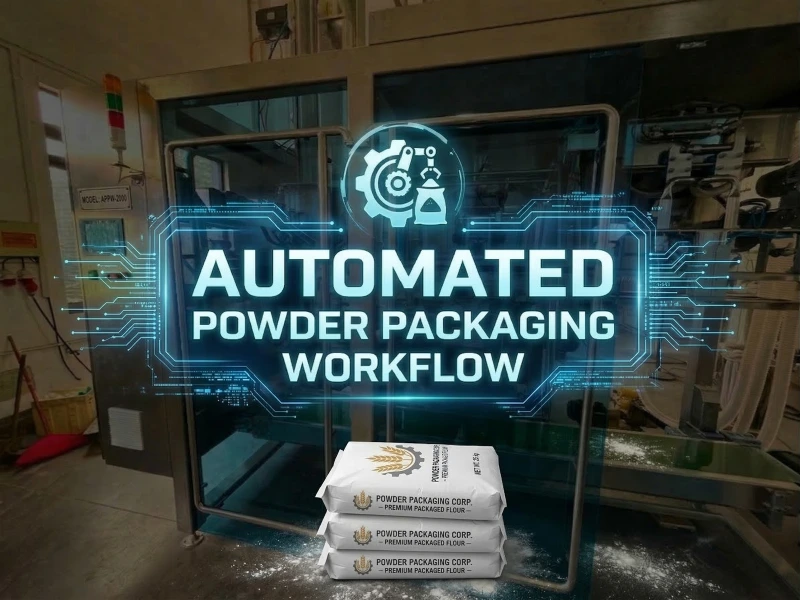
    Real-world automated powder packaging line with safety enclosure, conveyor section, and stacked finished bags

    Specify the complete powder bagging line, not only the filler

    Share the powder type, bulk density, bag construction, target weight, required bags per minute, closure method, utilities, and palletizing layout. BPM can use those inputs to review the Mipline bag handoff, filling, closure, inspection, and discharge configuration for your plant.

    Discuss Your Powder Line
  • How Flour Is Packed at a Pasta Factory: A 25 kg Powder Bagging Line With Stable Handoff Before Sewing

    How Flour Is Packed at a Pasta Factory: A 25 kg Powder Bagging Line With Stable Handoff Before Sewing

    FLOUR BAGGING LINE | MIPLINE

    How Flour Is Packed at a Pasta Factory: A 25 kg Powder Bagging Line With Stable Handoff Before Sewing

    At a pasta factory, flour packing is not finished when the target weight is reached. The filled bag must remain square, clean at the mouth, and controlled through transfer before sewing or sealing. Mipline links automatic bag handling, bottom-up filling, guided transfer, inspection, and discharge into one powder packaging line.

    3D render of an automated flour bag conveyor line inside a food processing factory

    Flour packing starts with a controlled bag, not only a filling head

    A pasta factory typically needs to move flour from bulk handling into industrial bags for storage, internal transport, or the next production step. In a basic arrangement, an operator opens an empty bag, holds it under the filler, straightens the filled bag, and guides it toward a sewing head. That method can work at a small scale, but it creates a difficult last meter when a 25 kg bag twists, sags, or arrives with a skewed mouth.

    Mipline is configured as an automatic powder bagging line for this complete sequence. A bag magazine and pickup section prepare the bag; a clamp holds it during filling; the bottom-up filling method keeps the fill point close to the product; and downstream transfer sections support a cleaner handoff before sewing or sealing. The exact speed and configuration still depend on flour bulk density, flowability, bag construction, target weight, and the factory layout.

    3D-rendered flour bag conveyor line entering a packaged flour processing gate in a food factory
    THE OLD HANDOFF PROBLEM

    Free-fall filling and un guided conveying may leave flour bags dusty, uneven, or out of square. Operators then spend the last meter manually straightening the bag before the sewing head. The sewing process becomes less stable when the mouth arrives skewed, while dust around the closure area makes housekeeping and sealing more difficult.

    Why Mipline fits a flour bagging line at the pasta factory

    The solution is to treat bag supply, filling, closure, and transfer as one process. The line can use three-stage screw feeding—fast filling, medium filling, and slow final dosing—together with weighing control. Bottom-up filling is designed to reduce the free-fall distance and keep the fill point close to the flour. Where specified, vacuum extraction or de-aeration can be added before closure. These functions address the source of the problem instead of asking an operator to correct the finished bag manually.

    After filling, the bag moves through a controlled path that can include dust removal, trimming, inner-bag heat sealing, pressing, sewing, paper-tape wrapping, or other project-defined closure steps. Turning, settling, shaping, metal detection, checkweighing, reject, and roller discharge can then be integrated according to the required line layout. This is why the equipment should be evaluated as a powder filling and bag sewing line rather than as a standalone automatic powder packing machine.

    ENGINEERING VIEW: The critical result is not simply “the bag moved.” The transfer conveyor, bag clamp alignment, and downstream shaping path must deliver a stable bag mouth and a repeatable bag position to the next station. That is the practical difference between conveying and a stable bag handoff before sewing.

    Visible machine evidence behind the process

    The production images show the structures that make the flour packing sequence controllable: an enclosed stainless steel bagging station, blue inspection windows, a bag magazine conveyor, green transfer belts, roller conveyor sections, and guided transfer equipment. These are not generic factory decorations. They show how operators can supervise the automatic bagging machine for powder while keeping access, guarding, and line connection visible.

    A twin-belt transfer conveyor with adjustable side guides helps maintain a more consistent path between stations. Angled roller sections support bag transfer and line integration, while the enclosed station and inspection windows provide a defined area for bag handling and maintenance access. Final specifications must be confirmed against the flour, bag material, closure method, required throughput, and palletizing interface.

    Process pointWhat the line addressesWhat must be confirmed
    Bag supply and clampingRepeatable bag placement before fillingBag dimensions, material, mouth construction
    Bottom-up fillingShorter product fall and controlled dosingFlour flowability, density, target weight
    Transfer before sewingCleaner alignment and less manual straighteningGuide layout, closure head, line height
    Inspection and dischargeDefined checks before storage or palletizingCheckweigher, detector, reject, downstream layout
    Stainless steel roller conveyor transfer section with angled rollers for industrial bag handling and line integration
    Stainless-steel twin-belt transfer conveyor with central control housing and adjustable side guides
    Stainless steel automatic bagging machine with blue inspection windows, bag magazine conveyor, and top access platform

    Specify the flour bagging line around the handoff point

    For a pasta factory, start with the flour properties, 25 kg bag construction, required closure, target output, inspection needs, and available conveyor space. Mipline can then be configured as dry powder packaging equipment with the bag clamp, transfer conveyor, sealing, shaping, and inspection functions required for a stable route into sewing or final handling.

    Discuss Your Flour Packaging Line
  • How a 5 kg Limestone Flour Line Stabilizes Bag Transfer in Sverdlovsk Oblast

    How a 5 kg Limestone Flour Line Stabilizes Bag Transfer in Sverdlovsk Oblast

    MIPLINE POWDER PACKAGING LINE

    How a 5 kg Limestone Flour Line Stabilizes Bag Transfer in Sverdlovsk Oblast

    For a regional limestone flour producer in Sverdlovsk Oblast, Russia, a Mipline automatic powder packing machine can be configured around 5 kg bags, controlled filling, clean closure, and a guided handoff before sewing or sealing. The key is to treat filling and bag handling as one powder packaging line rather than as a standalone filler.

    3D render of an automated flour bag conveyor line inside a food processing factory

    From a 5 kg mineral powder requirement to a controlled bagging process

    A limestone flour plant does not only need a device that puts powder into a bag. It needs the bag to arrive open, stay positioned during filling, close without an unstable mouth, and leave the line in a condition that is practical for storage or palletizing. Fine mineral powder can be dusty and aerated; its bulk density, flowability, moisture, particle distribution, and bag construction should therefore be confirmed before the final configuration is approved.

    Mipline is suited to this type of project because its process logic connects bag supply, bag opening, clamping, filling, closure, transfer, shaping, inspection, and discharge. The DS25K reference covers 5–25 kg bags, while speed and accuracy remain configuration- and material-dependent. For a 5 kg limestone flour bagging line, the correct design brief should include the target bag, filling rate, dust extraction, closure method, downstream sewing or sealing, and available plant space.

    Stainless steel roller conveyor transfer section with angled rollers for industrial bag handling and line integration
    The old bottleneck: the bag is filled, but the last transfer is not controlled

    On a manually corrected line, operators may open and hold each bag, straighten a leaning package, remove powder from the mouth, or reposition it before the sewing or sealing head. A twisted bag can arrive with a skewed mouth; retained air can make the package settle unevenly; and a conveyor that only moves the bag forward does not guarantee a square, repeatable handoff. These problems become visible at the closure and dispatch stages, even though their cause started at filling or transfer.

    Why Mipline fits the limestone flour bagging scenario

    The product adapts the filling and handling sequence to the material and bag instead of forcing every powder through one generic cycle. A vertical screw feeding system with weighing control can be arranged with fast, medium, and slow dosing stages. Bottom-up tracked filling keeps the fill point close to the material and is designed to reduce dust escape compared with open free-fall filling. A lifting platform can follow the fill level, while the bag magazine, pickup, opening, clamp, and holding mechanisms reduce the need for operators to manually reposition a heavy or flexible bag.

    After filling, the selected closure route may combine dust removal, trimming, inner heat sealing, sewing, paper-tape wrapping, pressing, or other project-approved steps. Settling and shaping sections can prepare the bag for final handling. Where specified, metal detection, checkweighing, alarms, and reject handling inspect the finished bag after forming and closure. This is important for a limestone flour line: filling control alone does not confirm the condition of the closed package.

    Engineering view: For a 5 kg automatic bagging machine for powder, the transfer path is part of the quality system. Confirm the bag dimensions, powder behavior, closure equipment, detector effect, checkweigher range, and required handoff before selecting the final line configuration.

    Structure and parameter evidence to verify before commissioning

    The production references show the type of mechanical evidence expected from an integrated powder packaging line: enclosed stainless-steel stations, inspection windows, bag magazine conveyors, green belts, roller transfer sections, adjustable guides, control cabinets, emergency stops, and maintenance access. The roller conveyor image above is especially relevant to the handoff before sewing or sealing. It shows an angled transfer section and supporting frame intended for stable industrial bag handling; it does not, by itself, prove a project speed or final alignment result.

    For this 5 kg application, the specification should be frozen only after a material and bag test. The table separates reference values from items that need project confirmation, so the limestone flour producer can compare the proposed powder bagging line with the actual plant conditions rather than relying on a generic capacity promise.

    ItemReference or design pointProject check
    Bag rangeDS25K reference: 5–25 kgConfirm the 5 kg bag dimensions and construction
    Filling methodVertical screw feeding with weighing control and bottom-up lifting fillTest limestone flour flowability, aeration, and dust behavior
    Bag handlingMagazine, pickup, opening, clamp, holding, and guided conveyor transferConfirm the handoff geometry before sewing or sealing
    InspectionOptional metal detection, checkweighing, alarms, and reject pathApprove detector effect and checkweigher data for the finished bag
    UtilitiesDS25K reference: 380/220 V, 50–60 Hz; 5 kW; 6 kg/cm² air supplyVerify the selected configuration against the plant supply

    Specify the right 5 kg powder bagging line for your plant

    Send the limestone flour bulk density, bag drawing, target output, closure method, dust-control requirement, and layout constraints to BPM. The Mipline team can then define the filling, bag clamp alignment, roller conveyor transfer, inspection, and final discharge configuration around verified project data.

    Discuss Your Powder Packaging Line
  • Sugar Powder Packaging: 25 kg Bagging Line or Stick Sachet Machine?

    Sugar Powder Packaging: 25 kg Bagging Line or Stick Sachet Machine?

    POWDER PACKAGING APPLICATION GUIDE

    Sugar Powder Packaging: 25 kg Bagging Line or Stick Sachet Machine?

    For a sugar processor, the right packaging route starts with the bag format—not the machine label. Mipline is a configurable powder packaging line for industrial 25 kg bags, with controlled filling, bag handling, closure, transfer, inspection, and discharge. It is not a stick sachet machine. That distinction prevents a costly mismatch between the required retail pack and the line actually specified.

    Stainless steel automatic bagging machine with blue inspection windows, bag magazine conveyor, and top access platform

    Start with the customer scenario: industrial sugar bags, not stick packs

    A sugar, food-powder, or dry-ingredient plant may use the phrase “sugar packaging machine” for two very different jobs. A stick sachet machine forms and fills narrow single-serve packets. An industrial powder bagging line fills larger bags for warehouse handling, palletizing, or later distribution. Mipline belongs to the second category. Its nominal application is a 25 kg industrial powder bag, with suitability determined by bulk density, flowability, moisture, aeration, bag construction, target weight, and the required closure.

    The difference changes the complete process. Instead of only dosing product, Mipline coordinates bag supply, opening, clamping, bottom-up filling, closure, settling, shaping, inspection, reject, and final roller discharge. For sugar or another approved dry powder, the project team can define the bag material and downstream sewing or sealing route before equipment details are finalized. Stainless steel bagging conveyor line with green belts, vertical guide frame, and emergency-stop control box

    Stainless steel roller conveyor transfer section with angled rollers for industrial bag handling and line integration
    The old-solution problem

    A basic filler can leave operators opening, holding, straightening, or repositioning a heavy bag by hand. The filled bag may retain air, arrive skewed at the sewing or sealing head, or move without a controlled handoff between stations. For sugar and food powders, dust around the bag mouth can also complicate closure and housekeeping. A conveyor alone moves the bag; it does not necessarily square it, stabilize it, or create a defined inspection and reject path.

    Why Mipline fits a controlled powder bagging workflow

    Mipline addresses the process as a sequence. A bag magazine and vacuum pickup support repeatable bag supply. Opening and clamping hold the bag at the filling head. Bottom-up tracked filling keeps the fill point close to the material, while the three-stage screw feed—fast filling, medium filling, and slow final dosing—supports controlled weighing rather than an uncontrolled free-fall drop. Where configured, vacuum extraction or de-aeration can be added before closure.

    After filling, the line can be configured around dust removal, trimming, inner heat sealing, sewing, paper-tape wrapping, pressing, turning, settling, shaping, metal detection, checkweighing, reject, and roller discharge. The stainless-steel enclosed station, blue inspection windows, guide frames, and emergency-stop hardware visible in the factory evidence show how the equipment is arranged for an integrated industrial line. Stainless-steel twin-belt transfer conveyor with central control housing and adjustable side guides

    Engineering note: Do not specify a 25 kg powder bagging line from weight alone. Confirm powder behavior, bag dimensions, closure method, target speed, dust extraction, utilities, and palletizing layout. The Mipline configuration must follow those inputs; a stick sachet requirement would call for a different machine class.

    Stainless steel roller conveyor with vacuum grippers handling kraft paper powder bags on a packaging line

    Structure and parameter evidence to review before selection

    For a 25 kg sugar or dry-powder project, the evidence should connect each operating problem to a physical station. The image record shows bag magazines, vacuum handling, clamps, stainless-steel frames, adjustable guides, roller transfers, control panels, and enclosed access areas. The technical brief identifies a vertical screw feeding system, weighing control, lifting fill platform, PLC/HMI control, and optional vacuum or nitrogen traction. These are the details that separate a complete powder filling and bag sewing line from a standalone filler.

    Published references include 5–25 kg operation at 1–3 bags/min with accuracy stated up to ≤±0.2% for one DS25K configuration. Another 25 kg reference states 1.5–2 bags/min and ≤±0.1–0.2%. These figures are variant- and material-dependent, not a universal promise. Industrial conveyor line with touch-screen control box, emergency stop, and roller transfer sections

    Project questionWhat the Mipline specification must define
    What pack is required?25 kg industrial bag versus stick sachet; confirm bag material, dimensions, and closure.
    How is dust controlled?Bottom-up filling, close material tracking, optional vacuum or de-aeration, and a defined closure sequence.
    How does the bag reach sewing or sealing?Clamp alignment, guided conveyor handoff, settling, shaping, and roller transfer layout.
    How is quality checked?Project-approved metal detector, checkweigher range, reject logic, alarms, and production records.

    Specify the right sugar powder packaging route

    If the requirement is a 25 kg powder packaging line for industrial sugar bags, Mipline can be evaluated around the material, bag, closure, speed, inspection, and palletizing conditions. If the requirement is a retail stick sachet, state that format at the start so the project is directed to the correct equipment class. Contact BPM for a configuration review based on the actual powder and bag data.

    Discuss your powder bagging line
  • Mipline Flour Bagging Line for Stable 25 kg Bag Handoff Before Sewing

    Mipline Flour Bagging Line for Stable 25 kg Bag Handoff Before Sewing

    FLOUR BAGGING LINE | MIPLINE

    Mipline Flour Bagging Line for Stable 25 kg Bag Handoff Before Sewing

    A powder packaging line for flour plants that need cleaner bag alignment, fewer manual corrections, and a controlled transfer from filling to sewing or sealing.

    3D-rendered flour bag conveyor line entering a packaged flour processing gate in a food factory

    Why flour plants lose control in the last meter

    For a flour mill or starch powder plant packing 25 kg kraft-paper or woven bags, filling is only one part of the job. The filled bag still has to reach sewing, heat sealing, palletizing, or warehouse handling in a predictable shape. When the bag twists, sags, or arrives with a skewed mouth, operators are pulled into the last meter to open, straighten, and reposition it.

    A conveyor that only moves the bag does not necessarily provide a stable bag handoff before sewing. The line must coordinate bag supply, opening, clamp alignment, bottom-up filling, closure, and downstream transfer so that the next station receives a controlled bag rather than a moving correction task.

    Real-world automated powder packaging line with safety enclosure, conveyor section, and stacked finished bags
    The real issue is not simply powder filling

    If the bag mouth is dusty or skewed, sewing becomes unstable. If the filled bag retains air or leaves the clamp without support, it can collapse during transfer. Manual bag straightening may hide the problem for a shift, but it keeps labor, hygiene, and closure quality tied to operator attention.

    How Mipline is adapted to the flour bagging workflow

    Mipline treats the automatic powder packing machine and its bag-handling path as one connected process. A bag magazine and pickup section prepare the bag; controlled opening and clamping hold the mouth; bottom-up filling keeps the fill point close to the material; and three-stage feeding—fast, medium, and slow—supports the final dose. Where configured, vacuum extraction or de-aeration can be used before closure.

    After filling, the line can connect dust removal, trimming, inner-bag heat sealing, pressing, sewing, hot-melt paper tape application, and final pressing. Turning, settling, shaping, metal detection, checkweighing, reject, and roller discharge can then be arranged around the required layout. This is the difference between a standalone filler and a powder filling and bag sewing line designed for a controlled handoff.

    Engineering note: the nominal application is 25 kg dry-powder bags. Published capacity depends on material behavior, bag construction, closure method, and configuration; reference sources include 1–2 bags/min and 1–3 bags/min variants, so the final target should be confirmed by project testing.

    Visible structures that support cleaner bag transfer

    The production evidence shows an enclosed stainless steel bagging station with blue inspection windows, a bag magazine conveyor, green belts, roller conveyor sections, control cabinets, adjustable guides, emergency-stop controls, and access platforms. These are not decorative features: they show where the operator supervises the line, where the bag is guided, and where stations are joined.

    For a flour bagging line, the correct specification still depends on bulk density, flowability, moisture, aeration, bag dimensions, target speed, and the chosen sewing or sealing method. The images confirm the machine architecture and transfer components; they do not by themselves establish a universal capacity or accuracy claim.

    Buyer concernMipline response to verifyVisible or documented evidence
    Bag twists before sewingClamp alignment, guided transfer, roller or twin-belt handoffBag clamp, adjustable guides, roller conveyor sections
    Dust reaches the closure areaBottom-up filling, vacuum/de-aeration and configured closure sequenceFilling and closure modules; project configuration required
    Filled bags lose shapeSettling, shaping and controlled discharge before palletizingGreen transfer belts and roller discharge path
    Bad bags reach dispatchMetal detection, checkweighing and reject after formingInspection modules available by selected configuration
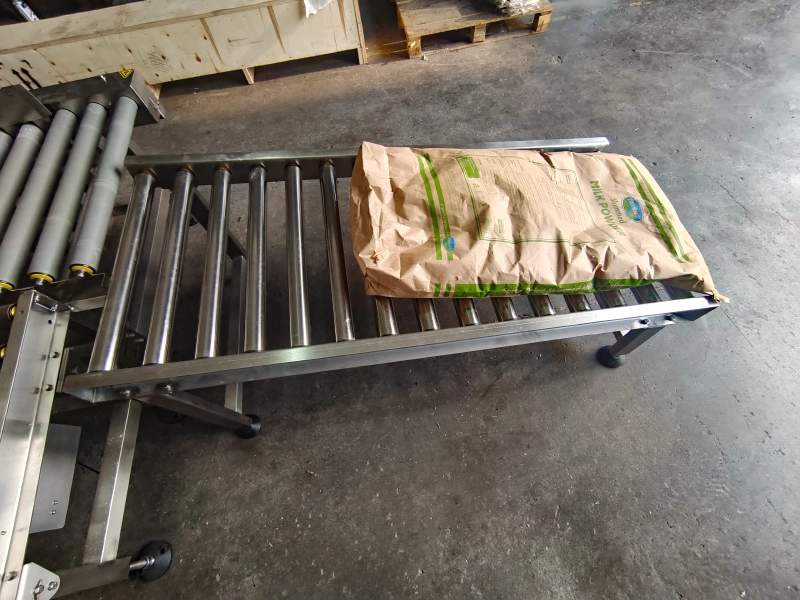
    Stainless steel roller conveyor with kraft paper bag, used for bag transfer in packaging line
    Stainless steel bagging conveyor line with green belts, vertical guide frame, and emergency-stop control box

    Specify the bag handoff, not only the filler

    Share your flour or starch powder, bag material and dimensions, target weight, required bags per minute, closure method, air and power conditions, and palletizing layout. BPM can then match the automatic bagging machine for powder to the transfer, inspection, and final sewing requirements.

    Discuss Your Powder Packaging Line
  • Flour Packaging Line: Zpacker Automatic Paper Bag Packing for 1–5 kg Retail Packs

    Flour Packaging Line: Zpacker Automatic Paper Bag Packing for 1–5 kg Retail Packs

    FLOUR PACKAGING APPLICATION

    Flour Packaging Line: Zpacker Automatic Paper Bag Packing for 1–5 kg Retail Packs

    For a food plant moving from manual filling to an automatic packaging line, Zpacker combines premade paper-bag handling, screw dosing, dust removal, sealing, and downstream inspection in one flour packaging line. The configuration is intended for 1 kg, 2 kg, 2.5–5 kg paper or paper-plastic bags, with final speed confirmed against the flour, bag sample, and feeding system.

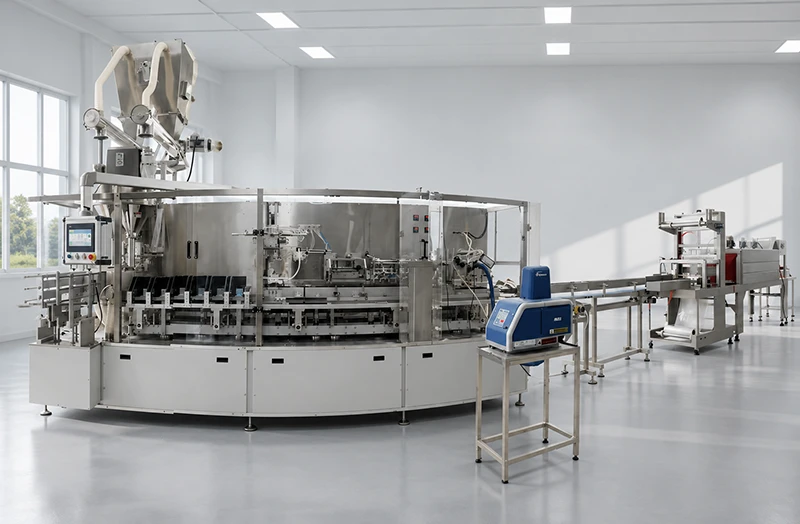
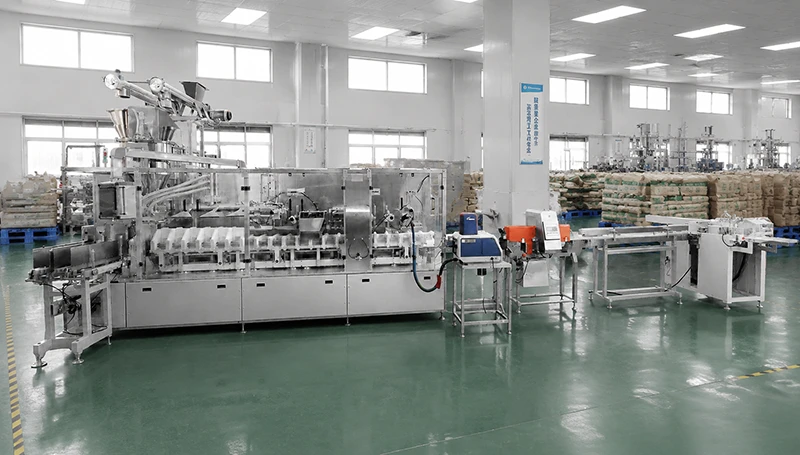
    Clean workshop view of zpacker automatic paper bag packing machine for flour packaging line with horizontal bagging unit, touchscreen, dosing structure, and outfeed conveyor

    Why a flour plant outgrows manual filling and basic machines

    Flour mills, milling complexes, and bakery producers often begin with manual or semi-automatic packing. Operators take a flat kraft bag, open it, hold the mouth under a filler, settle the flour, clean the sealing area, and close the bag. That sequence becomes difficult to keep stable when the retail program includes 1 kg, 2 kg, and 5 kg packs. Labor is tied up in repetitive bag handling, while powder can escape at the mouth or remain loose in the package.

    A standard liquid filler is not relevant to this job, and a vertical packaging machine normally forms bags from roll film rather than handling a customer-supplied M-fold premade bag. Zpacker is designed around the actual paper-bag workflow: a belt feeds the premade bag, the bag is opened into shape, a screw dosing unit fills the flour, vibration and dust-removal stations help the product settle, and the top is folded and glued. This makes the machine a better fit when the package format and existing paper-bag supply chain are already defined.

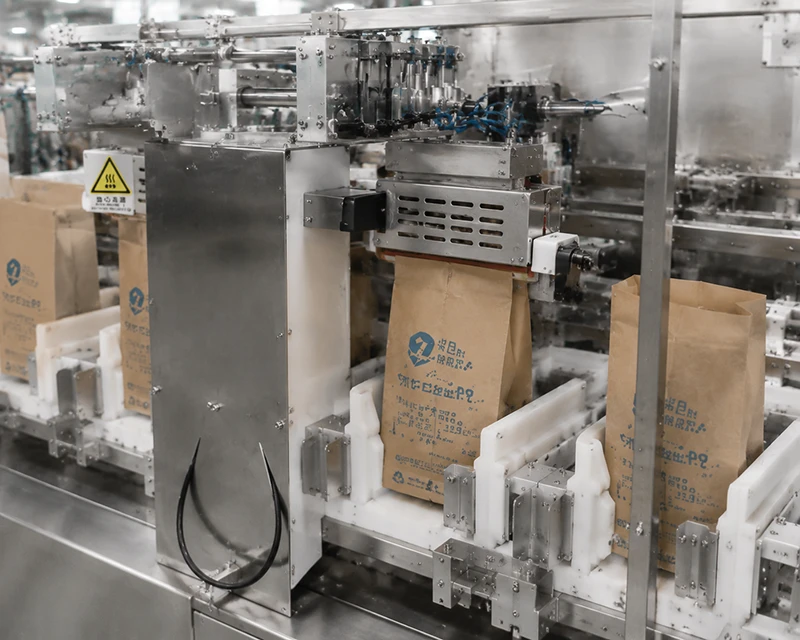
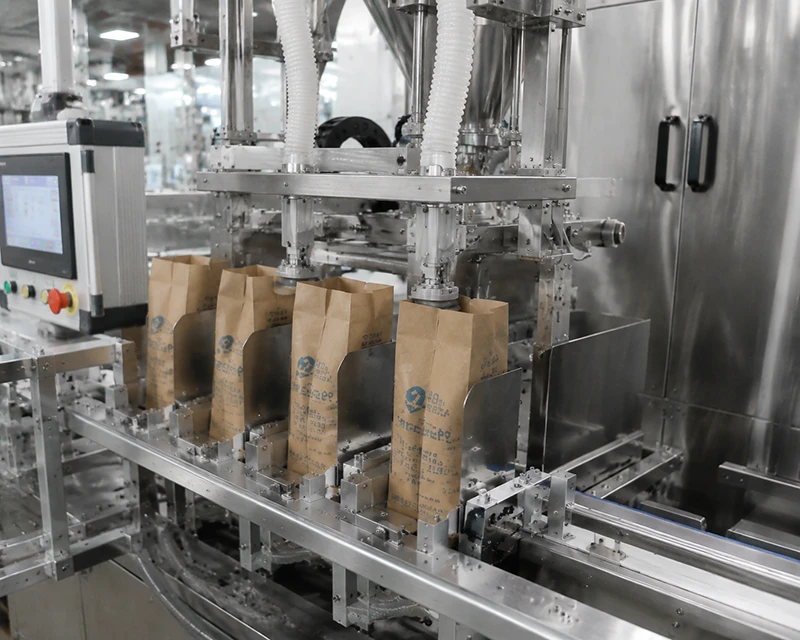
    Zpacker premade paper bag packaging machine with bag magazine, opening mechanism, pneumatic lines, and standing kraft bags
    The practical bottleneck: the M-fold bag is not only a container

    An M-fold square-bottom bag must be opened, positioned, filled, compacted, folded back, trimmed, rolled, glued, and pressed. If these actions are split between people and unrelated machines, the line can lose rhythm and the sealing zone can carry flour. Before selecting equipment, confirm the bag direction, width, length, side fold, paper or paper-plastic construction, and target pack weight with real samples.

    How Zpacker matches the product and the complete bag process

    The machine uses a two-station linear arrangement for bag supply and dosing. The reference operating ranges are approximately 30–35 bags per minute for 1–2 kg and 15–20 bags per minute for 2.5–5 kg; other operating notes indicate about 40–50 bags per minute at 1 kg and 16–20 bags per minute at 5 kg. These figures are reference values, not a guaranteed output: flour flowability, screw feeding, bag quality, and acceptance conditions determine the final rate.

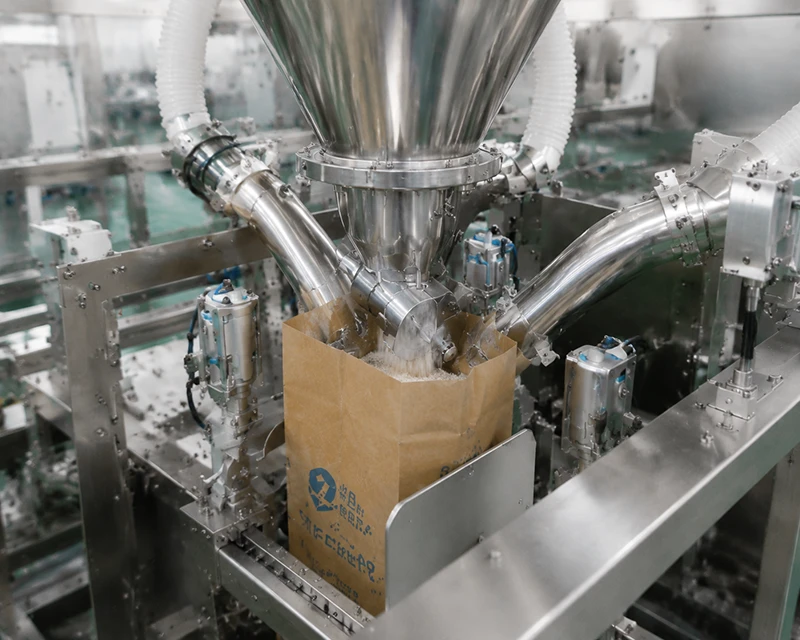
    At the filling station, the conical hopper and screw dosing arrangement are directly above the open bag. The reference accuracy is approximately ±0.5% (5‰). After dosing, multiple vibration and dust-removal stages help release air and reduce powder carry-over around the mouth. The M edge is then formed again, with trimming, rolling, hot-melt dot or line glue, and top pressing. This is a paper-bag sealing process, not heat sealing. A 10.4-inch touchscreen, PLC controller, bag detection, air-pressure protection, and glue-temperature alarm support operator supervision; the exact bill of materials is confirmed in the final proposal.

    Selection note: For an automatic flour packaging machine project, the useful question is not simply “how fast is the machine?” It is whether the screw dosing unit, bag geometry, dust-removal path, and sealing sequence have been tested together on the customer’s flour and bags. Ask for a bag trial and define the acceptance speed before comparing offers.

    Powder screw dosing station on zpacker automatic flour packaging machine with conical hopper, open kraft paper bag, and controlled filling

    Reference configuration for 1–5 kg flour paper bags

    The packaging machine can be specified as part of a broader automatic packaging line. A typical process starts with a silo or buffer hopper, screw elevator and horizontal screw feeder, then reaches the twin screw dosing and bagging stations. The outfeed can be followed by a checkweigher, metal detector, date printer, bag arranger, and either group shrink wrapping or manual insertion into a larger transport bag. This approach removes isolated manual transfers rather than automating only the filler.

    Use the following reference points to frame the technical discussion. The machine is listed at about 15.5 kW, around 3,000 kg, and 380 V ±10%, 50 Hz. Air demand is approximately 0.76 m³/min; supply pressure must be confirmed for the final configuration because source documents show different reference ranges. Product-contact and exposed relevant parts use 304 stainless steel, while the main frame is described as painted carbon steel with some anodized aluminium parts. A layout discussion of about 17 m by 3.6 m is only a planning reference, not a fixed footprint for every line.

    Project checkpointReference for discussionWhy it matters
    Retail pack1 kg, 2 kg, 2.5–5 kgDetermines dosing range, bag handling, and target rate
    Bag formatM-fold square-bottom premade paper or paper-plastic bagControls opening, orientation, folding, and glue compatibility
    Bag dimensionsW 80–140 mm; L 240–320 mm; side fold about 60–80 mmMust be checked against real samples before approval
    Line quality controlsCheckweigher, metal detector, and date printerSupports weight compliance, foreign-body control, and traceability
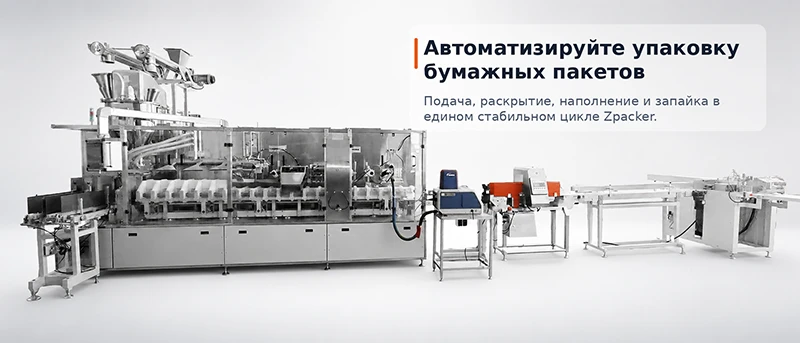
    Full zpacker automatic packaging line for 1 kg to 5 kg flour paper bags with dosing unit, conveyor, and downstream equipment
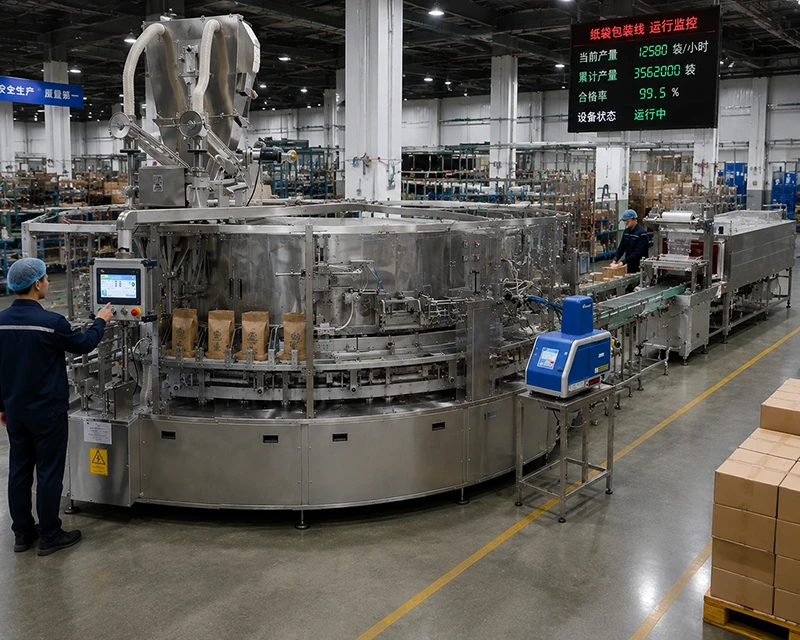
    Wide workshop view of zpacker automatic flour packaging line with upper feeding system, conveyor, and finished bag handling area

    Define the bag and material before requesting a final line proposal

    Send the flour specification, target weights, bag drawings or samples, bag direction, expected output, available feeding capacity, compressed-air conditions, and installation space. BPM can then match the zpacker equipment for flour filling, confirm the dust-removal and sealing sequence, and determine whether checkweighing, metal detection, coding, arranging, and secondary packaging should be included.

    Discuss your flour packaging line
  • Sugar Powder Packaging Equipment: When a Premade Paper Bag Line Replaces Manual Filling

    Sugar Powder Packaging Equipment: When a Premade Paper Bag Line Replaces Manual Filling

    SUGAR POWDER PACKAGING | ZPACKER

    Sugar Powder Packaging Equipment: When a Premade Paper Bag Line Replaces Manual Filling

    For food producers moving sugar powder into 1–5 kg paper bags, zpacker combines automatic bag handling, screw dosing, dust removal and sealing in one automatic packaging line. The fit depends on the powder, bag sample and required output, but the process is designed around the real sequence that premade M-fold bags require.

    Clean workshop view of zpacker horizontal paper bag packaging machine for sugar powder with rotary main unit, touchscreen, dosing structure, and outfeed conveyor

    Why sugar powder plants outgrow manual filling

    A sugar powder producer may begin with manual weighing, bag opening and top sealing. That approach becomes difficult to control when the line must supply retail formats such as 1 kg, 2 kg or 5 kg. Operators have to keep the bag upright, prevent product from reaching the sealing area and repeat the same weighing and closing movements throughout the shift. Variation in handling also makes downstream checking and grouping less consistent.

    There is a second issue: a premade paper bag is not simply an empty container placed below a filler. An M-fold square-bottom bag must be picked from the magazine, opened into shape, held in position during filling, settled, folded back at the top and sealed. A conventional filler or a vertical packaging machine making bags from roll film does not automatically cover this complete paper-bag sequence.

    Powder screw dosing and filling station on zpacker for premade paper bag sugar powder packaging with conical hopper, inclined auger outlet, and open kraft paper bag
    The decision point: can the line control both powder and bag geometry?

    For sugar powder packaging equipment, the practical question is not only the target weight. The project must confirm powder flow and dust behavior, bag width and length, M-fold side width, bag direction, sealing material, feeding capacity, compressed air and available installation space. These inputs determine whether the proposed dosing, bag handling and sealing sequence can be tested and accepted.

    Why zpacker fits premade paper bags

    zpacker is a fully automatic, double-station, linear premade paper bag packaging machine for compatible powders. A belt-fed bag system transfers bags from the magazines to the opening and filling positions. The machine then coordinates bag holding, screw dosing, settling and the top-finishing operations instead of leaving each step to a separate operator.

    The powder route includes the filling position, vibration and dust-removal stages. After the bag is filled and settled, the M-fold top can be trimmed, rolled, glue-sprayed and pressed closed with hot-melt adhesive. This is different from heat-sealing film. Paper and paper-plastic bags therefore require confirmation of the bag construction and adhesive compatibility before the final configuration is fixed.

    Engineering view: the bag sample is as important as the target weight. A 1–2 kg format and a 2.5–5 kg format use different working ranges, while the bag direction and M-fold geometry affect opening, filling clearance and top sealing. A controlled sample test connects the requested format to the actual machine settings.

    What the line includes—and what to confirm

    The equipment can be arranged as an automatic packaging line: storage hopper or silo, screw conveyor, double screw dosing, zpacker bagging machine, outfeed conveyor, checkweigher, metal detector, date printer and bag arranging. Finished bags may then be grouped by shrink film or transferred to manual outer-bagging, boxing or palletizing, depending on the plant’s logistics plan.

    The following reference values help structure an inquiry for sugar powder packaging equipment. They are not a substitute for a material test, final bag drawings or an approved technical proposal.

    Project itemzpacker referenceWhy it matters
    Pack formatsApprox. 1–2 kg and 2.5–5 kg rangesLinks dosing range and bag handling to the retail format.
    Reference speedAbout 30–35 bags/min for 1–2 kg; 15–20 bags/min for 2.5–5 kgActual output depends on powder, feeding and site conditions.
    Dosing accuracyAbout ±0.5% referenceFinal acceptance should use the agreed material and test conditions.
    Bag constructionPremade paper or paper-plastic M-fold square-bottom bagBag dimensions, direction and adhesive compatibility must be checked.
    Controls and utilities10.4-inch touchscreen; 15.5 kW; 380 V ±10%, 50 Hz; about 0.76 m³/min air consumptionConfirms electrical, pneumatic and installation readiness.
    Quality and safety optionsDust removal, checkweigher, metal detector and date printerSupports weight control, foreign-metal protection and traceability.

    Build the sugar powder packaging line around your real bag sample

    Send the target weight, sugar powder characteristics, bag drawings or samples, required speed and available utilities. BPM can then confirm the dosing range, bag sequence, dust-removal arrangement and downstream inspection options for a zpacker proposal.

    Discuss your packaging project
  • Starch Powder Packaging: Zpacker Automatic Paper Bag Packing Machine for Dust-Controlled Lines

    Starch Powder Packaging: Zpacker Automatic Paper Bag Packing Machine for Dust-Controlled Lines

    POWDER PACKAGING | ZPACKER

    Starch Powder Packaging: Zpacker Automatic Paper Bag Packing Machine for Dust-Controlled Lines

    For starch and other compatible powders, the right equipment for automatic filling is not just a filler. Zpacker combines premade paper bag handling, screw dosing, dust removal and downstream inspection in one automatic packaging line for controlled 1–5 kg production.

    Wide bright workshop view of zpacker full packaging line with horizontal bagging machine, upper feeding system, conveyor, and bag handling area

    Why starch powder packaging needs more than a basic filler

    A starch producer, food plant or bakery ingredient supplier may start with manual filling or a semi-automatic machine. That approach can work at low output, but it leaves operators repeating bag picking, opening, filling and closing. The result is uneven rhythm, more handling around the bag mouth and a difficult transition to an automatic packaging line.

    Powder behavior adds another constraint. During filling, starch can escape at the bag opening, remain around the sealing area or settle unevenly inside the package. A vertical packaging machine for roll film is also not a direct substitute when the customer already uses a premade kraft bag or a side-gusset bag. The bag format and the closing process are different.

    Powder screw dosing and filling station on zpacker with conical hopper, inclined auger outlet, and open kraft paper bag
    The practical selection issue

    For starch powder packaging, confirm the powder flow, target weight, premade bag dimensions and bag-mouth construction before comparing machine speeds. The equipment must control the product at the filling point and still leave a clean, stable edge for sealing.

    How Zpacker matches the premade bag process

    Zpacker is a fully automatic dual-station linear paper bag packing machine for powder products. It takes a prepared paper or paper-plastic bag from the bag magazine, opens it into its three-dimensional shape, positions it for filling and meters the product through a screw dosing system. This is the important distinction from a roll-film line: the machine is built around the customer’s finished bag supply.

    For M-fold square-bottom bags, the process continues after dosing. The bag can pass through settling and dust-removal stations, then the top is folded back, trimmed, rolled, hot-melt glue is applied as a dot or line, and the top is pressed into shape. The machine therefore addresses the complete route from bag feeding to sealing instead of leaving the most sensitive closing operations to an operator.

    Engineering note. Paper-plastic bags require confirmation of the paper-to-film bond and adhesive compatibility. Bag orientation is also directional; final acceptance should use customer samples, not a nominal bag description alone.

    Close view of zpacker automatic paper bag feeding and opening station with kraft bags, bag clamps, stainless frame, and touchscreen

    Which Zpacker configuration fits a 1–5 kg starch project?

    The reference configuration uses two working ranges: approximately 1–2 kg and 2.5–5 kg. Indicative rates are about 30–35 bags per minute for the smaller range and 15–20 bags per minute for the larger range. Some project notes record approximately 40–50 bags per minute at 1 kg and 16–20 bags per minute at 5 kg. Actual output depends on starch properties, feeding stability, bag samples and the final acceptance plan.

    The reference bag envelope is about 80–140 mm wide, 240–320 mm long, with an M-fold side width around 60–80 mm. Product-contact and exposed relevant parts use 304 stainless steel; the main frame is described as painted carbon steel with local anodized aluminium parts. A 10.4-inch touchscreen and PLC control support recipe operation, while no-bag, air-pressure and adhesive-temperature alarms protect the sequence.

    Project pointZpacker referenceWhat to confirm
    ProductStarch and compatible powderFlowability, dust level and feeding behavior
    Retail weights1–2 kg or 2.5–5 kgTarget mix and changeover plan
    BagPremade M-fold square-bottom paper bagW, L, M-fold, orientation and adhesive surface
    Line additionsCheckweigher, metal detector, printer and groupingRequired inspection and secondary packaging route
    Large workshop view of zpacker packaging machine with operator, control screen, automatic packing line, and material handling area

    Specify the starch bag before you specify the machine

    Send the starch sample, target weights, bag drawings or samples, expected output and available utilities. BPM can then check the screw dosing, dust-removal sequence, premade bag handling and downstream inspection for an automatic paper bag packaging line.

    Discuss your powder packaging line
  • Soda Powder Packaging Line: How Zpacker Reduces Dust and Manual Labor in Premade Paper Bags

    Soda Powder Packaging Line: How Zpacker Reduces Dust and Manual Labor in Premade Paper Bags

    SODA POWDER PACKAGING | ZPACKER

    Soda Powder Packaging Line: How Zpacker Reduces Dust and Manual Labor in Premade Paper Bags

    For food and chemical powder producers moving from manual filling or a semi-automatic machine, Zpacker is a full automatic paper bag packing machine for premade kraft and M-fold bags. Its screw dosing, bag handling, dust removal and downstream inspection path is designed to make soda powder packaging more consistent from dosing to sealed-bag transfer.

    Zpacker automatic paper bag packing machine feeding kraft bags for soda powder packaging with bag clamps and touchscreen control

    Why soda powder packaging becomes difficult with a manual process

    A soda powder line may start with a simple requirement: dose the material into a paper bag and close it. In production, the operator must still pick and open each premade bag, hold it under the filling outlet, settle the powder, clean the bag mouth, fold the M side and apply the final seal. Small variations in these actions can create inconsistent fill levels, powder around the closure and interruptions between filling and packing.

    Zpacker addresses this sequence as one automatic packaging line rather than treating filling as an isolated machine function. The bag magazine and belt-fed entry handle premade paper or paper-plastic bags, while the machine opens and positions the bag before screw dosing. This makes it suited to plants that already purchase finished kraft bags and need a repeatable route for soda powder or another tested powder material.

    Zpacker screw dosing and powder filling station for soda packaging with conical hopper, auger outlet, and open kraft paper bag
    The main production risk is not only weighing the powder

    Powder can escape at the bag mouth, remain unsettled inside the bag or contaminate the sealing area. A standalone filling machine may also leave bag opening, folding, sealing and inspection to operators. The correct equipment must connect each action to the actual bag format and material behavior.

    How Zpacker matches the premade M-fold paper bag process

    Zpacker is built around a complete premade-bag sequence: take the flat bag from the magazine, open it into a stable three-dimensional shape, fill it with a screw dosing system, then settle and remove dust before the mouth is formed. The M-fold square-bottom bag is folded back through trimming, edge rolling and hot-melt glue application before the top is pressed closed. This is different from a vertical packaging machine that forms bags from film, and it is not a valve-bag or liquid-filling system.

    The line can be configured with two bagging and dosing stations. If one station has no bag, it can stop and alarm while the other configured station continues its cycle; the final operating logic should be confirmed in the approved configuration and acceptance plan. The process can then continue to a conveyor, checkweigher, metal detector, date printer, bag arranger and secondary packing equipment.

    Engineering point: For soda powder, confirm flowability, dust behavior, target weight, bag construction and closure compatibility before quotation. The screw dosing and dust-removal arrangement can only be validated against the actual material and bag samples.

    Reference configuration for 1–5 kg powder paper bag packaging

    The recorded Zpacker configuration covers two practical weight ranges: approximately 1–2 kg and 2.5–5 kg. Reference speeds are about 30–35 bags per minute for the smaller range and 15–20 bags per minute for the larger range. Other recorded demonstrations indicate that speed changes with material, feeding and site conditions, so the final target must be confirmed through the technical proposal and bag test.

    The same principle applies to utilities and layout. Reference data lists approximately 15.5 kW, 380 V ±10%, 50 Hz, around 3,000 kg machine weight and approximately 0.76 m³/min air consumption. Air-pressure records vary by configuration, so the final requirement should be confirmed rather than copied as a fixed value. Product-contact and exposed relevant parts use 304 stainless steel, with the frame and local components specified according to the final bill of materials.

    Zpacker full paper bag packaging line with dosing unit, outfeed conveyor, and downstream equipment for powder filling
    Selection itemZpacker referenceWhat to confirm before approval
    Powder and packageSoda powder in premade paper or paper-plastic M-fold square-bottom bagsFlowability, dust behavior, bag direction, layer bonding and glue compatibility
    Filling rangeApproximately 1–2 kg or 2.5–5 kgTarget retail weights, tolerance and changeover requirements
    Bag dimensionsReference width 80–140 mm; length 240–320 mm; M-side about 60–80 mmActual bag samples and final dimensional drawing
    Downstream routeConveyor, checkweigher, metal detector, coding, arranging and secondary packingInspection, rejection, grouping, shrink wrapping, case packing or palletizing scope
    Zpacker horizontal paper bag packaging machine in a clean workshop with touchscreen, dosing structure, and outfeed conveyor

    Plan a soda powder packaging line around the real bag sample

    Share the powder characteristics, target weight, bag drawings or samples, required speed and available utilities. BPM can review whether the Zpacker screw dosing, dust removal, premade-bag handling and downstream inspection path fit your process before the final configuration is approved.

    Discuss your packaging project
    Zpacker wide full powder packaging line with upper feeding system, conveyor, and bag handling area for automatic paper bag packing