
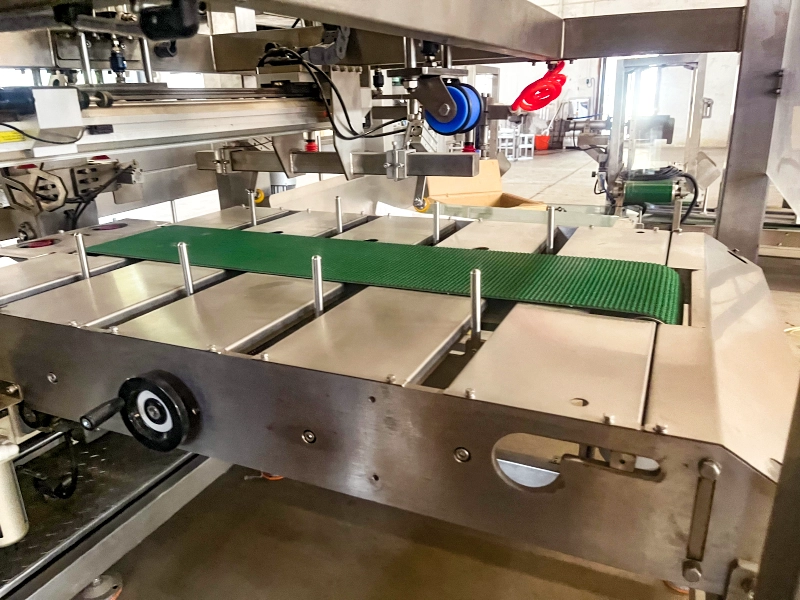
машина для вторичной упаковки пакетов в мешок купить
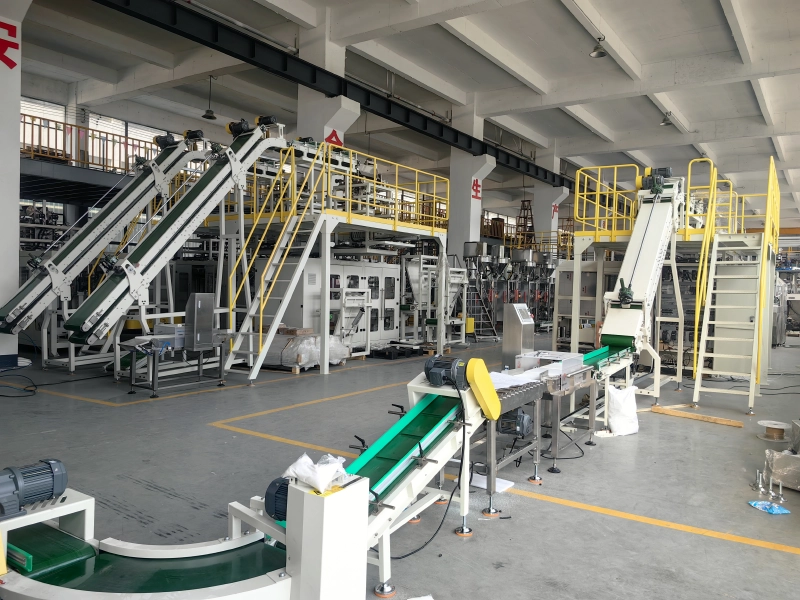
Is your salt turning into “bricks” before it even leaves the warehouse?
Handling hygroscopic bulk solids like sea salt, urea, or fertilizers isn’t just about packaging—it’s a war against moisture, corrosion, and gravity. If your pallets are “flowering” (leaning outward) during transport because manual laborers can’t squeeze the air out of 1kg bags, you are shipping 30% air and losing money on every truckload. It’s time to stop the manual struggle.
The “Balloon Bag” Crisis: Why Your Pallets Are Collapsing
In the salt and chemical industry, the enemy isn’t just the market competition; it’s the air trapped inside your primary packaging. When you run a VFFS machine at 60 bags per minute, the 1kg salt bags often drop onto the conveyor looking like inflated balloons.
Manual packers cannot apply consistent pressure to flatten these bags without risking breakage. The result? You stuff rounded, air-filled bags into a woven sack. When these sacks are stacked on a pallet, they act like rollers. The moment the truck hits the first bump, your pallet stability is compromised.
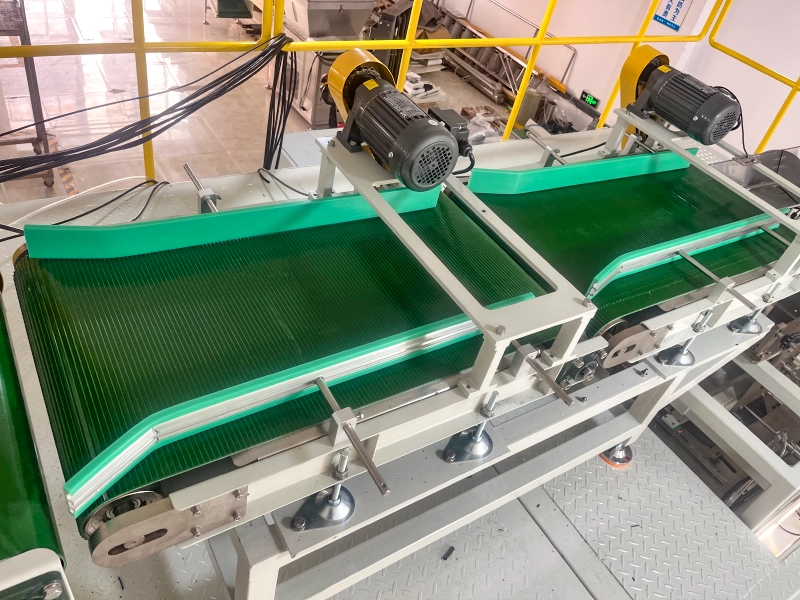
The Double-Deck Shaping Conveyor physically forces air out, turning “balloons” into stackable “bricks.”
Our Engineering Logic: We integrate a specialized Double-Deck Shaping Conveyor into our машина для вторичной упаковки пакетов в мешок system. This isn’t just a belt; it’s a mechanical press that grips the bag from top and bottom as it ascends.
The Result: The trapped air is forced out through the micro-perforations or valves. Your 1kg salt bags arrive at the grouping station flat, dense, and brick-hard. This allows for a tighter pack in the master bag and a pallet that is rock-solid stable, increasing your truck loading efficiency by up to 20%.
Surviving the Chloride Attack: 316L or Nothing
Standard carbon steel packaging lines in a salt plant are a ticking time bomb. The saline dust combined with ambient humidity creates a highly corrosive atmosphere. We have seen generic packaging machines rust and seize up within 12 months, leading to contamination of the final product (rust spots in white salt) and catastrophic downtime.
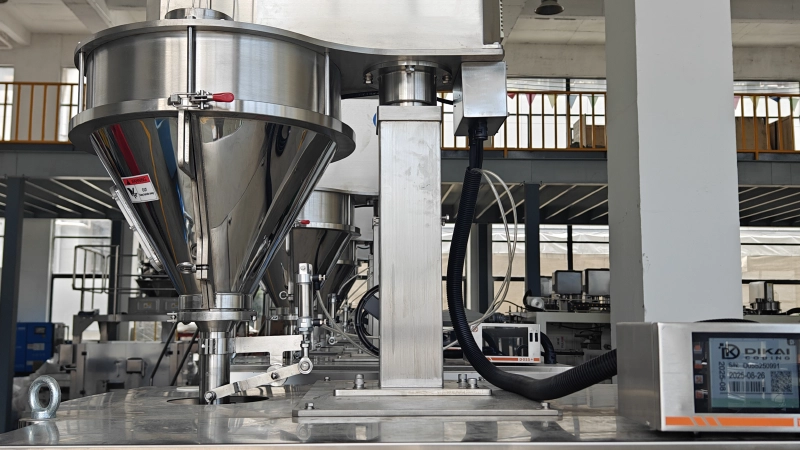
316L Stainless Steel Dosing and Contact parts ensure hygiene and longevity against corrosion.
Our Solution: We don’t just paint over the problem. For salt and corrosive chemical applications, the core contact parts of our system are upgraded to 316L Medical-Grade Stainless Steel. Furthermore, we employ a unique “Salt Filtering Conveyor” with diamond-pattern rollers.
Why diamond rollers? Because salt bags break. When they do, the granules usually accumulate on flat belts, grinding into the motors and gears. Our design allows the spilled salt to fall through the conveyor for collection, keeping the line clean and the bags dust-free before they enter the master sack.
Eliminating the “Giveaway” and Human Error
In manual secondary packaging, counting errors are rampant. If a worker puts 21 bags into a 20-bag sack to be “safe,” you are giving away 5% of your product for free. Over a year, that is tons of salt lost.
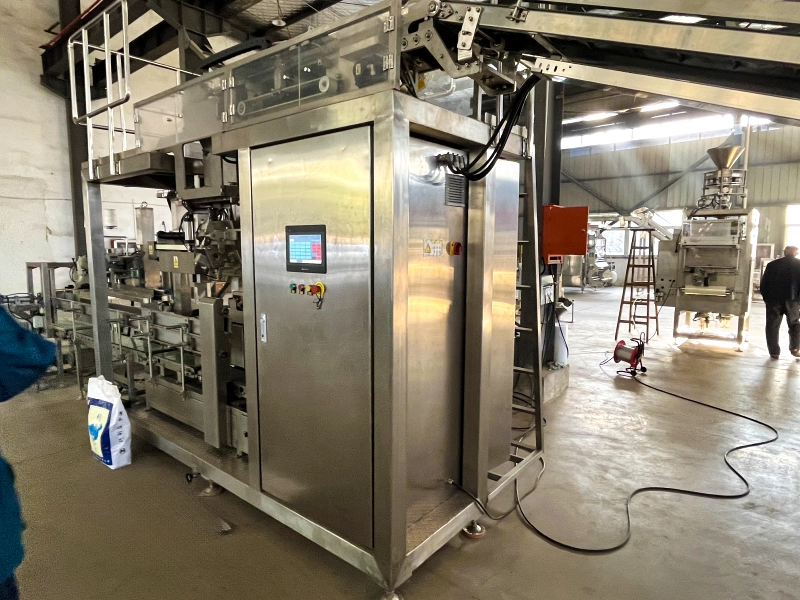
High-speed Checkweigher automatically rejects off-weight packs before they reach the master bag.
The Automation Advantage: Our line integrates high-speed Checkweighers (like the ZX300) and precise servo-driven counting systems.
- Weight Verification: Every single small bag is weighed. Underweight or overweight bags are kicked off the line instantly.
- Precise Grouping: The machine counts exactly 20 or 25 units (depending on your setting) before dropping them into the master bag.
- Zero Waste: You sell exactly what you promise. No more customer complaints about missing packets, and no more profit loss from overfilling.
End-of-Line: From Bagging to Robot Palletizing
The bottleneck often isn’t the filling; it’s the master bagging. A human operator struggles to open a stiff PP woven bag, hold it under a chute, and wait for 20kg of product to drop. It’s slow, dusty, and dangerous.
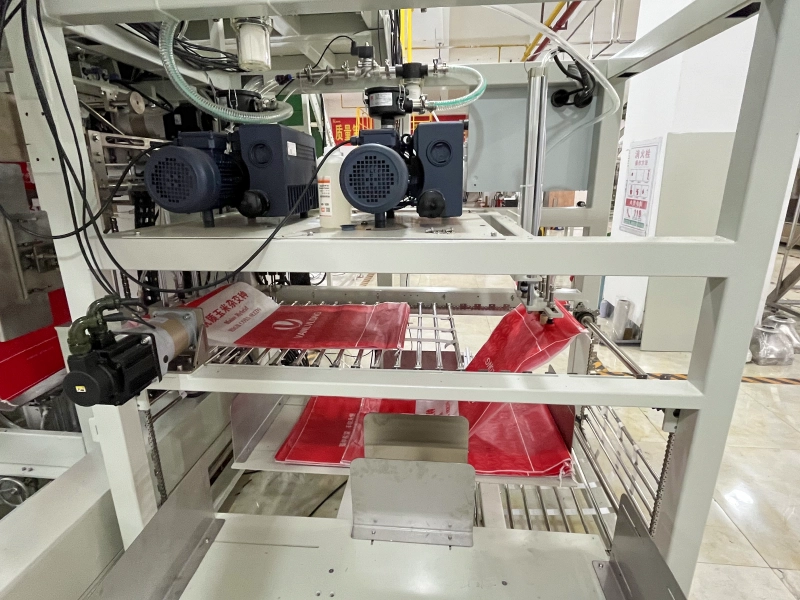
Automatic Bag Feeding and Opening mechanism replaces the most labor-intensive manual task.
Our машина для вторичной упаковки пакетов в мешок automates the entire sequence: bag fetching, opening, filling, and sewing. Once sewn, the heavy bag is tipped horizontally and conveyed to a Роботизированный Паллетизатор.
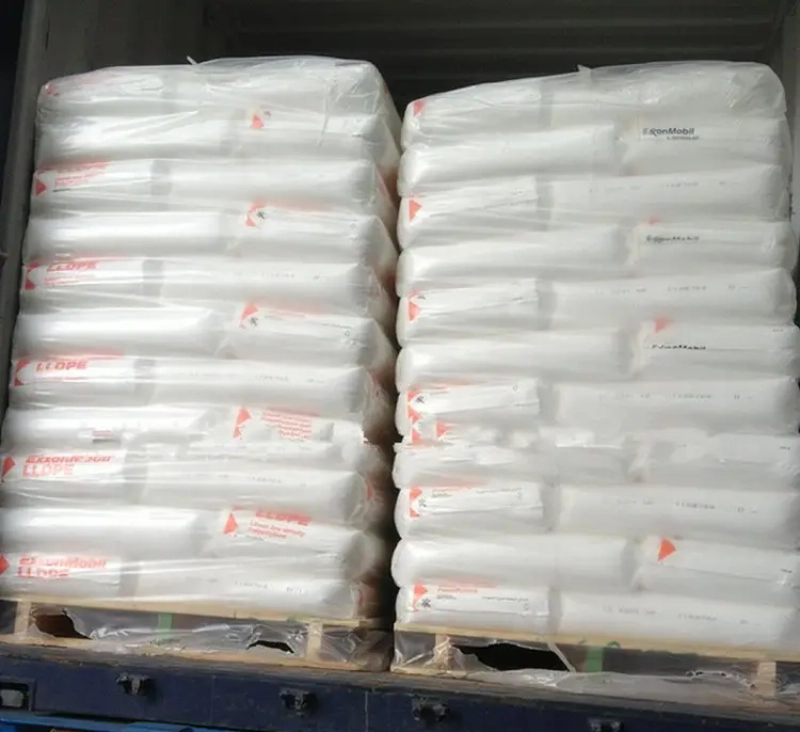
Final result: High-density, stable pallets ready for global shipping.
Using KUKA or ABB robotics, we create interlocking stacking patterns that lock the load together. This means you can stack pallets higher in your warehouse without fear of them toppling over, maximizing your storage density per square foot.
Часто задаваемые вопросы
Q1: Can this machine handle highly corrosive sea salt?
Yes. We offer a “Salt Industry Edition” where all contact parts are manufactured from 316L Stainless Steel, and the frame is treated with a specialized anti-corrosion coating to withstand high-salinity environments.
Q2: What types of master bags does the system support?
The system is versatile and handles PP (Polypropylene) woven bags, Kraft paper laminated bags, and heavy-duty plastic sacks. It includes automatic sewing or heat-sealing modules depending on your bag material.
Q3: My salt bags often have dust on the outside. Will this affect the machine?
We integrate a dust extraction system at the sewing station and use “Salt Filtering Conveyors” with diamond rollers that allow loose dust to fall through into a collection tray, preventing build-up on the drive belts.
Q4: What is the maximum speed for 1kg salt packets?
For a standard configuration, the secondary packaging line can handle up to 120 primary bags per minute (depending on the grouping pattern), outputting approximately 4-5 master bags (25kg) per minute.
Q5: Do I need a skilled engineer to operate the robot palletizer?
No. The system is controlled via a user-friendly Siemens Touch Screen HMI. Operators can switch between pre-programmed palletizing patterns (e.g., 5-layer, 8-layer) with a single touch, without needing to write code.
Нужна консультация по упаковочному оборудованию?
СВЯЗАТЬСЯ С НАМИ → English
 Русский
Leave a Reply