
How ppline kept woven-sack handoffs aligned in a southern grain warehouse
For a warehouse that needs steady bag flow after filling and before sewing, the problem is rarely one single machine. It is the handoff: bag mouth alignment, transfer stability, dust control, operator rhythm, and whether the line can keep moving when pallets, forklifts, and changeovers all happen at once. This ppline line was matched to that reality with hopper feed, gravity dosing, HMI control, and a bagging-to-conveyor layout that keeps the sacks calmer from the first drop to the final stitch.
Why the old transfer point kept causing trouble
In bulk-product packing, the warehouse team usually feels the problem first at the seam between filling and sewing. If the bag is not square, the next worker wastes time straightening it. If the discharge point drops the sack too hard, the bag body twists and the seam starts from a poor position. If the conveyor transition is not steady, the line slows down, and the pallet area becomes a waiting zone instead of a staging zone.
That is why a simple “faster machine” answer is not enough. The customer’s scene needed a line that could hold a consistent bag posture, keep the feed smooth, and give operators a predictable working rhythm. The goal was not only output; it was cleaner handoff, less rework, and fewer interruptions around sewing and palletizing.
The old setup made the warehouse spend labor on bag straightening and transfer control instead of moving finished sacks out of the packing zone.
Why ppline matched this application
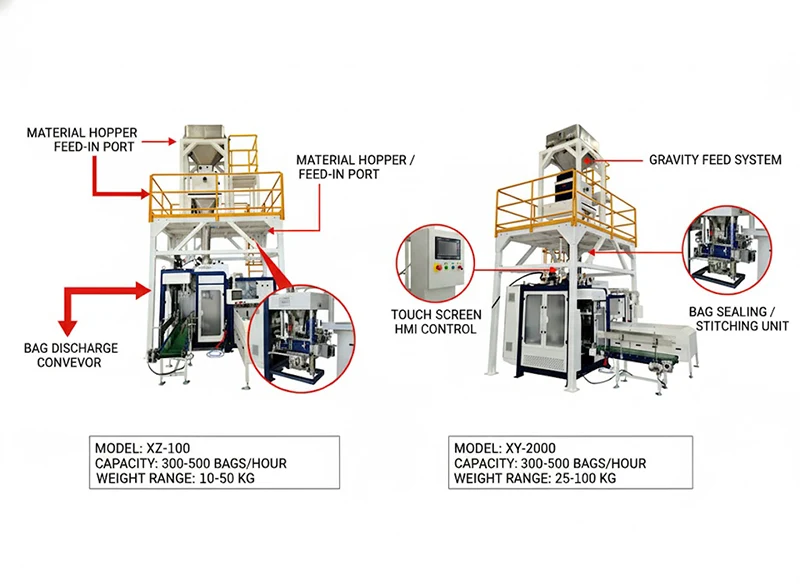
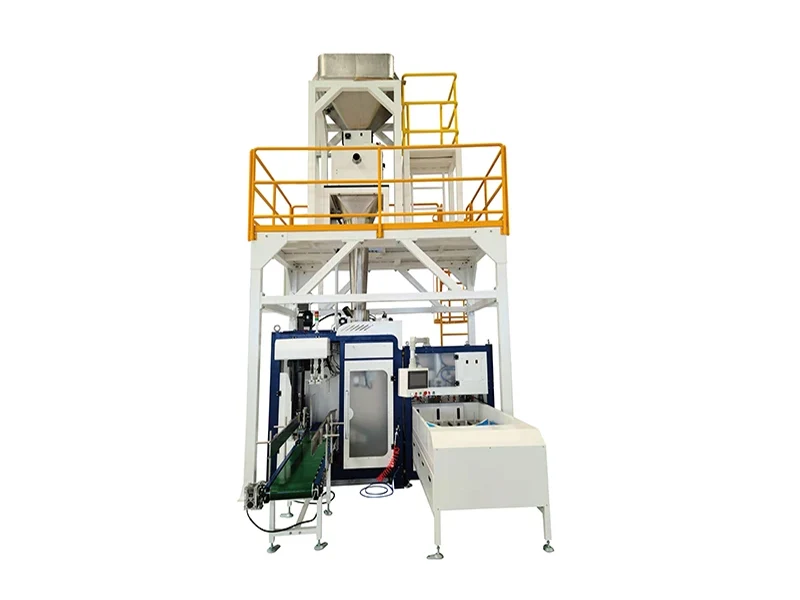
The fit came from structure, not just labels. The top hopper and gravity dosing help keep product feed stable. The elevated steel platform gives the machine a clear working height and helps the line stay organized. The inclined conveyor supports a smoother transition between stations, so the sack does not have to be “rescued” by hand after every move. The HMI touchscreen gives operators a practical control point for changeovers and daily adjustments, which matters when the warehouse is handling bulk-product variations instead of one fixed bag format.
The machine family shown in the image set is also built around integration. The enclosed cabinet, platform rails, and linked discharge path are not cosmetic details. They reduce the chaos around the bagging point and make the whole line easier to supervise. For a grain warehouse, that translates into fewer awkward pauses at the sewing point and fewer bags that need to be lifted, turned, or corrected twice.
Practical insight: when the handoff is stable, the rest of the warehouse stops fighting the packaging line. That is where throughput improves: not in one dramatic jump, but in the small gains from every sack that leaves the machine in the right position.
What the structure, parameters, and现场 evidence say
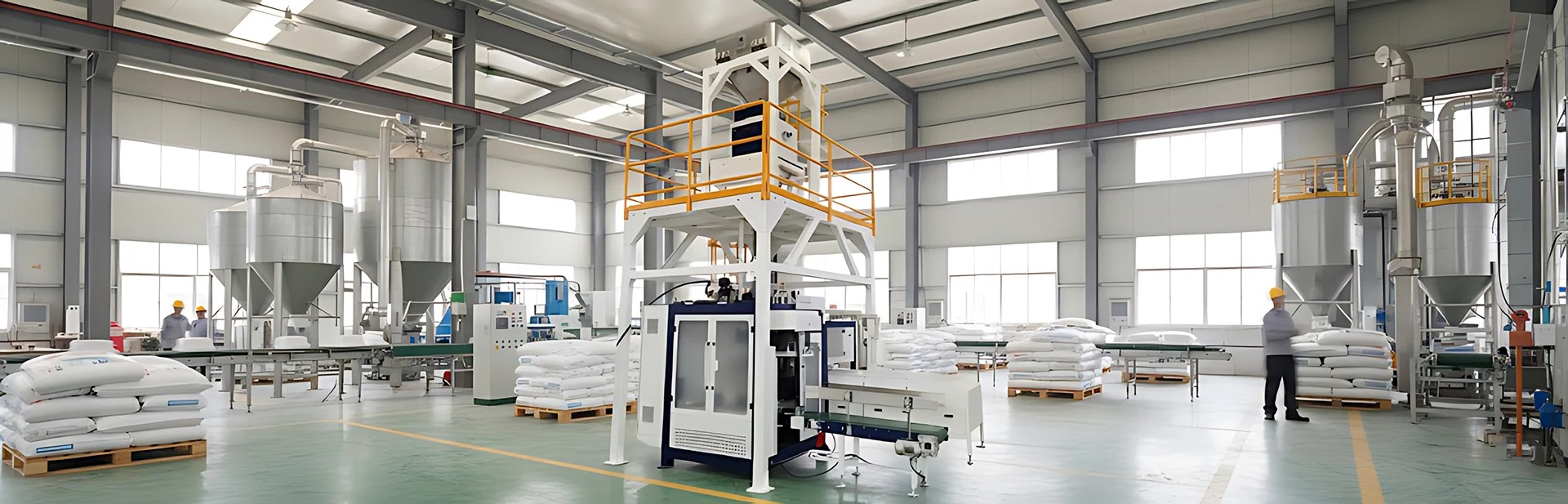
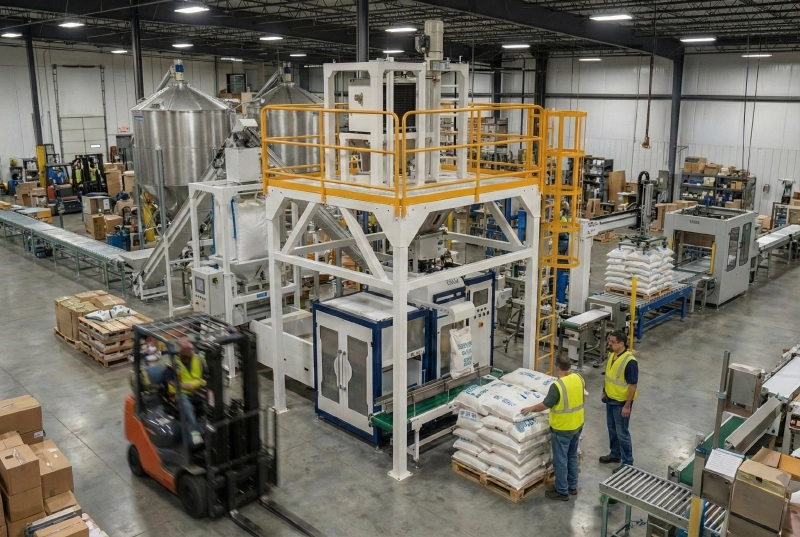
The image set shows three useful evidence layers. First, the machine layout: hopper feed, sealed machine body, platform access, and conveyor connection. Second, the operating context: warehouse-scale installation, bag stacking, and forklift movement around the packaging zone. Third, the product behavior: lines in this family are presented with 300–500 bags per hour capability and coverage for 10–50 kg or 25–100 kg bag ranges, which is the right territory for grain, powder, and other bulk-product handling.
In other words, ppline is not being used here as a generic packaging buzzword. It is being matched to a site where the packing line must feed, weigh, hold posture, and release sacks in a way that makes sewing and pallet transfer easier, not harder. The final result is a calmer packing zone, less manual correction, and a more predictable warehouse rhythm.
| Warehouse requirement | ppline response | Evidence from the image set |
|---|---|---|
| Keep woven-sack handoff steady | Hopper feed + gravity dosing + controlled discharge path | Automatic bulk bagging machine and linked conveyor layout |
| Reduce bag straightening before sewing | Raised platform and aligned transfer geometry | Elevated steel platform, inclined conveyor, safety railings |
| Support warehouse-scale output | Line-level integration with HMI control and bagging range coverage | Operational packing line, stacked sacks, forklifts, and plant-floor activity |
Need a steadier bulk-product packing line?
If your warehouse is losing time at the seam between filling, sewing, and pallet movement, ppline is built to make that transfer calmer and more controllable. Share the bag size, target output, and product type, and the line can be matched to your packing rhythm instead of forcing your team to work around it.
Request a packing line proposal English
 Русский