
How a Bibpu Secondary Packaging Line Keeps Salt Bag Handoffs Stable Before Sewing
For plants that re-pack small salt packs into woven PP sacks, the weak point is not filling alone. The weak point is the transfer: loose bags, trapped air, unstable stack shape, and a sewing station that has to compensate for poor line control. This line layout is built to make that handoff cleaner, flatter, and easier to close.
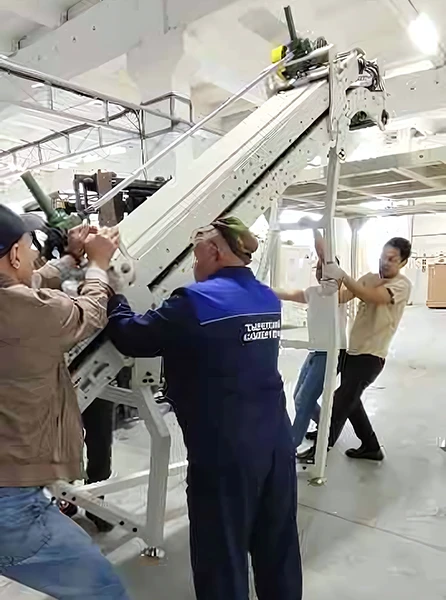
Why secondary packaging becomes unstable in real production
In a secondary packaging job, the plant often starts with finished inner packs and ends with a woven sack or pallet-ready bundle. That sounds simple, but the line usually breaks down at the transitions. Bags leave the filling zone with uneven shape, some carry extra air, and the operator has to manually straighten them before they can be collected, opened, loaded, pressed, and sewn. Every manual correction slows the line and increases the chance of crooked stacks or poor seam quality.
The common old approach is to rely on a basic conveyor and a worker at each handoff point. That works only when output is low. Once the line runs continuously, the transfer section needs to do more than move product. It must guide, align, hold, compress, and present the bag to the next station in a consistent position.
When secondary packs arrive with uneven geometry or trapped air, the next station pays the price: poor alignment, unstable stacking, and more rework before sewing.
Why Bibpu fits this job better than a generic transfer line
Bibpu is suited to this workflow because the system is not just a bagging machine. It is a complete secondary packaging path. The line can take product from bagging and transfer it through controlled collection, holding, alignment, compression, and sewing. That matters for salt, where bag shape and sealing quality are both affected by dust, film behavior, and the need to keep the load square before closing.
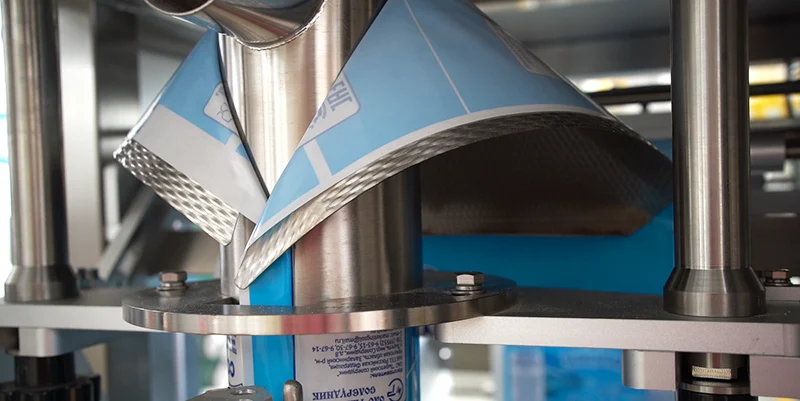
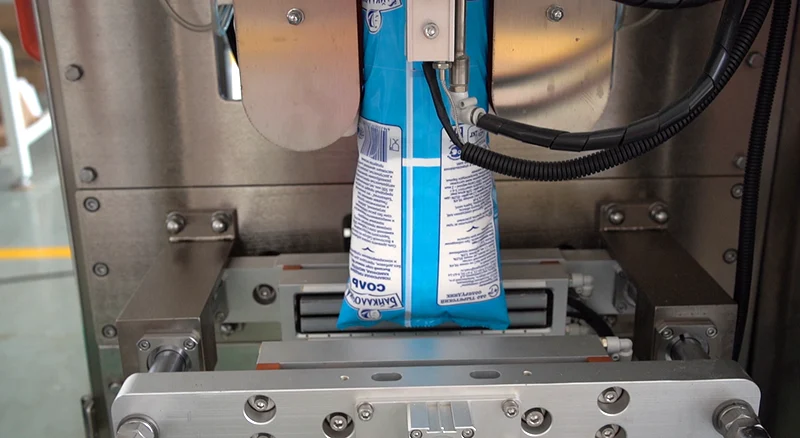
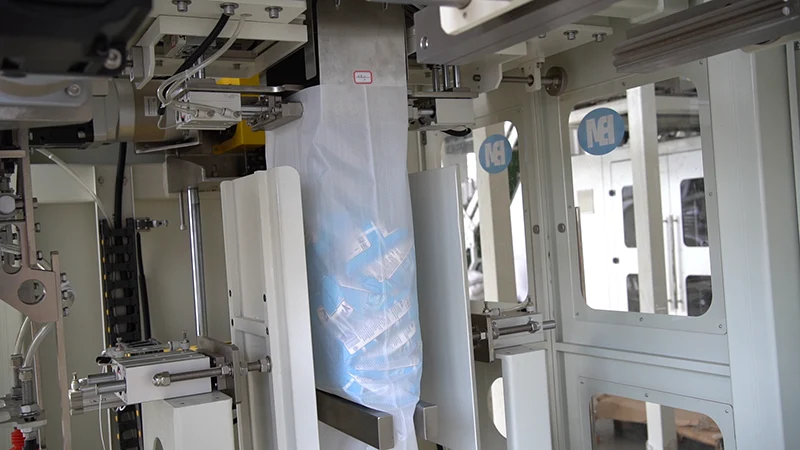
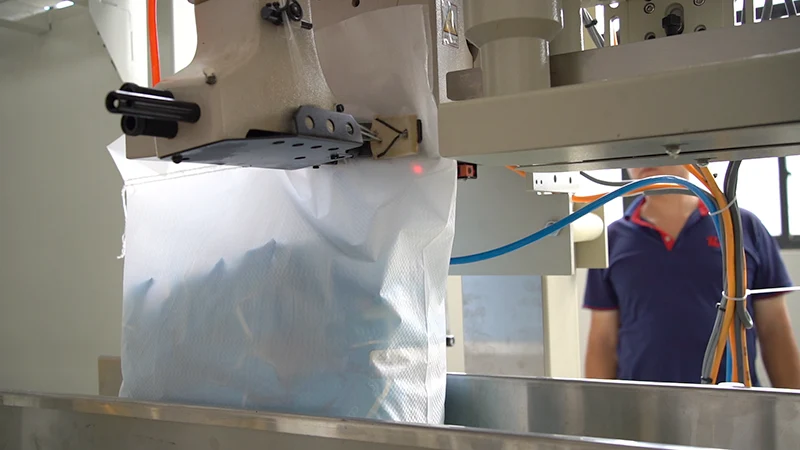
The machine details in the selected images show the actual engineering behind that stability. The dimpled stainless steel forming shoulder helps reduce film sticking and drag. The heated sealing jaw keeps the closure consistent. The pneumatic clamping and bag holding station keeps inner packs or filled sacks positioned before the next step. And the heavy-duty sewing head at the end turns a stable presentation into a clean final closure instead of asking the operator to fix shape problems by hand.
Practical insight: in secondary packaging, the best line is often the one that removes correction work from people and moves it into guided structure, controlled transfer, and repeatable closing stations.
Structure and process evidence from the line
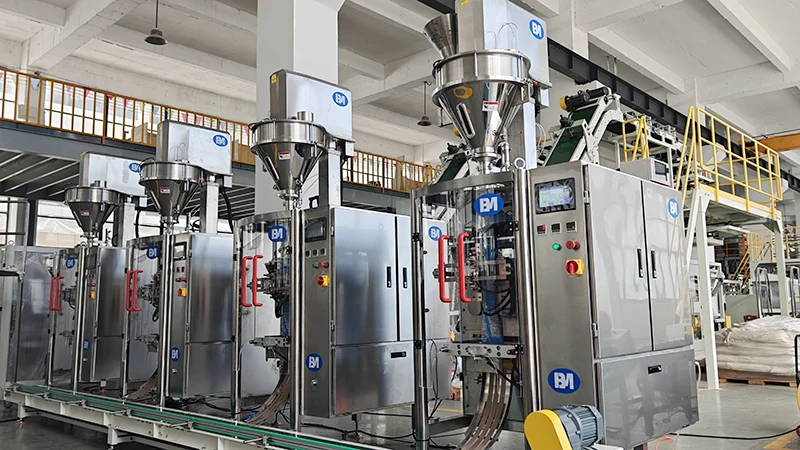
The line is built around a steel workshop layout, multiple VFFS units, and controlled transfer hardware. The stainless hopper row supports stable feeding. The shoulder section handles film routing with less sticking. The sealing zone keeps the bag edge consistent. Downstream, the woven sack station uses pneumatic clamps to hold the load before the sewing head closes the top.
That combination is important because each station solves a different failure mode. Feeding solves supply continuity. Shoulder geometry solves film handling. Sealing solves closure reliability. Bag holding solves position control. Sewing solves final integrity. When these functions are linked, the result is fewer crooked bags, less operator intervention, and a cleaner path from inner pack to outer sack.
| Элемент линии | What it solves | Evidence from selected image |
|---|---|---|
| Stainless hopper row | Stable feed and multi-station continuity | Four-machine VFFS array |
| Формующий плеч с ямками | Less film drag and sticking | Textured stainless collar detail |
| Heat sealing jaw | Repeatable closure quality | Closed sealing mechanism during operation |
| Pneumatic bag holding | Bag position before closing | Inner packs held inside woven PP sack |
| Industrial sewing head | Final secure top closure | Newlong sewing head stitching the sack opening |
For plants that need to standardize secondary packaging, the real result is not only higher throughput. It is a more predictable handoff structure. That means less manual sorting, fewer misaligned sacks, cleaner sewing, and a more stable final package ready for storage or shipment.
Need a secondary packaging layout that reduces handoff rework?
Use a Bibpu line when your process needs controlled transfer, stable bag shape, and a final sewing step that starts from a well-presented load instead of a manually corrected one.
Contact us English
 Русский